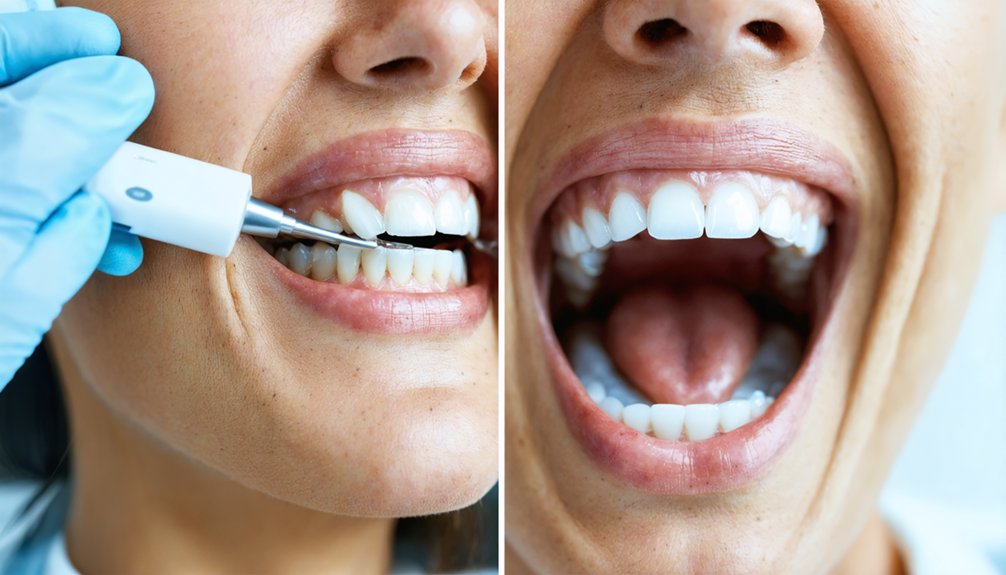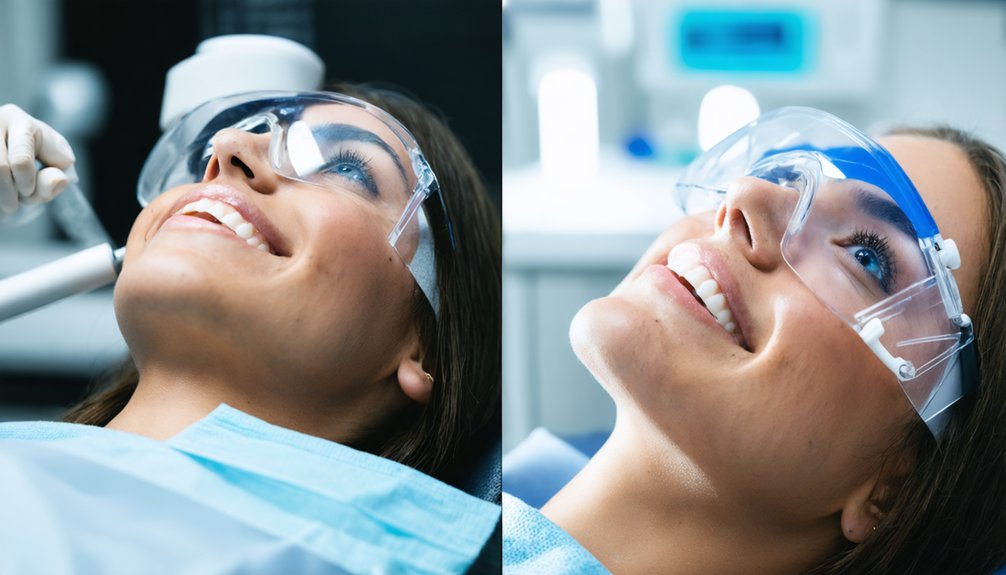
If you need fast results, in-office whitening delivers noticeable changes in 60–90 minutes using 25%–40% hydrogen peroxide. If you’re focused on cost and flexibility, at-home kits using carbamide peroxide work just as effectively over 1–2 weeks. Research shows no significant difference in overall results between the two methods. Your decision really comes down to speed versus budget. Keep going to find out exactly which option suits your situation best.
Key Takeaways
- In-office whitening delivers visible results in 60–90 minutes, while at-home whitening requires daily use over 1–2 weeks.
- In-office treatments cost $400–$800; at-home kits range from $100–$500, offering a more budget-friendly, gradual alternative.
- Both methods are equally effective overall; success depends more on compliance than which approach you choose.
- In-office treatments cause more immediate sensitivity, while at-home methods produce milder, gradual discomfort over several days.
- Both methods last 1–3 years; at-home kits offer easier maintenance using existing trays and gels.
The Real Difference in Whitening Strength and Formulas
When comparing whitening options, the concentration of the bleaching agent is the most fundamental difference.
In-office gels use 25%–40% hydrogen peroxide, formulated for rapid shade change under clinical supervision.
At-home dentist-dispensed gels use 10%–22% carbamide peroxide, designed for slower, controlled oxidation over one to two weeks.
These differences aren’t arbitrary. Higher concentrations increase enamel permeability faster, accelerating whitening but also raising sensitivity risk.
Higher peroxide concentrations don’t just whiten faster—they raise sensitivity risk in equal measure.
Gel viscosity also varies between delivery systems—chairside gels are engineered for tray or direct application with precise tissue isolation, while at-home trays use thinner formulations suited for extended wear.
Over-the-counter products fall below both professional categories in concentration and efficacy.
If you want predictable results, professional-grade options—whether in-office or dentist-dispensed—give you far greater control over the outcome.
How Fast Do Each Method Actually Show Results?
If you’re working against a deadline, in-office whitening gives you visible results in a single 60–90 minute appointment.
At-home treatment, by contrast, requires daily application over one to two weeks before you reach full results.
Your timeline, more than any other factor, may determine which method actually fits your life.
In-Office Speed Advantage
One of the clearest advantages of in-office whitening is speed—you’ll typically see visible results within a single 60–90 minute appointment. Dentists apply high-concentration whitening gels, commonly 25%–40% hydrogen peroxide, directly to your teeth under controlled conditions, producing a measurable shade change in one visit.
This makes in-office treatment the practical choice when you’re working toward a deadline—an event, interview, or specific date where waiting two weeks isn’t an option. You’re not relying on daily compliance; the outcome is controlled and immediate.
One tradeoff worth knowing: the stronger whitening gels used chairside can trigger more acute teeth sensitivity compared to lower-concentration at-home formulas. That sensitivity is typically transient, but it’s a factor you should weigh when deciding which method fits your timeline and tolerance.
At-Home Gradual Timeline
At-home whitening works on a different clock—instead of a single appointment, you’re applying a lower-concentration gel daily for roughly one to two weeks before seeing full results.
Dentist-dispensed trays typically use 10%–16% carbamide peroxide, allowing gradual shade change that’s easier to manage around your schedule.
Clinical evidence supports this approach: five days of consistent at-home use can match a single in-office session by both instrumental and visual measures.
That timeline, however, assumes strict protocol adherence.
Lifestyle habits like tobacco use or daily coffee consumption can slow visible progress, and diet considerations—particularly staining foods and beverages—directly affect how quickly results emerge.
You’re not just whitening; you’re managing variables that determine the outcome.
In-Office vs. At-Home Whitening: Which Works Better?
When choosing between in-office and at-home whitening, the evidence may surprise you: research shows no significant difference in overall color change between the two methods. A 2024 umbrella review confirmed equal effectiveness, and a randomized clinical trial found no clinically significant difference at nine months.
Five days of at-home whitening can match a single in-office session by both visual and instrumental measures.
What actually drives your results isn’t the delivery method—it’s your protocol adherence, baseline tooth color, oral hygiene, and dietary habits. Staining foods, tobacco, and inconsistent maintenance will undermine either approach.
If you want speed, in-office delivers it. If you want cost control and flexibility, at-home performs just as well. You’re not sacrificing effectiveness—you’re choosing the method that fits your lifestyle.
How Do In-Office and At-Home Whitening Actually Work?
Both in-office and at-home whitening rely on the same core chemistry: peroxide-based gels penetrate enamel and break apart stain molecules through oxidation. The key difference is concentration and delivery.
In-office treatments use 25%–40% hydrogen peroxide applied chairside, producing a rapid tooth shade change within 60–90 minutes under professional supervision.
At-home systems use lower-concentration carbamide peroxide gels, typically 10%–16%, loaded into custom trays fabricated from a dental impression of your teeth. You wear these trays daily for one to two weeks, allowing gradual, controlled whitening.
The custom fit maximizes gel contact and minimizes gum exposure. Both approaches trigger the same oxidation process—what you’re controlling is the pace, concentration, and setting in which that chemistry works.
What Sensitivity Risks Should You Expect From Each Method?
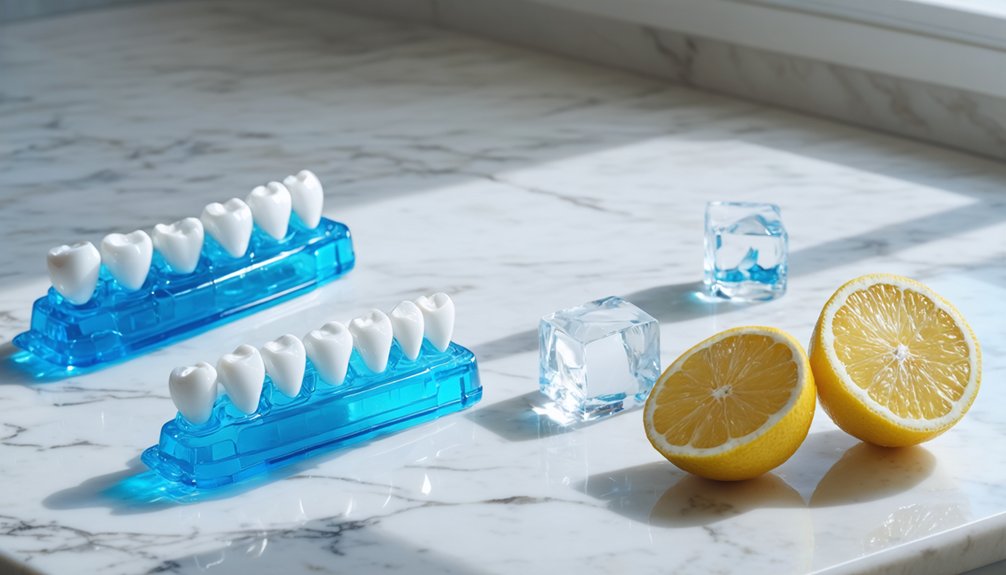
Both in-office and at-home whitening carry a real risk of tooth sensitivity, and research shows the overall risk and intensity are similar between the two methods.
However, in-office treatments—using higher-concentration gels—tend to cause more acute, immediate sensitivity during or shortly after the procedure, while at-home methods produce a slower, milder response spread across days of use.
You can manage discomfort with either approach by using desensitizing toothpaste, reducing application frequency, or consulting your dentist about adjusting the protocol.
Sensitivity Risk Comparison
Tooth sensitivity is one of the most common side effects you’ll encounter with either whitening method, though the experience differs in timing and intensity.
In-office treatments use higher concentrations of hydrogen peroxide, which can trigger more acute sensitivity immediately after your appointment.
At-home methods produce milder, more gradual sensitivity due to lower-concentration formulas applied over days.
Research supports that overall sensitivity risk and intensity are statistically similar between both methods.
A 2024 umbrella review found no meaningful difference in post-treatment sensitivity outcomes.
Regardless of your chosen method, tooth sensitivity typically remains mild and transient.
Your diet considerations also matter post-treatment.
Avoiding acidic or temperature-extreme foods reduces sensitivity duration.
Knowing this helps you plan whitening around your schedule and dietary habits with greater confidence.
Managing Whitening Discomfort
Knowing your sensitivity risk is only part of the equation—managing it effectively makes whitening more comfortable regardless of which method you choose.
Start by timing treatments strategically—incorporating whitening into your morning routines before meals gives enamel time to stabilize before food or beverage contact.
Use potassium nitrate-based desensitizing toothpaste before and after each session.
For in-office treatments, ask your dentist about pre-treatment fluoride applications to buffer acute sensitivity.
With at-home methods, reduce application frequency if discomfort increases rather than pushing through.
Diet restrictions matter considerably—avoiding acidic foods, coffee, and cold beverages immediately after whitening reduces post-treatment irritation.
Both methods respond well to these strategies, so you can maintain consistent progress without sacrificing comfort or compromising your results.
How Much Does Teeth Whitening Cost With Each Option?
Understanding these pricing strategies helps you match your budget to your whitening goals. Dental insurance doesn’t cover cosmetic benefits like whitening, so you’re paying entirely out of pocket.
If you want fast results and can absorb the higher cost, in-office treatment makes sense.
If you prefer gradual improvement with ongoing control, at-home options offer better long-term value.
How Long Do In-Office and At-Home Whitening Results Last?
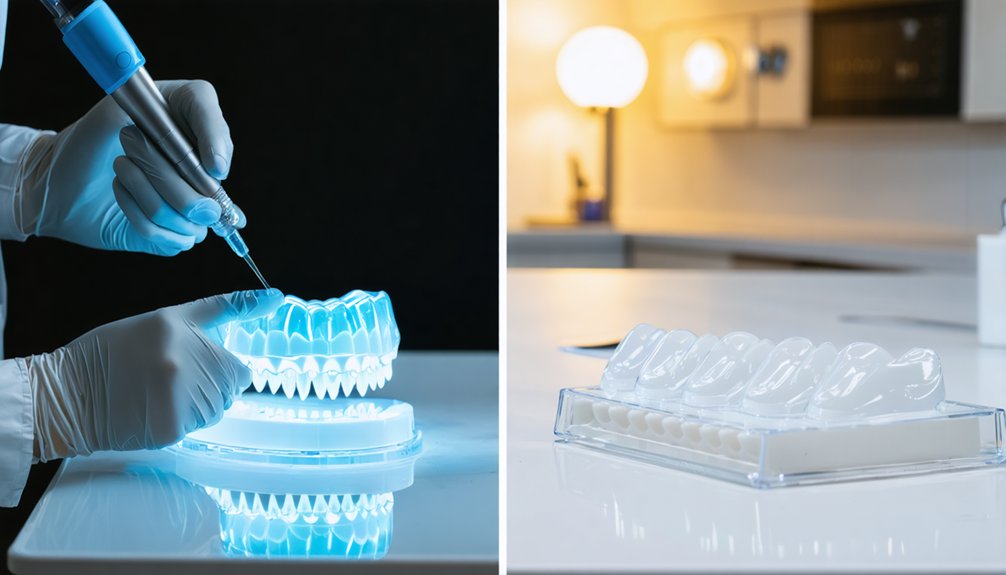
Regardless of which method you choose, both in-office and at-home whitening typically last about one to three years with proper maintenance. Your diet, tobacco use, and touch-up frequency are the primary factors controlling how long results hold.
With proper maintenance, teeth whitening results typically last one to three years — your habits are the deciding factor.
Cost considerations extend beyond the initial treatment. At-home kits offer lifestyle flexibility by allowing periodic touch-ups on your schedule, which some evidence suggests supports slightly better long-term color stability.
In-office results may fade faster without supplemental maintenance, potentially adding future costs.
You control longevity by limiting staining foods and beverages, avoiding tobacco, and following your dentist’s maintenance protocol.
Whichever method you select, building a consistent touch-up routine is the most reliable way to protect your investment and extend your results.
Which Whitening Method Fits Your Timeline and Budget?
Your timeline and budget are the two most practical filters for choosing between in-office and at-home whitening.
If you need results before an event, in-office treatment delivers visible change in 60–90 minutes at roughly $400–$800.
If you’re managing costs and prefer flexibility, dentist-dispensed at-home kits range from $100–$500 and produce comparable results within one to two weeks.
Don’t let whitening myths steer your decision. Dental myths suggesting in-office treatment always outperforms at-home methods aren’t supported by current evidence—a 2024 umbrella review found no significant difference in color change between the two.
Your choice comes down to speed versus cost.
Neither method includes insurance coverage, so clarifying your priorities before committing puts you in full control of the outcome.
How to Maintain Your Whitening Results Based on Your Method
Whether you chose in-office or at-home whitening, both methods typically last one to three years—but that range depends heavily on what you do after treatment. Diet, tobacco use, and touch-up frequency are the primary variables you control.
Limit staining foods and drinks, and use touch-up applications consistently. At-home kits make this easier since you already have the trays and gel on hand.
In-office patients may need periodic retreatment, which adds cost—and since dental insurance doesn’t cover cosmetic whitening, that expense falls entirely on you.
Don’t fall for whitening myths suggesting results are permanent or that maintenance is unnecessary. Regardless of your method, consistent habits determine longevity.
Treating maintenance as part of your whitening strategy, not an afterthought, protects your investment and sustains your results.
Frequently Asked Questions
Can Teeth Whitening Damage Existing Dental Restorations Like Crowns or Veneers?
Whitening agents won’t damage your crowns or veneers, but they don’t lighten them either. You must consider dental material compatibility and restoration durability, as mismatched shading after treatment can compromise your smile’s uniformity.
Are Whitening Results Affected by Certain Medications or Health Conditions?
Like shadows dimming bright light, medication interactions and health condition effects can mute your whitening results. Certain antihistamines, antipsychotics, and tetracycline-based drugs stain enamel deeply, while conditions like enamel hypoplasia make achieving uniform brightness considerably harder.
What Age Restrictions Apply to Professional and At-Home Whitening Treatments?
Most dentists won’t recommend professional or DIY whitening for patients under 16, as developing enamel is more vulnerable. You’ll also find over-the-counter options carry similar age guidance, so consult your dentist before starting any whitening protocol.
Can Pregnant or Breastfeeding Individuals Safely Undergo Teeth Whitening Treatments?
Don’t risk it — pregnancy safety and breastfeeding considerations demand you avoid all whitening treatments entirely. You should hold off until after you’ve finished breastfeeding, as no evidence confirms these treatments are safe during either period.
Does Teeth Whitening Work Equally Well on All Natural Tooth Discoloration Types?
No, whitening doesn’t work equally on all natural discoloration. Your results depend heavily on tooth stain types—extrinsic stains respond best, while intrinsic natural discoloration from trauma or tetracycline often resists both in-office and at-home treatments.
References
- https://www.chickashadentist.com/cosmetic-dentistry/in-office-vs-take-home-teeth-whitening-which-option-works-best-in-moore-norman-and-mustang/
- https://www.yourdentistryguide.com/inoffice-vs-athome/
- https://www.dentalassociates.com/blog/professional-teeth-whitening-vs-at-home-teeth-whitening
- https://pmc.ncbi.nlm.nih.gov/articles/PMC10873745/
- https://pubmed.ncbi.nlm.nih.gov/20672721/
- https://pubmed.ncbi.nlm.nih.gov/41759028/
- https://pubmed.ncbi.nlm.nih.gov/21037194/
- https://meridian.allenpress.com/operative-dentistry/article/35/4/381/107546/Comparison-of-At-home-and-In-office-Tooth