Stannous fluoride—not sodium fluoride—is the compound responsible for the dark, stubborn stains you’re trying to remove. It reacts with sulfur compounds in saliva, depositing tin-based residue on your enamel’s surface. The good news: these stains are extrinsic, meaning the right whitening toothpaste can address them. Look for high-cleaning silica, sodium hexametaphosphate, or hydrogen peroxide. Clinical trials show meaningful reduction by week three. Everything you need to choose correctly and act effectively is ahead.
Key Takeaways
- Fluoride stains from stannous fluoride are extrinsic, sitting on the enamel surface, making them treatable with the right whitening toothpaste ingredients.
- Look for whitening toothpastes containing high-cleaning silica, sodium hexametaphosphate, or hydrogen peroxide to effectively target and remove surface stains.
- Brush for two full minutes twice daily using moderate pressure and a pea-sized amount of toothpaste for optimal results.
- Clinical studies show significant stain reduction by week three, with up to 97% of participants achieving measurable improvement by week six.
- If stains persist after six weeks of consistent brushing, seek professional dental cleaning to address firmly adhered or internal discoloration.
What Are Fluoride Stains and Why Do They Form?
Although the term “fluoride stains” gets used broadly, the discoloration you’re likely seeing comes specifically from stannous fluoride, not from standard sodium fluoride.
Stannous fluoride, common in cavity-protection and sensitivity toothpastes, reacts with sulfur compounds in saliva to deposit tin-based residue on enamel surfaces.
Stannous fluoride reacts with saliva to leave tin-based residue on your enamel — the real culprit behind those stubborn stains.
These stains are extrinsic, meaning they sit on the tooth surface rather than forming internally.
Your dietary habits accelerate buildup — coffee, tea, and acidic foods create a surface environment where stannous compounds bind more readily.
Inconsistent oral hygiene compounds the problem by allowing deposits to accumulate between brushings.
The critical distinction: these stains aren’t permanent structural damage. Because they’re surface-level, they respond to targeted removal strategies, which means you have real, actionable control over the outcome.
Which Ingredients in Whitening Toothpaste Actually Work on Fluoride Stains?
Knowing that stannous fluoride stains are extrinsic puts you in a useful position: you can target them with specific ingredients rather than guessing. Ignore packaging designs and candy flavors marketed as selling points—focus on what’s actually inside.
Four ingredients with evidence behind them:
- High-cleaning silica — mechanically abrades surface stain during brushing without damaging enamel.
- Sodium hexametaphosphate — prevents new stain from binding to enamel and supports active removal.
- Hydrogen peroxide — lifts discoloration when formulated at an effective concentration.
- Stabilized stannous fluoride with polyphosphates — clinical trials showed 17.5% stain reduction at three weeks and 27.8% at six weeks versus regular fluoride toothpaste.
Check the ingredient list before purchasing. Results depend on what’s in the formula, not how it’s branded.
What Clinical Studies Actually Found About Fluoride Stain Removal
Marketing claims are easy to make, but clinical trial data tells a clearer story. Two randomized, double-blind trials measured stain reduction using Lobene composite scores. By week three, subjects showed statistically significant reductions versus baseline.
By week six, 86% and 97% of participants in each respective trial achieved more than a 0.5-unit score reduction. A stabilized stannous fluoride dentifrice also demonstrated 17.5% stain reduction at three weeks and 27.8% at six weeks compared to regular fluoride toothpaste.
These findings validate whitening toothpaste as a credible alternative stain prevention strategy for extrinsic fluoride discoloration. However, results build gradually over weeks, not days.
If your staining is severe or unresponsive after consistent use, professional whitening options or mechanical dental cleaning may better match your situation.
How to Pick the Right Whitening Toothpaste for Fluoride Stains
When selecting a whitening toothpaste to address fluoride-related surface stains, you’ll want to prioritize formulas containing high-cleaning silica, sodium hexametaphosphate, or hydrogen peroxide, as these ingredients target stain removal through distinct mechanical and chemical mechanisms.
Silica works abrasively to lift surface deposits during brushing, while sodium hexametaphosphate inhibits new stain adhesion and supports ongoing whitening.
Checking the label for at least one of these active agents gives you a clearer indication that the product is formulated for stain reduction rather than general cleaning alone.
Key Stain-Fighting Ingredients
Not all whitening toothpastes are formulated the same, so checking the ingredient list before you buy matters. Dietary influences and natural remedies alone won’t clear stannous fluoride surface stains—targeted ingredients will.
Look for these four evidence-backed compounds:
- High-cleaning silica — mechanically lifts surface stain during brushing without relying on natural remedies or dietary changes alone.
- Sodium hexametaphosphate — blocks new stain from binding to enamel and supports active stain reduction.
- Hydrogen peroxide — delivers measurable whitening when present in an effective formulation.
- Stabilized stannous fluoride with polyphosphates — clinical trials documented 17.5% stain reduction at three weeks and 27.8% at six weeks versus regular fluoride toothpaste.
Prioritize formulas containing at least two of these ingredients for controlled, predictable results.
Selecting the Best Formula
Choosing the right whitening toothpaste for stannous fluoride stains comes down to matching the formula’s active ingredients to the stain type you’re dealing with.
Prioritize products containing high-cleaning silica for mechanical stain removal, sodium hexametaphosphate for stain prevention, or hydrogen peroxide for added whitening action.
Clinical evidence supports formulas combining stannous fluoride with sodium hexametaphosphate, which demonstrated significant Lobene composite stain reductions at both three and six weeks.
If standard formulas underperform, consider alternative stain removal methods such as professional polishing before resuming maintenance brushing.
Natural whitening remedies lack the clinical validation that silica- and polyphosphate-based dentifrices carry, making them a lower-confidence choice for stannous fluoride staining.
Select a formula with documented stain-reduction data, not marketing claims, to maintain control over your results.
How Long and How Often to Brush for Visible Stain Reduction
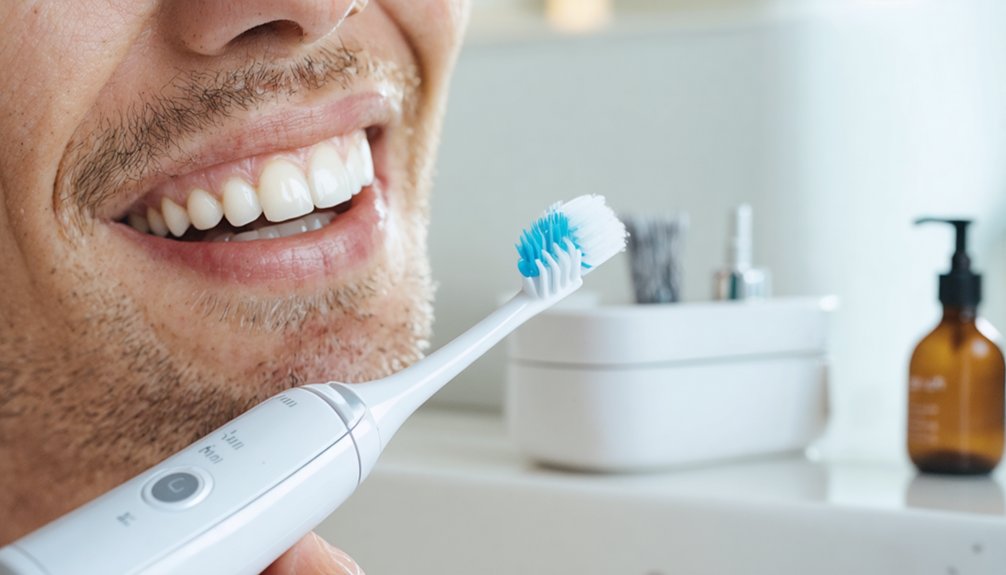
When using whitening toothpaste for fluoride stains, you should brush for a full two minutes per session to allow active ingredients sufficient contact time with the tooth surface.
Clinical studies on stannous fluoride dentifrices recorded meaningful stain reductions at three and six weeks, indicating that consistent daily use drives results rather than any single brushing event.
You won’t see significant improvement overnight, so maintaining a regular brushing routine over several weeks is essential for measurable stain reduction.
Brushing Duration Matters
Brushing duration and frequency directly influence how much surface stain whitening toothpaste can remove. Clinical evidence supports a structured approach to brushing techniques that minimizes stain buildup over time.
Follow these four evidence-backed brushing parameters:
- Brush for two full minutes — less time reduces abrasive and chemical contact with stained surfaces.
- Brush twice daily — consistency accelerates cumulative stain reduction, as clinical trials showed measurable results at weeks three and six.
- Use a pea-sized amount — adequate paste volume ensures even distribution of active stain-fighting ingredients across all surfaces.
- Apply moderate, controlled pressure — excessive force doesn’t improve stain removal and risks enamel wear.
You control the outcome by maintaining this routine without deviation.
Consistency Over Weeks
Stain reduction from whitening toothpaste doesn’t happen overnight—clinical trials show measurable improvement at three weeks, with greater reduction by week six. In two randomized, double-blind studies, 86% and 97% of subjects achieved more than a 0.5-unit reduction in Lobene composite stain scores by week six.
You’ll need to brush consistently twice daily to replicate those results. Monitor your dietary habits during this period, since staining foods and beverages—coffee, tea, red wine—can slow visible progress.
Follow toothpaste warnings regarding overuse; exceeding recommended amounts won’t accelerate results and may cause unnecessary abrasion. Treat this as a structured protocol: same duration, same frequency, same product.
Consistency is the variable most within your control, and the clinical evidence confirms it drives cumulative stain reduction.
When Whitening Toothpaste Won’t Be Enough for Fluoride Stains
Whitening toothpaste has clear limits. When staining is severe or firmly adhered, brushing alone won’t deliver full clearance. Recognize these four situations where you’ll need to escalate beyond toothpaste:
- Firmly adhered surface stains that don’t respond after six weeks of consistent brushing require mechanical dental cleaning.
- Heavy stannous fluoride buildup leaves residual specks that polishing instruments remove more effectively than abrasive silica.
- Internal discoloration sits beneath the enamel surface, placing it outside what any whitening toothpaste can reach.
- Persistent extrinsic stains post-cleaning signal a need for alternative treatments, including professional whitening procedures targeting deeper discoloration.
If you’ve brushed consistently for weeks without meaningful change, schedule a professional evaluation. That assessment determines whether your staining is extrinsic or internal and which intervention fits.
Frequently Asked Questions
Can Fluoride Stains Return After Being Successfully Removed With Whitening Toothpaste?
Yes, fluoride stains can return if you continue using stannous fluoride products. Without consistent toothpaste abrasion, surface stain rebuilds. You’re not facing fluoride toxicity—just extrinsic redeposition you can control through disciplined, regular brushing habits.
Are Fluoride Stains More Visible on Certain Tooth Types or Positions?
Yes, you’ll notice stain visibility is highest on anterior teeth and flat tooth surfaces, where stannous fluoride deposits accumulate most. Canines and lower incisors often show darker extrinsic discoloration due to increased plaque retention and salivary flow patterns.
Is Whitening Toothpaste Safe to Use on Dental Crowns or Veneers?
Whitening toothpaste won’t bleach crowns or veneers due to dental material compatibility limits. You’ll avoid sensitivity concerns by selecting low-abrasion formulas, but don’t expect shade changes—consult your dentist to confirm what’s safe for your restorations.
Can Children Safely Use Whitening Toothpaste to Remove Fluoride Stains?
Like handing a child an adult tool, children’s safety demands caution—whitening toothpaste ingredients like high-abrasive silica or peroxide aren’t formulated for developing enamel. You should consult your child’s dentist before use.
Does Diet Affect How Quickly Fluoride Stains Develop or Worsen?
Yes, your diet impacts stain progression. Consuming pigment-rich foods and acidic beverages accelerates surface stain accumulation, making fluoride stains more visible faster. You’ll slow progression by limiting these dietary triggers and maintaining consistent brushing habits.
References
- https://www.amazon.com/MOON-Whitening-Toothpaste-Fluoride-Free-Peppermint/dp/B07VZVRZDC
- https://www.ulta.com/p/stain-removal-fluoride-free-gel-whitening-toothpaste-pimprod2022567?sku=2576020
- https://pubmed.ncbi.nlm.nih.gov/30797258/
- https://www.jacksonavedental.com/post/how-to-remove-stannous-fluoride-stains-from-teeth
- https://www.dentalcare.com/en-us/stannous-fluoride/oral-health/anti-stain-and-whitening
- https://pubmed.ncbi.nlm.nih.gov/17410949/