Tooth stains fall into two categories: extrinsic stains on the outer enamel and intrinsic stains within the dentin layer. Whitening treatments work well for extrinsic stains caused by coffee, tea, and tobacco, but they can’t reach intrinsic discoloration caused by medications, trauma, or aging. The good news is that effective solutions exist for both types. Understanding which stain you’re dealing with is the first step toward choosing the right treatment — and that’s exactly what you’ll discover ahead.
Key Takeaways
- Extrinsic stains affect outer enamel from coffee, tea, tobacco, and dark foods, while intrinsic stains originate within the dentin layer.
- Whitening treatments effectively remove extrinsic stains through professional in-office procedures, customized take-home trays, or scaling to eliminate surface buildup.
- Intrinsic stains caused by fluorosis, tetracycline, trauma, or aging do not respond well to standard whitening treatments.
- Cosmetic solutions like dental bonding, porcelain veneers, crowns, or KöR Deep Bleaching are recommended for masking intrinsic discoloration.
- Identifying stain type is essential, as using the wrong treatment wastes time and money without achieving desired results.
What Are Extrinsic and Intrinsic Tooth Stains?
When it comes to tooth discoloration, not all stains are created equal. Understanding the difference puts you in control of your treatment options and stain prevention strategies.
Extrinsic stains affect your tooth’s outer enamel layer, typically appearing yellow or brown. They develop from external sources like coffee, tea, tobacco, and dark-colored foods, making them the most common threat to your tooth aesthetics.
Extrinsic stains are your smile’s most common enemy, fueled by everyday culprits like coffee, tea, and tobacco.
Intrinsic stains, however, originate within your tooth’s internal dentin layer. They can appear yellow, brown, gray, or white and form during tooth development. Causes include excessive fluoride exposure, certain medications like tetracycline, dental trauma, or genetics.
Each stain type requires a different approach, and knowing which one you’re dealing with determines the most effective path to a brighter smile.
How to Tell Which Type of Stain You Have
Identifying which type of stain you’re dealing with comes down to a few key differences.
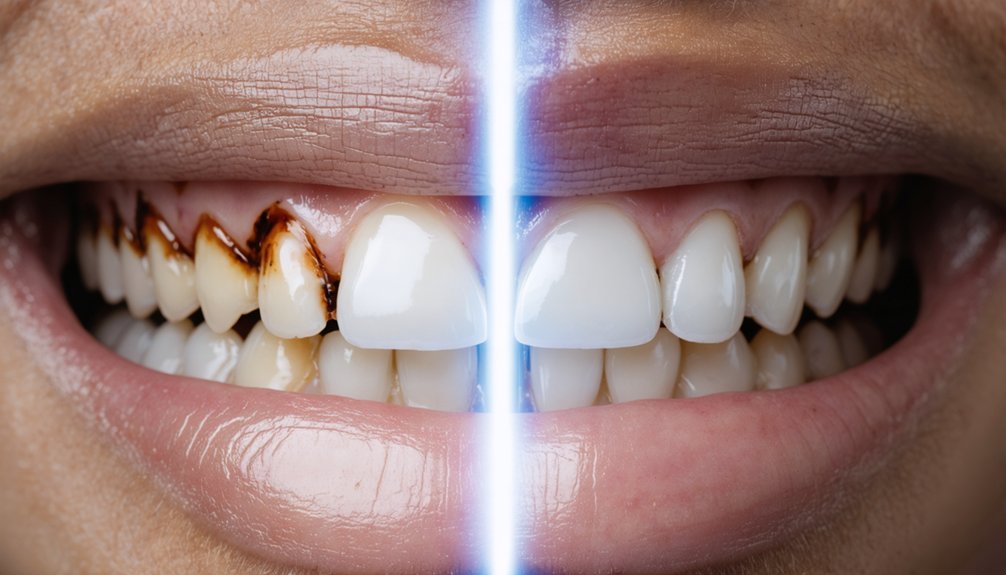
Start with a surface inspection — if your teeth appear yellow or brown from coffee, tea, tobacco, or poor oral hygiene, you’re likely looking at extrinsic stains. These sit on the enamel’s outer layer and respond well to whitening treatments.
Stain identification becomes more complex with intrinsic discoloration. If your teeth show gray, white, or deep brown tones that developed during childhood, resulted from medication use, or followed a dental injury, the staining originates within the dentin.
Whitening alone won’t resolve it.
A simple way to assess: if your stains don’t improve with whitening toothpaste or professional bleaching, they’re most likely intrinsic and require alternative cosmetic solutions.
What Causes Extrinsic Tooth Stains?
Extrinsic stains form when external substances repeatedly contact and penetrate your tooth’s outer enamel layer. The beverage impact from coffee, tea, red wine, and cola is among the most common culprits.
Dark-colored foods like berries also contribute notably to surface discoloration over time.
Tobacco use—whether from cigarettes or cigars—leaves stubborn yellow and brown deposits on your enamel.
Poor oral hygiene accelerates staining because plaque buildup creates a surface where pigments adhere more easily.
Tooth decay can further deepen surface discoloration if left untreated.
The good news is that you have real control here. Since these stains develop externally, consistent oral hygiene practices and professional whitening treatments can effectively address them, restoring your smile’s natural brightness.
What Causes Intrinsic Tooth Discoloration?
Unlike extrinsic stains, intrinsic tooth discoloration originates within the tooth’s internal structure and can result from factors like excessive fluoride exposure during childhood or the use of certain medications, such as tetracycline, during tooth development.
Dental trauma can also trigger intrinsic staining by damaging the dentin layer beneath the enamel. Additionally, genetic factors and natural aging can predispose you to this type of discoloration, making it harder to prevent than extrinsic stains.
Medications and Fluoride Exposure
Intrinsic stains develop deep within the tooth’s dentin layer, making them far more resistant to conventional whitening treatments than surface-level discoloration.
Two common culprits behind this internal discoloration are medication effects and fluoride toxicity.
If you took tetracycline antibiotics during childhood or were exposed to them before birth, you may notice gray, brown, or banded discoloration throughout your teeth.
These medication effects occur because the antibiotic binds directly to developing tooth structure.
Fluoride toxicity, known as fluorosis, results from excessive fluoride intake during tooth development, causing white spots or brown streaking across enamel.
While fluoride strengthens teeth in appropriate amounts, overexposure disrupts normal mineralization.
Understanding these causes empowers you to pursue the most targeted, effective treatment options available.
Trauma and Genetic Factors
Beyond medications and fluoride, dental trauma and genetic factors can also drive intrinsic discoloration deep within your tooth structure.
When you experience a significant blow or injury to a tooth, internal bleeding can deposit pigments into the dentin, causing lasting discoloration that no surface treatment can reverse.
Genetic predisposition plays an equally important role. Your inherited tooth structure, enamel thickness, and dentin composition all influence how your teeth naturally appear and how vulnerable they’re to internal staining.
Some people simply develop discoloration due to their genetic makeup, regardless of lifestyle choices.
Understanding these trauma effects and genetic factors helps you make informed decisions about treatment.
Since whitening alone won’t resolve these issues, cosmetic options like veneers or bonding offer you effective, lasting solutions.
Does Teeth Whitening Work on Extrinsic Stains?
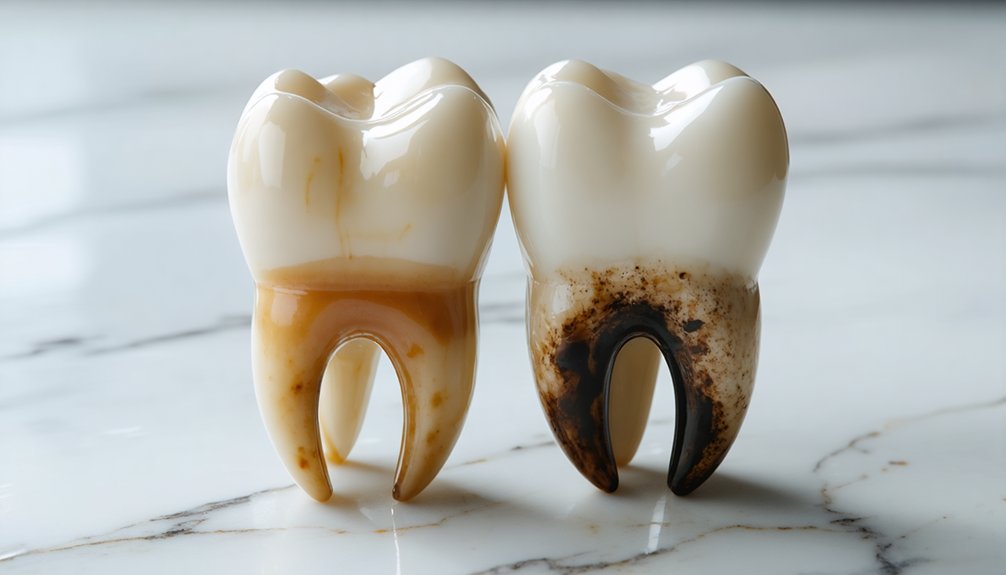
If you have extrinsic stains, you’re in luck — professional teeth whitening is highly effective at treating surface-level discoloration.
You can choose between an in-office whitening procedure, which takes about an hour, or customized at-home trays with professional-grade bleaching gel.
Mild to moderate stains respond especially well to these bleaching treatments, making it easier than ever to restore your smile’s natural brightness.
Whitening Extrinsic Stains Effectively
When it comes to extrinsic stains, professional teeth whitening is your most effective treatment option. You can choose between in-office procedures, which are completed in just one hour, or customized take-home trays loaded with professional-grade bleaching gel.
Both whitening techniques deliver reliable extrinsic stain removal, particularly for mild to moderate discoloration caused by coffee, tea, tobacco, or dark-colored foods.
Beyond bleaching, your dentist can also perform scaling procedures that mechanically remove surface buildup, further lightening your tooth’s appearance.
Mild to moderate stains respond especially well to these treatments, giving you visible, measurable results.
The key takeaway is that extrinsic stains are highly treatable. With the right professional approach, you can take direct control over your smile’s appearance and achieve lasting improvement.
Best Whitening Treatment Options
Since extrinsic stains respond directly to bleaching agents, professional teeth whitening is highly effective at clearing surface discoloration. Your dentist can complete in-office treatments within one hour, delivering immediate, noticeable results.
For added flexibility, customized take-home trays with professional-grade bleaching gel let you whiten on your own schedule.
Mild staining may also respond to consistent oral hygiene improvements and scaling procedures that mechanically remove buildup.
While home remedies and natural solutions like baking soda or oil pulling circulate widely online, they typically lack the clinical strength to produce reliable results.
For moderate to significant extrinsic staining, professional treatment remains your most dependable option.
Taking control of your whitening journey starts with choosing solutions backed by proven clinical effectiveness.
Why Teeth Whitening Can’t Fix Intrinsic Stains
Although teeth whitening is highly effective for extrinsic stains, it can’t penetrate deep enough to address intrinsic discoloration. These stains originate within the dentin layer, where bleaching agents simply can’t reach.
Understanding these whitening limitations helps you make informed decisions about your treatment options.
Since intrinsic stains develop from factors like fluorosis, tetracycline use, trauma, or genetics, stain prevention isn’t always possible. However, you’re not without solutions.
Dental bonding, porcelain veneers, and crowns effectively conceal intrinsic discoloration by covering the affected tooth structure entirely. For deeper discoloration, KöR Deep Bleaching offers a more advanced approach.
Knowing why standard whitening falls short empowers you to pursue treatments that actually work, giving you the confident, bright smile you’re looking for.
The Best Ways to Treat Intrinsic Tooth Stains
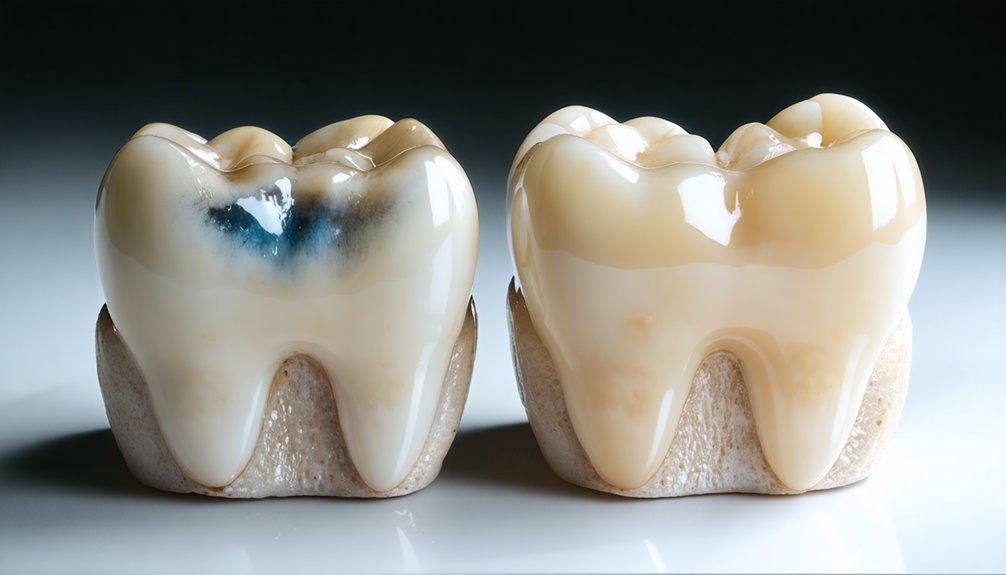
Because intrinsic stains develop within the dentin layer, treating them requires cosmetic solutions that conceal rather than bleach.
Intrinsic stains live deep within the dentin — beyond the reach of bleaching, but not beyond the reach of modern cosmetic dentistry.
Unlike natural remedies or standard whitening treatments, cosmetic dentistry offers targeted approaches that effectively mask deep discoloration.
Your most effective options include:
- Dental bonding – Tooth-colored resin is applied directly over the stain, restoring a natural appearance quickly and affordably.
- Porcelain veneers – Custom-crafted shells bond to your tooth’s surface, concealing imperfections while seamlessly blending with surrounding teeth.
- Dental crowns – Ideal for trauma-related staining, crowns fully encase the affected tooth.
- KöR Deep Bleaching – An advanced option for deeper discoloration that standard treatments can’t reach.
Consulting your dentist helps you identify which solution best fits your specific staining situation and goals.
Which Treatment Is Right for Your Stain Type?
Knowing which treatment works best depends entirely on whether your stain is extrinsic or intrinsic. Stain identification is your first step toward reclaiming a confident smile.
Once you understand your stain type, treatment comparison becomes straightforward.
- Extrinsic stains respond well to professional whitening and scaling
- Intrinsic stains require veneers, bonding, or crowns for lasting results
- Uncertain stain type means consulting your dentist for accurate diagnosis
- Both stain types have proven, effective solutions available to you
You don’t have to accept discoloration as permanent.
Whether your staining lives on the surface or deep within your tooth structure, targeted treatments exist.
Taking that first step toward professional evaluation puts you fully in control of your smile’s outcome.
Frequently Asked Questions
Can Children Develop Both Intrinsic and Extrinsic Tooth Stains Simultaneously?
Yes, your child can develop both stain types simultaneously. During tooth development, extrinsic staining causes like diet and hygiene combine with intrinsic factors like fluorosis or medications, but you’ve got effective treatment options available.
How Long Does Professional Teeth Whitening Last for Extrinsic Stains?
Professional teeth whitening for extrinsic stains typically lasts six months to two years. You’ll maintain results longer by avoiding staining foods and combining professional whitening techniques with dentist-recommended home remedies to keep your smile consistently bright.
Are Intrinsic Stains Covered by Dental Insurance Plans?
Insurance coverage for intrinsic stains varies by plan, as most insurers classify cosmetic treatments as elective. You’ll want to contact your provider directly, since stain types influence whether procedures like veneers or bonding qualify for benefits.
Can Extrinsic Stains Eventually Penetrate Deeper and Become Intrinsic Stains?
Yes, extrinsic causes like poor oral hygiene can allow surface stains to penetrate deeper over time, triggering intrinsic factors. You can prevent this by maintaining consistent oral hygiene and scheduling regular professional cleanings to stay in control.
How Do I Maintain Whitening Results After Treating Extrinsic Stains?
Your smile’s a canvas—protect it daily. Follow these whitening maintenance tips: avoid staining beverages, practice dietary stain prevention by limiting coffee and wine, brush regularly, and you’ll preserve your bright, confident results long-term.
References
- https://www.malkidental.com/blog/2018/06/27/intrinsic-vs-extrinsic-tooth-stains-191821/
- https://www.rwatsondds.com/blog/2018/08/08/intrinsic-vs-extrinsic-tooth-stains-192463/
- https://www.sanfernandodentalcare.com/blog/2-types-tooth-stains/
- https://www.dentaldesignsbyalisareed.com/intrinsic-vs-extrinsic-tooth-stains-cosmetic-dentist-the-woodlands/
- https://chisholmtrailsmilecenter.com/extrinsic-vs-intrinsic-staining-how-to-whiten-both/
- https://www.gilreathdental.com/intrinsic-versus-extrinsic-tooth-stains-and-why-it-matters/
- https://www.dentalcare.com/en-us/ce-courses/ce491/staining-types-and-causes
- https://thechesterfielddentist.com/blog/what-type-of-stains-can-teeth-whitening-remove-cip119/
- https://nwdentalatlanta.com/blog/what-type-of-stains-can-teeth-whitening-remove-cip119/
- https://www.ada.org/resources/ada-library/oral-health-topics/whitening