The best whitening treatment depends on your stain type. Extrinsic stains from coffee or smoking respond well to whitening strips, professional bleaching, or ADA-approved toothpaste. Intrinsic stains from tetracycline or fluorosis need carbamide peroxide treatments, veneers, or bonding. Severe structural damage may require a crown. Over-the-counter products won’t fix every stain, and choosing the wrong one costs you time and money. Matching your stain to the right treatment makes all the difference.
Key Takeaways
- Extrinsic stains from food, drinks, or smoking respond well to ADA-approved whitening strips, lightening teeth one to two shades over two to four weeks.
- Professional in-office whitening delivers immediate results using high-concentration peroxide with light activation, ideal for severe extrinsic stains from coffee, tea, or smoking.
- Intrinsic stains caused by tetracycline or fluorosis require carbamide peroxide treatments or veneers, as over-the-counter products are largely ineffective.
- Veneers and dental bonding offer restorative solutions for deep stains, lasting 10–15 years and 5–7 years respectively.
- Crowns are recommended when severe staining accompanies structural damage, restoring both function and aesthetics with a lifespan of 10–15 years.
Why Some Tooth Stains Resist Standard Whitening
Not all tooth stains respond to standard whitening treatments, and understanding why helps you choose the right intervention. Stain types determine treatment efficacy.
Extrinsic stains, caused by food, drinks, or smoking, sit on enamel surfaces and respond well to bleaching agents. Intrinsic stains, however, originate within the dentin or enamel structure itself, resulting from tetracycline use, fluorosis, or trauma. These penetrate deeper than peroxide-based products typically reach, exposing clear whitening limitations.
Your teeth’s structural composition also affects outcomes. Dense enamel restricts bleaching agent permeation, reducing effectiveness.
Additionally, stains from certain medications or developmental conditions don’t oxidize predictably under standard protocols. Recognizing these distinctions allows you to move beyond ineffective treatments and pursue targeted options that directly address your stain’s origin and depth.
Professional In-Office Whitening for Fast, Dramatic Results
When standard whitening falls short due to intrinsic staining or dense enamel, professional in-office whitening offers a clinically superior alternative. You’ll experience immediate results within a single appointment, with teeth lifting several shades using concentrated bleaching solutions applied under controlled conditions.
The whitening benefits you gain include:
- Precision application — custom trays with high-concentration peroxide target staining that over-the-counter products can’t penetrate.
- Accelerated outcomes — light or heat activation intensifies the bleaching process, compressing weeks of home treatment into one session.
- Clinical oversight — a dentist monitors sensitivity and exposure time, reducing risk of enamel compromise.
If you’re managing severe extrinsic stains from smoking, coffee, or tea, in-office treatment delivers measurable, controlled, and lasting correction.
Do Whitening Strips Actually Work on Stubborn Stains?
Whitening strips work—but only up to a point. If your stains come from coffee, tea, or wine, strips like Crest 3D White Whitestrips Professional Effects can deliver measurable stain removal, lightening teeth by one to two shades over two to four weeks.
You’ll apply them twice daily for 30 to 60 minutes, and results can last up to four months.
However, treatment effectiveness drops sharply with stubborn or intrinsic stains. Strips rely on peroxide gel penetrating the enamel surface, which means deep discoloration from tetracycline or fluorosis won’t respond well.
You can expect gradual improvement for extrinsic staining, but if your stains resist two full weeks of consistent use, strips aren’t your solution—professional intervention becomes the more clinically sound next step.
When Whitening Toothpaste or Baking Soda Is Enough
For milder surface staining, you don’t need strips or professional treatment—whitening toothpaste or baking soda can be enough.
These options target extrinsic stain types through mild abrasives, not bleaching, so whitening effectiveness is limited to surface-level removal.
Choose these when:
- Stains are recent and superficial — caused by coffee, tea, or food with no deep penetration into enamel.
- You need maintenance, not correction — toothpaste sustains results after professional treatment rather than reversing significant discoloration.
- Sensitivity is a concern — abrasive-based options avoid peroxide, reducing irritation risk for reactive teeth.
Look for ADA-sealed products to confirm safety.
Baking soda offers a low-cost alternative with comparable surface stain reduction.
Neither option changes your tooth’s actual color—they only clear accumulated deposits.
What Microabrasion and Dentist Kits Can Do That Strips Can’t
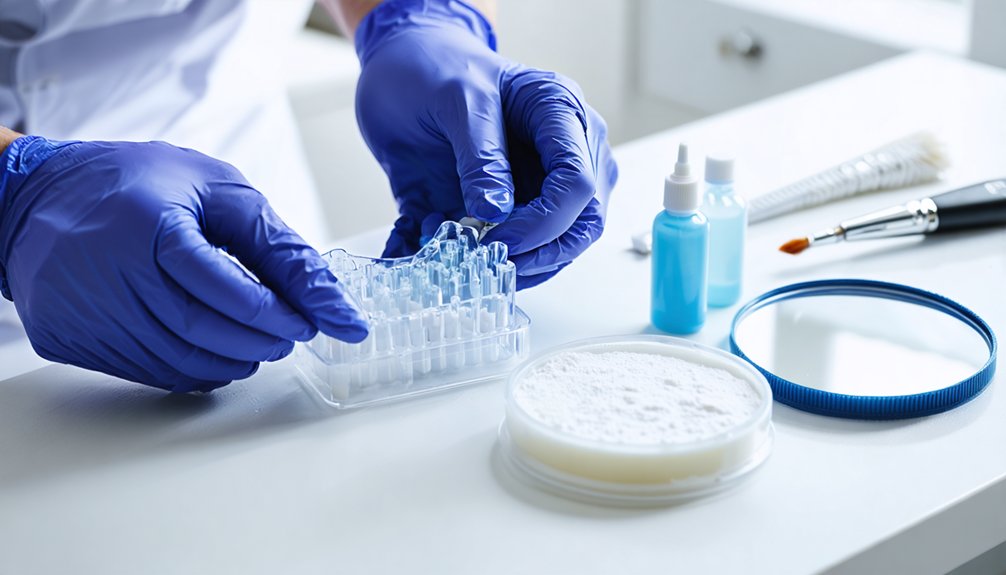
Some stains resist strips entirely—and that’s where microabrasion and dentist-prescribed take-home kits earn their place.
Microabrasion techniques physically remove superficial enamel defects by combining mild acid with abrasive compounds, targeting extrinsic discoloration that peroxide can’t penetrate. It’s particularly effective for enamel surface irregularities that strips simply pass over.
Dentist kits take a different approach. They use custom-fitted trays loaded with higher-concentration carbamide or hydrogen peroxide, allowing the bleaching agent to permeate deeper dental tissues.
This makes them considerably more effective against intrinsic stains—including tetracycline discoloration—than anything you’ll find over the counter.
You’re not guessing with these options. Your dentist calibrates both the concentration and duration to your specific stain type, giving you targeted, evidence-backed results that strips can’t replicate.
Veneers vs. Bonding for Deep Stains That Won’t Bleach Away
When bleaching fails to address deep intrinsic stains, you have two primary restorative options: porcelain veneers or dental bonding.
Veneers offer a durable, stain-resistant solution lasting 10–15 years, while bonding provides a more affordable alternative using tooth-colored resin to mask mild-to-moderate discoloration.
Your choice depends on the severity of the staining, your budget, and whether structural concerns accompany the discoloration.
Veneer Benefits For Stains
Deep intrinsic stains—those embedded within the dentin from tetracycline use, trauma, or excessive fluoride—don’t respond reliably to bleaching agents, leaving veneers and bonding as the two primary restorative options.
Veneers deliver clinically superior outcomes when you’re managing severe, treatment-resistant discoloration.
Here’s what veneer aesthetics and veneer longevity offer you:
- Complete coverage — Thin porcelain shells permanently mask deep stains that bleaching can’t penetrate.
- Durability — With proper care, veneers last 10–15 years, making them a long-term structural investment.
- Stain resistance — Porcelain resists future discoloration from food, beverages, and smoking far better than natural enamel.
If you need predictable, lasting control over severe discoloration, veneers provide an evidence-backed restorative solution that bonding simply can’t match.
Bonding As Affordable Alternative
Although veneers offer superior longevity and stain resistance, dental bonding delivers a clinically viable, cost-effective alternative when you’re managing mild-to-moderate intrinsic stains without underlying structural damage.
Bonding techniques involve applying tooth-colored composite resin directly to your enamel surface, masking discoloration that bleaching protocols can’t resolve. Your dentist sculpts and cures the resin in a single appointment, eliminating the laboratory fabrication delays associated with porcelain veneers.
On a cost comparison basis, bonding typically runs considerably lower per tooth than veneers, making it the strategically sound choice when budget constraints are a factor.
The tradeoff is durability — bonding lasts 5-7 years versus veneers’ 10-15. You’ll control outcomes by maintaining disciplined oral hygiene and scheduling periodic professional assessments to monitor resin integrity.
Choosing The Right Option
How do you choose between veneers and bonding when bleaching has failed to resolve deep intrinsic stains? Your decision hinges on stain types, structural condition, and treatment effectiveness over time.
Consider these three clinical factors:
- Stain severity — Tetracycline or fluorosis stains unresponsive to peroxide require coverage, not bleaching.
- Tooth integrity — Structurally sound teeth suit bonding; compromised teeth benefit more from veneers’ durability.
- Longevity expectations — Bonding lasts 5–7 years; porcelain veneers deliver 10–15 years of stain-resistant coverage.
You’re making a permanent cosmetic decision, so prioritize evidence-based outcomes over cost alone.
Consult your dentist to assess which option aligns with your stain classification, budget, and long-term aesthetic goals.
When Severe Staining Needs a Crown Instead of Whitening
When severe tooth staining coincides with structural damage or decay, a dental crown becomes the clinically appropriate solution over whitening treatments.
Crowns restore both function and aesthetics simultaneously, making them the superior choice when bleaching agents can’t penetrate intrinsic discoloration caused by trauma, decay, or failed restorations.
When bleaching agents fail against intrinsic discoloration, crowns uniquely restore both function and aesthetics in one definitive solution.
You’re not just masking a cosmetic problem — you’re rebuilding a compromised tooth with a durable, full-coverage restoration.
Crown longevity typically spans 10–15 years with proper oral hygiene, and their stain resistance guarantees your results remain consistent over time without repeated whitening sessions.
Your dentist will assess structural integrity first. If the tooth’s foundation is compromised, whitening won’t deliver a clinically sound outcome.
A crown resolves both the discoloration and the underlying damage definitively.
Matching Your Stain Type and Budget to the Right Treatment
Structural damage makes the treatment decision straightforward, but most staining cases don’t involve a compromised tooth — and that’s where matching your specific stain type to an appropriately priced intervention becomes the deciding factor.
Stain identification drives everything. Budget considerations determine your entry point.
- Extrinsic stains (food, drinks, smoking): Start with ADA-approved whitening strips or professional cleaning before escalating costs.
- Intrinsic stains (tetracycline, trauma): Skip over-the-counter products — carbamide peroxide treatments or veneers deliver clinically meaningful results.
- Mixed or fluorosis stains: Microabrasion combined with professional bleaching targets enamel defects strips can’t reach.
You control outcomes by diagnosing accurately first. Spending without stain identification wastes money and delays results.
Align intervention complexity with stain origin, not convenience.
Frequently Asked Questions
Can Whitening Treatments Cause Long-Term Damage to Tooth Enamel?
Overusing whitening ingredients like peroxide can cause enamel sensitivity, but you won’t experience long-term damage if you follow ADA-approved protocols. Choose products bearing the ADA Seal to protect your enamel effectively.
How Often Should I Whiten My Teeth to Maintain Results?
Like clockwork, you’ll maintain results by following proper whitening frequency: touch up strips every 4 months, professional treatments annually. Limit home remedies to avoid enamel stress. You’re in control of sustaining your smile’s brightness effectively.
Are Whitening Treatments Safe for Children and Teenagers?
You should follow whitening age guidelines carefully, as most treatments aren’t recommended for children under 14. Teenagers with fully erupted permanent teeth can safely use supervised options, prioritizing children’s dental health throughout the process.
Can Whitening Treatments Affect Dental Implants or Dentures?
Whitening treatments won’t touch your implants or dentures — not even slightly! They’re immune to bleaching agents. You must understand whitening compatibility limitations and prioritize implant care, as peroxide only affects natural enamel, leaving restorations completely unchanged.
Does Dental Insurance Ever Cover Professional Whitening Procedures?
Most insurance policies don’t cover professional whitening since it’s cosmetic. You’ll typically pay treatment costs out-of-pocket. Check your plan’s specifics, as some flexible spending accounts may offset expenses, giving you financial control.
References
- https://thedentistinlouisville.com/what-are-the-best-treatments-for-stained-teeth/
- https://mypenndentist.org/dental-tips/2024/02/13/how-to-remove-stains-from-teeth/
- https://www.ada.org/resources/ada-library/oral-health-topics/whitening
- https://www.colgate.com/en-us/oral-health/teeth-whitening/teeth-stain-removal-types
- https://nhdentistrybeverlyhills.com/press/6-of-the-best-teeth-whitening-kits-in-the-drugstore/
- https://www.youtube.com/watch?v=FI1dQf73k6U
- https://crest.com/en-us/oral-care-tips/teeth-whitening/how-to-get-rid-of-stains-on-teeth
- https://www.aarp.org/health/conditions-treatments/teeth-whitening/