When stubborn stains resist toothpaste, you need a whitening gel that penetrates enamel directly. Toothpaste only scrubs surface discoloration, while carbamide peroxide-based gels oxidize discolored molecules at their structural source. Clinical formulas containing 35% carbamide peroxide can lift stains up to 12 shades brighter within 7 days. Matching gel concentration to your specific stain type determines how effectively you’ll break down chromogens from coffee, wine, and tobacco. The details ahead will sharpen your results considerably.
Key Takeaways
- Whitening gel penetrates enamel to break down intrinsic stains, unlike toothpaste, which only removes surface discoloration through mild abrasion.
- 35% carbamide peroxide releases oxygen radicals that chemically disrupt molecular bonds holding stubborn chromogens from coffee, wine, and tobacco.
- Extrinsic stains respond well to carbamide peroxide-based gels, while intrinsic stains require professional-grade formulations like Opalescence PF for effective removal.
- Clinical data shows MySmile’s 35% carbamide peroxide formula delivers up to 12 shades brighter results within 7 days.
- Matching gel concentration to stain type and depth eliminates guesswork, ensuring optimal whitening results with minimal sensitivity.
Why Whitening Gel Removes the Stains Toothpaste Can’t Touch?
When toothpaste scrubs the surface, it only addresses extrinsic stains through mild abrasion—but whitening gel penetrates the enamel to break down intrinsic stains from coffee, wine, and aging at a molecular level.
Toothpaste polishes the surface. Whitening gel goes deeper—breaking down intrinsic stains at the molecular level.
That’s where gel effectiveness becomes measurable. The 35% carbamide peroxide in MySmile’s formula releases sustained peroxide that oxidizes discolored molecules deep within your enamel, delivering results toothpaste simply can’t replicate.
In a direct stain comparison, toothpaste manages surface debris while whitening gel targets the structural source of discoloration.
You’re not polishing—you’re chemically reversing stain buildup. Clinical data confirms users achieve up to 12 shades brighter in 7 days.
If you want precise, controlled results, whitening gel gives you the mechanism toothpaste was never designed to provide.
Why Does the Strength of Your Whitening Gel Actually Matter?
The concentration of your whitening gel directly determines how effectively it breaks down stubborn tooth stains.
At-home formulas typically range from 10–22% carbamide peroxide, while professional-grade gels reach 15–38% hydrogen peroxide—each tier delivering measurably different results.
When you use a higher-concentration formula like 35% carbamide peroxide, it sustains a longer peroxide release that penetrates enamel and dismantles the deep-set stains that lower-strength gels simply can’t reach.
Gel Concentration Impacts Results
Gel concentration directly determines how effectively a whitening treatment breaks down tooth stains. Higher gel potency accelerates the oxidation process, penetrating enamel more aggressively to dissolve stubborn compounds from coffee, wine, and tobacco.
A concentration comparison reveals the distinction clearly: at-home gels typically range from 10–22% carbamide peroxide, while professional-grade formulas reach 15–38% hydrogen peroxide.
MySmile’s 35% carbamide peroxide formula sits at the upper threshold of at-home efficacy, delivering sustained peroxide release that outperforms lower-concentration alternatives. Weaker formulations require longer exposure or repeated sessions to achieve comparable results.
When you choose a higher-concentration gel, you’re taking direct control over treatment speed and outcome depth. Matching gel potency to your specific stain severity guarantees you’re not wasting time with underpowered options.
Stronger Formulas Break Stains
Stronger whitening gels work faster because they release more free radicals per unit time, directly accelerating the oxidation of chromogenic compounds embedded in your enamel.
Higher carbamide peroxide concentrations—like the 35% formula in MySmile’s kit—sustain this reaction longer than standard over-the-counter options, maximizing stain removal depth and speed.
Gel effectiveness scales with concentration because deeper stains require greater oxidative pressure to break molecular bonds within enamel.
At-home gels typically range 10–22% carbamide peroxide, while professional-grade formulas reach 15–38% hydrogen peroxide equivalent. You’re choosing the latter category when you select a 35% carbamide peroxide system.
That concentration difference isn’t cosmetic—it’s chemical.
Higher-strength gels penetrate enamel more aggressively, targeting coffee, wine, and aging-related discoloration that weaker formulas simply can’t reach.
Why Does Whitening Gel Work on Coffee, Wine, and Smoke Stains?
When coffee, wine, or smoke leave stains on your teeth, they do so by embedding chromogens—deeply pigmented molecules—into your enamel’s porous surface. Tannins in wine and coffee accelerate this bonding, while tobacco’s tar compounds create particularly resistant deposits.
Understanding stain composition clarifies why surface brushing alone won’t eliminate them.
Knowing what stains are made of explains why no amount of brushing will ever fully remove them.
Whitening gel counters this through targeted gel penetration. Carbamide peroxide breaks down into hydrogen peroxide, which releases oxygen radicals that chemically disrupt the molecular bonds holding chromogens within your enamel.
These radicals don’t just clean the surface—they reach the subsurface deposits responsible for persistent discoloration.
With 35% carbamide peroxide and tray-based delivery, you’re ensuring the gel maintains sufficient contact time to fully oxidize stubborn stains from coffee, wine, and smoke.
How Do You Apply Whitening Gel for the Best Results?
Proper application technique directly determines how effectively whitening gel penetrates and oxidizes tooth stains.
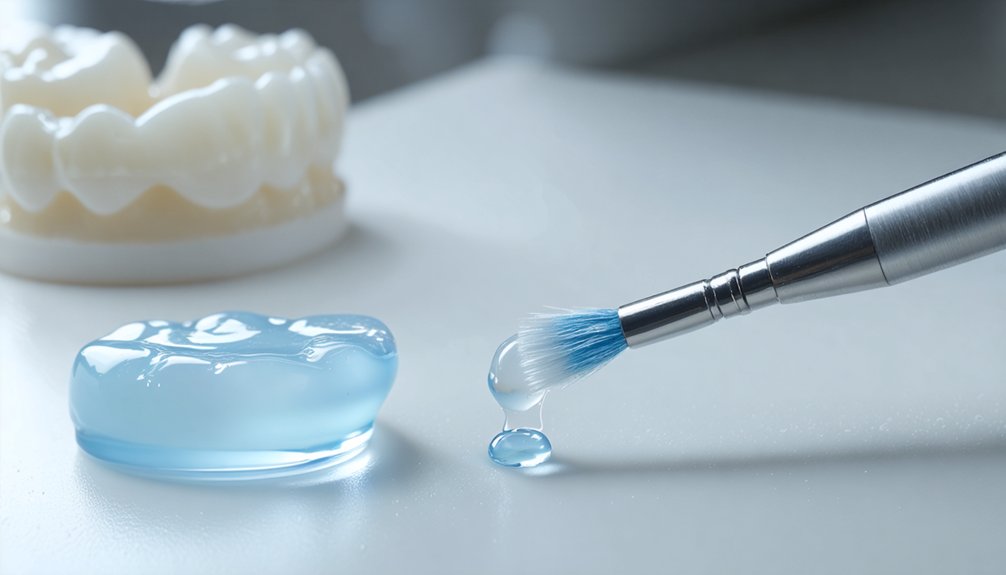
Start by brushing your teeth thoroughly, then apply exactly 0.25 ml of gel to each side of your mouth guard. Insert the 28-LED light guard and activate it for ideal timing of 10 minutes per session.
Don’t overload the tray—excess gel increases gum contact and irritation without improving results. Custom or boil-n-bite trays distribute gel more evenly than one-size-fits-all options, ensuring consistent enamel coverage.
After each session, rinse completely to remove residual peroxide. For maximum efficacy, follow application techniques daily for 7 consecutive days.
Prolonged, controlled gel contact via trays consistently outperforms pens or strips, giving you measurable, predictable stain removal with each treatment.
Is Whitening Gel Safe for Sensitive Teeth?
If you have sensitive teeth, whitening gel can cause temporary discomfort due to peroxide penetrating the enamel and reaching nerve endings.
You’ll reduce this risk considerably by choosing a non-sensitive formula, like xylitol-based carbamide peroxide gels, which release peroxide more gradually than hydrogen peroxide alternatives.
To further minimize discomfort, you should limit session duration, use well-fitted custom trays to prevent gum contact, and avoid back-to-back treatments.
Sensitivity Risks Explained
Tooth sensitivity is one of the most common concerns associated with whitening gels, yet most cases are temporary and manageable with proper product selection. Sensitivity triggers typically include high peroxide concentrations, prolonged gel contact, and poor-fitting trays that expose gum tissue.
When peroxide penetrates the enamel, it can temporarily stimulate nerve endings, causing short-term discomfort.
Managing discomfort starts with choosing a xylitol-based, non-sensitive formula like MySmile’s 35% carbamide peroxide gel, which releases peroxide gradually, reducing nerve irritation.
Custom-fit or boil-n-bite trays minimize gum exposure, directly lowering irritation risk. You should limit sessions to the recommended 10 minutes daily and avoid overuse.
If sensitivity persists, reducing treatment frequency gives your enamel adequate recovery time between sessions.
Non-Sensitive Formula Benefits
Whitening gel can be safe for sensitive teeth when the formula is specifically engineered to minimize peroxide-induced nerve stimulation. MySmile’s xylitol-based gel delivers non-sensitive advantages by moderating carbamide peroxide‘s release rate, reducing the likelihood of pulpal irritation during your 10-minute sessions.
This controlled release mechanism allows you to maintain consistent whitening routines without sacrificing comfort.
The gentle application design guarantees the gel contacts enamel effectively while limiting gum tissue exposure. Unlike standard formulas, the xylitol base buffers the active whitening agents, protecting dentin tubules from hypersensitivity triggers.
You retain full control over your treatment frequency without interruption from discomfort. Custom-fit trays further optimize gel placement, minimizing overflow onto sensitive gingival tissue and reinforcing the formula’s clinically engineered precision throughout each session.
Minimizing Discomfort Tips
Sensitive teeth don’t have to prevent you from achieving a brighter smile, provided you apply a few targeted strategies to minimize discomfort during treatment.
For effective discomfort reduction, limit sessions to 10 minutes daily and avoid exceeding recommended gel concentrations. During gel application, use precisely 0.25 ml per tray side to prevent overflow onto gum tissue, which triggers irritation.
Custom boil-n-bite trays distribute gel evenly, reducing unnecessary gum contact compared to one-size-fits-all alternatives. Choose a non-sensitive, xylitol-based formula, as it’s clinically gentler than standard peroxide gels.
If temporary sensitivity occurs post-treatment, space sessions every other day rather than daily. Rinsing thoroughly after each session also removes residual peroxide, further reducing prolonged tissue exposure and post-treatment sensitivity.
Which Whitening Gel Works Best for Your Stain Type?
Not all tooth stains respond equally to whitening agents, so matching the right gel to your stain type is critical for effective results.
Extrinsic stains from coffee, wine, and tobacco respond well to carbamide peroxide-based gels, particularly 35% concentrations like MySmile’s formula, which penetrates enamel efficiently. For surface-level discoloration, lower-concentration options averaging 10–22% carbamide peroxide deliver measurable improvement without excessive sensitivity.
Intrinsic stains require sustained gel contact through custom trays, making professional-grade formulations like Opalescence PF more effective than strips or pens.
Your gel selection should align directly with stain depth and origin. Identifying your specific stain types before purchasing eliminates guesswork and maximizes outcomes.
Prioritize formulations with clinical backing and verified peroxide concentrations to guarantee you’re targeting discoloration precisely and efficiently.
Frequently Asked Questions
How Long Does Whitening Gel Last Before It Expires or Loses Effectiveness?
Whitening gel’s shelf life is typically 1–2 years unopened. You’ll preserve its potency by following these storage tips: keep it refrigerated, avoid heat exposure, and seal it tightly after each use to maintain effectiveness.
Can Whitening Gel Damage Existing Dental Work Like Crowns or Veneers?
Whitening gel won’t damage crowns or veneers, but it won’t whiten them either, potentially causing uneven coloring. You’ll experience tooth sensitivity on natural teeth only. Schedule dental consultations before treatment to assess your existing restorations strategically.
How Many Shades Whiter Can Teeth Realistically Get With Whitening Gel?
You can realistically achieve up to 12 shades whiter in 7 days—averaging 2.9 shades in 20 days. Shade expectations vary by stain severity, but whitening safety’s guaranteed through our non-sensitive, xylitol-based formula.
Should You Avoid Certain Foods or Drinks After Using Whitening Gel?
Yes, you should avoid coffee, wine, tea, and soda immediately after treatment. These post-treatment precautions protect freshly whitened enamel. For ideal consumption timing, wait at least 48 hours before reintroducing stain-causing foods or drinks.
How Often Should You Repeat Whitening Gel Treatments to Maintain Results?
You should repeat gel application every 3–6 months to maintain results. If you experience teeth sensitivity, extend intervals between treatments. Daily 10-minute sessions for 7 days deliver ideal whitening, with touch-ups sustaining your achieved shade effectively.
References
- https://www.ulta.com/p/ultimate-teeth-whitening-kit-with-enamel-strengthening-gel-mkt77000240?sku=77000356
- https://mysmilesteeth.com/products/non-sensitive-teeth-whitening-gel-refill-35-cp
- https://www.goodhousekeeping.com/health-products/g28723133/best-at-home-teeth-whitening-products/
- https://www.dentistsanfrancisco.com/teeth-whitening-gel-ultimate-guide/
- https://gloscience.com/collections/whitening-gel
- https://nhdentistrybeverlyhills.com/press/6-of-the-best-teeth-whitening-kits-in-the-drugstore/