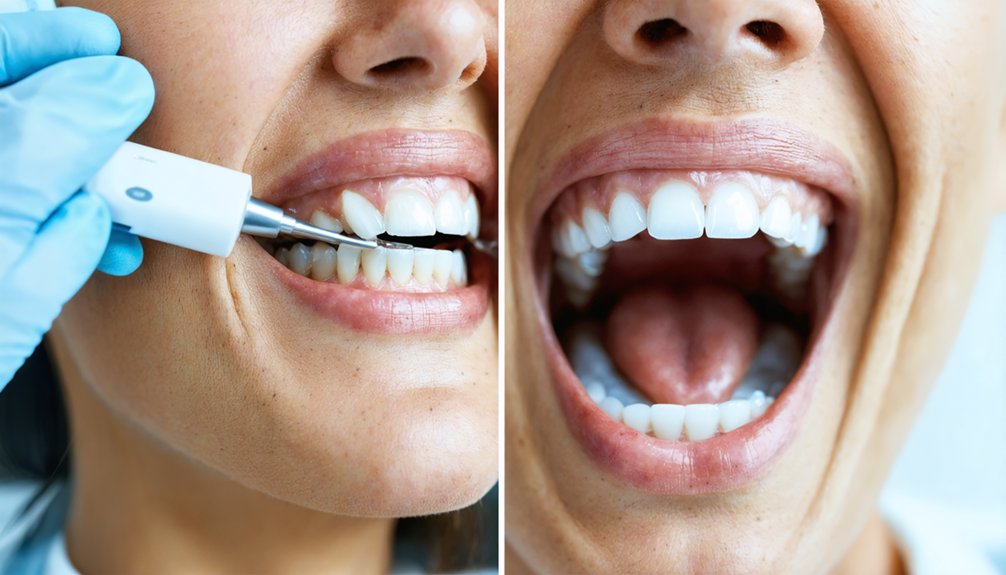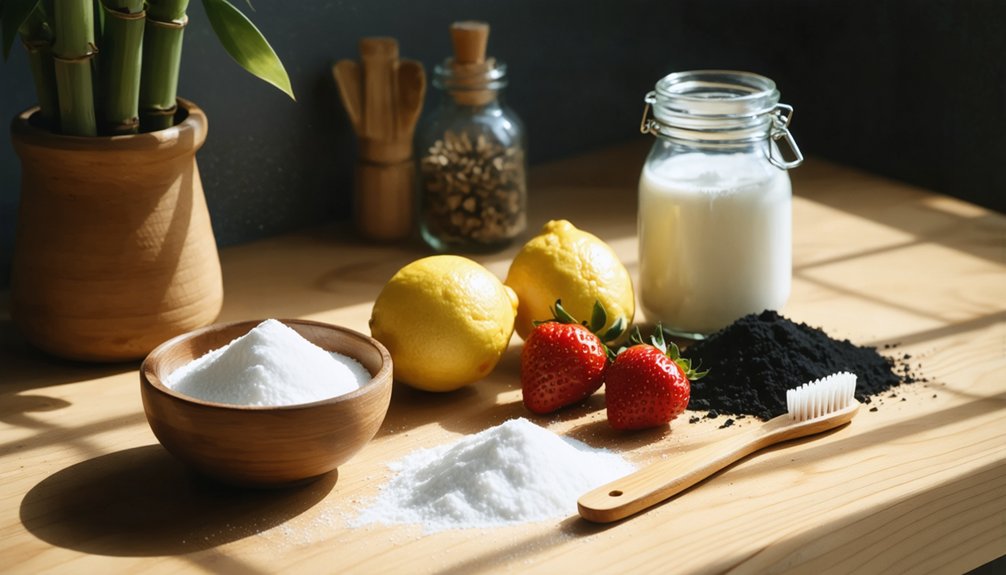
Your best DIY teeth whitening options include hydrogen peroxide-based whitening strips, baking soda and hydrogen peroxide paste, custom whitening trays, and whitening toothpastes with proven ingredients. These methods deliver measurable results when you use them correctly and consistently. Avoid lemon juice and unproven remedies like oil pulling, as they can damage enamel or simply don’t work. Each method carries risks if misused, and what works best depends on your specific dental needs — so keep going to find out which option suits you.
Key Takeaways
- Whitening strips like Crest Whitestrips deliver visible results within one to two weeks when applied for 30 minutes twice daily.
- A DIY paste using 2 teaspoons baking soda and 1 teaspoon hydrogen peroxide offers a clinically supported weekly whitening option.
- Custom trays with low-concentration hydrogen peroxide gel provide precise, consistent whitening while minimizing gum irritation and sensitivity risks.
- Whitening toothpastes like Crest 3D White effectively remove surface stains, with noticeable results after 12 weeks of consistent use.
- Avoid lemon juice mixtures, as their acidity actively erodes enamel, making them unsafe despite their popularity as DIY remedies.
Risks to Know Before You Start Whitening at Home
Before reaching for a whitening kit, you need to understand the risks that come with at-home treatments. Overusing hydrogen peroxide is a leading cause of enamel erosion, so you should limit direct application to once weekly.
At-home whitening carries real risks — hydrogen peroxide overuse erodes enamel faster than most people realize.
Sensitivity concerns are equally common, especially when products aren’t used as directed. Ill-fitted mouth guards can irritate your gums and expose tooth roots, compounding the damage.
Avoid lemon juice mixtures entirely — their acidity actively breaks down enamel. Over-the-counter products are generally safer than unverified DIY methods, but they still require disciplined use.
If you notice persistent discomfort or increased sensitivity, stop treatment immediately and consult your dentist. Taking control of your whitening routine starts with recognizing what can go wrong before you begin.
Which At-Home Whitening Methods Are Actually Proven
When it comes to at-home whitening, not every method holds up to scrutiny. You’ll find that the most reliable effective whitening ingredients are hydrogen peroxide and baking soda, both backed by clinical studies confirming their stain-removing and bleaching capabilities.
Whitening strips, custom trays, and peroxide-based toothpastes deliver measurable results when used consistently and correctly.
Alternative whitening methods like oil pulling and lemon juice mixtures lack scientific support. Oil pulling won’t damage your enamel, but there’s no confirmed evidence it whitens teeth.
Lemon juice, however, can actively erode enamel due to its acidity.
Stick to products with proven formulations—Crest Whitestrips, dentist-made trays, or baking soda toothpastes. When you choose evidence-backed options, you stay in control of both your results and your dental health.
Whitening Strips Worth Buying for Home Use
When shopping for whitening strips, you’ll find reliable options in Crest Whitestrips, SmileDirectClub, Zimba, Linhart, and Lumineux, all formulated for home use.
These strips work by coating your teeth with a hydrogen peroxide gel, which you apply for 30 minutes twice daily to break down surface stains.
You can expect visible results within one to two weeks, though you should know that whitening effects typically last only five to six months before touch-ups become necessary.
Top Whitening Strip Brands
Several whitening strip brands stand out as reliable, effective options for home use, but choosing the right one depends on your sensitivity levels and whitening goals.
Crest Whitestrips effectiveness is well-documented, delivering visible results within one to two weeks when you apply hydrogen peroxide-coated strips twice daily for 30 minutes. Results typically last five to six months, giving you meaningful control over maintenance.
SmileDirectClub comparisons often favor its kit format, which appeals to users wanting a more thorough approach.
Zimba, Linhart, and Lumineux round out the top contenders, each offering distinct formulations suited to varying sensitivity needs.
Before committing to any brand, assess your enamel health and consult your dentist if sensitivity is a concern.
How Whitening Strips Work
Understanding how whitening strips work helps you make smarter purchasing decisions and avoid common mistakes that can damage your enamel. Most strips use hydrogen peroxide as the primary whitening ingredient, directly bleaching stains beneath your enamel’s surface rather than just removing surface discoloration.
Whitening ingredients’ effectiveness depends heavily on concentration and contact time. Crest Whitestrips, for example, deliver hydrogen peroxide gel over 30-minute sessions twice daily, producing visible results within one to two weeks.
Proper strip application techniques matter greatly. Press strips firmly against teeth, ensuring full contact without overlapping your gumline. Gel touching gum tissue causes irritation and sensitivity.
Results typically last five to six months before you’ll need another treatment cycle. Overusing strips risks enamel erosion, so follow manufacturer guidelines strictly.
Expected Results Timeline
Knowing what to expect from whitening strips helps you plan realistically and avoid abandoning a product before it actually works. With consistent use, you’ll typically notice visible changes within one to two weeks, with results lasting five to six months.
However, timeline variations exist depending on stain severity, product concentration, and your application discipline. Results consistency depends heavily on following instructions precisely — skipping sessions or shortening wear time undermines the process.
Crest Whitestrips, for example, require 30 minutes twice daily to deliver the outcomes they’re designed for. Expecting dramatic overnight changes sets you up for premature disappointment. Treat the timeline as non-negotiable rather than flexible.
If sensitivity develops, reduce frequency rather than stopping entirely, and consult your dentist if discomfort persists beyond initial adjustment.
How to Make a Baking Soda and Hydrogen Peroxide Paste
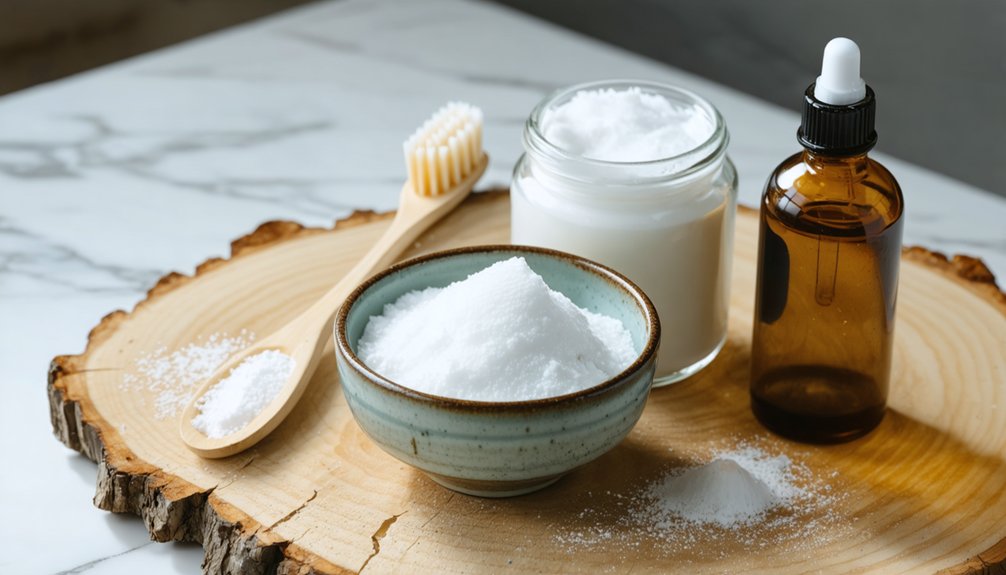
Making a baking soda and hydrogen peroxide paste at home is straightforward, but you’ll want to follow the correct ratios to avoid overusing these ingredients.
For weekly use, mix two teaspoons of baking soda with one teaspoon of hydrogen peroxide.
For a daily paste, combine one tablespoon of baking soda with two tablespoons of hydrogen peroxide.
Baking soda benefits include its mild abrasiveness, which effectively removes surface stains without harsh chemical exposure.
Studies confirm it’s a proven stain remover in dental formulas.
Regarding hydrogen peroxide safety, this natural bleaching agent kills bacteria but erodes enamel if overused, so limit stronger applications to once weekly.
Stick to these ratios, monitor any sensitivity, and consult your dentist if irritation develops.
Does Oil Pulling Actually Whiten Teeth?
Oil pulling has gained popularity as a natural teeth-whitening remedy, but does it actually work? The process involves swishing coconut oil in your mouth daily, and its oil pulling benefits include creating an alkaline environment that reduces plaque over time.
Coconut oil effectiveness is considered safe since it won’t erode your enamel the way acidic alternatives might.
However, you should know that no scientific studies currently confirm coconut oil’s ability to whiten teeth. If you choose to try it, mix one part coconut oil with one part baking soda for a simple paste.
No scientific studies confirm coconut oil whitens teeth, yet a simple paste combines equal parts coconut oil and baking soda.
Always spit the oil into the trash to avoid clogging your drains. For proven results, pair oil pulling with evidence-based whitening methods your dentist recommends.
Are Custom Whitening Trays Worth the Dentist Visit?
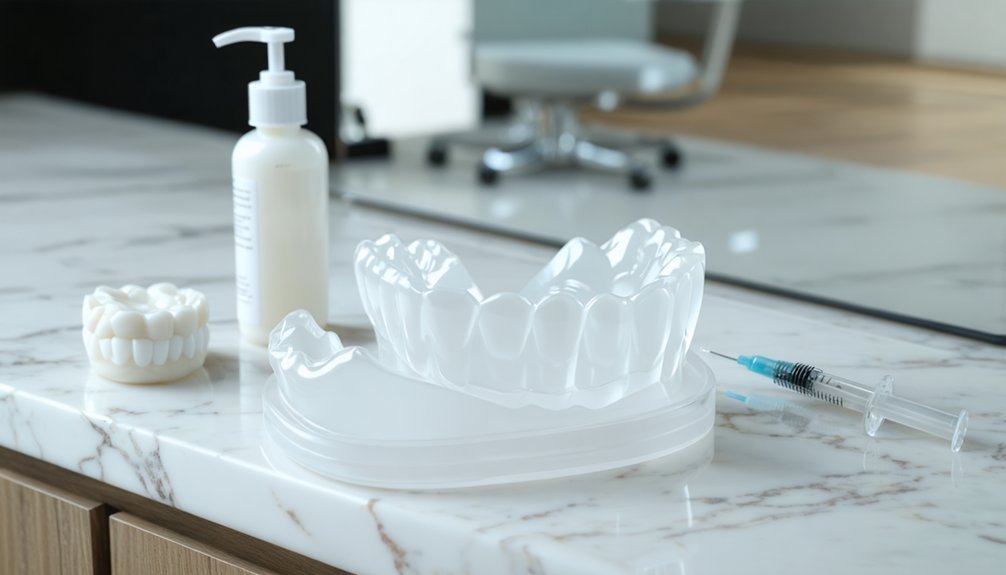
If you’re serious about whitening at home, custom trays made by your dentist offer a clear advantage—their precise fit prevents gel overflow and reduces gum irritation, making them safer than one-size-fits-all alternatives.
You’ll use a lower-concentration hydrogen peroxide gel over two weeks, achieving results without the risks that come with ill-fitted over-the-counter trays.
The upfront dentist visit pays off long-term, since the trays last indefinitely and you’ll only need to purchase gel refills for future touch-ups.
Custom Tray Benefits
Custom whitening trays made by your dentist are widely considered the best at-home whitening option by dental professionals, and for good reason.
The custom tray advantages begin with their personalized fit, which prevents gel from overflowing onto your gums and minimizes irritation. Unlike boil-and-bite trays you’d find over the counter, dentist-made trays conform precisely to your teeth, ensuring consistent gel contact and more predictable results.
You’ll use a lower-concentration hydrogen peroxide gel over two weeks, reducing sensitivity risks while still achieving meaningful whitening. The trays themselves last indefinitely, so you’ll only need gel refills for future touch-ups.
If you want controlled, professional-grade results without repeated office visits, investing in custom trays gives you long-term whitening capability on your own schedule.
Professional Fit Matters
When weighing the cost of a dentist visit against long-term whitening results, the fit of your tray makes all the difference. Custom tray advantages extend beyond comfort—a precise fit prevents gel from overflowing onto your gums, reducing irritation and protecting exposed roots.
The fitting process involves your dentist creating a mold tailored to your exact tooth structure, something boiling-water thermo-form trays simply can’t replicate.
You’ll use a lower-concentration hydrogen peroxide gel over two weeks, giving you controlled, gradual results. Once made, your trays last indefinitely—you’ll only need gel refills for future touch-ups.
Dental professionals consistently rank custom trays as the superior at-home whitening option. If long-term results and gum safety matter to you, the dentist visit is worth it.
Long-Term Cost Value
The upfront cost of custom whitening trays from a dentist can feel steep, but three factors make them a stronger long-term investment than most over-the-counter alternatives: durability, reusability, and precision.
When you conduct a proper cost comparison, custom trays outlast disposable strips and generic kits markedly. You’re not repurchasing entire kits—you’re purchasing gel refills only, which reduces recurring expenses considerably.
Your value assessment should also factor in fit. Custom trays prevent gel overflow onto your gums, minimizing irritation and protecting your enamel.
Poorly fitted alternatives may require multiple replacement purchases, driving costs upward over time.
Dental professionals consistently recommend custom trays as the superior at-home option. If you’re serious about long-term whitening results without repeated spending, the initial dentist visit earns its cost.
The Best Whitening Toothpastes You Can Use Every Day
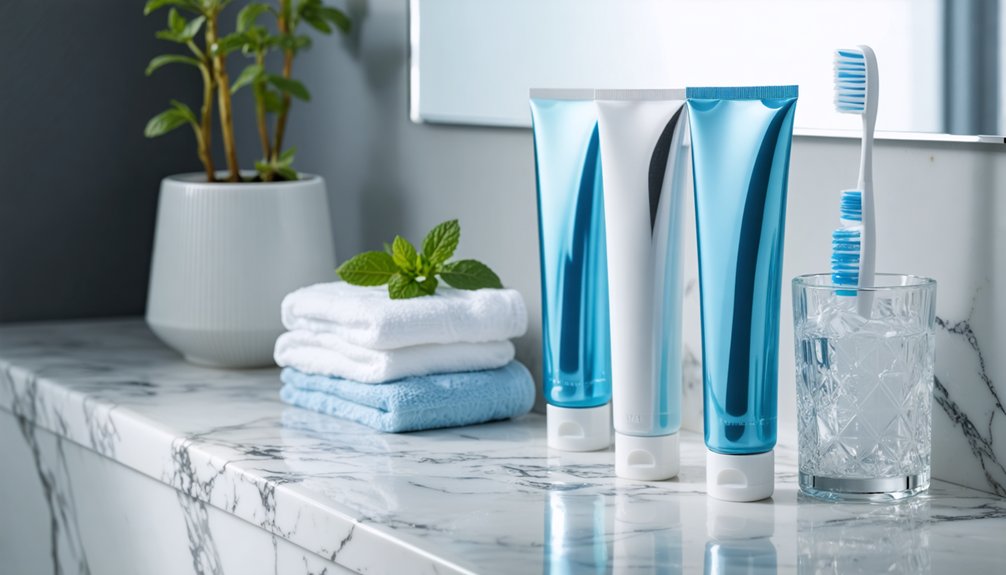
Whitening toothpastes offer a convenient daily option for maintaining a brighter smile without the intensity of bleaching treatments. By incorporating them into your daily regimen, you’re choosing a low-risk approach that delivers gradual results.
Products like Crest 3D White and Arm & Hammer Extreme Whitening contain effective whitening ingredients that remove surface stains through mild abrasion. If you have sensitive teeth, Sensodyne Extra Whitening or Burt’s Bees Purely White are gentler alternatives worth considering.
Research confirms that toothpastes with higher hydrogen peroxide concentrations produce noticeable whitening after 12 weeks of consistent use. Baking soda-based formulas additionally reduce plaque and gum inflammation.
However, you should monitor sensitivity closely and consult your dentist if irritation develops, as overuse of certain whitening agents can compromise enamel integrity over time.
Frequently Asked Questions
How Long Should I Wait Between Different Whitening Treatments?
You should space whitening treatments at least one week apart to protect whitening frequency and maximize treatment effectiveness. Overusing hydrogen peroxide erodes enamel, so you’ll want to consult your dentist to monitor sensitivity and maintain safe results.
Can Teeth Whitening Methods Affect Dental Crowns or Veneers?
Over 60% of restorations don’t respond to whitening agents. Whitening treatments won’t change your crowns or veneers, but you’ll risk crown sensitivity and compromise veneer durability. Consult your dentist before starting any whitening regimen.
Is Teeth Whitening Safe During Pregnancy or Breastfeeding?
You should avoid teeth whitening during pregnancy or breastfeeding, as hydrogen peroxide risks aren’t fully studied. Opt for natural alternatives like baking soda paste instead, and always seek professional advice from your dentist before proceeding.
At What Age Can Teenagers Safely Start Whitening Their Teeth?
You can typically start whitening at 14–16 years old, once permanent teeth fully develop. Watch for teeth sensitivity, and consider natural remedies like baking soda first. Always consult your dentist before beginning any whitening treatment.
Does Diet Affect How Long Whitening Results Actually Last?
Yes, your dietary habits directly impact how long whitening results last. You’ll extend results by avoiding coffee, tea, and red wine. Consistent stain prevention practices, like rinsing after meals, help you maintain your brighter smile notably longer.
References
- https://www.sandiegoartofdentistry.com/blog/what-is-the-best-teeth-whitening-method/
- https://www.urmc.rochester.edu/news/publications/health-matters/diy-teeth-whitening-too-good-to-be-true
- https://sportingsmiles.com/diy-teeth-whitening-options-at-home/
- https://www.pleasantfamilydentistry.com/blog/6-natural-ways-to-whiten-your-teeth
- https://www.youtube.com/watch?v=FI1dQf73k6U
- https://www.armandhammer.com/en/articles/how-to-whiten-teeth-with-baking-soda
- https://www.healthline.com/nutrition/whiten-teeth-naturally