You shouldn’t use hydrogen peroxide as a daily teeth whitener. Daily use strips enamel faster than your teeth can remineralize, causing irreversible structural damage over time. Clinical evidence links overuse to sensitivity in up to 80% of patients, along with gum irritation and demineralization. The ADA recommends limiting applications to a few times per week to protect your long-term oral health. There’s much more you need to know before whitening.
Key Takeaways
- Daily use of hydrogen peroxide strips enamel, irritates gums, and increases sensitivity risk, making it unsafe as an everyday whitening solution.
- The ADA recommends limiting whitening strip use to a few times per week to protect enamel and long-term oral health.
- Safe home-use concentrations range from 3% to 6%, with overexposure linked to sensitivity in up to 80% of patients.
- Applications should be spaced at least 48 hours apart to prevent compounding oxidative damage and allow enamel remineralization.
- Safer alternatives, like hydroxyapatite toothpaste or baking soda, can maintain whitening results without the risks of daily peroxide exposure.
Can You Use Hydrogen Peroxide as a Daily Teeth Whitener?
While hydrogen peroxide can whiten teeth, you shouldn’t use it daily. Despite common whitening myths, frequent application strips enamel and irritates gum tissue, causing lasting structural damage. Daily routines involving peroxide increase your risk of sensitivity, demineralization, and nerve irritation.
Clinical evidence confirms that overexposure weakens tooth structure through enamel erosion. Even store-bought products containing 3–6% hydrogen peroxide become harmful with excessive use. The ADA recommends limiting application to a few times per week at most.
If you’re integrating whitening into your daily routines, choose peroxide-free alternatives for everyday use. Reserve hydrogen peroxide treatments for periodic application, and consult your dentist before starting. Controlled, infrequent use protects both your enamel and long-term oral health outcomes.
How Hydrogen Peroxide Whitens Your Teeth
When hydrogen peroxide contacts your teeth, it penetrates the enamel and dentin layers to reach discoloration compounds beneath the surface. This whitening mechanism relies on oxidation — the peroxide breaks apart stain molecules, effectively neutralizing discoloration at its source.
Peroxide concentration directly controls how aggressively this process occurs. Store-bought kits typically contain 3–10% hydrogen peroxide, while professional treatments reach up to 40%. Higher concentrations accelerate whitening but simultaneously increase your risk of enamel damage and nerve irritation.
You’re not simply bleaching the surface — you’re triggering a chemical reaction inside your tooth structure. Understanding this helps you recognize why concentration matters and why exceeding safe thresholds, even in pursuit of faster results, compromises your long-term dental health.
Why Daily Use Damages Your Enamel and Gums
When you use hydrogen peroxide daily, you accelerate enamel erosion through repeated demineralization and deproteinization, weakening your tooth structure over time.
Prolonged contact strips the protective enamel layer, exposing sensitive nerves and increasing vulnerability to decay.
High concentrations or extended application also trigger gum inflammation, causing irritation that ranges from mild discomfort to significant tissue damage.
Enamel Erosion Risks
Although hydrogen peroxide effectively whitens teeth, daily use breaks down enamel faster than it can remineralize, leaving your teeth vulnerable to sensitivity, decay, and structural damage.
Overusing whitening techniques compromises enamel health by triggering demineralization and deproteinization, weakening your teeth’s protective layer permanently.
Key enamel erosion risks from daily hydrogen peroxide use include:
- Demineralization: Peroxide strips essential minerals, thinning enamel progressively with each application.
- Nerve exposure: Eroded enamel exposes dentinal tubules, intensifying temperature and pressure sensitivity.
- Structural weakening: Repeated oxidation degrades the enamel matrix, increasing fracture vulnerability.
- Irreversible damage: Unlike temporary sensitivity, enamel loss doesn’t regenerate, making overuse permanently harmful.
Limiting applications to a few times weekly gives your enamel critical recovery time between treatments.
Gum Inflammation Effects
Daily hydrogen peroxide application doesn’t just erode your enamel—it actively inflames your gum tissue, compounding the damage with each use.
When peroxide contacts your gingival tissue repeatedly, it triggers oxidative stress, disrupting the cellular integrity that supports gum health.
Inflammation symptoms emerge progressively: redness, swelling, tenderness, and bleeding during brushing. These aren’t minor inconveniences—they signal tissue breakdown.
Studies confirm that gingival irritation affects users across mild-to-moderate severity ranges, particularly with concentrations exceeding 6% or prolonged contact beyond two minutes.
You’re fundamentally chemically stressing soft tissue that lacks enamel’s partial resilience. Daily exposure compounds cumulative irritation, potentially advancing toward chronic inflammation.
Controlling your whitening frequency—limiting applications to a few times weekly—is the critical variable that protects both your enamel and gum integrity.
Side Effects Most People Don’t Expect
Hydrogen peroxide whitening carries side effects that catch most users off guard, even when they’re following label instructions carefully.
Beyond surface-level sensitivity management, unexpected reactions can signal deeper tissue and enamel compromise.
When reactions go beyond basic sensitivity, your enamel and soft tissue may already be sustaining deeper, less visible damage.
Watch for these overlooked warning signs:
- Nerve hypersensitivity — thermal sensitivity that persists days after treatment ends
- Enamel deproteinization — structural protein breakdown weakening tooth integrity over time
- Soft tissue blanching — temporary gum whitening indicating chemical irritation from direct contact
- Rebound sensitivity — intensified discomfort following repeated application cycles
You’re not immune to these effects simply because you’re using store-bought concentrations.
Even 3–6% solutions trigger measurable enamel demineralization with improper frequency.
Recognizing these signals early gives you the control needed to prevent irreversible damage.
What Concentration of Hydrogen Peroxide Is Safe to Use?
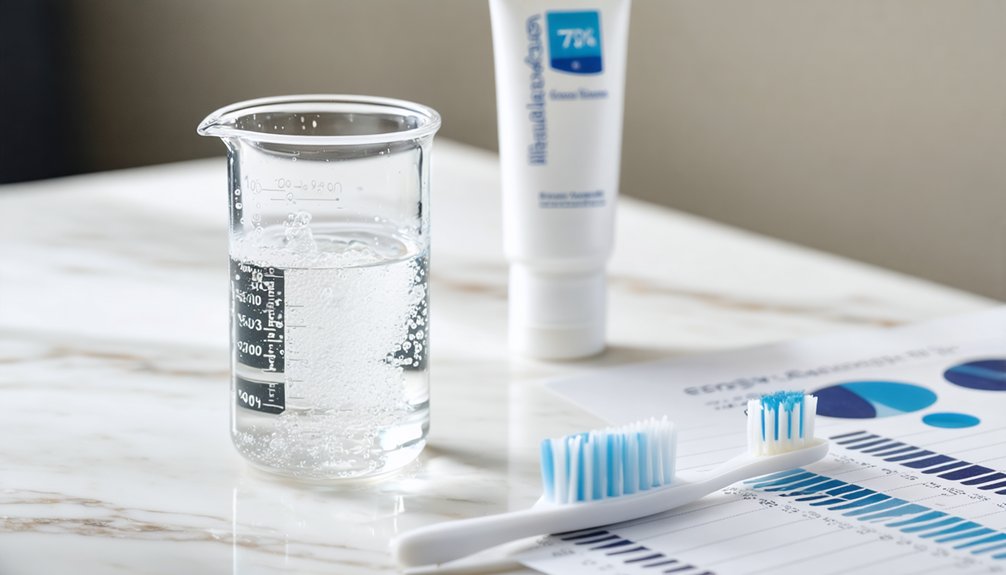
Knowing which concentration is safe can mean the difference between effective whitening and irreversible enamel damage. For home use, you should stay within safe concentrations of 3% to 6% hydrogen peroxide.
The ADA approves up to 10% in whitening products, but exceeding 6% without professional supervision increases your risk of enamel destruction and gum damage considerably.
Peroxide guidelines established by the FDA and ADA identify 3.6% hydrogen peroxide—derived from 10% carbamide peroxide—as a reliable benchmark for OTC safety.
Dentist-administered treatments may use concentrations up to 40%, but these require clinical oversight for a reason.
If you’re using store-bought kits, verify the concentration label before application. Anything above 6% demands professional guidance to prevent long-term structural damage to your teeth.
How Often Should You Use Hydrogen Peroxide?
You should limit hydrogen peroxide whitening to a few times per week, as daily use strips enamel and irritates gum tissue.
Exceeding this frequency heightens your risk of enamel demineralization, nerve sensitivity, and gingival inflammation.
Watch for warning signs of overuse—including increased tooth sensitivity and gum soreness—as these indicate you’ve surpassed your enamel’s tolerance threshold.
Recommended Usage Frequency
When using hydrogen peroxide for teeth whitening, you should limit applications to a few times per week rather than daily. Incorporating it into your daily routine increases your risk of enamel erosion, gum irritation, and heightened tooth sensitivity.
Following established usage guidelines protects your dental health while still achieving whitening results.
Key frequency recommendations to follow:
- Apply 2-3 times per week maximum to minimize cumulative damage
- Limit contact time to 1-2 minutes per application
- Use concentrations between 3-6% for safe home application
- Discontinue use if sensitivity or gum inflammation develops
Exceeding these boundaries doesn’t accelerate whitening—it accelerates harm. You maintain greater control over outcomes by respecting evidence-based frequency limits rather than pursuing aggressive daily application.
Weekly Application Limits
Three applications per week represents the upper limit that dental professionals consider safe for at-home hydrogen peroxide whitening. Exceeding this weekly application threshold accelerates enamel erosion and increases gum irritation risk considerably.
You should space each session at least 48 hours apart, giving your enamel time to remineralize between treatments. Staying within these safe limits isn’t optional if you’re serious about protecting your tooth structure long-term.
Daily use eliminates recovery windows, compounding oxidative damage with each successive application. Research links overuse directly to sensitivity affecting up to 80% of patients and progressive enamel demineralization.
Monitor your teeth for increased sensitivity or gum inflammation—these signal that you’ve already pushed your frequency too far.
Reduce applications immediately when either symptom appears.
Signs Of Overuse
Persistent tooth sensitivity between whitening sessions is one of the clearest signs you’ve exceeded safe application frequency.
Recognizing overuse symptoms early lets you intervene before irreversible damage occurs. Enamel sensitivity that lingers days after treatment signals structural compromise.
Watch for these warning signs:
- Increased sensitivity to hot, cold, or sweet stimuli between sessions
- Gum irritation or whitening along the tissue line after application
- Translucent or chalky enamel appearance, indicating demineralization
- Persistent soreness that doesn’t resolve within 48 hours post-treatment
If you’re experiencing any of these overuse symptoms, stop applications immediately and consult your dentist.
Continuing despite enamel sensitivity accelerates erosion and nerve exposure. Your whitening schedule requires adjustment—protection of tooth structure outweighs cosmetic gains.
Safer Alternatives to Daily Hydrogen Peroxide Whitening
Since daily hydrogen peroxide use risks enamel erosion and gum irritation, you’re better served by alternatives that maintain whitening results without repeated peroxide exposure.
Several natural whitening and non-peroxide options deliver safer daily maintenance. Whitening toothpastes containing hydroxyapatite or baking soda gently polish surface stains without chemical oxidation.
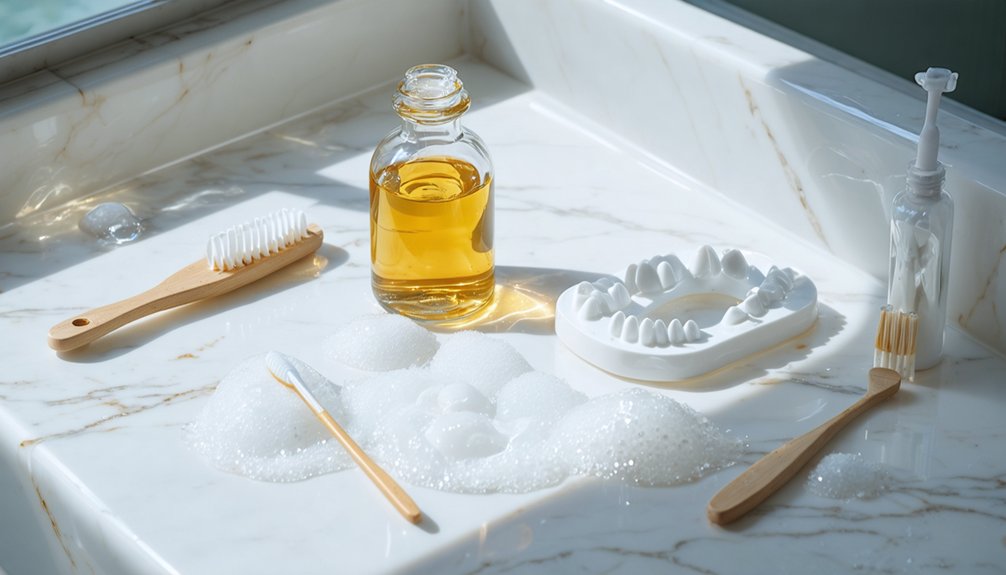
Oil pulling with coconut oil reduces surface bacteria linked to discoloration. Activated charcoal, though abrasive if overused, offers occasional stain removal without peroxide chemistry.
For sustained results, limit hydrogen peroxide treatments to two or three sessions weekly while incorporating these gentler daily options. You’ll preserve enamel integrity while managing surface staining effectively.
If sensitivity persists, consult your dentist about professionally supervised protocols that balance whitening efficacy with structural tooth protection.
When Hydrogen Peroxide Whitening Requires Professional Supervision
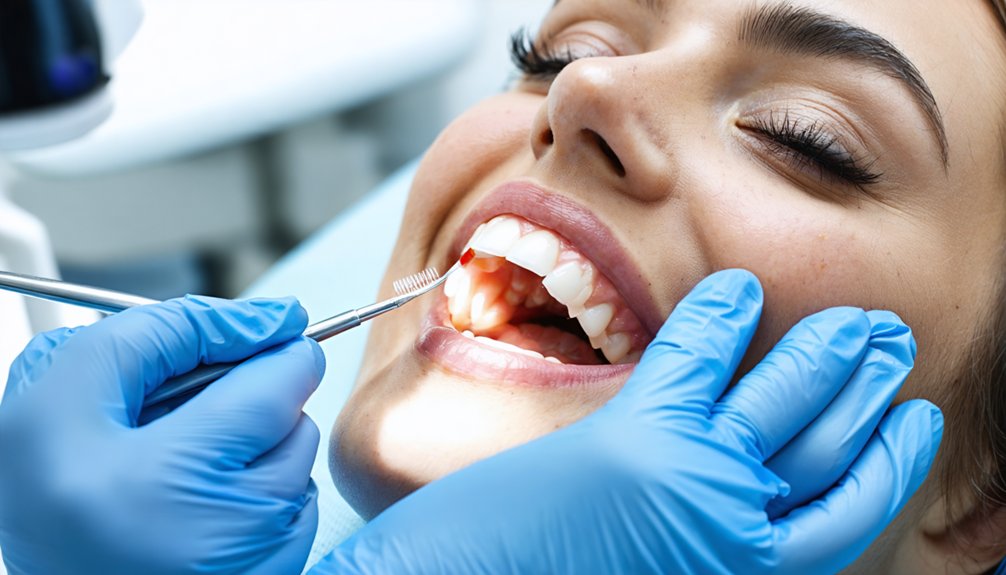
While gentler daily alternatives help you maintain whitening results, certain clinical situations call for hydrogen peroxide use under direct professional oversight. If you’re managing severe discoloration, enamel vulnerabilities, or existing restorations, dental consultation isn’t optional—it’s essential.
Professional guidance becomes critical when:
- Concentrations exceed 10%, as enamel destruction risk rises considerably without controlled application.
- You have existing sensitivity, since nerve irritation worsens under unsupervised high-dose exposure.
- Restorations or crowns are present, because peroxide affects natural and artificial surfaces differently.
- Previous whitening caused gum inflammation, indicating your tissue tolerance requires clinical monitoring.
Dentists use up to 40% hydrogen peroxide safely through precise timing and protective barriers you can’t replicate at home.
Proceeding without professional oversight in these situations risks compounding structural damage rather than correcting it.
Frequently Asked Questions
Can Children Safely Use Hydrogen Peroxide for Teeth Whitening Purposes?
You shouldn’t use hydrogen peroxide for children’s teeth whitening. Safety concerns are significant, as there aren’t established dosage guidelines for kids. Consult a pediatric dentist before considering any peroxide-based whitening treatment for your child.
Does Hydrogen Peroxide Whitening Work on Dental Crowns or Veneers?
Like bleaching wood grain, hydrogen peroxide won’t whiten crowns or veneers — it doesn’t penetrate artificial materials. You’ll maintain crowns’ durability and veneers’ maintenance by avoiding peroxide, which can instead degrade their bonding agents and surface integrity.
Can Hydrogen Peroxide Interact Negatively With Common Prescription Medications?
Hydrogen peroxide interactions with prescription medications aren’t well-documented dentally, but you should consult your doctor. Dental medication effects vary, and certain drugs affecting gum tissue or saliva production could amplify hydrogen peroxide’s irritation risks markedly.
Is Hydrogen Peroxide Whitening Safe During Pregnancy or While Breastfeeding?
With 80% of users experiencing sensitivity, you shouldn’t use hydrogen peroxide whitening during pregnancy or breastfeeding. Current safety guidelines lack sufficient evidence, and pregnancy precautions strongly recommend avoiding elective chemical treatments until after you’ve finished breastfeeding.
How Does Hydrogen Peroxide Whitening Compare in Cost to Other Treatments?
You’ll find hydrogen peroxide’s cost-effectiveness appeals to consumer preferences, but effectiveness comparison reveals professional treatments deliver superior results. You’re trading affordability for potential risks, so weigh budget-friendly options cautiously against clinically supervised, safer whitening alternatives.
References
- https://harborcreekdental.com/hydrogen-peroxide-teeth-whitening-safety-guide/
- https://www.medicalnewstoday.com/articles/326148
- https://pubmed.ncbi.nlm.nih.gov/23846062/
- https://www.healthline.com/health/hydrogen-peroxide-teeth-whitening
- https://watsonnivenskahendds.com/hydrogen-peroxide-for-teeth-whitening-safe-or-harmful/
- https://dentalsmilesatdacula.com/is-hydrogen-peroxide-safe-for-teeth-whitening/
- https://www.urmc.rochester.edu/news/publications/health-matters/diy-teeth-whitening-too-good-to-be-true
- https://pmc.ncbi.nlm.nih.gov/articles/PMC9915942/
- https://www.colgate.com.au/oral-health/teeth-whitening/is-hydrogen-peroxide-safe-for-teeth