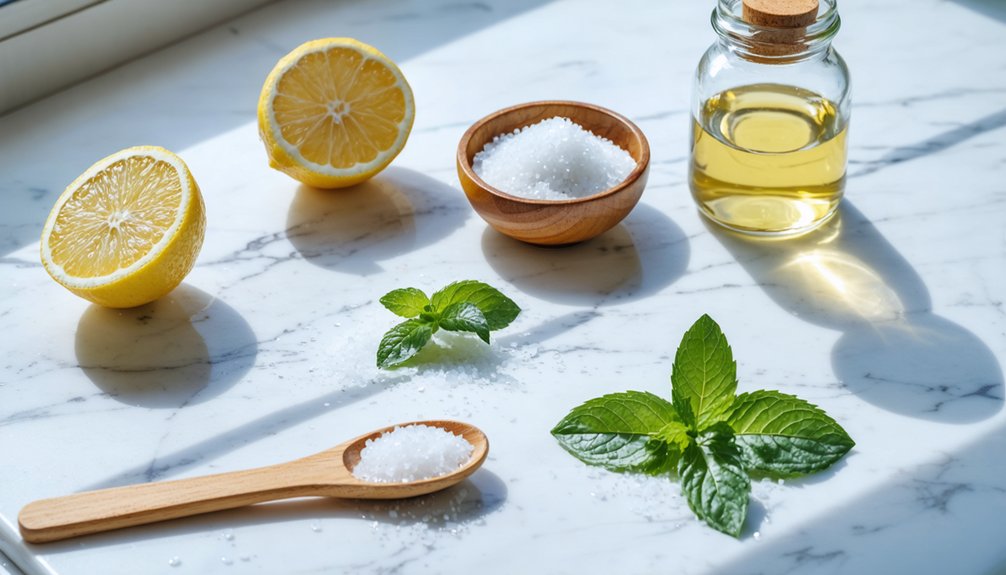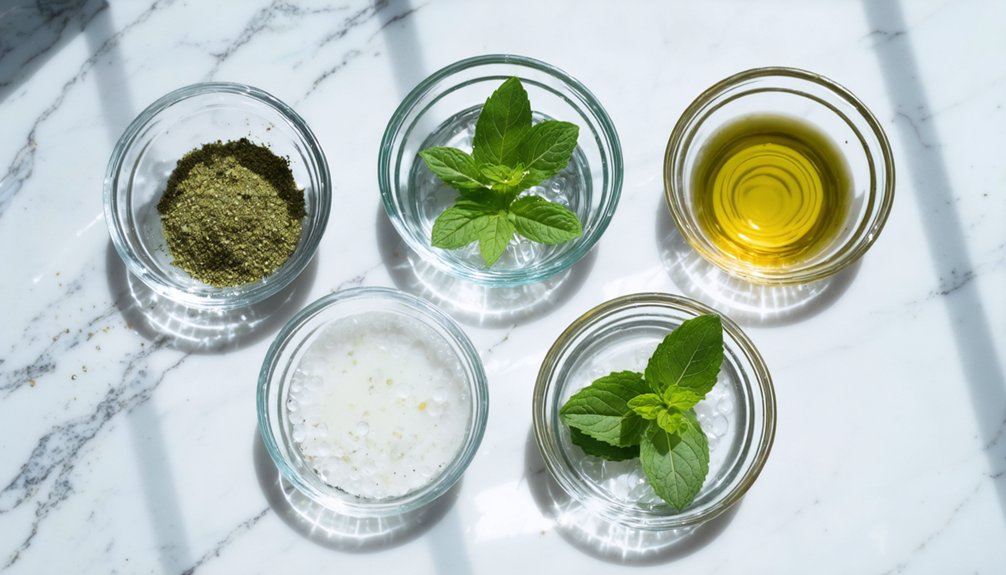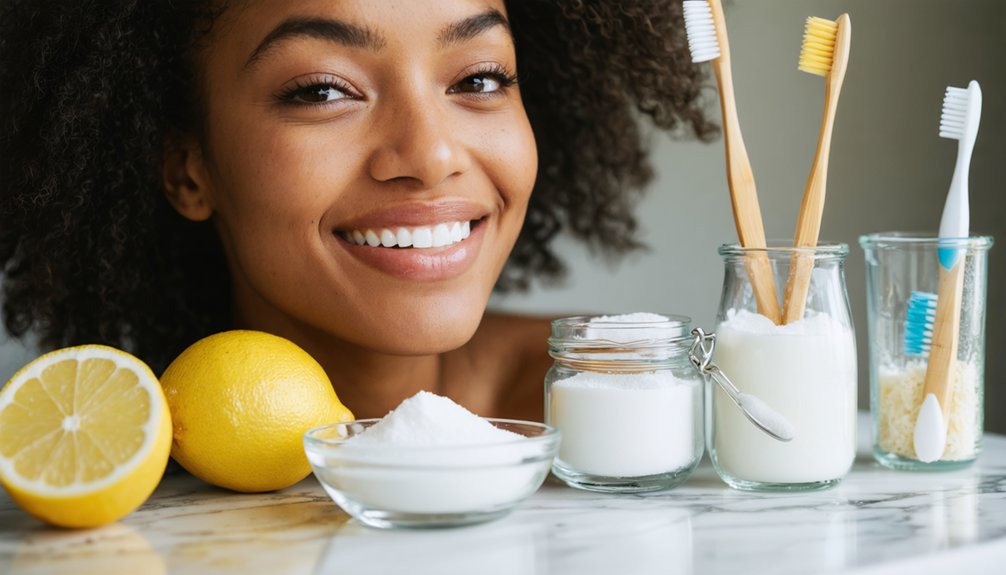
You can whiten your teeth at home, but only if you use the right methods, follow safe usage limits, and protect your enamel throughout the process. Baking soda and hydrogen peroxide paste, oil pulling, and activated charcoal can reduce surface stains when used carefully. Overuse, however, causes irreversible enamel damage. Understanding your stain type determines which approach works best for your situation. The sections ahead break down each method, its evidence, and how to apply it safely.
Key Takeaways
- Mix baking soda with 3% hydrogen peroxide to create a whitening paste, brushing gently for two minutes once or twice weekly.
- Oil pulling with one tablespoon of coconut oil for 15–20 minutes daily reduces bacteria, plaque, and surface discoloration effectively.
- Activated charcoal adsorbs surface stains but should be used sparingly to prevent cumulative enamel erosion over time.
- Limit stain-causing beverages like coffee, tea, and red wine; use a straw to minimize direct contact with teeth.
- Brush twice daily with fluoride toothpaste, floss regularly, and drink water throughout the day to maintain whitening results.
Why Your Teeth Lose Their White Over Time
As you age, your teeth naturally lose their brightness due to a combination of intrinsic and extrinsic factors. Enamel aging thins your outer protective layer, exposing the yellowish dentin beneath.
As you age, enamel thins and yellowing dentin beneath gradually becomes more visible.
Simultaneously, extrinsic tooth stain causes accumulate from daily habits — coffee, tea, red wine, and tobacco deposit chromogens directly onto enamel surfaces.
Your diet isn’t the only culprit. Certain medications, particularly tetracycline antibiotics, cause intrinsic discoloration that penetrates deeper enamel layers, making surface treatments less effective.
Poor oral hygiene accelerates plaque buildup, which traps staining compounds against your teeth.
Understanding these mechanisms matters because it shapes your whitening strategy. Surface stains respond to abrasive or bleaching interventions, while intrinsic discoloration requires professional evaluation.
Targeting the correct stain type prevents wasted effort and potential enamel damage.
Baking Soda and Hydrogen Peroxide Done Right
To make the paste, mix a pinch of baking soda with just a few drops of hydrogen peroxide until you get a spreadable consistency—too much peroxide increases erosion risk without improving results.
Brush gently for two minutes, then rinse thoroughly, letting the baking soda’s mild abrasive action lift surface stains while the peroxide bleaches discoloration.
You shouldn’t use this method more than once or twice weekly, as frequent application strips enamel and causes long-term sensitivity.
Mixing the Perfect Paste
When combining baking soda and hydrogen peroxide, you’ll want to get the ratio right to avoid damaging your enamel. Use a pinch of baking soda with just a few drops of 3% hydrogen peroxide — never higher concentrations.
Your paste consistency should resemble toothpaste: thick enough to adhere to teeth without dripping, but not so gritty it feels abrasive.
Apply the paste gently using circular motions for two minutes, then rinse thoroughly. If you notice teeth sensitivity developing, reduce frequency immediately — that’s your enamel signaling stress.
Limit use to once or twice weekly maximum. Exceeding this risks permanent enamel erosion, which no whitening method can reverse.
Precision in preparation and disciplined application give you control over results without compromising your dental health.
Avoiding Enamel Erosion
Getting the paste right is only half the equation — protecting your enamel through consistent, disciplined use is where most people fall short.
Enamel protection depends entirely on frequency control. You shouldn’t apply this mixture more than once or twice weekly; exceeding that threshold accelerates erosion prevention failures rather than supporting them.
Hydrogen peroxide’s bleaching action and baking soda’s abrasiveness are both dose-dependent risks. More isn’t better — it’s damaging.
Brush gently for exactly two minutes, then rinse thoroughly. Prolonged contact increases acid exposure time, weakening enamel progressively.
Watch for warning signs: increased sensitivity, translucent tooth edges, or surface roughness. These indicate erosion already occurring. If any appear, stop immediately and consult your dentist.
Discipline here isn’t optional — it’s the difference between whitening and irreversible structural damage.
Natural Scrubs That Actually Lift Surface Stains
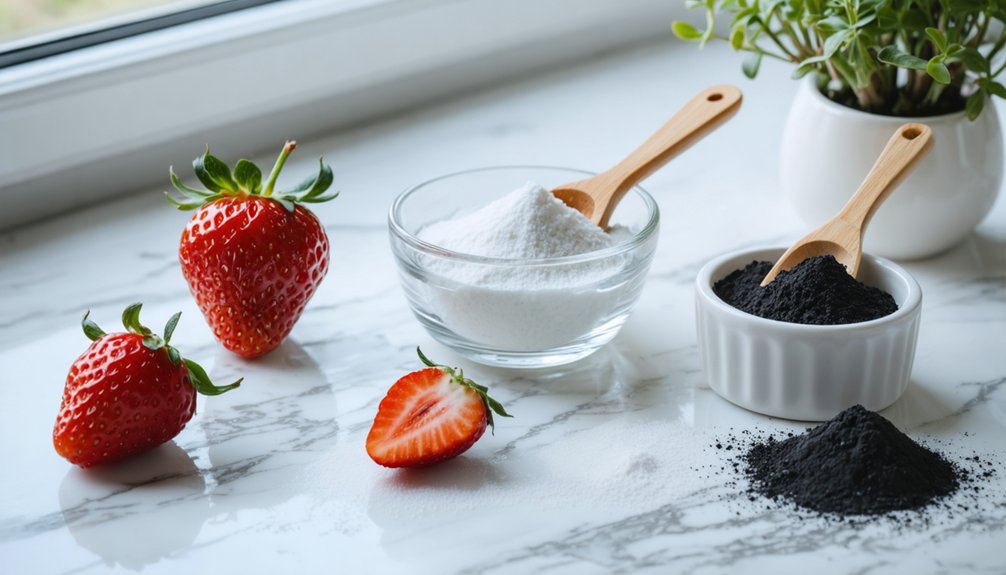
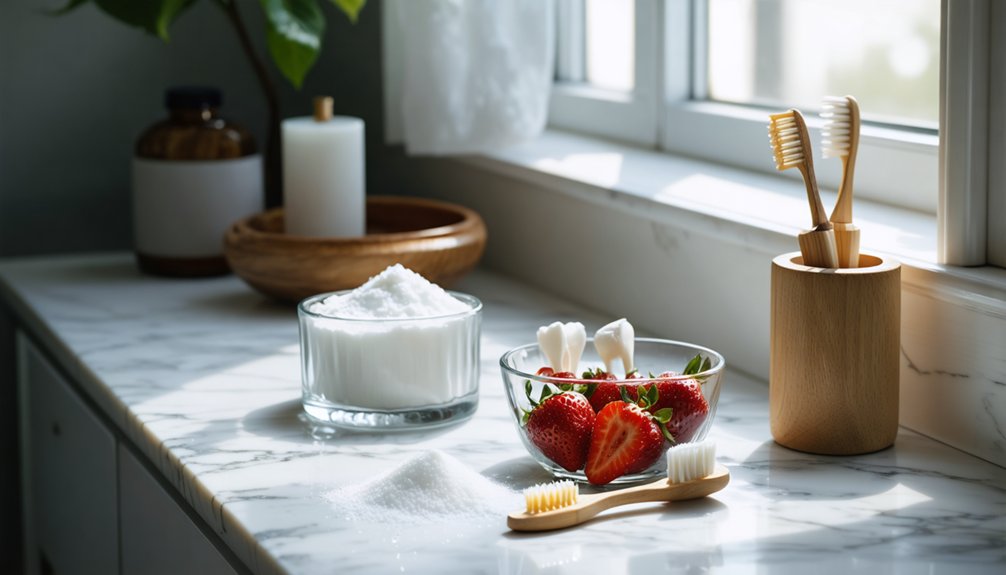
If you’re looking for natural scrubs that target surface stains, a mashed strawberry and baking soda mixture leverages malic acid’s whitening properties alongside baking soda’s mild abrasiveness.
However, you should apply it sparingly and rinse thoroughly to protect your enamel.
Activated charcoal offers another option, as its adsorptive properties bind to and lift discoloring substances when you brush gently for a couple of minutes.
Both methods carry real risks of enamel damage if you overuse them, so limit each to occasional use rather than making them part of your daily routine.
Strawberry And Baking Soda
Though it sounds unconventional, mashing fresh strawberries with a small amount of baking soda creates a scrub that targets surface stains through two complementary mechanisms.
Strawberry benefits stem from malic acid, which dissolves discoloration on enamel. Baking soda efficacy comes from its mild abrasive structure, physically polishing stained surfaces without aggressive chemical intervention.
Apply the combined scrub gently across your teeth, let it sit for two to three minutes, then rinse thoroughly. You’ll notice incremental improvement with consistent, controlled use.
However, both malic acid and abrasion carry erosion risks if you overuse this method. Limit applications to once or twice weekly, monitor your enamel sensitivity carefully, and discontinue immediately if discomfort develops.
Precision in frequency determines whether this remedy helps or harms.
Activated Charcoal Benefits
Activated charcoal operates through adsorption rather than abrasion alone, distinguishing it mechanistically from the strawberry and baking soda scrub you’ve just read about. It binds discoloring substances, lifting them from enamel surfaces. Among charcoal types, food-grade activated charcoal remains the only safe option for oral charcoal applications.
Follow this controlled protocol:
- Dip a wet toothbrush into powdered activated charcoal — precision matters here.
- Brush gently for two minutes, resisting aggressive scrubbing that destroys enamel permanently.
- Rinse thoroughly until water runs completely clear.
- Limit frequency strictly, as cumulative abrasion causes irreversible enamel thinning you can’t reclaim.
You’re choosing a remedy with legitimate stain-removal potential, but its abrasive nature demands disciplined, infrequent use to protect your long-term dental integrity.
Oil Pulling and Activated Charcoal for Daily Whitening
While both oil pulling and activated charcoal have gained popularity as natural whitening methods, understanding how to use them correctly is essential to avoid unintended harm.
Oil pulling benefits include reducing bacteria, plaque, and gingivitis when you swish one tablespoon of coconut oil for 15–20 minutes daily. It’s safe for regular use, though it delivers gradual maintenance rather than dramatic results.
Charcoal effectiveness lies in its ability to adsorb surface stains, but its abrasive nature demands caution. Dip a wet toothbrush into powdered activated charcoal, brush gently for two minutes, then rinse thoroughly.
Overuse risks enamel erosion, so you shouldn’t incorporate it daily. Use these methods strategically, monitoring your teeth’s sensitivity and condition throughout.
How Often Can You Safely Whiten at Home?
Knowing how often to safely whiten at home depends on the method you’re using and your enamel’s tolerance. Whitening frequency directly impacts your long-term dental health.
Follow these safe practices to protect your teeth:
- Baking soda and hydrogen peroxide paste — limit use to once or twice weekly; overuse causes irreversible enamel erosion.
- Oil pulling with coconut oil — safe for daily use, offering gradual maintenance without aggressive abrasion.
- Apple cider vinegar rinse — use sparingly due to high acidity; monthly application reduces enamel risk.
- Activated charcoal — restrict to occasional use only; its abrasive nature accelerates enamel thinning with repeated application.
You control the outcome — overuse doesn’t accelerate results, it destroys them.
Keep Your Teeth White Longer With These Daily Habits
Maintaining your results requires consistent daily habits that prevent new stains from forming in the first place. Brush twice daily using fluoride toothpaste, floss regularly, and incorporate an antibacterial mouthwash into your routine.
These three steps collectively reduce plaque buildup and surface discoloration.
Your dietary choices greatly impact how long your results last. Limit coffee, tea, red wine, and dark berries, as these notoriously stain enamel. When you do consume staining beverages, use a straw to minimize contact.
Teeth hydration matters more than most people realize. Drinking water throughout the day rinses away residual pigments before they settle. Staying hydrated also promotes saliva production, your mouth’s natural defense against bacterial accumulation and enamel erosion.
Consistency protects your investment.
Frequently Asked Questions
Can DIY Teeth Whitening Methods Work for Sensitive Teeth?
Nearly 40% of adults experience sensitivity issues. You can try DIY whitening, but you’ll need alternative solutions like oil pulling or diluted rinses, as abrasive methods risk worsening enamel erosion and discomfort considerably.
Are Natural Whitening Remedies Safe During Pregnancy or Breastfeeding?
You shouldn’t use most natural whitening remedies during pregnancy or breastfeeding without consulting your doctor first. Natural ingredients like hydrogen peroxide and apple cider vinegar lack confirmed pregnancy safety data, so you’ll want professional medical guidance beforehand.
How Long Before Seeing Visible Results From Home Whitening Methods?
Don’t expect overnight miracles—whitening timelines vary! You’ll typically notice visible changes within 2–4 weeks of consistent use. Baking soda and hydrogen peroxide may show earlier results, while oil pulling delivers gradual improvements over months with daily commitment.
Can These Remedies Help With Intrinsic Stains Beneath the Enamel?
These remedies can’t address intrinsic stains beneath your enamel—they’re only surface-level solutions. You’ll risk compromising your enamel health by overusing them. Consult a dentist for clinically proven treatments targeting deeper discoloration effectively.
Should You Consult a Dentist Before Starting DIY Whitening Treatments?
You should consult a dentist before starting DIY whitening treatments. Professional advice guarantees your teeth health isn’t compromised, as underlying conditions like enamel erosion or sensitivity can worsen without proper evaluation guiding your whitening approach safely.
References
- https://drtopping.com/top-5-ways-to-whiten-your-teeth-at-home/
- https://www.berkeleyhillsdentist.com/brighten-your-smile-naturally-berkeley-home-remedies-for-teeth-whitening/
- https://www.lwdentist.com/diy-teeth-whitening-what-works-and-what-to-avoid/
- https://www.healthline.com/nutrition/whiten-teeth-naturally
- https://www.pleasantfamilydentistry.com/blog/6-natural-ways-to-whiten-your-teeth
- https://www.listerine.com/teeth-whitening/whitening-teeth-instructions
- https://www.urmc.rochester.edu/news/publications/health-matters/diy-teeth-whitening-too-good-to-be-true
- https://www.northeastdentalarts.com/blog/what-is-the-least-damaging-way-to-whiten-your-teeth/
- https://www.armandhammer.com/en/articles/how-to-whiten-teeth-with-baking-soda
- https://www.youtube.com/watch?v=FI1dQf73k6U