Coconut oil’s lauric acid makes up nearly 50% of its fatty acid profile, giving it natural antibacterial power against plaque and gingivitis-causing bacteria. You can use it through oil pulling, a coconut oil and baking soda paste, or by choosing organic, extra-virgin, cold-pressed varieties for maximum potency. It cleans teeth effectively without harsh chemicals, though it works through bacterial removal rather than bleaching. Keep going to discover exactly how each method works and which delivers the best results.
Key Takeaways
- Oil pulling with one tablespoon of organic coconut oil for 15-20 minutes removes plaque and surface bacteria, brightening teeth naturally.
- Mixing coconut oil with baking soda creates a paste that buffs away stains while lauric acid neutralizes harmful bacteria.
- Coconut oil’s lauric acid disrupts bacterial colonies before they harden into plaque, keeping teeth visibly cleaner over time.
- Always choose organic, extra-virgin, cold-pressed coconut oil to maximize lauric acid concentration and antibacterial effectiveness.
- Coconut oil whitens teeth through cleaning rather than bleaching, offering a gentle, enamel-safe alternative to chemical whitening treatments.
How Coconut Oil’s Lauric Acid Removes Plaque and Bacteria
Coconut oil’s effectiveness as a natural oral care remedy comes largely from its high lauric acid content, a medium-chain fatty acid with potent antibacterial and anti-inflammatory properties. Lauric acid directly targets harmful mouth bacteria responsible for plaque buildup, gingivitis, and bad breath.
By disrupting bacterial colonies before they harden into plaque, it supports consistent oral hygiene without exposing your enamel to harsh chemicals.
For maximum antibacterial properties, choose organic, extra-virgin coconut oil, which retains the highest lauric acid concentrations. Through regular oil pulling or brushing with coconut oil, you’ll reduce plaque removal barriers that cause surface discoloration, making teeth appear visibly cleaner.
While it won’t bleach enamel, controlling bacterial growth gives you a measurable, science-backed foundation for improving your overall oral health naturally.
How to Do Oil Pulling With Coconut Oil Every Morning
Oil pulling is a simple morning ritual you can add to your routine before eating or drinking anything. This ancient practice delivers real oil pulling benefits when done consistently as part of your morning routine.
Oil pulling is an ancient morning ritual that delivers real benefits when practiced consistently before eating or drinking.
Follow these three steps:
- Measure one tablespoon of organic, extra-virgin coconut oil and allow it to melt in your mouth for a few seconds.
- Swish for 15 to 20 minutes, pulling the oil between your teeth to capture bacteria and loosen plaque.
- Spit into a trash can, never the sink, then brush your teeth to remove residual oil containing bacteria.
Don’t swallow the oil. It accumulates bacteria throughout the process, making ingestion counterproductive to your oral hygiene goals.
How to Make a Coconut Oil and Baking Soda Paste for Stains
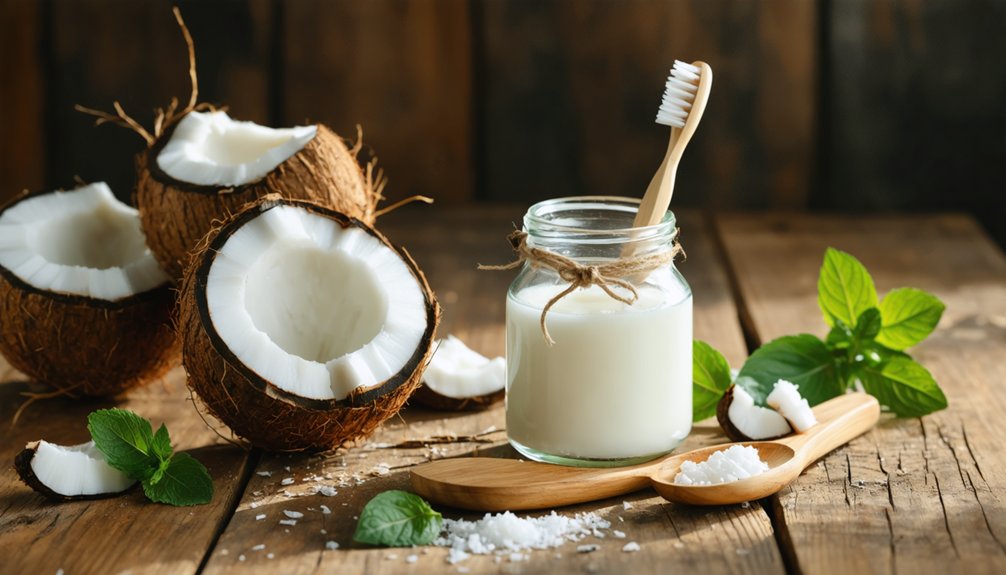
Beyond swishing, you can also apply coconut oil directly to your teeth by combining it with baking soda to target surface stains.
Mix one teaspoon of each ingredient to create a paste that supports teeth health through two complementary mechanisms. Baking soda acts as a mild abrasive, gently buffing away stains, while coconut oil’s lauric acid neutralizes bacteria that cause plaque and bad breath.
Among natural remedies, this combination is cost-effective and straightforward to prepare.
Apply the paste to your teeth, brush gently for two minutes, then rinse thoroughly.
Keep in mind that this method improves appearance through surface cleaning rather than bleaching. It won’t alter your teeth’s natural color the way hydrogen peroxide-based treatments do, but consistent use delivers measurable results.
Which Coconut Oil Works Best for Your Teeth?
Not all coconut oils deliver the same benefits for oral health. Choosing the right coconut oil types directly affects how much lauric acid you’re getting, which drives the antibacterial results.
Select your coconut oil using these three criteria:
- Organic coconut oil — Avoids pesticides and additives that may interfere with antimicrobial properties.
- Extra-virgin — Undergoes minimal processing, preserving the highest concentration of lauric acid.
- Cold-pressed — Uses no heat during extraction, protecting the oil’s natural antibacterial compounds.
Refined coconut oils undergo bleaching and deodorizing processes that strip beneficial compounds, reducing their effectiveness against oral bacteria.
Refined coconut oils are bleached and deodorized — stripping the very compounds that fight harmful oral bacteria.
For oil pulling or paste-making, organic, extra-virgin, cold-pressed coconut oil gives you the most potent antibacterial action and the cleanest ingredient profile.
Why Coconut Oil Cleans Teeth but Won’t Truly Whiten Them
Coconut oil cleans your teeth effectively, but it can’t truly whiten them. It removes plaque, surface bacteria, and stains through lauric acid’s antibacterial action, making teeth appear cleaner and brighter.
However, natural whitening requires bleaching agents like hydrogen peroxide or carbamide peroxide, which coconut oil simply doesn’t contain.
What coconut oil does offer is enamel safety. Unlike acidic or abrasive commercial products, oil pulling won’t erode your enamel or cause sensitivity. It reduces plaque and gingivitis-causing bacteria, supporting healthier gums and a cleaner mouth.
You’re improving your oral environment, not chemically altering tooth color. If you want genuine whitening results, you’ll need peroxide-based treatments.
Coconut oil remains a valuable complementary practice, but it works through cleaning, not bleaching.
Frequently Asked Questions
Can Children Safely Use Coconut Oil for Daily Teeth Cleaning Routines?
You can safely introduce coconut oil benefits into children’s oral health routines, but consult your pediatric dentist first. Make certain they don’t swallow it, as coconut oil’s antibacterial properties work best when properly spit out after use.
How Long Before Noticeable Results Appear From Using Coconut Oil Regularly?
Coincidentally, most users notice coconut oil benefits within two to four weeks of consistent use. You’ll see improved whitening effectiveness as plaque reduces, though true color change requires peroxide-based treatments for measurable, lasting results.
Does Coconut Oil Interact Negatively With Existing Dental Work or Fillings?
Coconut oil benefits your oral health without harming fillings or dental work. You don’t need to worry about damage, as its gentle antibacterial properties address dental work considerations safely, making it suitable for most restorations.
Can Coconut Oil Replace Regular Toothpaste for Everyday Oral Hygiene?
You shouldn’t replace toothpaste entirely with coconut oil. While coconut oil benefits include antibacterial properties, it lacks fluoride. Consider it among oral hygiene alternatives that complement—not substitute—regular brushing for complete cavity and enamel protection.
Is Coconut Oil Safe to Use Alongside Professional Whitening Treatments Simultaneously?
Yes, you can safely use coconut oil benefits alongside professional treatments. It won’t interfere with whitening effectiveness, as it lacks bleaching agents. You’ll support oral hygiene, reduce bacteria, and complement your professional results simultaneously.
References
- https://stapletondentistry.com/4-ways-to-whiten-your-teeth-at-home/
- https://www.myimagedental.com/blog/oil-pulling-myth/
- https://www.youtube.com/watch?v=Nt2OzsSMNxc
- https://www.suncreekdental.com/our-practice/blog/does-coconut-oil-whiten-teeth/
- https://enameldentistry.com/the-truth-about-coconut-oil-teeth-whitening/
- https://www.healthline.com/nutrition/whiten-teeth-naturally
- https://www.victory-smiles.com/at-home-teeth-whitening-remedies-to-try/
- https://englewooddental.com/blog/coconut-oil-for-a-whiter-brighter-and-healthier-smile/
- https://www.colgate.com/en-us/oral-health/teeth-whitening/does-coconut-oil-whiten-teeth