Finding the right dentist for smoker’s teeth whitening starts with understanding that tobacco stains penetrate beyond the enamel surface, requiring specialized training to treat effectively. You’ll want a dentist with cosmetic dentistry credentials, clinical experience with nicotine and tar staining, and access to professional-grade laser whitening technology. Costs typically range from $300 to $1,000 per session, and most smokers need two to four sessions. Everything you need to choose wisely is covered ahead.
Key Takeaways
- Look for dentists with AACD board certification, fellowship status, and clinical experience specifically treating tobacco-related staining for best results.
- Professional in-office whitening uses higher-concentration agents that penetrate deeper than over-the-counter strips, making it more effective for smokers.
- Heavy smokers typically need two to four professional sessions, costing between $300 and $1,000 per session depending on stain severity.
- Laser whitening is the most effective option for tobacco stains, with controlled wavelengths targeting deeply embedded nicotine and tar compounds.
- Ask potential dentists about their recommended whitening methods, expected sessions, maintenance appointments, and tailored aftercare for smoking patients.
How Smoking Stains Teeth (And Why Regular Whitening Falls Short)
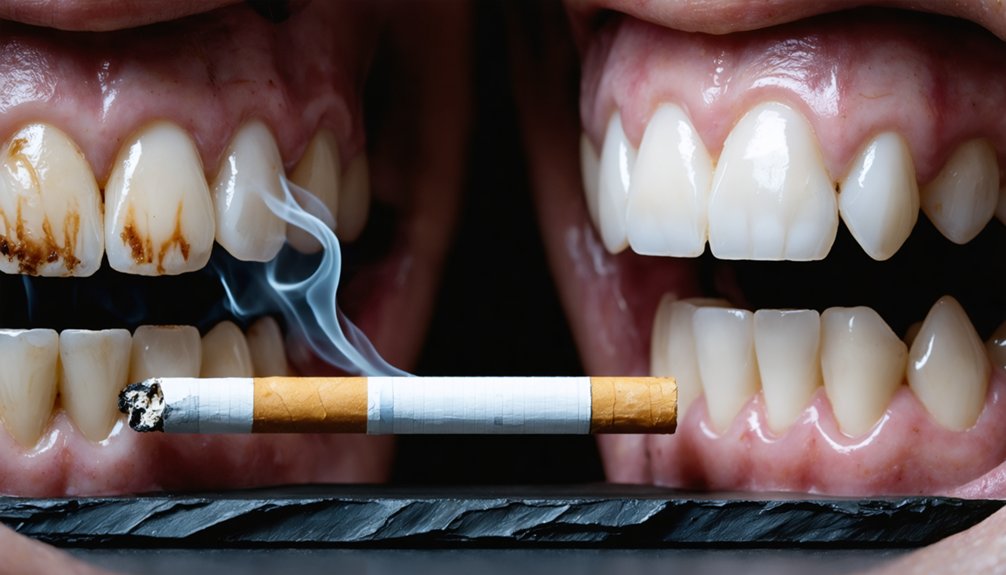
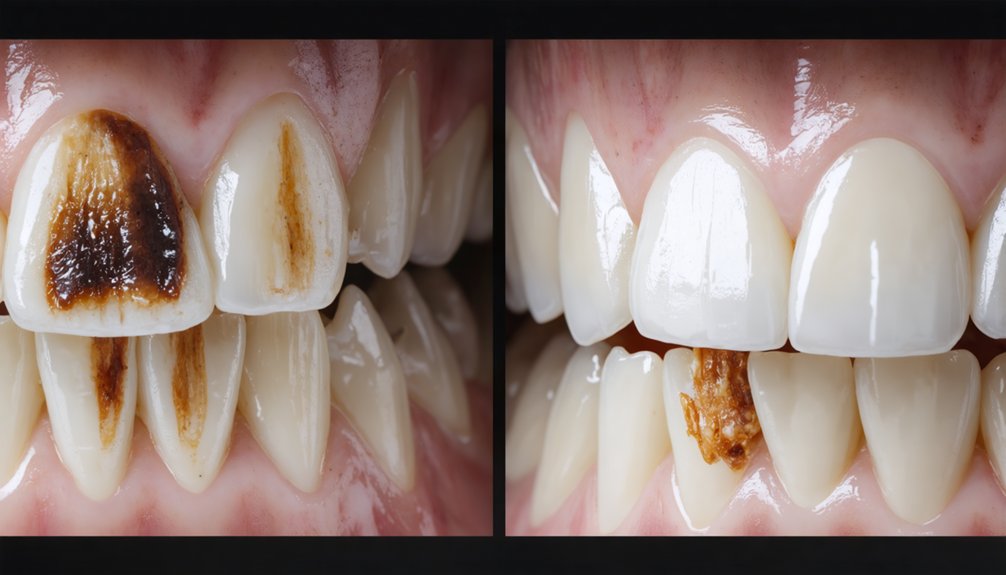
Smoking doesn’t just stain your teeth — it chemically alters them. Nicotine and tar penetrate your enamel’s microscopic pores, embedding deep beneath the surface where standard whitening strips and over-the-counter gels can’t reach.
These products work on surface-level discoloration, but smoking effects operate at a structural level, bonding chromogens directly to your enamel and dentin.
Smoking doesn’t just discolor — it bonds chromogens structurally to your enamel and dentin, far beyond the surface.
That’s where whitening limitations become frustrating. You apply the product, see minimal results, and repeat the cycle without addressing the root cause. Your teeth may also have weakened enamel from prolonged tobacco exposure, making aggressive at-home treatments potentially damaging rather than corrective.
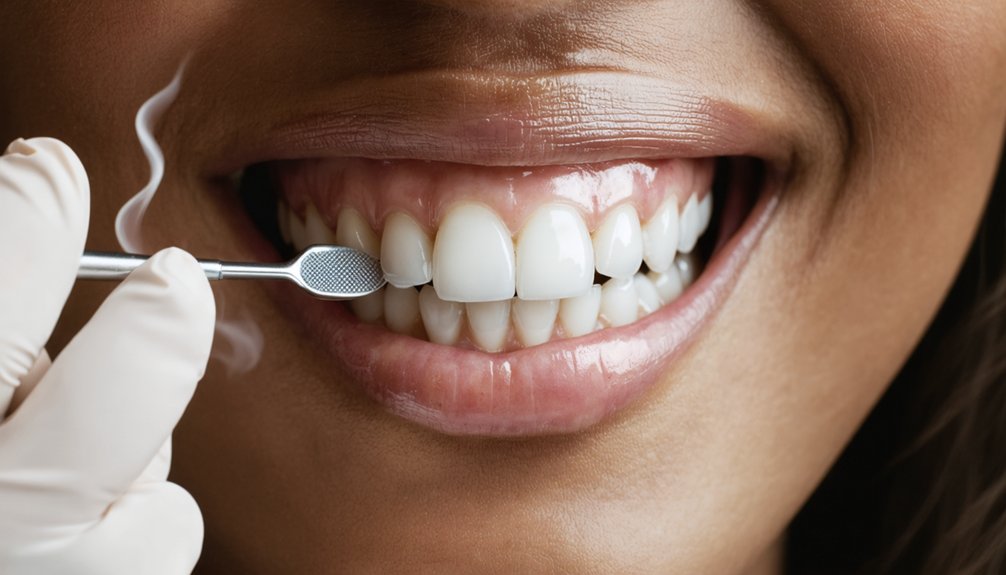
Professional-grade whitening — administered by a dentist experienced with tobacco staining — uses higher-concentration agents and customized protocols that penetrate deeper, delivering results that store-bought solutions simply can’t match.
5 Credentials That Separate Whitening Specialists From General Dentists
Once you recognize that tobacco staining requires a deeper clinical approach, your next step is identifying which dentists actually have the training to deliver it.
A solid credentials overview starts with board certification in cosmetic dentistry through recognized bodies like the American Academy of Cosmetic Dentistry (AACD). Fellowship or accreditation status signals advanced competency beyond basic licensure.
Look for dentists who’ve completed continuing education specifically in advanced whitening techniques, including laser-assisted bleaching and high-concentration peroxide protocols designed for deep, intrinsic staining.
Clinical experience with tobacco cases matters equally. Ask directly how many smoker whitening cases they manage annually.
Dentists who regularly treat nicotine and tar staining calibrate treatment plans differently than generalists. That specialized focus is what produces measurable, lasting results for your specific condition.
Questions to Ask Before Your First Smoker’s Whitening Appointment
Before scheduling your first appointment, you should ask your dentist which whitening method they recommend for tobacco-stained enamel, since in-office laser treatments, professional bleaching trays, and combination protocols each carry different clinical implications for smokers.
You’ll also want to confirm the expected treatment timeline, including how many sessions you’ll need and whether maintenance appointments will be necessary to sustain results.
These targeted questions help you set realistic expectations and choose a provider whose clinical approach aligns with the severity of your tobacco staining.
Whitening Method Options
Choosing the right whitening method before your first appointment can save you time, money, and disappointing results. Ask your dentist whether in-office bleaching, custom tray systems, or laser whitening best addresses tobacco stain depth.
Each method carries different implications for teeth sensitivity, so disclose your full smoking history upfront. In-office treatments typically deliver faster results but may heighten post-procedure sensitivity. Custom trays allow gradual whitening with more controlled exposure.
Laser whitening accelerates bleaching agents but isn’t universally appropriate for heavily stained enamel. Request specific aftercare tips tailored to your tobacco use patterns, since continued smoking between sessions undermines results.
Understanding each method’s timeline, cost, and sensitivity risks lets you make an informed decision rather than discovering limitations after treatment has already begun.
Expected Treatment Timeline
Understanding the expected treatment timeline before your first appointment helps you set realistic goals and avoid premature frustration with results.
Heavy tobacco staining typically requires multiple in-office sessions rather than a single treatment. Your dentist will assess stain depth during your consultation and outline a realistic treatment duration based on your specific discoloration level.
Ask your provider directly how many sessions you’ll likely need and how far apart they should be scheduled.
Patient expectations must align with clinical realities — significant tobacco stains rarely disappear after one visit. Most smokers require two to four professional sessions combined with at-home maintenance protocols.
Knowing this timeline upfront lets you plan financially, schedule accordingly, and measure progress accurately without abandoning treatment too early.
The 10 Best Dentists for Smoker’s Teeth Whitening
Finding the right dentist for smoker’s teeth whitening can markedly impact your results, since tobacco stains penetrate deeper into enamel than most surface discoloration.
Understanding smoking effects on dental tissue helps you ask better questions and avoid whitening myths that promise overnight transformation.
Knowing how smoking damages dental tissue empowers smarter questions and exposes whitening myths promising unrealistic results.
When evaluating providers, prioritize cosmetic dentists who:
- Perform thorough enamel assessments before treatment
- Offer combined mechanical debridement and professional bleaching
- Use prescription-strength peroxide formulations
- Provide documented before-and-after case studies
- Discuss realistic shade outcomes based on stain depth
Request consultations with at least three providers before committing.
Ask specifically about their experience treating tobacco-stained dentition, not general whitening cases.
Verify credentials through your state dental board.
The most qualified dentist will set measurable goals, not vague promises, giving you full control over your treatment decisions.
How Much Does Smoker’s Teeth Whitening Cost at a Dentist?
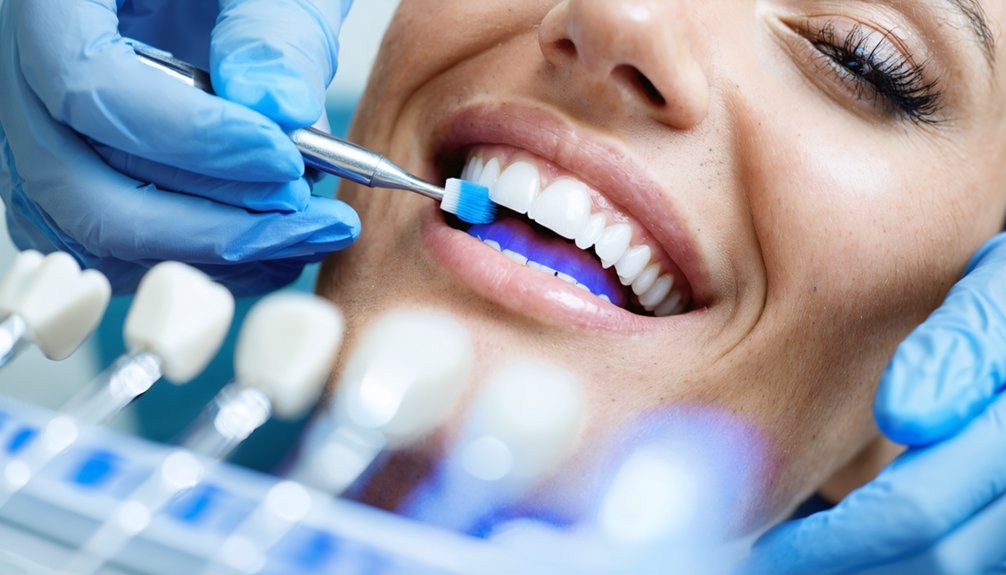
When considering professional teeth whitening as a smoker, you’ll find that costs typically range from $300 to $1,000 for in-office treatments, depending on the severity of tobacco staining and the whitening method your dentist recommends.
Several factors influence your final cost, including your geographic location, the dentist’s experience level, the number of sessions required, and whether you need preparatory treatments like a professional cleaning before whitening begins.
Understanding these variables upfront helps you budget accurately and avoid unexpected expenses as you work toward a healthier, brighter smile.
Average Whitening Treatment Prices
Smoker’s teeth whitening at a dentist typically costs between $300 and $1,000 per session, depending on the treatment type, severity of staining, and your geographic location.
In-office laser whitening runs higher, often reaching $1,000, while professional bleaching trays fall in the mid-range.
Your dentist selects whitening techniques based on how deeply tobacco has penetrated your enamel, which directly impacts the total cost.
Multiple sessions are sometimes necessary for heavy smokers, increasing your overall investment.
Factor in dental maintenance appointments, including cleanings before whitening, since removing surface buildup first maximizes results.
Some practices offer package pricing that bundles consultations, treatments, and follow-up visits.
Always request an itemized cost breakdown upfront so you can budget accurately and make informed decisions about your care.
Factors Affecting Whitening Costs
Several variables directly influence what you’ll pay for smoker’s teeth whitening at a dental office. The severity of tobacco staining is the primary cost driver — deeper, longer-established stains require more aggressive whitening techniques and extended treatment sessions.
Your geographic location, the dentist’s expertise level, and the specific technology used also affect pricing notably.
In-office laser treatments cost considerably more than custom tray systems, but they deliver faster, more controlled results on stubborn nicotine stains. Additional factors include pre-whitening examinations, desensitizing treatments, and any necessary preparatory procedures.
Following your dentist’s maintenance tips directly impacts long-term costs. Consistent post-treatment care — including prescribed touch-up trays, avoiding tobacco, and scheduling periodic professional cleanings — reduces retreatment frequency, ultimately lowering your cumulative whitening expenses over time.
Can Smokers Just Use Whitening Strips Instead?
Why reach for whitening strips when your dentist can deliver faster, longer-lasting results? Strip limitations make them a poor match for tobacco stains, which penetrate deeper than surface-level products can reach. Whitening effectiveness drops considerably when stains bond to dentin rather than enamel alone.
Consider these key drawbacks:
- Inconsistent contact — strips shift during wear, leaving uneven results across teeth.
- Limited bleaching strength — over-the-counter formulas contain lower peroxide concentrations than professional treatments.
- No stain penetration — strips address surface discoloration only, missing embedded tobacco compounds.
You need solutions that match the severity of your staining.
Professional treatments give you controlled, measurable outcomes — something no drugstore strip can reliably promise smokers with moderate-to-severe discoloration.
Why In-Office Laser Whitening Works Best on Tobacco Stains
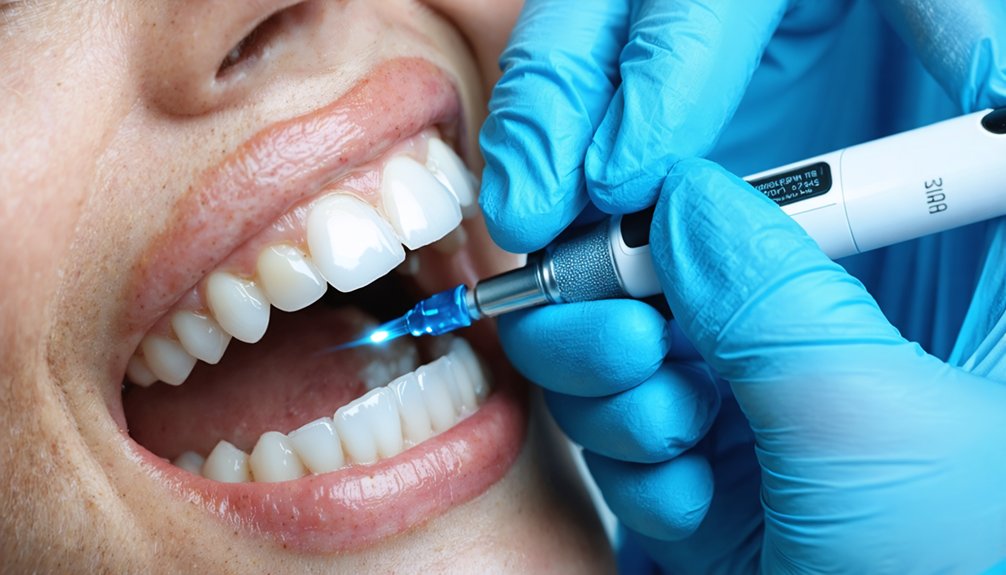
When tobacco stains penetrate beyond the enamel surface, laser energy reaches those deeper layers where strips simply can’t.
Your dentist controls the whitening strength in real time, adjusting the treatment to match the severity of your staining without risking overexposure.
This precision, combined with the laser’s activation of professional-grade bleaching agents, produces results in a single session that strips would take weeks—or never—to achieve.
Laser Penetrates Deep Stains
Tobacco stains don’t just coat the surface of your enamel — they penetrate deep into the porous layers beneath it, which is why over-the-counter strips and trays rarely deliver meaningful results for smokers.
Laser effectiveness comes from its ability to target chromogens embedded below the surface, where topical agents can’t reach.
Here’s how laser enables deep stain removal:
- Activates bleaching agents — The laser accelerates hydrogen peroxide breakdown, releasing oxygen molecules that penetrate enamel’s micro-pores.
- Targets discoloration precisely — Controlled wavelengths reach stain compounds without damaging surrounding tissue.
- Delivers faster oxidation — The reaction happens in minutes, not weeks, breaking down years of tobacco-related pigmentation efficiently.
You’re not just whitening — you’re addressing stains at their structural source.
Faster Results Than Strips
Strips and trays simply can’t compete with in-office laser whitening when tobacco stains are involved. Over-the-counter products require weeks of repeated application, yet they rarely penetrate the deep chromogenic compounds that nicotine and tar deposit into enamel. A single laser session delivers measurable whitening in under two hours.
You’ll also experience more manageable teeth sensitivity with professional treatments because your dentist controls the light intensity and applies protective barriers to your gums. That precision reduces unnecessary enamel exposure.
For whitening maintenance, your dentist provides a customized post-treatment protocol tailored to your smoking habits, telling you exactly how often to schedule touch-ups.
Strips offer no such personalization. When you choose laser whitening, you’re taking a data-driven approach that gives you faster, longer-lasting control over your results.
Dentist-Controlled Whitening Strength
Speed matters, but strength is what actually breaks apart tobacco stains at the molecular level. Your dentist controls the concentration of whitening agents—something no strip or tray can replicate.
Following dentist recommendations guarantees you’re receiving a calibrated approach rather than a generic solution.
In-office laser whitening activates professional-grade hydrogen peroxide at intensities matched to your stain severity. These whitening techniques outperform OTC options because they’re adjusted in real time based on your enamel’s response.
Three reasons dentist-controlled strength outperforms store-bought options:
- Precision dosing targets nicotine and tar compounds specifically
- Laser activation accelerates the whitening agent’s penetration depth
- Live monitoring prevents enamel damage while maximizing stain removal
You’re not guessing with percentages—your dentist is making clinical decisions on your behalf.
How Long Does Smoker’s Teeth Whitening Actually Last?
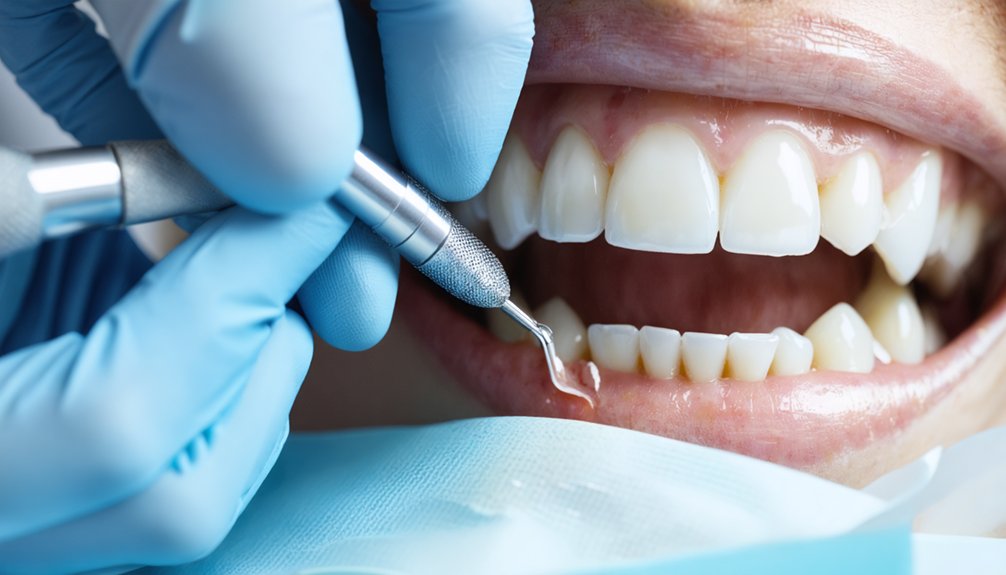
When you invest in professional teeth whitening as a smoker, results typically last three to six months — considerably shorter than the one to two years non-smokers enjoy. Continued tobacco use reintroduces tar and nicotine, which penetrate enamel and accelerate stain recurrence.
Your whitening maintenance strategy directly controls how long results hold. Dentist-prescribed take-home trays let you touch up between appointments without triggering unnecessary teeth sensitivity.
Using desensitizing toothpaste alongside your maintenance routine further protects enamel during repeated whitening cycles.
Scheduling professional cleanings every three months — rather than the standard six — removes surface buildup before stains set deeply. Rinsing immediately after smoking also slows pigment absorption.
Ultimately, how long your results last depends less on the treatment and more on the daily habits you control.
When Smokers Need Veneers Instead of Whitening
Sometimes whitening simply isn’t enough. Smoking impacts teeth beyond surface stains, causing structural damage that whitening can’t fix. If you’re experiencing any of the following, veneers benefits may outweigh whitening treatments:
Whitening has its limits — when smoking causes structural damage, veneers may be the stronger solution.
- Deep intrinsic stains that have penetrated the enamel and resist professional bleaching agents entirely.
- Enamel erosion caused by tobacco’s acidic compounds, leaving teeth structurally compromised and visually uneven.
- Permanent discoloration from decades of tar and nicotine exposure that no whitening concentration can adequately address.
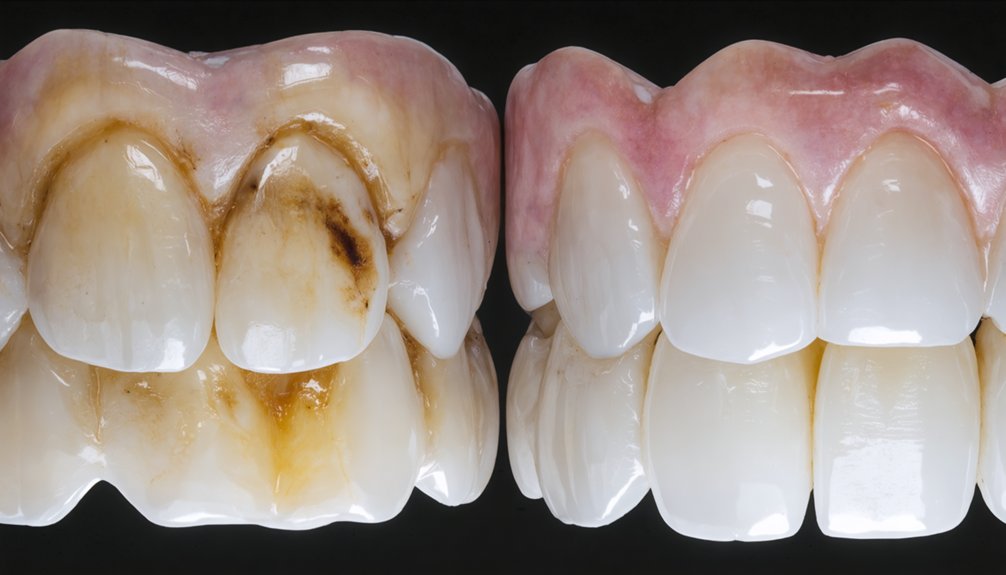
Veneers cover these issues by bonding a porcelain shell directly to your tooth’s surface, giving you complete control over your final shade.
Your dentist evaluates stain depth and enamel integrity before recommending this path. When whitening plateaus, veneers deliver predictable, lasting results.
How to Keep Your Smoker’s Whitening Results Longer
Whether veneers or whitening gets you the results you want, protecting that investment requires consistent effort—especially if you’re still smoking. Smoker’s habits accelerate staining, so whitening maintenance becomes non-negotiable if you want lasting results.
Follow these strategies to extend your outcomes:
- Rinse immediately after smoking to reduce surface contact with tobacco residue
- Use a whitening toothpaste formulated for smokers at least once daily
- Schedule touch-up treatments every three to six months, depending on your smoking frequency
- Avoid compounding stains from coffee, tea, and red wine
- Brush within 30 minutes of consuming staining substances
- Stay consistent with cleanings twice yearly to remove buildup before it sets
You control how long your results last. Discipline between appointments determines everything.
Frequently Asked Questions
Does Teeth Whitening Hurt More for Smokers With Sensitive Gums?
Yes, teeth whitening can hurt more if you’ve got sensitive gums from smoking. You’ll need proper sensitivity management and improved gum health before treatment to minimize discomfort and protect your oral tissues effectively.
Can Smokers Whiten Teeth While Using Nicotine Patches or Gum?
Like clearing fog from a mirror, you can whiten teeth while using patch alternatives. Nicotine effects won’t block whitening, but you’ll get better results by timing treatments between patch applications.
How Many Whitening Sessions Do Heavy Smokers Typically Need?
You’ll typically need 6–10 whitening sessions as a heavy smoker. Smoking effects deeply embed stains, requiring advanced whitening techniques to lift them. Your dentist will customize a preventive maintenance schedule to sustain your results effectively.
Is Teeth Whitening Covered by Dental Insurance for Smokers?
Like Mark, who paid out-of-pocket, you’ll find dental insurance typically won’t cover teeth whitening due to insurance limitations classifying it as cosmetic. Smoking effects worsen staining, making this an expected personal expense you’ll need to budget for.
What Whitening Shade Is Realistically Achievable for Long-Term Smokers?
You can realistically achieve 2-5 shades lighter with professional whitening products, but long-term teeth staining from smoking limits results. You’ll likely need multiple sessions to reach your achievable shade ceiling.
References
- https://friedmandentalgroup.com/dental-related/teeth-whitening-for-smokers-solutions-to-remove-tobacco-stains/
- https://tysondental.com/teeth-whitening-for-smokers-strategies-and-recommendations/
- https://mcmurphyfamilydentistry.com/dentist-services-biloxi-ms/teeth-whitening/
- https://backbayfamilydentistry.com/cosmetic-dentistry/teeth-whitening/
- https://www.healthgrades.com/dentistry-general-directory/ms-mississippi/gulfport
- https://www.biloxidental.com/services/cosmetic-dentistry/
- https://www.dentistinbiloxims.com/dental-care/cosmetic-dentistry/teeth-whitening/
- https://www.thesmilenova.com/post/the-ultimate-guide-to-teeth-whitening-for-smokers