If you have sensitive teeth, you can still whiten effectively by choosing low-peroxide formulas containing potassium nitrate or nano-hydroxyapatite. Start using desensitizing toothpaste two weeks before treatment, shorten tray wear times, and pause for 48–72 hours if discomfort flares. After whitening, avoid temperature extremes and switch to a soft-bristled toothbrush. Following evidence-based protocols before, during, and after each session dramatically reduces sensitivity risk—and every step of that process is worth understanding in detail.
Key Takeaways
- Use whitening products with lower peroxide concentrations and desensitizing ingredients like potassium nitrate or nano-hydroxyapatite to minimize sensitivity.
- Prepare teeth two weeks before whitening by consistently using desensitizing toothpaste and strengthening enamel with fluoride rinses.
- Shorten tray wear time, apply desensitizing gel after sessions, and pause treatment for 48–72 hours if sensitivity occurs.
- After whitening, avoid temperature extremes, stay hydrated, and use sensitive-formula toothpaste to support enamel remineralization.
- Stop whitening and consult a dentist if pain persists beyond 48 hours, gums swell, or unusual sensitivity develops.
Why Whitening Causes Tooth Sensitivity
When peroxide-based bleaching agents penetrate the enamel, they expose the underlying dentin and its microscopic tubules, triggering heightened sensitivity to temperature, pressure, and chemical stimuli.
Peroxide bleaching agents penetrate enamel, exposing dentin tubules and triggering sharp sensitivity to temperature, pressure, and chemical stimuli.
These tubules connect directly to nerve endings within the pulp, creating clear sensitivity triggers that intensify your discomfort during and after treatment.
Several factors amplify this reaction. Higher peroxide concentrations, particularly the 25–40% levels used in professional settings, cause greater irritation.
Pre-existing conditions like gum recession, cavities, or worn enamel increase your baseline reactivity.
Dehydrated enamel absorbs bleaching agents faster, compounding discomfort.
Thinning enamel from repeated treatments further reduces your natural protective barrier, leaving dentin increasingly vulnerable.
Understanding these mechanisms gives you the foundation to make informed, strategic decisions about your whitening approach.
Choosing the Right Whitening Products for Sensitive Teeth
Since sensitivity stems directly from peroxide concentration and enamel porosity, selecting products with lower peroxide levels is your most effective first line of defense.
At-home kits with reduced peroxide minimize dentin exposure while still delivering measurable results. For enamel protection, prioritize formulas containing potassium nitrate, nano-hydroxyapatite, or fluoride, as these clinically recognized agents actively block nerve signals and reinforce enamel structure.
Dentist-approved systems with built-in desensitizing compounds give you greater control over outcomes. Peroxide-free options, though slower, reduce irritation risk considerably.
Some natural remedies, such as fluoride-enhanced rinses derived from mineral compounds, complement these products by strengthening enamel between sessions.
Always verify that any product you choose carries professional endorsement, ensuring its formulation aligns with your specific sensitivity threshold and treatment goals.
How to Prep Sensitive Teeth Before Whitening
Before whitening, start using a desensitizing toothpaste containing potassium nitrate or nano-hydroxyapatite at least two weeks prior to treatment, as this helps block nerve signals and reduces baseline sensitivity.
Schedule a dental exam to identify and address pre-existing conditions like cavities, gum recession, or enamel erosion that can intensify your reaction to bleaching agents.
Strengthen your enamel further by incorporating a fluoride toothpaste or rinse into your daily routine during this preparatory period, since fluoride fortifies enamel and reduces its susceptibility to peroxide penetration.
Start Desensitizing Toothpaste Early
Starting desensitizing toothpaste at least two weeks before your whitening treatment gives the active ingredients time to take effect and meaningfully reduce procedural discomfort.
Toothpaste effectiveness depends on consistent, daily use—sporadic application won’t build adequate protection. Look for desensitizing ingredients like potassium nitrate, which interrupts nerve signal transmission, or nano-hydroxyapatite, which remineralizes and occludes exposed dentinal tubules.
Apply the toothpaste twice daily, brushing normally and allowing residual product to remain on your teeth for several minutes before rinsing. This maximizes absorption and cumulative benefit.
If your baseline sensitivity is significant, consider applying a thin layer directly to sensitive areas and leaving it overnight. You’re establishing a biochemical buffer before introducing peroxide—this preparation phase directly determines how well you’ll tolerate the whitening process.
Schedule A Dental Exam
Scheduling a dental exam before whitening is a necessary step, not a formality. Your dentist identifies underlying issues—cavities, gum recession, or enamel erosion—that amplify sensitivity during treatment.
Proceeding without this evaluation means whitening over compromised tissue, which guarantees discomfort and potential damage.
A professional dental cleaning removes tartar buildup and surface debris that interfere with gel penetration and skew results.
More importantly, it gives your clinician a clear view of your oral health baseline.
If decay or erosion is present, you’ll need to address those conditions before applying any bleaching agent.
Whitening doesn’t distinguish between healthy and damaged enamel—it acts on both equally.
Taking control of your results starts with knowing exactly what you’re working with.
Strengthen Enamel With Fluoride
Fluoride applied consistently before whitening treatment reinforces enamel mineralization and reduces dentinal permeability—two factors that directly determine how much sensitivity you’ll experience.
The fluoride benefits extend beyond surface protection; fluoride ions integrate into enamel’s crystalline structure, creating fluorapatite, which resists acid degradation and bleaching agent penetration more effectively than standard hydroxyapatite.
Start using fluoride toothpaste twice daily at least two weeks before your first whitening session.
Add a fluoride rinse each evening to maximize enamel protection at the microscopic level.
If your baseline sensitivity is significant, ask your dentist about prescription-strength fluoride gel applied via custom trays.
This targeted approach closes dentinal tubules before peroxide exposure begins, giving you a measurable physiological advantage going into treatment.
Application Techniques That Minimize Sensitivity
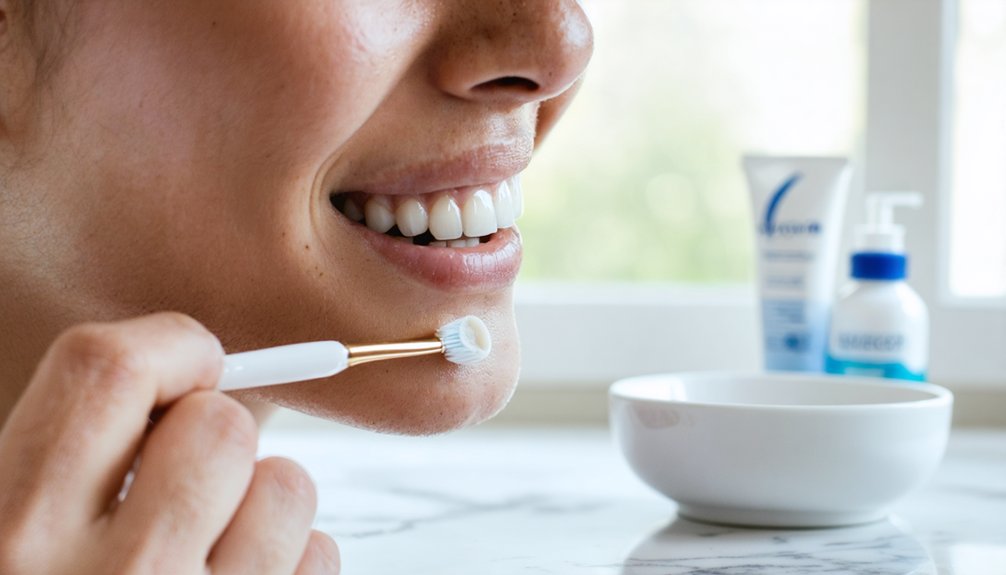
Although whitening products deliver results, how you apply them greatly affects your sensitivity risk. Prioritize custom fittings to guarantee even gel distribution and minimize gum contact.
Monitor application duration carefully—shorten tray wear time or alternate treatment days to support enamel recovery. Gradual whitening with lower peroxide concentrations reduces nerve irritation while still producing measurable results.
Pay close attention to gel consistency; thicker formulations tend to stay contained within trays, reducing soft tissue exposure. During sensitivity monitoring, note any sharp or lingering discomfort and pause treatment immediately if it intensifies.
After each session, line your trays with desensitizing gel and wear them for 10 minutes. Tray adjustments, combined with disciplined scheduling and 6-month treatment intervals, protect enamel integrity without sacrificing your whitening outcomes.
Post-Whitening Care for Sensitive Teeth
Once your whitening session ends, protecting sensitized enamel becomes your immediate priority. Avoid temperature extremes—hot coffee, cold beverages, and acidic foods destabilize your post whitening diet and worsen dentin exposure. Limit consumption to room-temperature, non-acidic items for 48 hours following treatment.
Hydration importance shouldn’t be underestimated. Whitening agents dehydrate enamel, amplifying nerve reactivity and discomfort. Drinking adequate water helps restore moisture balance and reduces post-treatment sensitivity risk.
Whitening agents dehydrate enamel—drinking adequate water restores moisture balance and reduces post-treatment sensitivity.
Switch to a soft-bristled toothbrush immediately and use sensitive-formula toothpaste containing potassium nitrate or nano-hydroxyapatite to block nerve signals. Rinse with lukewarm fluoride mouthwash to accelerate enamel remineralization.
If sensitivity persists beyond 72 hours, consult your dentist promptly—prolonged discomfort may indicate underlying enamel compromise requiring clinical intervention.
Managing Sensitivity If It Flares Up Mid-Treatment
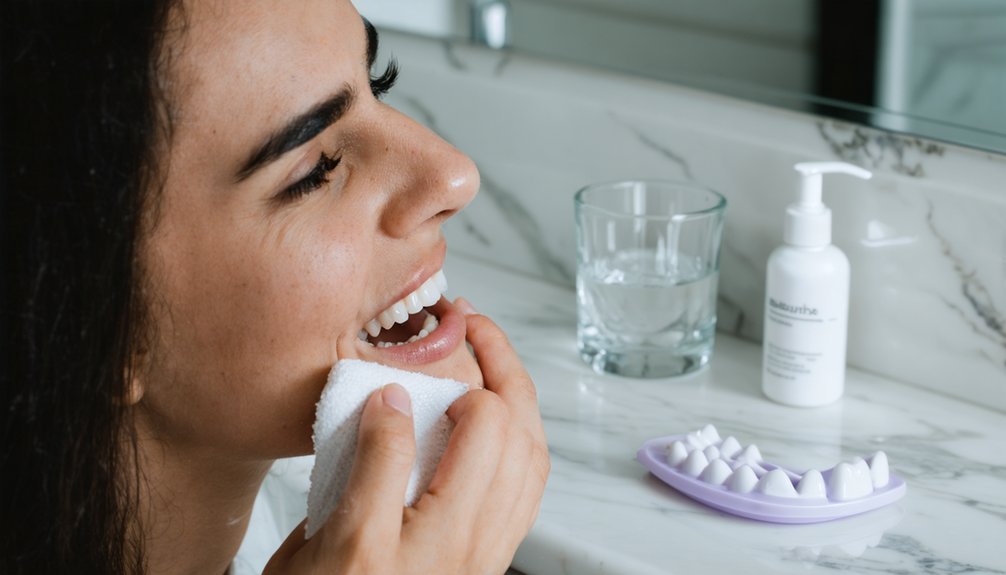
Mid-treatment sensitivity flare-ups are common, but they don’t require you to abandon your whitening regimen entirely.
Identifying sensitivity triggers early lets you intervene before discomfort escalates.
Take these targeted steps for emergency relief:
- Pause treatment immediately and allow your teeth 48–72 hours to recover before resuming.
- Apply a desensitizing gel directly into your trays and wear for 10 minutes to block nerve signals at the source.
- Take ibuprofen as directed to reduce inflammation and manage acute pain effectively.
Once sensitivity subsides, resume whitening with reduced application time or lower peroxide concentration.
If discomfort persists beyond a few days, consult your dentist to rule out underlying conditions requiring clinical intervention.
Signs It’s Time to Stop Whitening and See Your Dentist
While pausing treatment and applying desensitizing agents resolves most mid-treatment flare-ups, some symptoms signal a deeper problem that self-management can’t address.
Signs discomfort has crossed a clinical threshold include persistent pain lasting beyond 48 hours, unusual sensitivity to air or light pressure, and swelling concerns involving inflamed gum tissue that doesn’t subside.
Gum irritation producing white or bleeding patches also warrants immediate evaluation.
Stop whitening entirely if you notice a color mismatch between teeth, suggesting uneven enamel erosion.
Extended duration use beyond recommended cycles compounds overuse effects, accelerating structural damage.
These aren’t manageable at home. Consulting your dentist allows for professional assessment, identifying underlying decay, recession, or nerve involvement before permanent damage occurs.
How to Touch Up Whitening Without Retriggering Sensitivity
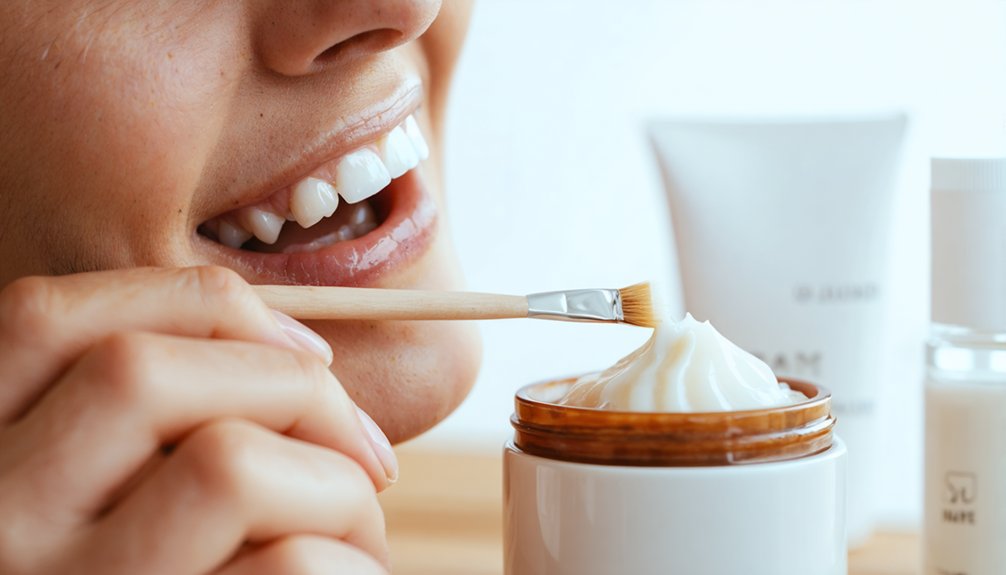
When touching up your whitening results, you should space treatments at least six months apart to allow enamel recovery and prevent cumulative irritation.
Opt for lower-concentration peroxide formulas during touch-ups, as gradual application delivers comparable results with markedly less nerve stimulation.
Afterward, follow up with fluoride rinses, desensitizing toothpaste, and temperature-neutral foods for 48 hours to protect newly treated enamel from retriggering sensitivity.
Spacing Treatments For Recovery
Spacing whitening treatments strategically lets your enamel recover between sessions and prevents cumulative irritation from compounding sensitivity.
Controlling treatment frequency directly determines how much recovery duration your dentin gets between exposures.
Follow these evidence-based spacing guidelines:
- At-home kits: Limit active whitening to 10–14 consecutive days, then pause for at least two weeks before resuming.
- Touch-up sessions: Apply treatments every other day rather than daily, giving enamel adequate remineralization time between applications.
- In-office treatments: Maintain a minimum six-month interval between professional sessions to prevent cumulative enamel degradation.
Between cycles, use fluoride rinses and desensitizing toothpaste to actively rebuild enamel strength.
If sensitivity resurfaces during a touch-up cycle, extend your recovery duration before continuing.
Lower Concentration Touch-Ups
Recovery intervals protect your enamel between full whitening cycles, but maintaining your results long-term requires a separate strategy for touch-ups.
Rather than repeating high-concentration treatments, use lower peroxide formulas—typically 6–10%—applied through custom trays for controlled, even distribution. This gradual application minimizes dentin exposure while reinforcing your existing shade without triggering acute sensitivity.
Schedule touch-ups only when visible dulling occurs, not on a fixed calendar. Apply the gel for shorter sessions than your original treatment and pair each application with a desensitizing agent loaded into your custom trays afterward.
Avoid touch-ups following acidic food exposure or periods of enamel dehydration. If sensitivity resurfaces, extend the interval further.
Precision and restraint in touch-up frequency preserve both your results and your enamel integrity.
Post-Touch-Up Sensitivity Care
Even after a carefully applied touch-up, your teeth remain temporarily vulnerable, and how you manage the next 48 hours determines whether sensitivity stays dormant or returns.
Execute these three evidence-backed steps immediately:
- Prioritize post-treatment hydration — Drink adequate water to counteract whitening-induced dehydration, which accelerates dentin exposure and discomfort.
- Support enamel restoration — Apply fluoride gel or nano-hydroxyapatite toothpaste directly after treatment to remineralize and reinforce weakened enamel structure.
- Eliminate thermal triggers — Avoid hot and cold foods or beverages for 48 hours, consuming only room-temperature items.
Additionally, switch to a soft-bristled toothbrush and avoid acidic foods during recovery.
If sensitivity intensifies rather than subsides, consult your dentist before scheduling your next session.
Frequently Asked Questions
Can Teeth Whitening Permanently Damage Enamel With Repeated Long-Term Use?
Yes, repeated long-term whitening can permanently compromise your enamel health. You’ll accelerate teeth sensitivity and irreversible enamel thinning by overusing high-peroxide treatments. Space sessions six months apart and maintain dentist-supervised protocols to protect your enamel effectively.
Are Natural Whitening Remedies Like Charcoal Safer for Sensitive Teeth?
Charcoal effectiveness is unproven and it’s actually abrasive, worsening sensitivity by eroding enamel. You should explore natural alternatives like nano-hydroxyapatite toothpaste instead, as it’s clinically supported for strengthening enamel and reducing discomfort safely.
Does Teeth Whitening Affect Dental Restorations Like Crowns or Veneers?
Whitening techniques don’t alter restoration materials like crowns or veneers, as peroxide only affects natural enamel. You’ll notice uneven color matching post-treatment, so consult your dentist before proceeding to maintain consistent aesthetic results.
Can Pregnancy Affect Tooth Sensitivity During or After Whitening Treatments?
Yes, pregnancy hormones can heighten your tooth sensitivity, making whitening treatments more uncomfortable. Prioritizing dental safety, you should consult your dentist before proceeding, as most professionals recommend avoiding whitening treatments entirely during pregnancy.
Is Professional Whitening Always More Effective Than At-Home Sensitivity-Friendly Kits?
Like a double-edged sword, professional treatments deliver faster, stronger results but amplify sensitivity. Home kits offer you gentler, controlled whitening with lower peroxide levels, making them equally effective for sensitivity-prone individuals seeking gradual, safer outcomes.
References
- https://www.mynorthbethesdadentist.com/blog/?p=121
- https://mypremiumdental.com/how-to-avoid-sensitivity-during-teeth-whitening-treatments/
- https://valleycreekdentalcare.com/blog/teeth-whitening-sensitivity-5-common-mistakes-and-how-to-prevent-them
- https://www.elitedentalbrookfield.com/cosmetic-dentistry/blog/teeth-whitening-with-sensitivity-options/
- https://www.thesuperdentists.com/sensitive-teeth-hurting-after-whitening/
- https://www.dentistsatorenco.com/blog/how-to-avoid-sensitivity-after-teeth-whitening/
- https://www.encinitascosmeticdentistry.com/practice-news/how-to-prepare-sensitive-teeth-for-whitening/
- https://www.colgate.com/en-us/oral-health/tooth-sensitivity/tooth-bleaching-at-home-five-ways-to-stop-sensitivity
- https://bocaratoncosmeticdentist.com/blog/pain-after-teeth-whitening/