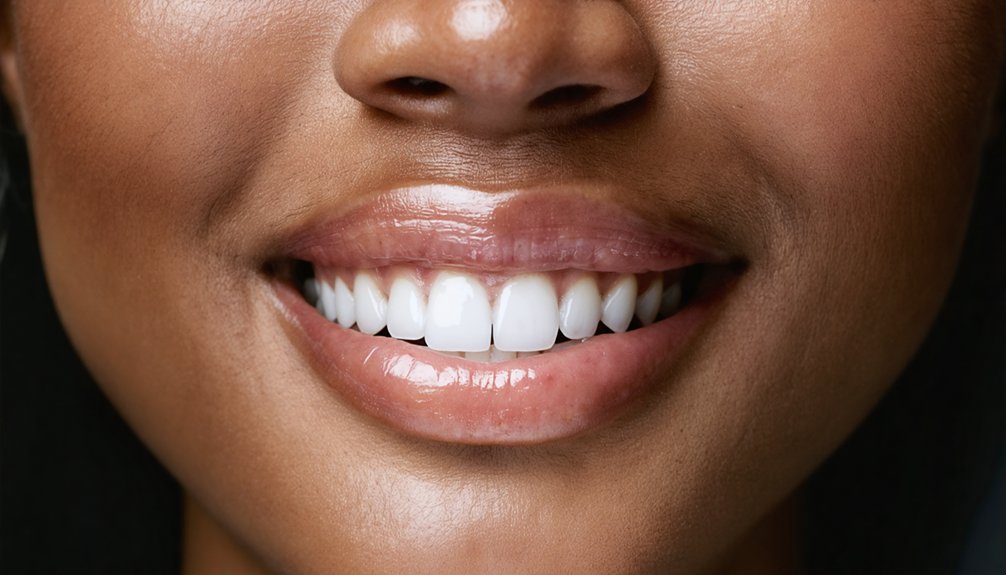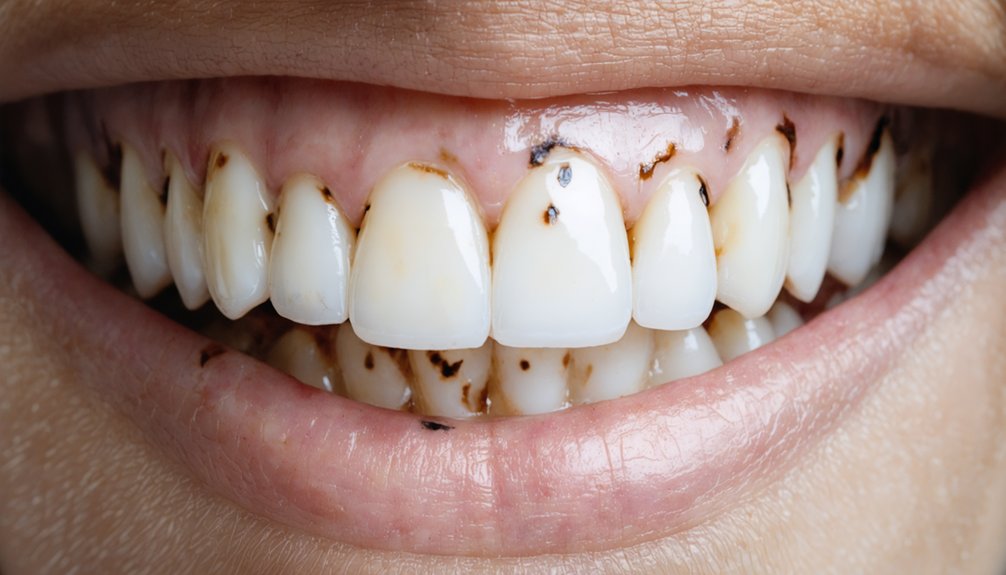
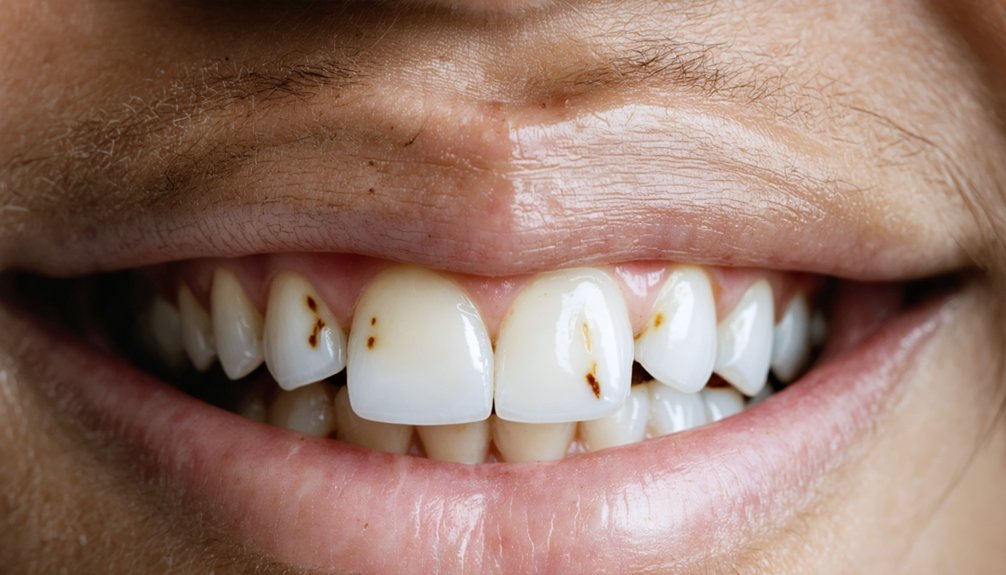
Dark spots appear on your front teeth when staining agents, bacterial byproducts, or structural changes compromise your enamel’s integrity. Extrinsic factors like coffee, tobacco, and poor oral hygiene allow chromogens and tartar to bind to your tooth surface. Intrinsic causes — including tetracycline use, fluorosis, trauma, or aging — originate deeper within the tooth structure. Identifying which mechanism is at work determines the right treatment path, and each cause has its own clinical profile worth understanding.
Key Takeaways
- Dark spots on front teeth can result from staining foods and drinks like coffee, tea, red wine, and berries due to chromogens and tannic acids.
- Tobacco products contain nicotine and tar that penetrate enamel deeply, causing persistent dark staining on front teeth.
- Poor oral hygiene allows plaque and tartar buildup, which absorbs pigments from food and beverages, intensifying tooth discoloration.
- Intrinsic causes like tetracycline use, dental trauma, fluorosis, and enamel hypoplasia can cause dark spots from within the tooth.
- Age-related enamel thinning gradually exposes darker dentin beneath, causing front teeth to appear darker or discolored over time.
What Causes Dark Spots on Front Teeth?
Dark spots on front teeth develop from a range of causes, both external and internal.
Externally, chromogens from coffee, tea, red wine, and tobacco penetrate enamel, while plaque and tartar accumulation accelerates stain adhesion. Poor oral hygiene allows these pigments to bind more aggressively to tooth surfaces, making stain prevention increasingly difficult over time.
Internally, factors like tetracycline use during childhood, fluoride overexposure, dental trauma, and enamel developmental defects cause discoloration that originates beneath the enamel surface.
Age-related enamel thinning exposes the darker dentin layer, and genetic conditions such as dentinogenesis imperfecta can cause inherent darkening from birth.
Identifying whether your dark spots stem from extrinsic or intrinsic sources directly determines which treatment approach will be most effective for you.
Foods, Drinks, and Tobacco That Stain Front Teeth
Certain foods, drinks, and tobacco products rank among the most common contributors to dark spots on front teeth. Staining foods like berries, soy sauce, and artificially dyed products contain chromogens that penetrate enamel directly.
Foods like berries, soy sauce, and dyed products contain chromogens that penetrate enamel, causing dark spots on front teeth.
Beverage pigments from coffee, tea, and red wine carry tannic acid compounds that adhere aggressively to enamel surfaces, accelerating enamel damage over time.
Tobacco effects are equally severe. Nicotine and tar penetrate deep into enamel, creating stubborn discoloration that routine oral hygiene can’t fully reverse.
Plaque accumulation intensifies every category of staining, since pigments bind more readily to plaque than to clean enamel.
You can pursue stain prevention by limiting exposure to these substances and maintaining consistent brushing and flossing habits.
Severe cases typically require professional cosmetic treatments for complete removal.
How Plaque and Tartar Create Dark Spots on Front Teeth
Plaque and tartar contribute to dark spots on front teeth through a different mechanism than food and tobacco staining, though the two processes reinforce each other.
Plaque accumulation creates a filmy bacterial layer that produces acids, breaking down enamel and exposing the yellowish dentin beneath. As plaque hardens into tartar, it absorbs pigments from foods and beverages far more readily than clean enamel does, intensifying visible discoloration.
You can’t remove tartar through brushing alone — professional tartar removal is required once calcification occurs. The bacteria within plaque also generate dark byproducts directly, creating brownish or black deposits on your front teeth.
Controlling plaque accumulation through consistent brushing and flossing remains your most effective strategy for preventing this compounding cycle of discoloration and enamel degradation.
Medications, Trauma, and Childhood Conditions That Darken Teeth
Beyond lifestyle habits, certain medications, past injuries, and conditions affecting your teeth during childhood can cause dark spots that you simply can’t prevent through brushing or diet.
Tetracycline and doxycycline antibiotics taken during tooth development, excessive fluoride exposure causing fluorosis, and hereditary conditions like dentinogenesis imperfecta all produce intrinsic discoloration baked into your tooth structure from the start.
Dental trauma from impacts or injuries can also trigger internal bleeding within the tooth, leaving gray or dark discoloration on your front teeth that becomes increasingly visible over time.
Medications Causing Tooth Discoloration
Some medications, developmental conditions, and physical trauma can permanently alter the color of your front teeth from the inside out—a process known as intrinsic discoloration.
Unlike surface staining, intrinsic dental discoloration originates within the tooth structure itself, making it resistant to conventional whitening methods.
Medication effects during critical developmental windows are particularly damaging. If you took tetracycline or doxycycline antibiotics before age eight, these compounds bonded directly to your developing enamel and dentin, producing permanent gray, yellow, or brown banding across your front teeth.
Antihistamines and certain antihypertensive medications can similarly trigger discoloration, though mechanisms differ.
Because these changes occur within the tooth matrix rather than on its surface, you’ll likely require professional cosmetic intervention—such as veneers or bonding—to effectively correct the discoloration.
Trauma and Developmental Conditions
Physical trauma and developmental conditions represent another category of intrinsic discoloration that medications alone don’t account for. When your front teeth experience direct impact or form improperly during development, the resulting discoloration becomes permanent without professional intervention.
Understanding these trauma effects and enamel conditions helps you identify the exact cause:
- Dental trauma from falls or sports injuries triggers internal bleeding, causing gray or dark discoloration.
- Enamel hypoplasia produces underdeveloped enamel, leaving front teeth highly vulnerable to staining.
- Fluorosis from excessive childhood fluoride exposure creates white streaks or dark brown spots.
- Dentinogenesis imperfecta causes darker teeth from birth due to hereditary structural abnormalities.
- Developmental enamel conditions expose porous tooth surfaces that trap pigments more aggressively.
Recognizing these causes determines which professional treatment options remain viable for your specific situation.
How Age and Genetics Cause Dark Spots on Front Teeth
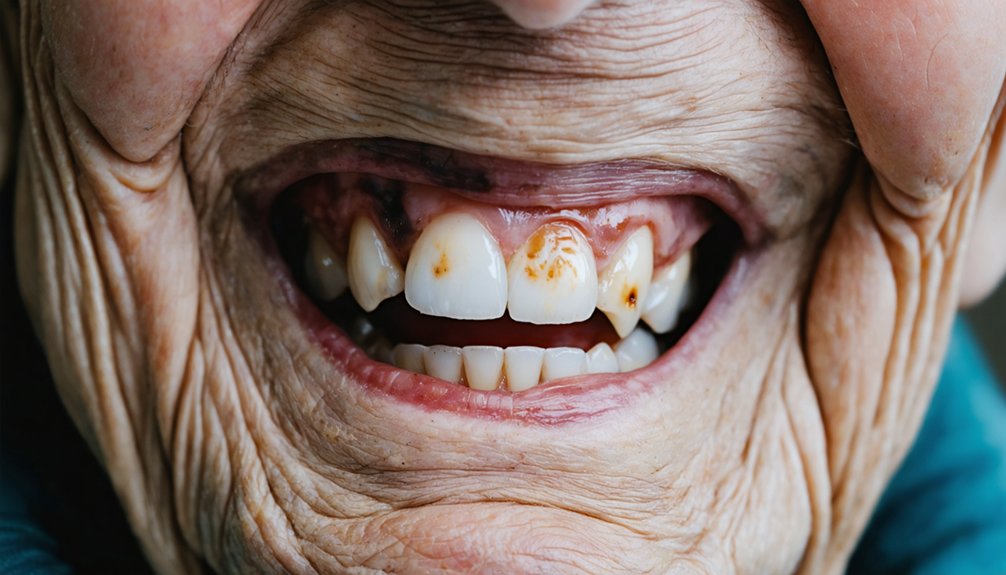
As you age, your tooth enamel gradually thins, allowing the naturally yellowish dentin beneath to show through more prominently on your front teeth. This thinning accelerates discoloration, particularly in areas where chips or cracks trap pigments from food and beverages.
Your genetic predisposition also directly influences enamel thickness, structural integrity, and how efficiently your enamel resists staining agents and bacterial acids. If your family history includes hereditary conditions like dentinogenesis imperfecta, your front teeth may exhibit darker pigmentation from birth, regardless of your oral hygiene practices.
Your genes shape enamel strength and stain resistance, sometimes causing discoloration no amount of brushing can prevent.
Additionally, genetic factors determine how your enamel responds to environmental stressors over time.
Understanding these biological variables helps you make informed decisions about preventive care, professional treatments, and cosmetic interventions targeting age-related and genetically influenced discoloration.
When Dark Spots Signal Something More Serious
While most dark spots on front teeth result from surface staining or minor enamel wear, certain presentations indicate serious underlying conditions that require prompt professional evaluation.
Recognizing these warning signs lets you take decisive action before complications escalate.
Seek immediate dental checkups if you notice:
- Rapidly expanding dark spots, suggesting aggressive decay progression
- Accompanying tooth sensitivity or pain, indicating pulp involvement
- Spontaneous discoloration following facial trauma, signaling internal hemorrhage
- Dark spots paired with visible pitting or structural tooth loss
- Discoloration appearing in children, potentially indicating developmental disorders or antibiotic-related intrinsic staining
These presentations extend beyond cosmetic concerns and demand clinical assessment.
Implementing consistent preventive measures, including regular professional cleanings and timely restorative intervention, greatly reduces your risk of irreversible structural damage to visible front teeth.
How to Remove Dark Spots on Front Teeth and Stop Them Coming Back
Removing dark spots from front teeth requires matching the treatment method to the underlying cause, since extrinsic stains, decay, and intrinsic discoloration each respond to different interventions.
Matching the right treatment to the right cause is the only path to eliminating dark spots for good.
For surface stains, professional cleaning eliminates hardened tartar and embedded pigments that home oral care can’t address. Teeth whitening treatments, whether in-office or prescribed, effectively lighten extrinsic and age-related discoloration. Decay requires restorative intervention before cosmetic solutions apply.
Preventing recurrence demands consistent action. Strengthen your dental hygiene routine with twice-daily brushing and daily flossing.
Prioritize enamel protection by limiting acidic and high-chromogen foods. Adjust your dietary choices and lifestyle changes to reduce tobacco use, coffee, and red wine consumption.
Strategic stain prevention means rinsing after meals and scheduling regular professional cleanings to maintain results and intercept new discoloration early.
Frequently Asked Questions
Can Dark Spots on Front Teeth Spread to Other Teeth Over Time?
Yes, dark spots can spread. If you don’t address the causes of dark spots—like plaque or decay—they’ll expand to neighboring teeth. Prevention methods, including consistent brushing and professional cleanings, help you stop progression effectively.
Are Dark Spots on Front Teeth Covered by Dental Insurance?
Coverage depends on cause, and coverage depends on treatment. Your insurance policies typically cover decay-related dark spots, but they’ll exclude cosmetic treatment options like whitening. You’ll need to verify your specific plan’s terms.
How Long Does Professional Treatment Take to Remove Dark Spots?
Treatment duration varies based on your chosen treatment options. Professional teeth whitening typically takes one to two hours, while procedures addressing decay or tartar require multiple visits. Your dentist’ll tailor the timeline to your specific condition.
Can Dark Spots on Front Teeth Affect Children and Teenagers?
Yes, dark spots can affect children and teenagers. Poor oral hygiene accelerates tooth decay, while tetracycline antibiotics and fluorosis during development cause intrinsic discoloration. You’ll need prompt professional intervention to prevent permanent damage to their front teeth.
Do Dark Spots on Front Teeth Cause Bad Breath or Other Symptoms?
Dark spots don’t directly cause bad breath, but the underlying bad breath causes—plaque, tartar, and decay—do. Poor oral hygiene drives both conditions simultaneously, meaning you’re likely dealing with multiple interconnected dental issues requiring professional evaluation.
References
- https://www.medicalnewstoday.com/articles/321480
- https://my.clevelandclinic.org/health/symptoms/10958-tooth-discoloration
- https://www.healthline.com/health/black-dot-on-tooth
- https://apdentalstudio.com/what-does-a-black-spot-on-your-tooth-really-mean/
- https://iodentistry.com/what-are-black-spots-on-teeth/
- https://mypenndentist.org/dental-tips/2024/01/09/what-to-do-about-black-dots-on-teeth/
- https://www.brownroaddental.com/understanding-black-spots-on-teeth-causes-removal-prevention/
- https://topellicottcitydentists.com/blog/black-spots-on-teeth-10-surprising-causes-and-effective-treatment/
- https://signaturesmilesoftexas.com/what-causes-dark-spots-on-teeth-and-how-can-a-cosmetic-dentist-fix-them/