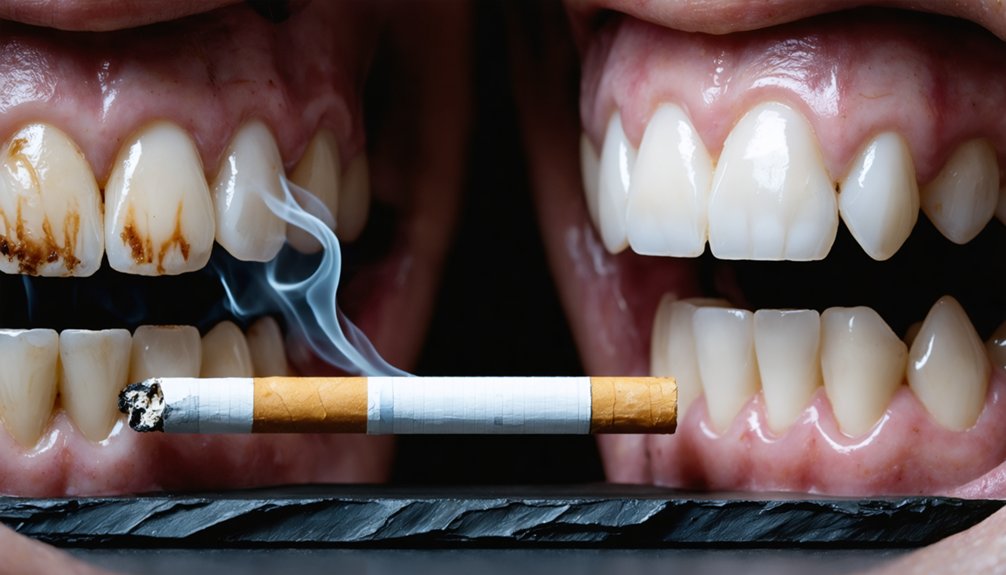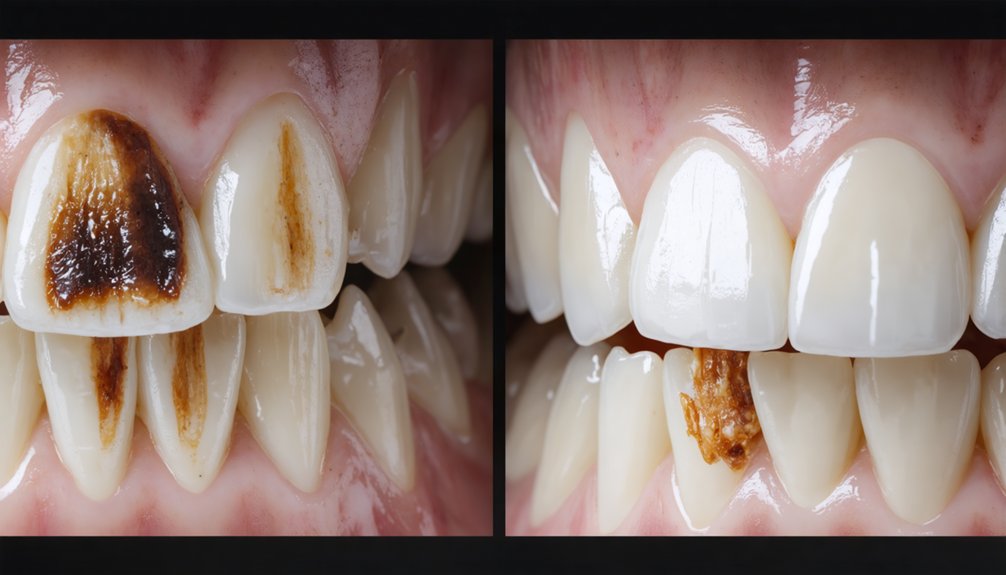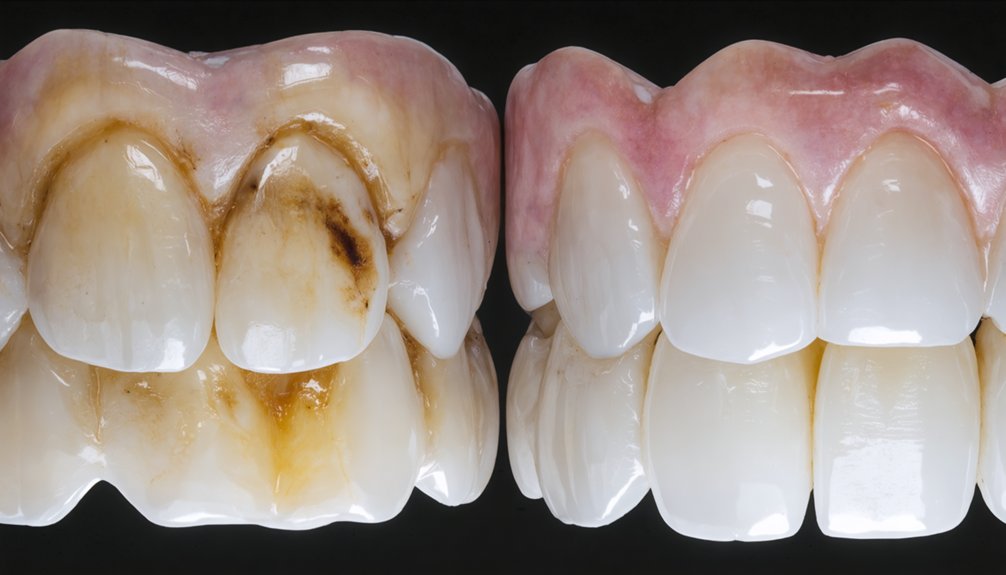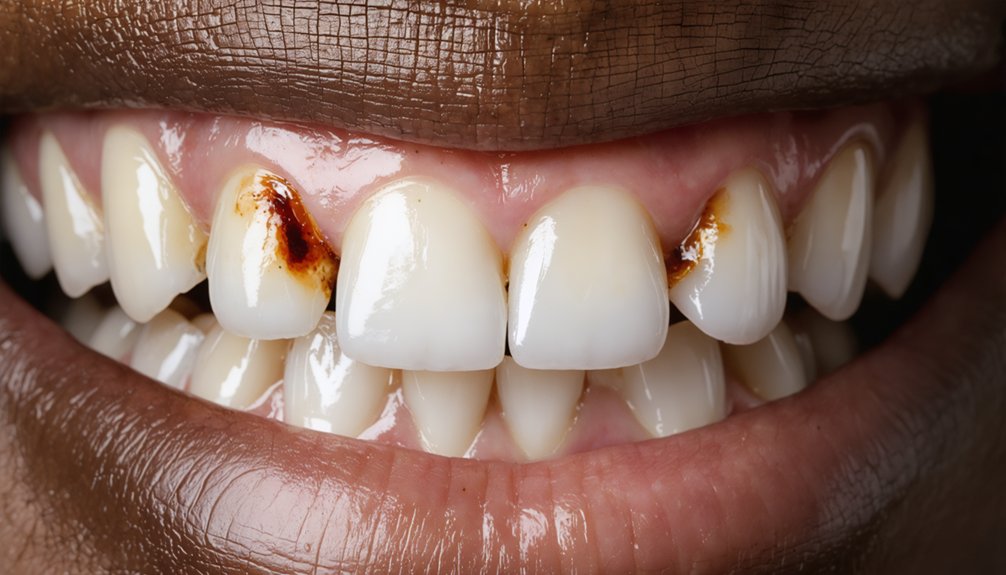
Smoking stains on your teeth aren’t just discoloration—they’re a sign of chemical damage embedding nicotine and tar deep into your enamel’s pores. This buildup weakens your enamel, inflames your gums, accelerates bone loss, and fuels persistent bad breath. Standard brushing can’t reach these ingrained compounds, making removal increasingly difficult the longer you wait. Understanding exactly how this damage works—and what can reverse it—starts with knowing what’s actually happening beneath your enamel’s surface.
Key Takeaways
- Smoking stains penetrate deep into enamel pores, making them impossible to remove through regular brushing alone.
- Tar and nicotine deposits accelerate gum deterioration, triggering periodontal disease and connective tissue breakdown.
- Untreated stains worsen over time, complicating treatment and requiring increasingly aggressive dental procedures.
- Tobacco compounds cause persistent bad breath that standard oral hygiene cannot effectively neutralize.
- Nicotine restricts blood flow to periodontal tissue, accelerating bone loss and weakening tooth support structures.
What Actually Causes Smoking Stains on Teeth
When you smoke, nicotine and tar from cigarettes attach directly to your tooth enamel, penetrating its porous surface and causing progressive discoloration.
Nicotine oxidizes upon oxygen exposure, turning yellow and embedding itself into enamel pores. Tar simultaneously deposits a sticky, brown residue that accumulates with each exposure.
Nicotine turns yellow as it oxidizes, while tar leaves a sticky brown residue — both embedding into enamel with every cigarette.
Smoke particles mix with saliva, forming adherent compounds that bond firmly to enamel. Unlike surface debris, these substances penetrate deeply, making stain prevention through standard oral hygiene insufficient alone.
Your smoking habits directly determine stain severity — frequency and duration amplify discoloration intensity over time.
Tartar buildup along tooth edges accelerates staining further, as its porous structure absorbs pigments rapidly.
Understanding these mechanisms clarifies why smoking stains resist conventional removal methods and require targeted professional intervention.
Why Smoking Stains Go Deeper Than Surface Level
When you smoke, nicotine and tar don’t just coat the outer surface of your teeth—they penetrate the porous microstructure of your enamel, embedding themselves at a level that ordinary brushing can’t reach.
Your enamel’s tiny pores actively absorb these compounds, while tar simultaneously builds a sticky, layered residue that accumulates with each cigarette.
This combination of deep absorption and progressive buildup means standard oral hygiene tools simply lack the chemical strength to lift these ingrained stains.
Enamel Pores Absorb Stains
Tooth enamel isn’t a solid, impermeable surface—it contains microscopic pores that readily absorb substances it contacts. When you smoke, nicotine and tar infiltrate these pores directly, bypassing the outer surface entirely.
Nicotine oxidizes upon oxygen exposure, turning yellow and embedding itself within enamel’s internal structure. Tar compounds simultaneously deposit a sticky, brown residue that accumulates with each cigarette.
This porous absorption mechanism explains why standard brushing can’t reverse the discoloration—you’re not addressing stains sitting on enamel; you’re dealing with compounds locked inside it.
Protecting enamel health requires understanding that penetration happens rapidly and compounds with frequency. Effective stain prevention demands professional-grade intervention capable of reaching beneath the surface where these pigmented molecules have already anchored themselves.
Tar Builds Up Deeply
Tar doesn’t simply coat your teeth—it infiltrates enamel at a structural level, building up progressively with each cigarette. Its sticky, brown residue bonds to enamel pores, creating layers that standard brushing can’t dislodge.
Over time, this accumulation advances tartar accumulation along tooth edges, which absorbs additional staining compounds due to increased porosity.
What makes tar particularly damaging is its chemical persistence. Unlike surface debris, tar penetrates enamel’s microscopic structure, compounding enamel erosion by weakening the tooth’s protective barrier.
Each subsequent cigarette deposits more residue onto already-compromised enamel, intensifying discoloration and structural vulnerability simultaneously.
You can’t reverse this process through over-the-counter products alone. The depth of tar penetration requires professional-grade intervention to break down ingrained compounds and genuinely restore your enamel’s integrity.
Brushing Fails Against Stains
Even with consistent brushing, you can’t remove smoking stains through surface mechanical action alone—enamel pores have already absorbed nicotine and tar at a structural depth that bristles simply can’t reach.
Standard dental hygiene practices dislodge surface debris but fail against compounds embedded within enamel‘s microscopic architecture. Tar’s sticky residue bonds tenaciously to porous surfaces, while nicotine oxidizes into yellow pigmentation that integrates structurally rather than sitting on top.
You’re fundamentally brushing over chemically bonded discoloration, not through it. Without professional intervention, stain prevention becomes increasingly difficult as accumulation compounds over time.
Frequency and duration of smoking directly correlate with penetration depth, meaning longer exposure makes mechanical removal progressively less effective—reinforcing why over-the-counter solutions consistently underperform against tobacco-derived discoloration.
Why Brushing Alone Won’t Clear Tobacco Stains
While brushing removes surface debris, it can’t penetrate the enamel pores where nicotine and tar compounds have absorbed.
Standard oral hygiene practices—brushing and flossing—address only superficial deposits, leaving deeply ingrained discoloration intact. Tar’s sticky residue bonds firmly to enamel, creating layers that accumulate with each smoking session.
Brushing and flossing only scratch the surface—tar bonds deeply to enamel, building up with every cigarette.
Even switching to tobacco alternatives doesn’t immediately reverse existing staining, as compounds already embedded in enamel remain resistant to mechanical cleaning.
Abrasive toothpastes may reduce surface yellowing slightly, but they risk enamel erosion without dissolving the absorbed chromogens responsible for brownish hues. Your brush simply lacks the chemical action needed to break these molecular bonds.
Professional-grade bleaching agents are required to oxidize and lift ingrained tobacco compounds effectively.
How Smoking Stains Damage Your Gums, Breath, and Bone Health
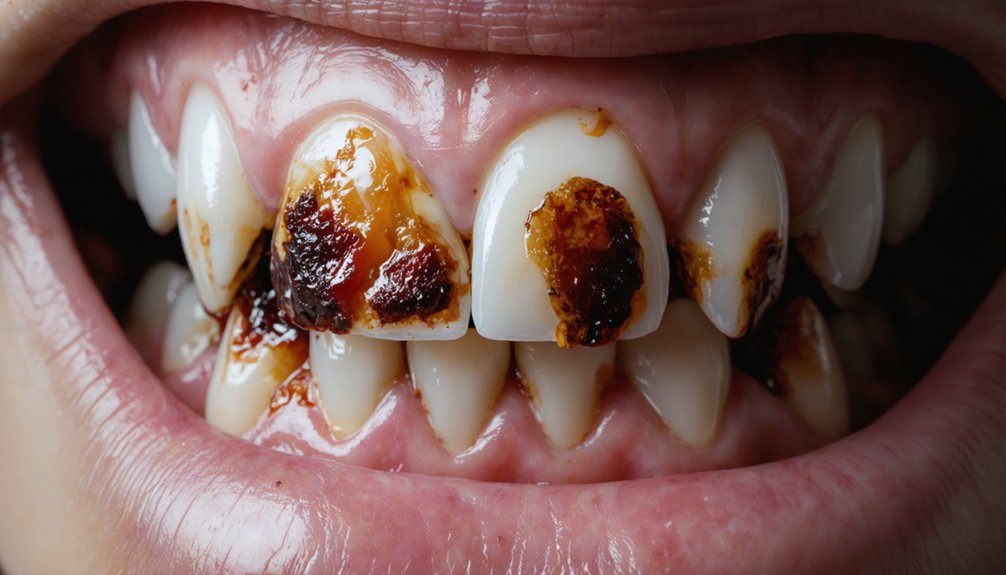
When you smoke, you don’t just stain your enamel—you actively compromise your gum tissue, triggering inflammation that can progress to periodontal disease.
Tobacco residues accumulate in your oral cavity, producing persistent bad breath that routine brushing can’t fully neutralize.
Over time, smoking accelerates bone loss in your jaw, weakening the structural foundation that supports your teeth.
Gum Disease and Inflammation
Smoking doesn’t just stain your teeth—it actively damages your gums, breath, and underlying bone structure. Tobacco residues compromise your gum health by triggering persistent bacterial accumulation along the gumline.
This bacterial load initiates chronic inflammation effects, causing your gum tissue to recede, bleed, and weaken over time. Nicotine restricts blood circulation to periodontal tissue, impairing your immune response and masking early warning signs of gum disease. You may not notice the progression until significant structural damage has already occurred.
Tar deposits further irritate gingival tissue, accelerating inflammatory pathways that break down the connective fibers anchoring your teeth. Without intervention, this cascade leads to periodontal disease, compromising both tissue integrity and long-term tooth stability.
Addressing stains professionally is one component of halting this broader oral deterioration.
Tobacco’s Impact on Breath
Beyond its assault on gum tissue, tobacco reshapes the bacterial environment throughout your entire oral cavity, directly fouling your breath in ways that brushing alone can’t correct.
Tobacco effects include reduced salivary flow, which strips your mouth of its natural cleansing mechanism, allowing odor-producing bacteria to thrive unchecked. Residual nicotine and tar compounds embed themselves within soft tissue and stained enamel surfaces, continuously releasing volatile sulfur compounds that compromise breath freshness long after you’ve extinguished a cigarette.
Additionally, tobacco accelerates gum recession and tissue necrosis, creating anaerobic pockets where bacteria generate particularly noxious byproducts. Standard oral hygiene protocols can’t penetrate these bacterial reservoirs effectively.
Professional dental intervention removes the stained, porous deposits harboring these microorganisms, directly targeting the structural conditions responsible for persistent halitosis.
Smoking-Related Bone Loss
Tobacco’s destructive reach extends beneath your gum line, actively dismantling the alveolar bone that anchors your teeth in place.
Smoking reduces blood flow to periodontal tissues, depriving bone cells of oxygen and nutrients essential for structural maintenance. This vascular impairment accelerates bone density loss around tooth roots, loosening their foundation progressively.
Nicotine suppresses osteoblast activity, impairing your body’s capacity to regenerate compromised bone tissue.
Simultaneously, tobacco-induced bacterial accumulation intensifies periodontal inflammation, compounding structural deterioration. You lose measurable bone mass faster than non-smokers, increasing tooth mobility and eventual loss risk considerably.
Maintaining rigorous oral hygiene slows this progression but can’t fully counteract smoking’s systemic damage.
Professional intervention combined with cessation gives your periodontal structures the best opportunity to stabilize and partially recover lost density.
How Professional Whitening Removes Smoking Stains
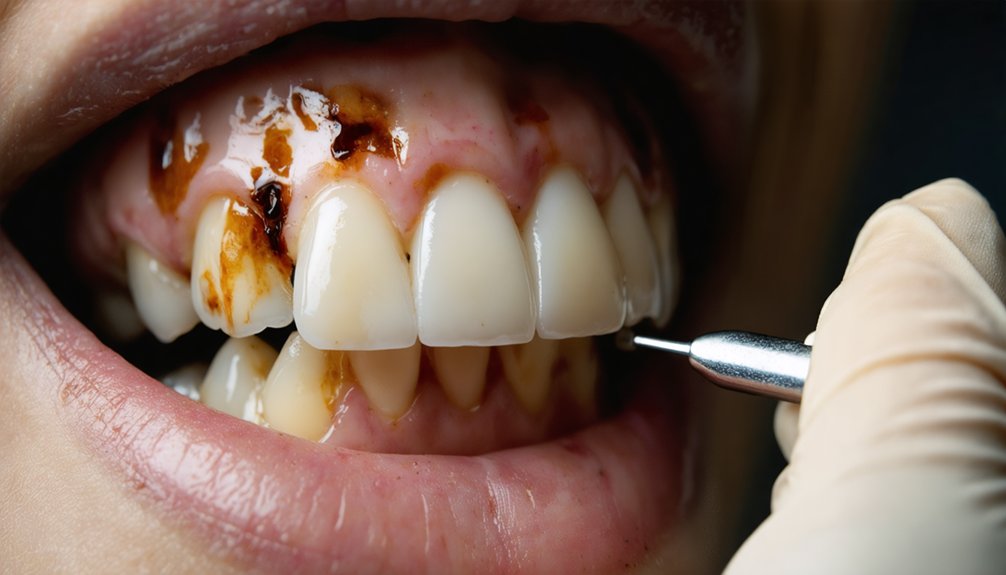
Professional whitening treatments tackle smoking stains by using hydrogen peroxide gel to break down the nicotine and tar compounds embedded in enamel pores.
These whitening techniques penetrate deeper than over-the-counter products, targeting stubborn discoloration that regular brushing can’t address.
In-office stain removal procedures apply concentrated bleaching agents directly to your enamel, with laser-assisted options accelerating the chemical reaction for faster results.
Your dentist customizes gel strength based on your smoking history and stain severity, ensuring precise treatment.
Multiple sessions may be necessary if you’ve smoked heavily or for extended periods.
Enamel-strengthening protocols are often incorporated alongside bleaching to minimize sensitivity.
Without professional intervention, embedded compounds continue darkening your teeth, compounding existing oral health concerns.
Whitening Results for Smokers: What to Realistically Expect
When you undergo professional whitening as a smoker, results can vary considerably based on how long and how frequently you’ve smoked. Heavy, long-term smoking habits produce deeply embedded stains that may require multiple treatment sessions before achieving noticeable improvement.
You can realistically expect significant brightening, though complete restoration to natural enamel color isn’t always guaranteed. Results typically last up to three years if you quit smoking post-treatment. Continuing your smoking habits reduces durability to approximately one year before discoloration returns.
Stain prevention becomes your primary maintenance responsibility—routine dental cleanings, avoiding tobacco, and scheduled whitening touch-ups preserve results longer. Your dentist will calibrate bleaching gel concentration to your stain severity, giving you measurable, targeted outcomes rather than generalized treatment.
What Happens If You Leave Smoking Stains Untreated
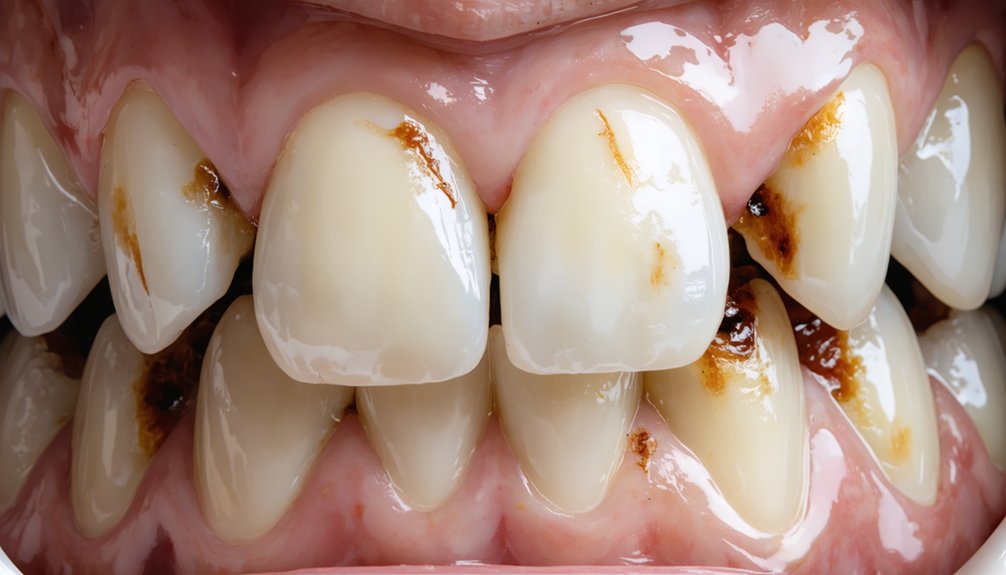
Leaving smoking stains untreated accelerates a cascade of oral health deterioration beyond surface discoloration. Tartar buildup intensifies as porous enamel absorbs tobacco compounds more aggressively over time, making stain prevention increasingly difficult.
Your oral hygiene efforts become less effective against entrenched nicotine and tar deposits that deepen into enamel layers. Untreated stains correlate directly with elevated plaque accumulation, triggering gum inflammation and periodontal disease progression.
Persistent tobacco residues contribute to chronic bad breath, salivary gland inflammation, and jawbone deterioration. Your cancer risk elevates as prolonged chemical exposure damages oral tissues.
Delayed intervention compounds treatment complexity, requiring more aggressive professional procedures to achieve comparable results. Early removal preserves enamel integrity, limits systemic complications, and restores your smile’s functional and aesthetic condition before irreversible damage occurs.
Frequently Asked Questions
Can Nicotine Gums Cause Similar Tooth Staining as Regular Cigarettes?
Bite the bullet—nicotine effects from nicotine gums can cause gum staining, but it’s milder than cigarettes. You’ll notice less tar buildup, yet prolonged use still discolors your enamel over time.
Does Smoking Stain Dental Implants and Crowns the Same as Natural Teeth?
Smoking doesn’t stain dental implants and crowns the same way—they’re less porous than natural enamel. However, you’ll still need consistent dental hygiene and professional stain removal, as surface discoloration can accumulate on surrounding gum tissue and restoration margins.
Are Children Exposed to Secondhand Smoke at Risk for Tooth Discoloration?
Yes, secondhand smoke can compromise your child’s dental health. Nicotine and tar particles settle onto enamel, causing discoloration similar to direct smoking. You’ll notice yellowish-brown staining that penetrates enamel pores, requiring professional intervention to effectively address.
Can Teeth Whitening Treatments Worsen Sensitivity in Longtime Smokers?
Yes, whitening options can heighten sensitivity in longtime smokers, as enamel’s compromised porosity amplifies bleaching agents’ effects. You’ll need sensitivity management strategies, like desensitizing gels or reduced peroxide concentrations, to minimize discomfort during treatment.
Do Electronic Cigarettes or Vaping Cause the Same Staining as Tobacco?
Here’s what you might not expect—vaping effects aren’t identical to tobacco staining, yet electronic cigarettes still deliver nicotine, which yellows upon oxygen exposure, causing discoloration. You’ll accumulate fewer tar deposits, but staining risk remains real.
References
- https://www.pittsfordfamilydental.com/blog/teeth-whitening-for-smoking-stains/
- https://www.smilesbymyles.com/blog/2014/08/25/tooth-stains-caused-by-smoking-148016/
- https://www.peterabasdds.com/removing-smoking-stains-from-teeth/
- https://friedmandentalgroup.com/dental-related/teeth-whitening-for-smokers-solutions-to-remove-tobacco-stains/
- https://www.ahgcdental.com/blog/can-teeth-whitening-work-on-deep-stains-from-smoking/
- https://www.advanceddental.com/blog/does-teeth-whitening-remove-smoking-stains
- https://www.smilesbyhanna.com/remove-stains-of-smoking-teeth/
- https://greenvalleysmilecare.com/blog/remove-tobacco-stains-fast-from-your-teeth/
- https://pmc.ncbi.nlm.nih.gov/articles/PMC9932248/