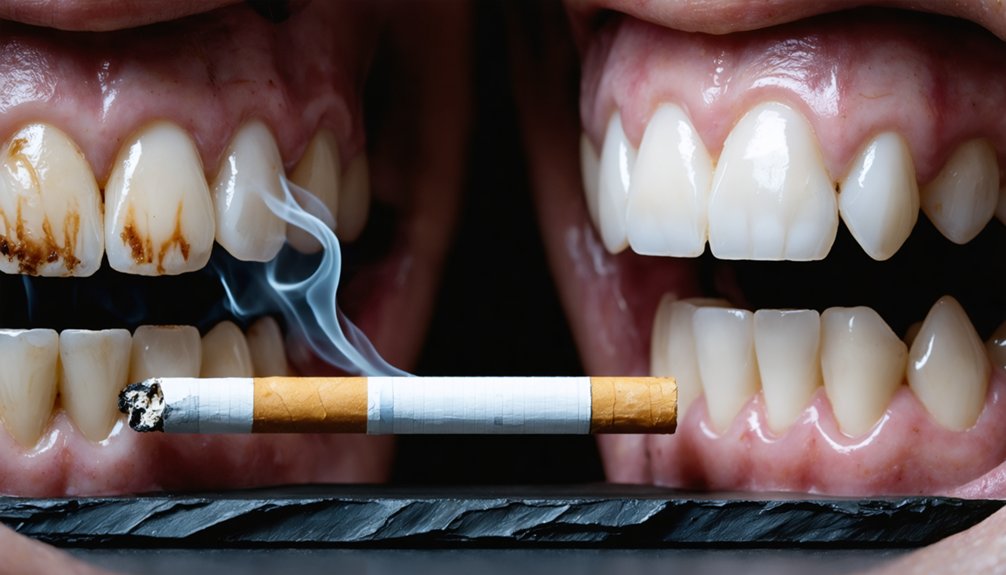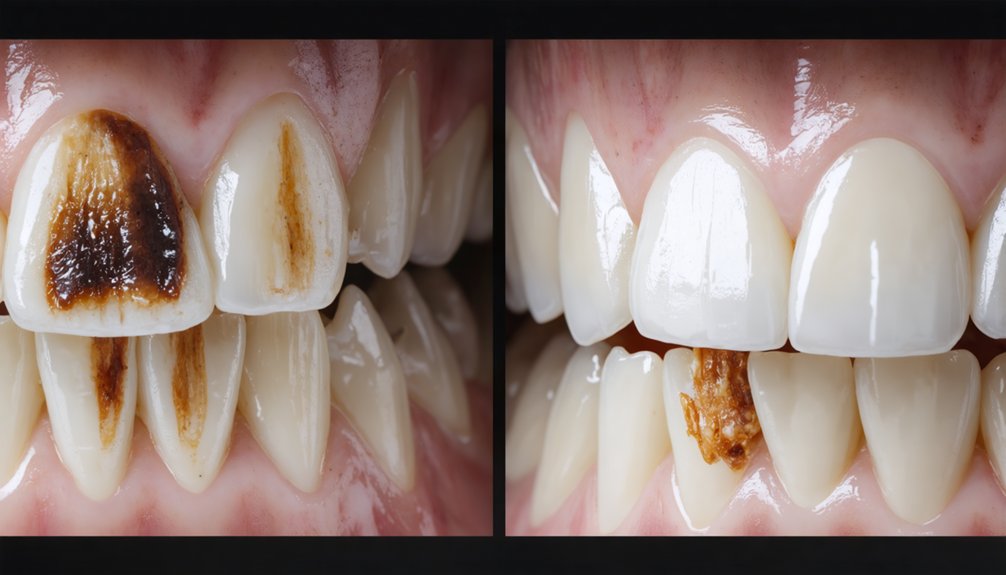
Professional whitening treatments using high-concentration hydrogen peroxide or carbamide peroxide gels are your most effective option as a smoker, since tobacco stains penetrate beyond the enamel into the dentin layer. Systems like Philips Zoom or custom prescription trays can reach these deeper stains where OTC products fail. You’ll need consistent maintenance and disciplined oral hygiene to preserve results. Everything from in-office procedures to daily habits that help smokers keep their teeth whiter is covered ahead.
Key Takeaways
- Professional whitening treatments using high-concentration hydrogen peroxide gels, like Philips Zoom, provide the most effective results for deep tobacco stains.
- Custom-fitted whitening trays with prescription-strength gel ensure even distribution and can match in-office treatment results with consistent use.
- OTC products like Crest 3DWhitestrips with LED Light offer accessible stain removal but require consistent, long-term use for noticeable results.
- Brushing immediately after smoking and using fluoride-based whitening toothpaste daily minimizes new stain redeposition on treated enamel.
- Severely stained teeth may require porcelain veneers or dental bonding when whitening treatments cannot address deep structural discoloration.
Why Smokers’ Teeth Are So Hard to Whiten
Tobacco smoke contains nicotine and tar, two compounds that penetrate beyond the enamel’s surface and embed themselves into the microscopic pores of dentin.
Unlike surface discoloration from coffee or tea, tobacco residue binds chemically to tooth structure, making it resistant to standard whitening approaches.
Repeated exposure accelerates enamel erosion, thinning the protective outer layer and allowing deeper pigment infiltration over time.
Because the staining occurs beneath the enamel rather than on it, surface-level treatments often fall short.
You’re not dealing with a simple cosmetic issue—you’re addressing structural discoloration that requires agents capable of penetrating deep tissue.
Understanding this distinction helps you make informed decisions about which whitening method will actually deliver measurable results rather than temporary improvement.
Does Whitening Work If You Haven’t Quit Smoking?
Knowing why tobacco stains penetrate so deeply raises a practical question: can whitening actually work if you haven’t stopped smoking? The short answer is yes, but with significant limitations tied to smoking impact on your results.
Whitening effectiveness diminishes when nicotine and tar continue redepositing onto treated enamel shortly after each session. Professional in-office treatments still produce visible improvements, yet those results degrade faster in active smokers.
Whitening works on smokers, but nicotine and tar quickly undo results between sessions.
You’ll likely need more frequent maintenance appointments and consistent at-home care to preserve any progress.
Think of it as managing a condition rather than eliminating it. Whitening works, but smoking actively counteracts it.
If quitting isn’t currently your goal, combining professional treatments with disciplined post-smoking oral hygiene gives you the best achievable outcome under those conditions.
What the Dentist Can Do That Nothing Else Can
When over-the-counter products reach their ceiling, professional intervention addresses what they can’t. Dentists apply high-concentration hydrogen peroxide or carbamide peroxide gels that penetrate deeper into enamel than anything available on retail shelves.
Systems like Philips Zoom and Opalescence Boost accelerate stain removal using light-activated gel, delivering dramatic results in a single appointment.
Professional treatments also include custom-fitted trays with prescription-strength gel for continued progress at home. Unlike store-bought options, these target embedded tobacco stains at a structural level, not just the surface.
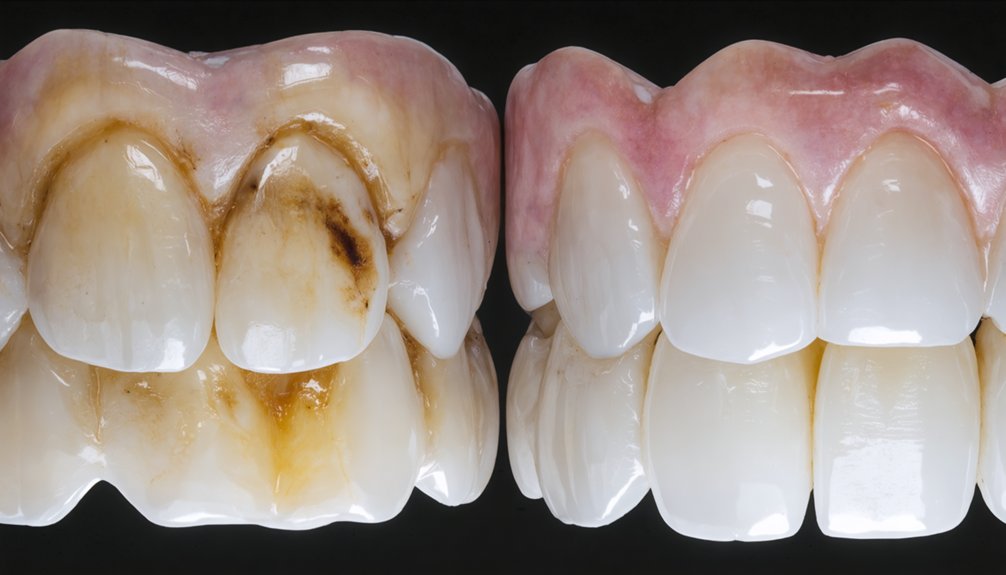
If bleaching doesn’t reach resistant discoloration, veneers offer a permanent solution. They cover severely stained teeth with durable, stain-resistant shells.
You’re not limited to surface-level fixes—your dentist can match the intervention to the actual depth of damage.
Take-Home Kits That Work on Tobacco Stains
If you can’t make it to the dentist’s office, take-home professional kits offer a clinically viable alternative for tackling tobacco stains.
Your dentist fits you with custom trays that distribute peroxide-based gel evenly across tooth surfaces, reducing the uneven results common with generic over-the-counter options.
Kits like ClearClub’s offer multiple intensity levels, allowing you to match the bleaching concentration to your stain severity for more targeted and effective outcomes.
Custom Tray Whitening Benefits
Custom tray whitening kits offer three distinct advantages for smokers: precise fit, controlled gel concentration, and flexible treatment scheduling.
Your dentist fabricates trays from dental impressions, ensuring a professional fit that distributes gel evenly across every tooth surface. This eliminates the uneven coverage common with generic strips.
The custom tray advantages extend beyond comfort. You control application timing, wearing trays during convenient windows while adjusting frequency based on stain severity.
Dentists calibrate gel concentration specifically for tobacco stain depth, giving you a targeted approach rather than a generalized one.
Consistent use over several weeks delivers results comparable to in-office treatments.
Even after professional whitening, continued tray use maintains and extends your results, particularly important since smoking accelerates stain redeposition.
Intensity Levels For Stains
Tobacco stains vary considerably in depth and saturation, so take-home kits that match gel concentration to your specific stain severity will deliver far better outcomes than a one-size-fits-all approach.
ClearClub’s kit, for example, structures its peroxide-based gel across three distinct intensity levels, letting you select the formulation that corresponds directly to your stain severity.
If you’re managing lighter surface discoloration, a lower concentration minimizes sensitivity while still producing visible improvement.
Deeper, longer-established tobacco stains require higher-intensity formulations that penetrate further into the enamel.
You’re not guessing—you’re applying a calibrated solution to a documented problem. This targeted approach reduces unnecessary enamel exposure to excessive bleaching agents and maximizes your whitening efficiency across each treatment session.
The OTC Products Worth Buying If You Smoke
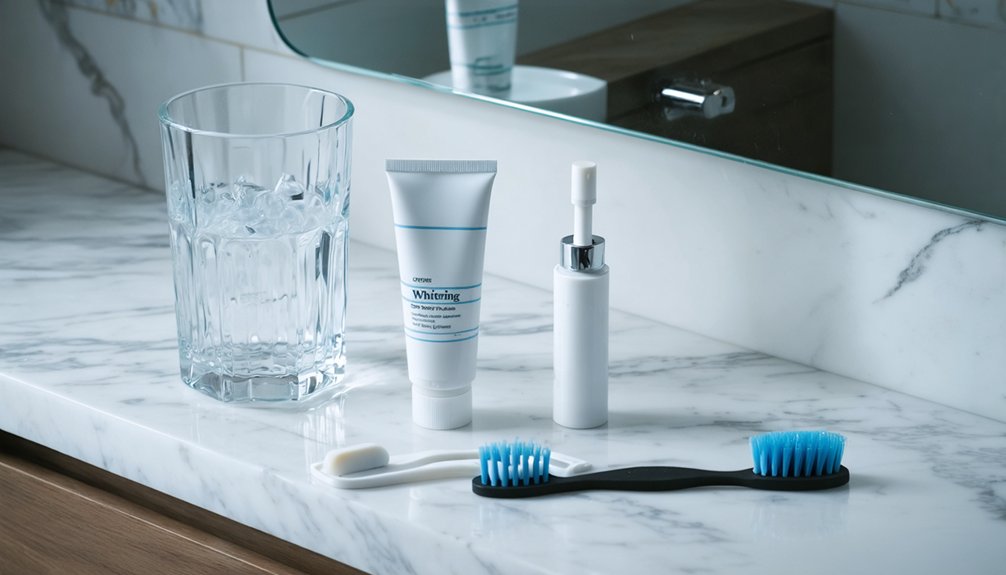
Over-the-counter whitening products fall into several categories, each with varying degrees of effectiveness against tobacco stains. Smoking effects go beyond surface discoloration, embedding pigments deep into enamel, which limits what OTC whitening can realistically achieve.
That said, certain products deliver measurable stain removal when used consistently. Crest 3DWhitestrips with LED Light is ADA-accepted and targets set-in stains effectively.
For daily routine integration, whitening pens offer enamel safety with minimal disruption. Sensitivity issues are common, so selecting peroxide formulas at lower concentrations reduces discomfort without sacrificing product effectiveness.
You won’t match professional-grade results with OTC options alone, but combining strips, a whitening toothpaste, and a pen creates a layered approach. Long-term results depend entirely on consistency and whether you’re actively managing new stain exposure.
Which Whitening Toothpastes Help Most?
When choosing a whitening toothpaste as a smoker, you’ll get the most benefit from formulas containing baking soda, hydrogen peroxide, or activated charcoal, as these ingredients actively lift surface tobacco stains with consistent daily use.
Natural options like coconut oil or turmeric mixtures offer gentler alternatives, though they work more gradually and with less clinical evidence behind them.
Your brushing habits matter just as much as the formula itself—brushing immediately after smoking reduces fresh stain redeposition and helps preserve any whitening progress you’ve already made.
Best Whitening Toothpaste Ingredients
Several key ingredients in whitening toothpastes determine how effectively they combat tobacco stains.
You’ll want to look for proven whitening agents like hydrogen peroxide and baking soda, which penetrate surface discoloration directly caused by nicotine and tar.
Activated charcoal physically absorbs stain particles, while fluoride guarantees enamel protection by reinforcing tooth mineral structure during repeated use.
Pyrophosphates prevent tartar buildup, a common issue for smokers that accelerates staining.
Coconut oil and turmeric offer natural alternatives, though clinical evidence supporting their efficacy remains limited compared to peroxide-based formulas.
Selecting a toothpaste combining both whitening agents and enamel protection delivers the most controlled, measurable results.
Prioritizing ADA-accepted formulations assures you’re using products meeting established safety and effectiveness standards for daily tobacco stain management.
Natural Whitening Paste Options
Natural whitening pastes offer an accessible alternative to chemical-based formulas, though their effectiveness against tobacco stains varies considerably by ingredient.
Baking soda provides mild abrasion that lifts surface stains without damaging enamel, making it your most evidence-supported natural option. Activated charcoal binds surface debris effectively, though research on deeper tobacco stains remains limited.
Turmeric paste contains curcumin, which demonstrates antimicrobial properties, but its whitening evidence is largely anecdotal. Coconut oil pulling, while popular, won’t penetrate the embedded nicotine stains professional treatments target.
You’ll get the best results by using these pastes consistently as a complement to professional whitening rather than a standalone solution.
For heavy tobacco staining, natural pastes manage surface accumulation but can’t replace clinical-grade bleaching agents.
Daily Brushing Habits Matter
Your brushing frequency and technique directly influence how effectively whitening toothpastes combat tobacco stains. Brush twice daily using small, circular motions rather than aggressive horizontal scrubbing, which erodes enamel and reduces whitening efficacy.
Fluoride-containing whitening toothpastes restore enamel integrity while lifting surface deposits left by tobacco. Brushing immediately after smoking minimizes new stain redeposition on freshly exposed tooth surfaces.
Don’t underestimate flossing importance—interdental areas accumulate tobacco residue that toothpastes can’t reach independently. Flossing daily clears these deposits before they embed deeper.
Effective brushing techniques, combined with consistent flossing, maximize whitening toothpaste performance over time. Without disciplined daily habits, even high-quality products deliver limited results.
You control the outcome by maintaining structured, methodical oral hygiene routines that actively counter continued tobacco exposure.
When Tobacco Stains Are Too Deep to Whiten
When tobacco stains penetrate beyond the enamel into the dentin layer, no bleaching agent—professional or otherwise—can fully reverse the discoloration. At that stage, you’re past the reach of conventional whitening, and deep stain solutions shift toward restorative dentistry.
Alternative treatments like porcelain veneers or dental bonding become the most clinically viable options. Veneers physically cover the compromised tooth surface with a stain-resistant shell, delivering consistent, long-term results that whitening can’t replicate.
Bonding offers a less invasive approach using tooth-colored resin applied directly to the surface. Your dentist can assess stain depth through clinical examination and recommend the appropriate intervention.
Continuing to smoke post-restoration will accelerate recontamination, so lifestyle modification remains a critical factor in preserving any cosmetic outcome.
How Smokers Can Keep Teeth White Between Treatments
Restoring your smile through professional whitening is only part of the equation—keeping it white while you’re still smoking requires consistent, deliberate maintenance.
Applying whitening maintenance tips strategically reduces nicotine redeposition between treatments. Brush immediately after smoking to minimize fresh stain adhesion. Use a fluoride-based whitening toothpaste daily to address surface buildup before it embeds.
Strategic whitening maintenance reduces nicotine redeposition—brush immediately after smoking and use whitening toothpaste daily.
Incorporate stain prevention strategies like drinking coffee, tea, or soda through a straw, reducing direct enamel contact. Rinse with a whitening mouthwash after meals to lift early-stage discoloration.
Schedule regular professional cleanings to remove tartar, which accelerates stain accumulation and blocks bleaching agent penetration. Limiting dark beverages and acidic foods further preserves your results.
The more consistently you apply these habits, the longer each whitening treatment remains effective.
Frequently Asked Questions
Can Whitening Treatments Damage Existing Dental Work Like Crowns or Veneers?
Whitening treatments won’t damage crowns or veneers, but they won’t whiten them either. You’ll notice uneven results and potential tooth sensitivity. Treatment effectiveness applies only to natural enamel, so consult your dentist before proceeding.
How Long Does Professional Whitening Typically Last for Active Smokers?
For active smokers, professional whitening typically lasts three to six months. You’ll need increased whitening frequency to maintain results. Apply maintenance tips like rinsing after smoking and limiting dark beverages to extend your outcome’s longevity.
Is Teeth Whitening Safe for Smokers With Gum Disease or Sensitivity?
Like walking a tightrope, you must balance whitening with caution—safety concerns multiply when gum health is compromised. You shouldn’t whiten with active gum disease or severe sensitivity without consulting your dentist first to minimize complications.
Does Teeth Whitening Affect the Fit of Dentures or Partial Plates?
Whitening techniques don’t alter your dentures’ fit. However, they won’t whiten artificial materials either. For proper dentures maintenance, consult your dentist before applying any whitening agents, as peroxide-based products may degrade certain prosthetic materials over time.
Are There Age Restrictions for Smokers Seeking Professional Whitening Treatments?
You’ll typically need to be 18+ for professional whitening due to age eligibility concerns around developing enamel. Your dentist will evaluate your treatment options, ensuring bleaching agents are appropriate for your dental maturity and smoking-related stain severity.
References
- https://friedmandentalgroup.com/dental-related/teeth-whitening-for-smokers-solutions-to-remove-tobacco-stains/
- https://parkwaysmiles.com/teeth-whitening-for-smokers/
- https://clearclub.com/blogs/clearclub/10-effective-ways-to-whiten-teeth-after-smoking-or-taking-medications
- https://tysondental.com/teeth-whitening-for-smokers-strategies-and-recommendations/
- https://www.theweymouthdentist.com/teeth-whitening-for-smokers-what-you-should-consider/
- https://www.dawsondental.ca/site/blog/2025/08/26/how-to-whiten-teeth-smokers-vapers
- https://crest.com/en-us/oral-care-tips/teeth-stains/how-to-remove-nicotine-stains-from-teeth
- https://www.thesmilenova.com/post/the-ultimate-guide-to-teeth-whitening-for-smokers
- https://bellaviadental.com/blog/how-to-keep-teeth-white-while-smoking/