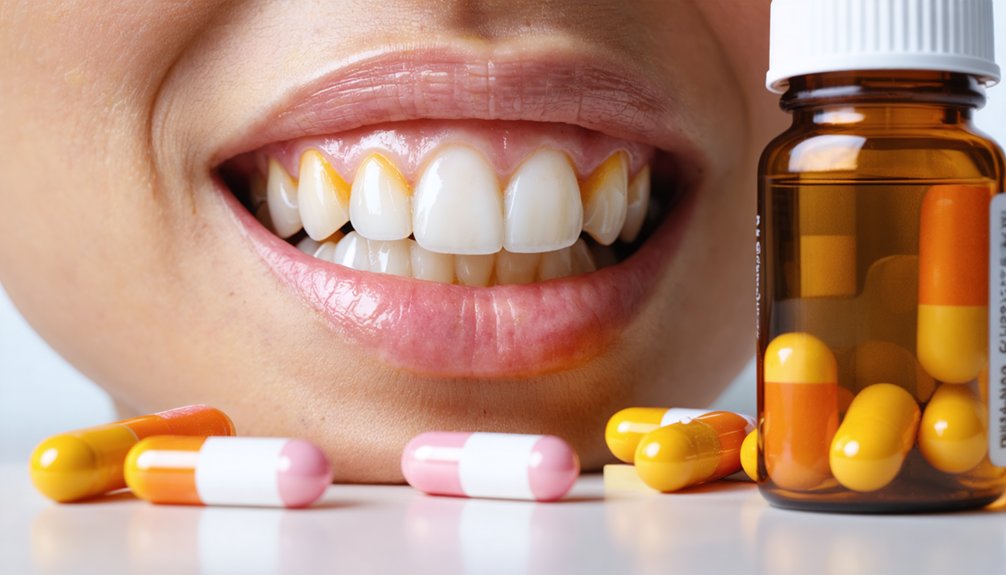
Medications stain your teeth by either embedding pigments directly into your enamel’s structure or altering your oral environment in ways that accelerate surface discoloration. Tetracyclines bind to calcium ions during tooth development, forming permanent complexes within hydroxyapatite crystals. Other drugs, like antihistamines, reduce your salivary flow, stripping away your mouth’s natural defense against chromogens. The severity depends on dosage, timing, and medication type — factors that also determine whether your staining is reversible or permanent.
Key Takeaways
- Tetracyclines bind to calcium during tooth development, forming permanent complexes within enamel that cause intrinsic discoloration impossible to reverse.
- Chlorhexidine mouthwash and antihistamines cause extrinsic brown staining on tooth surfaces through direct contact with enamel.
- Medications causing dry mouth reduce saliva, allowing chromogens to adhere more easily to unprotected enamel surfaces.
- Beta-blockers and calcium channel blockers contribute to brown tooth discoloration, with severity linked to dosage duration.
- Children under eight face the highest risk of permanent staining, as developing enamel absorbs medication compounds more readily.
How Drugs Become Permanently Embedded in Tooth Enamel
When tetracycline enters the bloodstream during tooth development, it binds directly to calcium ions within the mineralizing enamel and dentin matrix, creating stable tetracycline-calcium orthophosphate complexes that become permanently incorporated into the tooth’s crystalline structure.
These staining mechanisms operate at the molecular level, making reversal through conventional whitening impossible.
During enamel development, the antibiotic integrates into hydroxyapatite crystals as they form, distributing discoloration throughout the tooth’s internal layers rather than its surface.
Tetracycline weaves itself into forming hydroxyapatite crystals, embedding discoloration deep within enamel rather than merely staining the surface.
Children under eight face the highest risk because their teeth are actively mineralizing.
Ultraviolet exposure accelerates oxidation of embedded tetracycline compounds, shifting initial fluorescent yellow tones toward brown or gray.
Minocycline derivatives produce comparable intrinsic binding in long-term adult users, affecting three to six percent of patients despite completed skeletal development.
Which Medications Are Most Likely to Stain Your Teeth?
Several medication classes carry documented risk for tooth discoloration, each operating through distinct biochemical mechanisms.
Tetracyclines—including doxycycline and minocycline—represent the highest-risk medication types, permanently embedding chromophores within developing enamel when you’re exposed before age eight. Staining severity correlates directly with dosage duration and developmental timing.
Chlorhexidine mouthwash produces extrinsic brown staining through cationic binding with dietary chromogens, while antihistamines like diphenhydramine and cetirizine reduce salivary flow, accelerating pigment accumulation on tooth surfaces.
Beta-blockers and calcium channel blockers similarly compromise salivary protection, promoting brown discoloration.
Unlike tetracycline’s irreversible intrinsic damage, medications affecting saliva or surface chemistry produce reversible extrinsic stains.
Understanding which medication types you’re using lets you anticipate staining severity and pursue appropriate preventive or corrective dental intervention promptly.
Why Medication-Induced Saliva Loss Accelerates Tooth Staining
When you take medications that reduce salivary flow—such as antihistamines, beta-blockers, or calcium channel blockers—you lose a critical defense mechanism that normally rinses chromogens and neutralizes oral acids.
Saliva’s antimicrobial proteins and mechanical clearance action prevent pigment-producing bacteria from proliferating along the gum line and between teeth, so its absence accelerates both extrinsic staining and plaque accumulation.
Without adequate salivary protection, dietary chromogens from tea, coffee, and wine adhere more readily to enamel surfaces, compounding the staining risk you already face from the medication itself.
Saliva’s Protective Role
Saliva performs critical protective functions that defend tooth surfaces against staining, and losing this protection through medication-induced xerostomia accelerates discoloration considerably.
Your saliva composition includes antimicrobial proteins, mucins, and bicarbonate buffers that collectively neutralize acids, wash away chromogens, and suppress pigment-producing bacterial colonies. These protective mechanisms maintain a balanced oral environment where staining compounds can’t adhere effectively to enamel surfaces.
When medications reduce your salivary flow, this defense system collapses. Acidic conditions develop unchecked, plaque accumulates rapidly, and chromogenic bacteria proliferate along your gum line and between teeth.
Dietary pigments from coffee, tea, and wine bind more readily to unprotected enamel. Understanding this cascade helps you recognize why managing xerostomia aggressively—through hydration, saliva substitutes, or medication adjustments—directly reduces your staining risk.
Stain Accumulation Mechanisms
Understanding how saliva’s collapse triggers staining requires examining the specific biochemical and mechanical pathways that accelerate pigment deposition on enamel.
When medication reduces salivary flow, your mouth loses its primary buffering and cleansing mechanism. Acidic conditions develop rapidly, softening enamel and creating microscopic surface irregularities where chromogens from tea, coffee, and wine embed deeply.
Pigment-producing bacteria proliferate within this compromised environment, generating brown and black deposits along gum lines and interproximal surfaces.
Dietary influences intensify this process considerably—chromogen-rich foods adhere far more readily to unprotected, demineralized enamel.
Implementing effective stain prevention strategies requires understanding these compounding mechanisms: controlling dietary chromogen exposure, maintaining rigorous mechanical plaque removal, and stimulating residual salivary function through hydration each directly disrupts the biochemical cascade driving accelerated pigment accumulation.
How Antibiotics Disrupt Oral Bacteria and Cause Surface Staining
Antibiotics don’t just target harmful pathogens—they also disrupt the delicate balance of your oral microbiome, creating conditions that promote surface staining.
These antibiotic effects alter bacterial balance by eliminating beneficial organisms alongside harmful ones, allowing chromogenic (pigment-producing) bacteria to become disproportionately prominent.
Antibiotics eliminate beneficial bacteria alongside harmful ones, allowing pigment-producing strains to dominate your oral microbiome.
These opportunistic strains generate brown or black surface deposits along your gum line and between teeth.
Simultaneously, reduced salivary protection—often a secondary antibiotic effect—creates an environment where these chromogenic colonies flourish unchecked.
Fortunately, you can manage this outcome effectively.
These surface pigments are extrinsic, meaning professional polishing removes them completely once your oral flora stabilizes post-treatment.
Monitoring your gum line during antibiotic courses and scheduling a professional cleaning afterward gives you direct control over this reversible staining mechanism.
Which Medication Stains Are Reversible and Which Are Permanent?
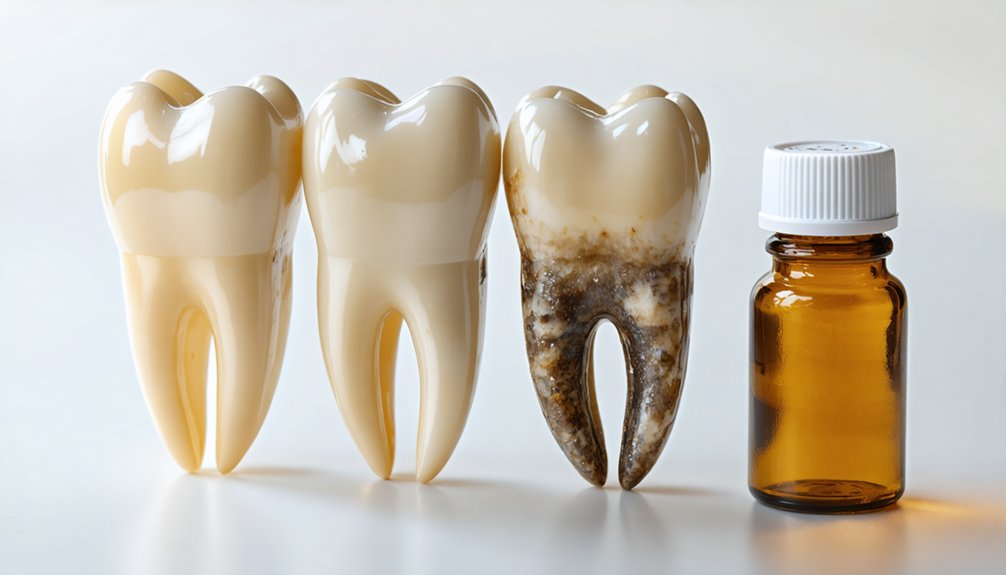
Not all medication-induced tooth stains carry the same prognosis—intrinsic stains from tetracycline antibiotics during tooth development create permanent discoloration embedded within the enamel matrix itself, while extrinsic stains from antihistamines, blood pressure medications, and chlorhexidine rinses respond to professional cleaning and improve over time.
Understanding stain types directly informs your treatment options. Tetracycline intrinsic staining resists conventional whitening, often requiring porcelain veneers for lasting cosmetic correction.
Linezolid-induced discoloration in children under eight remains reversible through extensive professional cleaning. Chlorhexidine-derived brown deposits lift completely after dental polishing, as do surface stains from antibiotic oral suspensions with consistent brushing.
Extrinsic stains from medication-related salivary reduction similarly resolve following professional intervention. Consulting your healthcare provider about alternative medications before staining develops remains your most effective preventive strategy.
What Actually Works for Removing Medication-Stained Teeth?
Knowing which stains are reversible sets the stage for choosing the right removal approach.
For extrinsic stains caused by antihistamines, blood pressure medications, or chlorhexidine rinses, professional dental cleaning delivers reliable removal results that brushing alone can’t achieve. You’ll find that consistent follow-up cleanings prevent chromogenic bacterial pigments and dietary chromogens from reaccumulating.
Intrinsic tetracycline staining requires a more aggressive strategy. Whitening treatments show limited efficacy against embedded discoloration and often demand extended treatment timelines before producing noticeable results.
When whitening treatments fall short, dental veneers become the most clinically effective intervention. Porcelain dental veneers permanently cover discolored enamel surfaces and resist future staining from food and beverages.
Consulting your dentist about your specific stain classification determines which intervention protocol actually matches your clinical situation.
Frequently Asked Questions
Can Medication-Induced Tooth Stains Affect Dental Implants or Crowns?
Medications don’t cause implant discoloration or crown staining intrinsically, but extrinsic chromogens can accumulate on surfaces. You’ll need consistent crown maintenance through professional cleaning to prevent dietary pigments and chlorhexidine precipitation from adhering to prosthetic materials.
Does Pregnancy Increase the Risk of Antibiotic Staining in Developing Babies?
Yes, pregnancy antibiotics like tetracycline cross the placenta, directly affecting fetal development. You’re exposing your baby’s mineralizing teeth to permanent intrinsic staining risk, as calcification begins during the second trimester.
Are Certain Tooth Shapes or Sizes More Vulnerable to Medication Staining?
Thin enamel, wide surfaces—your tooth morphology directly influences staining vulnerability. Teeth with reduced enamel thickness absorb chromogens more readily, while larger anterior surfaces face heightened medication-induced discoloration risk compared to smaller, denser posterior teeth.
Can Genetic Factors Make Some People More Prone to Medication-Induced Staining?
Yes, your genetic predisposition influences how susceptible you’re to medication-induced staining. Variations in enamel composition affect mineral density and porosity, determining how readily tetracycline binds or chromogens penetrate, making some individuals measurably more vulnerable than others.
Do Medication Stains Affect Tooth Sensitivity or Overall Dental Health?
With minocycline affecting 3-6% of long-term users, medication stains don’t directly cause tooth sensitivity, but they’ll compromise your dental hygiene by signaling enamel vulnerability, bacterial buildup, and reduced salivary protection—factors that collectively threaten your overall dental health.
References
- https://bentonvilledentist.com/blog/is-it-normal-for-teeth-to-stain-from-daily-medications/
- https://etessedentistry.com/blog/veneers-for-medication-induced-teeth-stains-a-lasting-solution/
- https://www.healthline.com/health/tetracycline-teeth
- https://pmc.ncbi.nlm.nih.gov/articles/PMC10133538/
- https://www.medsafe.govt.nz/profs/PUArticles/June2014AntibioticsAndToothStaining.htm
- https://danielcameronmd.com/black-teeth-antibiotics-lyme/
- https://santacruzdentist.com/your-meds-maybe-causing-teeth-discoloration/
- https://lifelongdental.com/p/BLOG-113902-2024.7.15-Medications-That-Often-Leave-Dental-Stains-in-Their-Wake-p.asp
- https://madison.singingriverdentistry.com/p/BLOG-111176-2024.3.1-Medications-That-Often-Leave-Dental-Stains-in-Their-Wake-p.asp