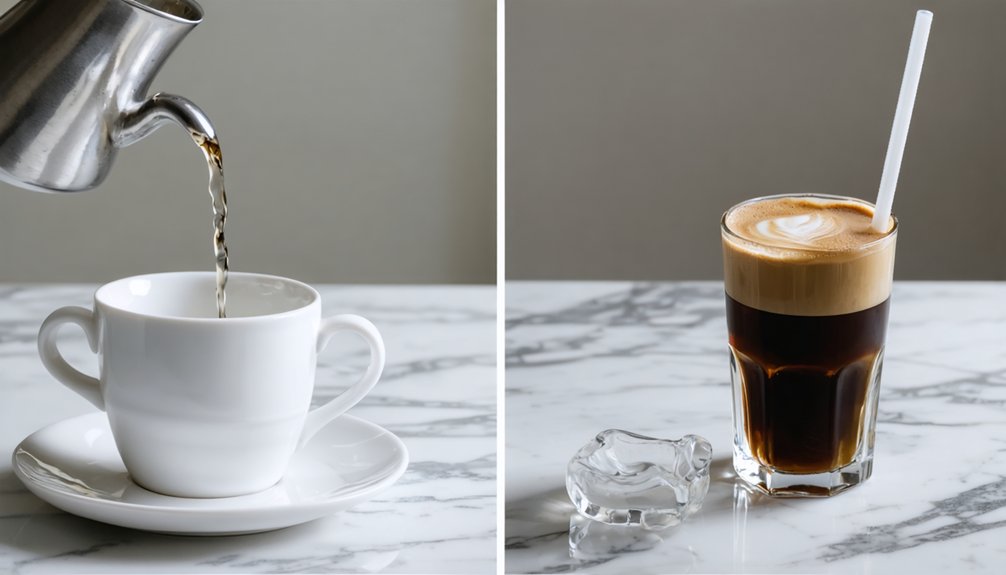
To remove tea stains from teeth, rinse your mouth with plain water immediately after drinking to disrupt tannin adhesion. Use a straw to minimize front-tooth exposure, and switch to a whitening toothpaste with mild abrasives or low-concentration peroxide. Apply a baking soda paste twice weekly, eat crunchy foods post-tea to mechanically dislodge pigments, and maintain consistent brushing and flossing. If stains persist beyond six to eight weeks, professional intervention becomes necessary — and each technique has nuances worth understanding.
Key Takeaways
- Rinse your mouth with plain water immediately after drinking tea to disrupt tannins before they adhere to enamel.
- Use a straw when drinking iced or cold brew tea to minimize contact with front teeth.
- Brush twice daily with whitening toothpaste containing mild abrasives or low-concentration peroxide to lift tannin stains.
- Apply a baking soda and water paste twice weekly to neutralize acidic residue and polish surface stains.
- Eat crunchy foods like apples or carrots within 30 minutes post-tea to dislodge pigments and stimulate saliva.
Rinse Your Mouth With Water Right After Tea
When you finish your cup of tea, rinse your mouth with plain water immediately. This single habit disrupts tannins and pigments before they adhere to your enamel. Mouth rinsing clears residual compounds efficiently, resetting your oral environment without requiring additional products or tools.
Stain prevention depends on timing. You’ll want to rinse within 30 minutes of drinking to protect enamel from temporary acid softening. During that window, your enamel remains vulnerable, so rinsing rather than brushing is the correct response. Swish water firmly around all tooth surfaces for maximum clearance.
Drinking water throughout your tea session also reduces compound concentration in your mouth.
Combined with other consistent habits, this straightforward step measurably limits discoloration over time.
Use a Straw to Keep Tea Off Your Front Teeth
Rinsing reduces what’s already in your mouth, but a straw prevents contact before it even occurs. The straw benefits are straightforward: you’re redirecting tea away from your front teeth entirely.
Use this method strategically:
Use this method strategically — small, intentional habits compound into meaningful protection for your smile over time.
- Reserve straws for iced teas and cold brews where temperature allows comfortable use.
- Position the straw toward the back of your mouth to minimize front tooth exposure.
- Choose reusable metal or silicone straws — sustainable choices that eliminate single-use waste.
- Combine straw use with a post-drink water rinse for compounded protection.
Hot teas require different strategies since straw use becomes impractical. However, for chilled varieties, this technique delivers measurable reduction in visible surface staining with minimal behavioral change required.
Switch to a Whitening Toothpaste That Targets Tea Stains
Switching to a whitening toothpaste gives you a targeted tool against tannin buildup that routine brushing alone won’t fully address. Whitening ingredients like mild abrasives and low-concentration peroxide compounds work together to lift surface discoloration before it penetrates enamel.
Toothpaste effectiveness depends on formulation consistency—products containing baking soda, such as Crest 3DWhite Brilliance, demonstrate measurable stain reduction after minimal use. You’ll want to avoid overly abrasive formulas, which compromise enamel integrity over time.
Pairing a whitening paste with an electric toothbrush maximizes mechanical plaque disruption, improving overall results. Brush twice daily for two minutes, and wait at least 30 minutes after drinking tea before brushing to prevent acid-softened enamel from sustaining abrasive damage.
Try a Baking Soda Paste to Lift Tea Stains Naturally
Baking soda functions as a mild abrasive that mechanically lifts surface tannin deposits without the chemical aggression of commercial whiteners.
You can apply a paste of baking soda and salt twice weekly, brushing gently to remove accumulated stains while limiting use to a few times monthly to avoid cumulative enamel wear.
This controlled frequency makes it a safer long-term alternative, provided you avoid aggressive scrubbing that could compromise enamel integrity over time.
How Baking Soda Works
When tea stains accumulate on enamel, a simple baking soda paste can lift them without harsh chemicals. Its mild alkalinity neutralizes acidic residue while its abrasive texture buffs away tannin deposits.
Understanding the baking soda benefits helps you apply it strategically:
- It disrupts tannin bonds on enamel surfaces
- It raises mouth pH, discouraging bacterial adhesion
- It polishes without stripping protective enamel layers
- It delivers measurable whitening within weeks of consistent use
Mix a small amount with water to form a paste, then brush gently twice weekly.
If you’re exploring baking soda alternatives, options like activated charcoal or mild silica-based toothpastes offer comparable abrasion. However, baking soda remains the most clinically validated, cost-effective choice for controlling surface tea stains.
Application And Frequency
Knowing how baking soda works is only half the equation — applying it correctly determines whether you’ll see results. Mix a small amount with water to form a paste, then brush gently for two minutes using circular strokes. Limit use to twice weekly; exceeding this frequency risks enamel erosion rather than stain prevention.
Don’t incorporate baking soda into your daily routine as a toothpaste replacement. Instead, alternate it with your regular fluoride toothpaste to preserve enamel integrity. Apply it within 30 minutes after drinking tea for maximum tannin removal before pigments adhere.
Consistency matters more than intensity. Two controlled applications per week, sustained over several weeks, produce measurable whitening without compromising your enamel’s structural defense.
Safety And Enamel Protection
Although baking soda effectively lifts tea stains, it’s a mild abrasive that can erode enamel if you use it too aggressively or too often. Follow these enamel safety protocols to maintain protective measures:
- Limit application to twice weekly maximum to prevent cumulative abrasion damage.
- Apply gentle pressure using soft circular strokes rather than aggressive scrubbing.
- Wait 30 minutes after drinking tea before brushing, allowing enamel to reharden from acid exposure.
- Discontinue use if you experience sensitivity, as this signals enamel compromise.
These protective measures guarantee you remove surface stains without sacrificing structural integrity.
If sensitivity persists, consult your dentist before continuing. Controlled, infrequent application delivers whitening results while keeping enamel damage risk minimal.
Eat Crunchy Foods After Tea to Scrub Stains Before They Set
Reaching for crunchy foods like apples, celery, or carrots shortly after drinking tea can mechanically disrupt tannin deposits before they bind to enamel.
These crunchy snacks function as natural abrasives, generating friction against tooth surfaces as you chew. That friction dislodges loosely adhered pigments during the critical window before enamel adhesion strengthens.
Crunchy foods act as natural abrasives, scrubbing away loose tea pigments before they permanently bond to enamel.
Fibrous produce also stimulates saliva production, which dilutes residual staining compounds and neutralizes oral acidity.
Apples contain malic acid, a compound associated with surface stain reduction. Celery and carrots require prolonged chewing, extending the mechanical scrubbing effect across multiple tooth surfaces.
Timing matters. Consuming these foods within 20–30 minutes post-tea maximizes their preventive impact.
Pairing this habit with water rinsing gives you measurable control over cumulative discoloration.
Brush and Floss the Right Way to Stop Tea Stains Setting
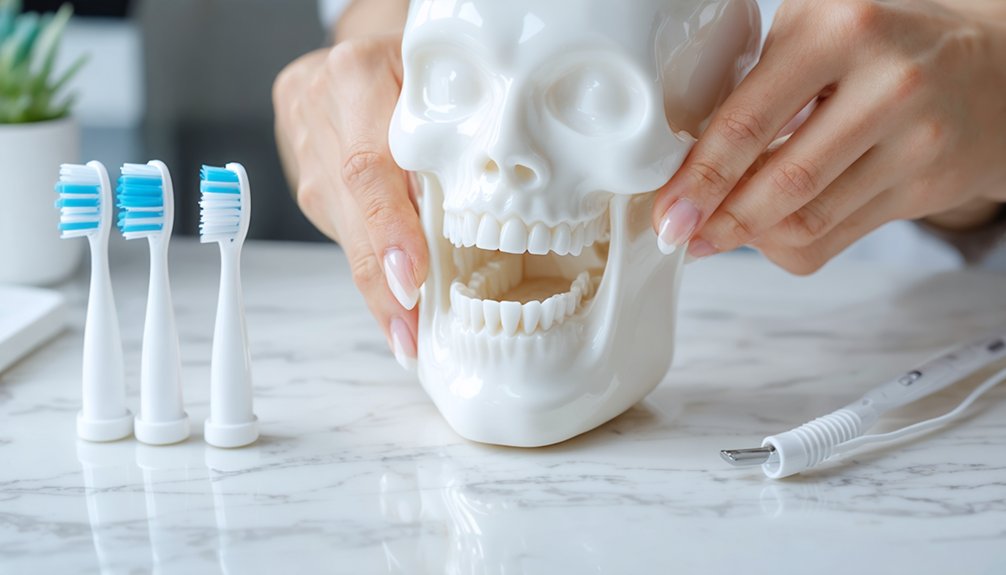
Two minutes of brushing twice daily disrupts the plaque matrix that anchors tannin deposits to enamel surfaces. Your brushing timing matters: wait 30 minutes after drinking tea before brushing, protecting temporarily softened enamel from abrasion damage.
Execute this protocol precisely:
- Brush for two full minutes using circular strokes targeting the gumline.
- Apply correct flossing technique by curving floss around each tooth in a C-shape, clearing inter-proximal deposits.
- Chew sugar-free gum between sessions to stimulate saliva, neutralizing residual compounds.
- Schedule professional cleanings to eliminate persistent staining your routine can’t resolve.
Flossing technique directly prevents edge staining where tannins concentrate between teeth.
Consistency with both practices removes the structural foundation stains require, giving you measurable control over discoloration progression.
See a Dentist When Home Remedies Stop Removing Tea Stains
When home remedies consistently fail to lift tea stains, you’re likely dealing with intrinsic discoloration that requires professional intervention.
Your dentist can perform scaling, polishing, or supervised bleaching treatments that target stains beyond the reach of baking soda or whitening toothpaste.
Seek professional care if stains persist after six to eight weeks of diligent home treatment, or if you notice sensitivity or enamel changes accompanying the discoloration.
Persistent Stains Need Attention
Home remedies lose effectiveness against intrinsic stains—discoloration embedded within enamel rather than sitting on its surface. When stain prevention strategies and tea alternatives no longer restore brightness, professional intervention becomes necessary. Your dentist can assess stain depth and recommend targeted treatment.
Schedule a consultation when you notice:
- Stains persisting after two weeks of consistent whitening toothpaste use
- Discoloration unresponsive to baking soda applications or dietary adjustments
- Gray or brown hues indicating deeper enamel penetration
- Surface texture changes suggesting enamel erosion alongside staining
Professional cleaning removes calcified deposits home tools can’t address. In-office bleaching penetrates intrinsic stains using higher peroxide concentrations than over-the-counter products.
Delaying treatment allows stains to deepen, making eventual correction more intensive and costly.
Professional Cleaning Options
Professional dentists offer three core treatments when surface-level remedies can no longer restore enamel brightness: ultrasonic scaling, air polishing, and in-office bleaching.
Ultrasonic scaling targets calcified plaque removal at the gum line, while air polishing uses pressurized sodium bicarbonate to eliminate tannin deposits. In-office bleaching applies concentrated hydrogen peroxide directly, achieving faster teeth whitening than at-home alternatives. These professional treatments address enamel care without compromising structural integrity when applied correctly.
Schedule dental check-ups every six months to maintain results and catch early staining. Your dentist monitors enamel thickness, adjusts cleaning techniques based on sensitivity, and recommends targeted oral maintenance strategies.
Consistent professional intervention, combined with daily stain prevention habits, establishes measurable long-term control over tea-related discoloration that home methods can’t fully resolve alone.
When To Seek Help
Persistent discoloration that resists whitening toothpaste, baking soda treatments, and consistent oral hygiene routines signals that intrinsic staining has likely developed beneath the enamel surface.
At this point, professional dental advice becomes necessary. Schedule a consultation when you notice:
- Yellowing or browning that doesn’t respond after 4–6 weeks of stain prevention efforts
- Sensitivity accompanying discoloration, indicating possible enamel erosion
- Gray or dark patches unaffected by surface-level treatments
- Uneven coloration suggesting deeper structural changes
Your dentist can assess whether professional bleaching, microabrasion, or bonding is clinically appropriate.
Don’t delay seeking dental advice—early intervention prevents staining from advancing further. You maintain control by recognizing when home strategies have reached their limit and escalating treatment accordingly.
Frequently Asked Questions
Can Green Tea Stain Teeth Less Than Black Tea Does?
Did you know green tea stains teeth less than black tea? Among tea types, green tea contains fewer tannins, so you’ll experience reduced discoloration. Still, you should rinse with water after drinking either variety.
How Long Does Professional Teeth Whitening Last After Treatment?
Professional teeth whitening duration typically lasts one to three years, depending on your habits. Professional treatment effectiveness diminishes faster if you drink tea regularly, so you’ll want to maintain rinsing routines and whitening toothpaste consistently.
Does Drinking Cold Tea Cause Less Staining Than Hot Tea?
cold tea benefits your enamel marginally. Tea temperature effects matter less than contact time. You’ll reduce staining more effectively by using a straw, rinsing immediately, and shortening steeping duration regardless of temperature.
Are Tea Stains on Teeth Linked to Any Health Risks?
Tea stains themselves don’t directly cause health risks, but they signal inadequate oral hygiene. Your tea consumption habits can foster bacterial plaque buildup, increasing cavity and gum disease risk if you don’t maintain consistent brushing and flossing routines.
Can Teeth Whitening Strips Remove Deep Tea Stains Effectively?
Whitening strips can tackle moderate tea stains, but they’re less effective on deep, set-in discoloration. You’ll maximize whitening effectiveness by combining strips with stain prevention habits like rinsing immediately after drinking tea.
References
- https://www.advantagedental.com/blog/how-to-remove-coffee-and-tea-stains-from-your-teeth
- https://crest.com/en-us/oral-care-tips/teeth-stains/tea-coffee-teeth-stains-how-to-avoid-remove-them
- https://bayhilldentalcare.com/blog/top-tips-reducing-teeth-stains/
- https://www.lesueurfamilydental.com/teeth-whitening-tips-for-tea-drinkers/
- https://www.gentledentalcaregroup.co.uk/blog/how-to-stop-tea-and-coffee-staining-teeth
- https://mypenndentist.org/dental-tips/2024/02/13/how-to-remove-stains-from-teeth/