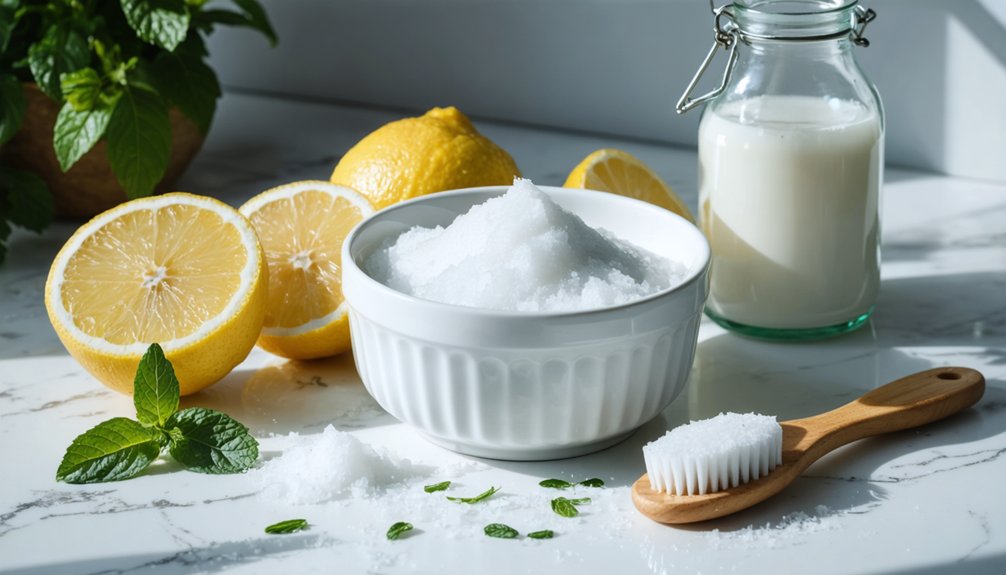
Tea stains your teeth because tannins chemically bond to porous enamel, embedding chromogens deep into its microstructure. You can fight back using baking soda, strawberry paste, or activated charcoal to lift surface discoloration, while rinsing with water immediately after each cup disrupts tannin adhesion before it sets. Oil pulling and crunchy vegetables offer additional natural defense. For stubborn staining, professional polishing and custom whitening trays deliver superior results. There’s much more to uncover about keeping your smile consistently bright.
Key Takeaways
- Rinsing your mouth with water immediately after drinking tea disrupts tannin adhesion before stains penetrate deeper into enamel pores.
- Brushing with baking soda acts as a mild abrasive, effectively lifting surface discoloration caused by tea tannins.
- Oil pulling with coconut oil for 15-20 minutes binds fat-soluble tannins, lifting them from enamel before brushing.
- Eating crunchy vegetables like carrots and celery mechanically scrubs teeth while stimulating saliva production to neutralize residual tannins.
- Professional dental polishing removes tannin buildup and brightens enamel up to 8 times more effectively than home remedies alone.
Why Tea Stains Your Teeth in the First Place
Tea contains naturally occurring compounds called tannins—polyphenolic molecules that bind readily to the protein pellicle coating your tooth enamel.
Understanding tea composition reveals that tannin effects aren’t superficial; they trigger a chemical adhesion process that embeds chromogens—color-producing particles—directly into your enamel’s microscopic pores.
Darker, longer-steeped varieties like black tea carry higher tannin concentrations, accelerating discoloration considerably.
Your enamel’s porous microstructure makes it particularly vulnerable. Once tannins penetrate these surface irregularities, routine brushing struggles to dislodge them effectively.
Saliva offers partial protection by diluting tannin concentration, but it can’t neutralize adhesion entirely.
Recognizing this mechanism gives you a precise target: interrupt tannin binding before it progresses, rather than treating established stains reactively.
Daily Habits That Stop Tea Stains Before They Set
After each cup of tea, rinse your mouth with water immediately to flush away tannins before they bond to enamel.
This simple step disrupts the staining process at its earliest stage, reducing the concentration of pigment-laden compounds on tooth surfaces.
Pair this habit with twice-daily brushing using a whitening or stain-removal toothpaste, which contains mild abrasives and peroxide compounds clinically shown to break down surface discoloration over time.
Rinse After Every Cup
One simple habit can considerably reduce tea staining before it takes hold: rinsing your mouth with water immediately after each cup. Tannins bind to enamel within minutes, so acting fast disrupts their adhesion before staining compounds penetrate deeper tooth surfaces.
Your rinse techniques matter. Swish water vigorously for 30 seconds, targeting all tooth surfaces, particularly the front teeth most exposed to liquid flow.
Don’t brush immediately afterward—wait 30 minutes to avoid abrading softened enamel.
For stronger intervention, consider mouthwash alternatives like diluted hydrogen peroxide or an antiseptic rinse, which neutralize residual tannins more effectively than water alone. These options give you measurable control between brushing sessions.
Consistency is the key variable—rinsing after every cup compounds into significant long-term stain prevention.
Brush With Whitening Toothpaste
Rinsing reduces tannin adhesion, but pairing that habit with the right toothpaste turns daily brushing into an active stain-fighting tool. Whitening toothpaste benefits come from mild abrasives—like baking soda or silica—that physically polish surface discoloration without stripping enamel.
Formulas containing hydrogen peroxide add chemical oxidation, breaking tannin bonds at a molecular level.
For best brushing techniques, hold your brush at a 45-degree angle to the gumline, apply light pressure, and use short circular strokes for two full minutes. Electric toothbrushes outperform manual options by generating more consistent abrasive contact.
Brush twice daily, and if your schedule allows, keep a travel-size whitening toothpaste at work for post-tea sessions. Consistency, not intensity, determines long-term stain control.
Kitchen Remedies That Scrub Away Tea Stains
Several kitchen staples double as effective tools for scrubbing away tea stains, offering a cost-efficient alternative to commercial whitening products.
Baking soda’s mild abrasive properties physically lift surface discoloration when applied as a paste. Combine it with mashed strawberry paste, letting the mixture sit for five to ten minutes before rinsing thoroughly.
Baking soda’s gentle abrasiveness, combined with strawberry paste, lifts tea stains effectively when left to work for several minutes.
Turmeric powder, despite its vibrant pigment, paradoxically reduces staining when brushed onto enamel for two minutes.
Incorporate crunchy vegetables like carrots and celery into your diet, as their fibrous texture mechanically scrubs tannin deposits during chewing.
Activated charcoal absorbs surface stains through adsorption, though you should limit its use to prevent excessive enamel abrasion.
Each method targets stains through distinct mechanisms, maximizing your results.
Does Oil Pulling Actually Remove Tea Stains?
How does swishing oil around your mouth translate into whiter teeth? Oil pulling works through lipid-based emulsification—oil binds to fat-soluble compounds, including some tannin residues, physically lifting them from enamel surfaces.
For stain removal, swish one tablespoon of coconut oil vigorously for 15–20 minutes daily, then spit into the trash to prevent drain clogs. Follow immediately with regular brushing to clear loosened debris.
The evidence is modest but consistent: oil pulling reduces plaque accumulation, which otherwise traps tannins against enamel.
It won’t reverse deep discoloration, but it’s a meaningful preventive tool when integrated into your daily routine. You’re fundamentally controlling the biofilm environment that makes staining worse over time.
Foods That Naturally Reduce Tea Stains
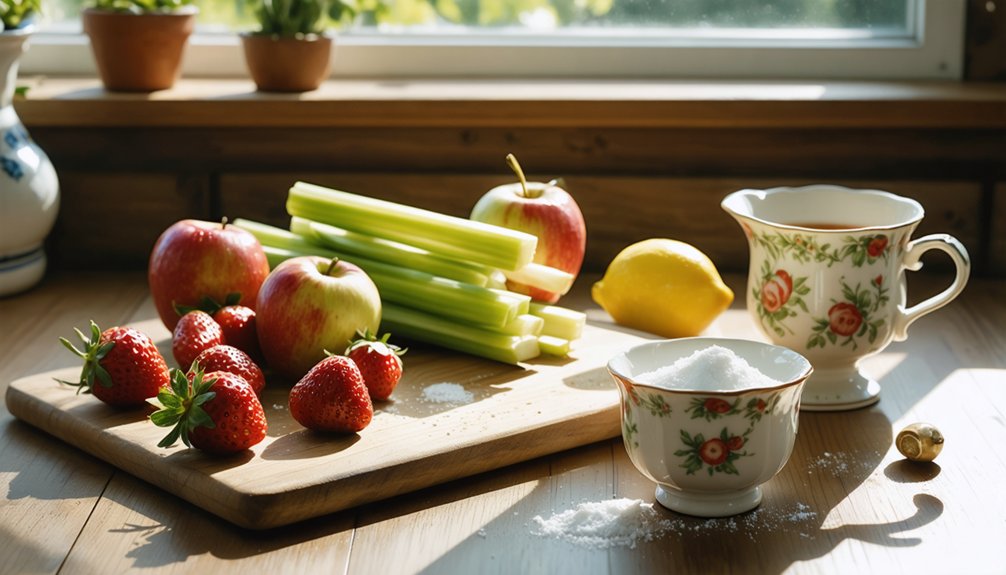
What you eat between cups of tea directly influences how much tannin adheres to your enamel. Incorporating natural stain fighters into your diet creates a mechanical and biochemical defense against discoloration.
Crunchy raw vegetables like celery and carrots act as abrasive agents, physically scrubbing tannin deposits from enamel surfaces as you chew.
Fiber rich foods stimulate saliva production, which neutralizes acids and rinses residual tannins before they bond to enamel.
Strawberries contain malic acid, a natural bleaching compound that breaks down surface stains effectively. Apples generate sustained chewing action that disrupts plaque formation.
Prioritizing these foods strategically—particularly immediately after tea consumption—gives you measurable control over stain accumulation without relying solely on topical treatments.
Professional Whitening Options Worth the Cost
When home remedies fall short, professional whitening options deliver measurable results you can’t replicate on your own.
Dentist polishing removes surface tannin buildup with precision, yielding enamel that’s three to eight times brighter after a single session.
For ongoing stain management, bespoke dental trays—custom-fitted to your teeth—provide superior coverage and more consistent whitening than over-the-counter alternatives.
Dentist Polishing Benefits
Dentist polishing delivers results that home remedies simply can’t match, brightening enamel 3x to 8x more effectively than over-the-counter alternatives.
Professional polishing techniques utilize specialized abrasive compounds and rotary instruments calibrated to your enamel’s specific density, removing tannin deposits embedded below the surface layer where brushing can’t reach.
Unlike home treatments, clinical polishing preserves enamel health by operating within controlled abrasion thresholds, preventing the micro-damage that aggressive DIY methods risk.
Your dentist also identifies early-stage staining patterns, allowing targeted intervention before discoloration compounds.
Scheduling professional polishing twice yearly establishes a measurable baseline for your whitening protocol.
Combined with consistent home maintenance, you’ll sustain clinically verified results rather than relying solely on incremental, unpredictable home remedy outcomes.
The investment directly translates to quantifiable, lasting enamel clarity.
Bespoke Dental Trays
Beyond professional polishing, bespoke dental trays extend your whitening results by delivering prescription-strength peroxide gel directly against your enamel’s contours.
Unlike generic strip formats, custom trays eliminate gel migration, ensuring consistent chemical contact across every surface and reducing gum irritation risks.
Your dentist takes precise impressions to fabricate trays that conform exactly to your dentition. You’ll load a measured peroxide concentration into these custom trays and wear them for dentist-specified intervals, typically one to two hours daily or overnight.
For stain prevention, you’ll maintain these sessions periodically after heavy tea consumption, sustaining brightness between professional visits.
Custom trays deliver superior peroxide distribution compared to over-the-counter alternatives, making them a clinically sound investment for anyone committed to long-term enamel whiteness and proactive stain management.
How to Stop Tea Stains From Coming Back
Once you’ve removed tea stains from your teeth, preventing their return requires consistent daily habits. Maintaining your teeth whitening results demands disciplined stain prevention strategies executed regularly.
- Rinse immediately — Swish water around your mouth directly after drinking tea to flush tannins before they bind to enamel.
- Brush strategically — Use a whitening toothpaste twice daily and wait 30 minutes post-tea before brushing to protect softened enamel.
- Modify consumption habits — Drink tea through a straw, add milk to reduce tannin concentration, and shorten steeping time to decrease staining potential.
Flossing regularly eliminates tannin-trapping plaque between teeth, while chewing sugar-free gum stimulates saliva production, your mouth’s natural defense against discoloration.
Frequently Asked Questions
Can Drinking Green Tea Cause Less Staining Than Black Tea?
Yes, you’ll find green tea offers “gentler chromatic impact” on enamel. Its lower tannin levels deliver notable green tea benefits, making tea stain prevention more manageable. You’re better positioned to maintain brightness by choosing green over black tea.
Are Tea Stains on Teeth Permanent if Left Untreated for Years?
Tea stains aren’t permanent—you can reverse them through consistent stain prevention strategies. Natural alternatives like baking soda, oil pulling, and professional polishing effectively lift even years-old tannin deposits, restoring your enamel’s original brightness with dedicated effort.
Does Teeth Whitening Work Differently on Crowns or Veneers?
Yes, teeth whitening doesn’t work on crowns or veneers since they’re made from non-porous materials. For crown maintenance and veneer care, you’ll need professional replacement or polishing to match your newly whitened natural teeth.
Can Children Safely Use Baking Soda Remedies for Tea Stains?
You shouldn’t use baking soda remedies on children’s teeth without consulting a dentist first. While baking soda aids stain removal, it can compromise children’s safety by eroding developing enamel, potentially harming their long-term dental health.
How Long Do Professional Whitening Results Typically Last Before Fading?
Professional whitening duration typically lasts six months to two years, depending on your habits. You’ll extend results through consistent stain prevention strategies, like rinsing after tea, using whitening toothpaste, and scheduling regular dentist polishing sessions for maintenance.
References
- https://crest.com/en-us/oral-care-tips/teeth-stains/tea-coffee-teeth-stains-how-to-avoid-remove-them
- https://www.docklandsdental.ie/how-to-remove-tea-stains-from-teeth/
- https://www.advantagedental.com/blog/how-to-remove-coffee-and-tea-stains-from-your-teeth
- https://alvarezdentistry.com/remove-yellow-stains-from-my-teeth-naturally-at-home/
- https://www.gentledentalcaregroup.co.uk/blog/how-to-stop-tea-and-coffee-staining-teeth
- https://mypenndentist.org/dental-tips/2024/02/13/how-to-remove-stains-from-teeth/
- https://www.youtube.com/watch?v=940WlpRuKy4
- https://dynamicdentalcare.com/p/BLOG-106279-2023.7.10-How-To-Remove-Tea-and-Coffee-Stains-from-Teeth-p.asp?fc=1