Genetic tooth stains form deep within enamel and dentin, making them resistant to most standard whitening approaches. You’ll get the best results from peroxide-based OTC products like Crest 3D Whitestrips or Aura Glow’s carbamide peroxide kit, which can achieve one to two shade improvements on mild cases. These work as management tools, not permanent fixes. Understanding which ingredients target intrinsic stains, and when to escalate to professional care, makes all the difference in your results.
Key Takeaways
- OTC whitening products typically achieve only 1-2 shade improvements, making them better suited for mild genetic stains than severe cases.
- Hydrogen peroxide strips penetrate enamel deeper than toothpaste, making them more effective for treating intrinsic genetic discoloration.
- Crest 3D Whitestrips, Colgate Optic White, and Aura Glow are recommended OTC options targeting intrinsic stains effectively.
- Applying whitening strips after professional cleaning enhances peroxide penetration and improves overall results on genetic stains.
- No improvement after two OTC treatment cycles indicates stains are too embedded, requiring professional dental intervention instead.
What Actually Causes Genetic Tooth Stains?
Genetic tooth stains originate from disruptions during enamel or dentin formation, a process called amelogenesis. When enamel genetics are compromised, your teeth develop structural irregularities that trap chromogens deep within the tooth matrix.
Unlike surface stains from coffee or tobacco, hereditary discoloration embeds itself intrinsically, making it considerably harder to address with standard whitening approaches.
Hereditary tooth discoloration lives within the tooth itself — far beyond the reach of standard whitening solutions.
Two primary conditions drive this: amelogenesis imperfecta, which disrupts enamel protein structure, and dentinogenesis imperfecta, which affects dentin mineralization.
Both result in yellow, brown, or gray discoloration that peroxide-based products struggle to fully penetrate. Your enamel’s thickness, mineral density, and genetic protein composition all determine how effectively OTC whitening agents can oxidize these deeply embedded chromogens and deliver measurable shade improvements.
Can OTC Whitening Products Fix Genetic Stains?
Understanding how these structural disruptions form helps clarify why OTC whitening products can only do so much.
Genetic stain variations—whether from enamel hypoplasia, fluorosis, or tetracycline incorporation—affect mineralization depth, which limits OTC effectiveness greatly.
Hydrogen peroxide and carbamide peroxide oxidize chromogens within enamel, but they can’t restructure compromised mineral matrices.
You’ll typically achieve one to two shade improvements with consistent strip or gel use, particularly for milder intrinsic discoloration.
Severe genetic cases won’t respond meaningfully to peroxide concentrations available over the counter.
Your best results come from applying ADA-approved strips post-professional cleaning, following the full 14-day protocol.
For moderate-to-severe genetic staining, OTC treatment serves as a maintenance tool rather than a corrective solution.
How to Pick the Right OTC Whitener for Genetic Stains
To choose the right OTC whitener for genetic stains, you’ll first need to identify whether your discoloration is intrinsic or extrinsic, since intrinsic stains respond less to peroxide-based products.
Once you’ve confirmed your stain type, compare active ingredients—hydrogen peroxide works faster, while carbamide peroxide releases more gradually and suits sensitive teeth better.
You should also check for the ADA Seal of Acceptance, which confirms that a product meets tested standards for both safety and efficacy.
Identify Your Stain Type
When choosing an OTC whitening product for genetic stains, you’ll need to first distinguish between intrinsic and extrinsic discoloration. Stain identification determines which active ingredient and delivery method you’ll actually need.
Extrinsic stains sit on enamel surfaces, caused by food, tobacco, or beverages. Hydrogen peroxide strips and silica-based toothpastes address these effectively.
Intrinsic stains originate within dentin, often from genetics, medication exposure, or developmental factors. These resist surface-level treatments and require peroxide-based agents that penetrate enamel structure.
Conduct a stain assessment by examining discoloration under natural light. Yellowish hues typically indicate extrinsic staining; gray or brown tones suggest intrinsic origin.
Accurate classification prevents wasted product use and sets realistic expectations, since OTC options yield only 1-2 shade improvements on genetic discoloration.
Compare Active Ingredients
Picking the right active ingredient determines whether an OTC whitener actually reaches genetic stains or merely polishes your enamel surface. Active ingredients comparison reveals two primary agents: hydrogen peroxide and carbamide peroxide.
Hydrogen peroxide oxidizes chromogens directly within enamel, making it your fastest option for intrinsic discoloration. Carbamide peroxide releases hydrogen peroxide more slowly, reducing sensitivity during extended overnight use.
Ingredient effectiveness depends on concentration and delivery method. Strips using 10–14% hydrogen peroxide penetrate deeper than silica-based toothpastes, which only abrade surface deposits.
Carbamide peroxide gel at 10–16% in tray systems sustains longer contact time, improving results on genetically embedded stains. Potassium nitrate manages sensitivity without compromising whitening action.
Avoid LED-activated kits—light acceleration remains clinically unproven and adds unnecessary cost without measurable benefit on intrinsic discoloration.
Check ADA Approval
Checking for the ADA Seal of Acceptance cuts through marketing claims and confirms a product’s safety and efficacy have been independently verified.
When evaluating product endorsements against ADA guidelines, prioritize these criteria:
- Seal Verification – Confirm the ADA Seal appears on packaging, not just in advertising copy.
- Peroxide Concentration – ADA-approved strips and gels use hydrogen peroxide at clinically validated concentrations.
- Sensitivity Disclosures – ADA-compliant products clearly state ingredient concentrations and sensitivity risks.
- Independent Testing – ADA approval requires third-party efficacy data, separating verified products from unvetted alternatives.
Non-ADA products lack this accountability standard.
For genetic stains, you’re already working against limited OTC efficacy, so you can’t afford to compound that limitation with unverified products.
Best OTC Whitening Products for Genetic Stains
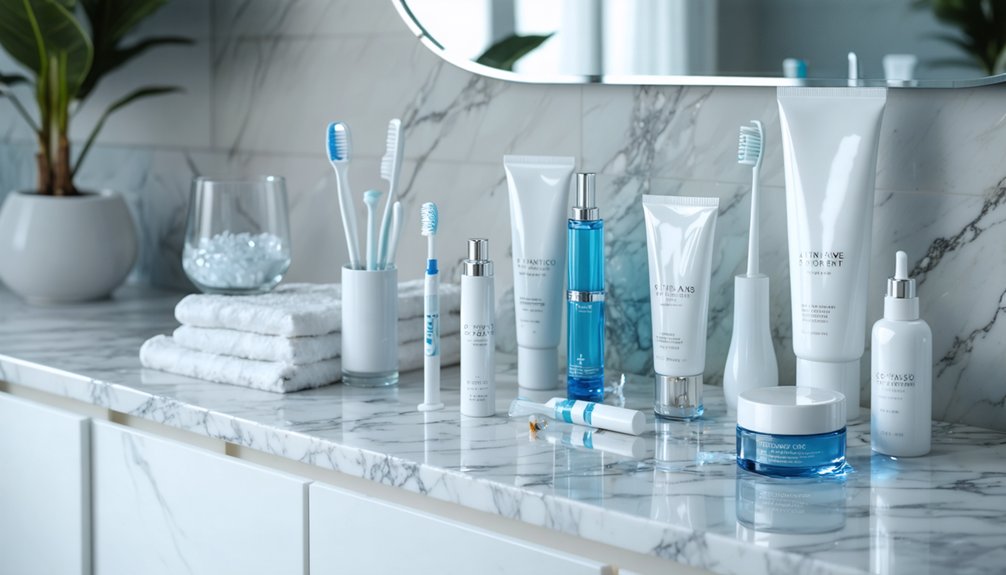
For genetic stains, your best OTC options include Crest 3D Whitestrips (Glamorous White or Brilliance), which deliver ADA-approved hydrogen peroxide directly to enamel, and the Aura Glow LED Kit, which uses FDA-approved carbamide peroxide for gradual oxidation of intrinsic discoloration.
These products typically achieve 1-2 shade improvements on mild genetic stains, though severe cases won’t respond adequately without professional-grade concentrations.
To maximize results, apply strips or trays after a professional cleaning and follow label instructions consistently, such as 30 minutes twice daily for 14 days.
Top OTC Whitening Products
Although genetic stains are among the hardest to treat with OTC products, several ADA-approved options can deliver measurable, if modest, improvements.
Ignore whitening myths suggesting overnight transformations—consistent, evidence-based use is your best stain prevention strategy.
Here are 4 top-performing products you should consider:
- Crest 3D Whitestrips Glamorous White – Hydrogen peroxide strips; apply 30 minutes twice daily for 14 days.
- Colgate Optic White Advanced Toothpaste – Targets intrinsic stains through daily brushing.
- Aura Glow Whitening Kit – FDA-approved carbamide peroxide with LED tray activation.
- Sensodyne Extra Whitening – Potassium nitrate formula designed for sensitivity-prone users.
Expect 1–2 shade improvements.
Apply strips post-professional cleaning to maximize peroxide penetration and optimize your results.
Genetic Stain Removal Effectiveness
Knowing which products work best is only part of the equation—understanding *how well* they work on genetic stains sets realistic expectations.
Genetic factors directly limit how OTC products perform—intrinsic discoloration embedded in dentin responds noticeably less than extrinsic surface staining. You can realistically expect 1-2 shade improvements with consistent use, such as strips applied twice daily for 14 days.
Severe genetic discoloration won’t resolve with OTC concentrations alone; professional treatment becomes necessary. For stain prevention, combining post-cleaning strip application with monthly maintenance keeps surface accumulation minimal.
ADA-approved hydrogen peroxide formulas penetrate enamel most effectively for mild intrinsic cases. Knowing your stain’s origin—genetic versus dietary—lets you calibrate expectations accurately and choose targeted interventions rather than wasting time on ineffective products.
Safe Usage Tips
Using OTC whitening products safely means following concentration guidelines and application schedules precisely. Whitening safety depends on disciplined product application to avoid enamel damage and gum irritation.
Follow these evidence-based protocols:
- Apply strips post-professional cleaning — reduced surface residue enhances peroxide penetration into enamel.
- Adhere to timing guidelines — use strips 30 minutes twice daily for 14 days without exceeding recommendations.
- Select lower peroxide concentrations — 10–16% carbamide peroxide minimizes sensitivity during overnight tray applications.
- Choose ADA-approved products — confirmed safety and efficacy reduce risks associated with unverified formulations.
For genetic stains requiring persistent treatment, combine monthly OTC touch-ups with professional in-office sessions.
Skipping protocols doesn’t accelerate results — it increases sensitivity risk.
How to Use OTC Whiteners on Genetic Stains for Best Results
While genetic stains respond less readily to OTC whiteners than extrinsic discoloration, you can still achieve one to two shade improvements by applying products strategically.
Schedule your first application immediately following a professional cleaning to maximize peroxide penetration on residue-free enamel. For application techniques, press strips firmly against buccal surfaces, eliminating air pockets that reduce contact time and efficacy.
Maintain a whitening frequency of twice daily for 14 consecutive days when using hydrogen peroxide strips. For tray-based systems containing 10–16% carbamide peroxide, apply overnight to extend oxidation exposure.
Avoid food and beverages that reintroduce chromogens within 48 hours post-treatment. Afterward, sustain results through monthly OTC touch-ups combined with periodic in-office treatments, which deliver higher peroxide concentrations targeting deeper intrinsic discoloration that OTC concentrations can’t fully address.
When Genetic Stains Need Professional Treatment Instead
Though OTC whiteners can address mild genetic discoloration, severe cases require professional intervention to achieve meaningful results.
When surface-level options fail, professional treatments deliver higher peroxide concentrations and controlled application that OTC products can’t replicate.
Recognize these indicators that you need professional treatment:
- Tetracycline or fluorosis staining — deep intrinsic discoloration requiring in-office bleaching or veneers.
- Zero shade improvement after two OTC cycles — stains are too embedded for low-concentration peroxides.
- Gray or brown genetic discoloration — these tones resist oxidation-based whitening entirely.
- Structural enamel defects — genetic discoloration tied to enamel hypoplasia demands restorative solutions, not bleaching.
Consulting a dentist lets you identify the precise stain origin and select a targeted, evidence-based protocol that actually works.
How to Keep Genetic Stain Whitening Results From Fading
Maintaining whitening results after treating genetic stains requires consistent, targeted upkeep—because intrinsic discoloration is more prone to regression than extrinsic staining.
Your whitening maintenance protocol should include monthly OTC strip applications or low-concentration carbamide peroxide tray sessions to sustain achieved shade levels. Use ADA-approved whitening toothpaste with hydrated silica daily to prevent surface stain accumulation.
Lifestyle choices directly impact result longevity. Limit chromogen-rich foods and beverages—coffee, red wine, and dark sauces accelerate rebound discoloration. If you consume them, rinse immediately afterward.
Avoid tobacco entirely, as it reintroduces both extrinsic and intrinsic staining mechanisms. Schedule professional cleanings every six months to remove residue that reduces peroxide penetration.
Applying strips post-cleaning maximizes efficacy. Structured, disciplined adherence is the only reliable strategy for preventing fade.
Frequently Asked Questions
Are OTC Whitening Products Safe to Use During Pregnancy?
You shouldn’t use OTC whitening products during pregnancy due to unresolved safety concerns. Ingredient analysis reveals peroxide compounds lack sufficient pregnancy safety data, so consult your dentist before proceeding with any whitening treatment.
Can Children or Teenagers Safely Use OTC Whitening Products?
You shouldn’t use OTC whitening products on children under 12. Teenagers must follow strict age restrictions and safety guidelines, as developing enamel risks heightened sensitivity. Consult your dentist before applying any peroxide-based treatment to younger teeth.
Do Whitening Products Damage Existing Dental Crowns or Veneers?
Like Dorian Gray’s portrait, your crowns and veneers won’t whiten—they’re peroxide-resistant. You won’t damage them, but you’ll create shade mismatches. Prioritize crown longevity and veneer maintenance by consulting your dentist before starting any whitening regimen.
How Does Diet Affect Whitening Results During the Treatment Period?
During treatment, you’ll compromise results by consuming staining agents like coffee, tea, or wine. Dietary influences matter considerably—you should prioritize stain prevention by avoiding chromogen-rich foods, ensuring peroxide penetrates enamel effectively for ideal whitening outcomes.
Can OTC Whiteners Be Used Alongside Prescription Dental Medications?
Like mixing chemicals blindly risks reactions, you’ll want a prescription compatibility check first. OTC whiteners can interact with some medications, heightening whitening sensitivity concerns. Always consult your dentist before combining treatments to maintain control over your outcomes.
References
- https://www.healthline.com/health/dental-and-oral-health/best-teeth-whitening
- https://lasrydentalclinic.com/best-at-home-teeth-whitening-products/
- https://shopremi.com/blogs/night-mouth-guard-blog/over-the-counter-teeth-whitening
- https://www.youtube.com/watch?v=fZccEgAEue8
- https://pmc.ncbi.nlm.nih.gov/articles/PMC4058574/
- https://www.aarp.org/health/conditions-treatments/teeth-whitening/
- https://stgeorgedentalcare.com/over-the-counter-teeth-whitner/