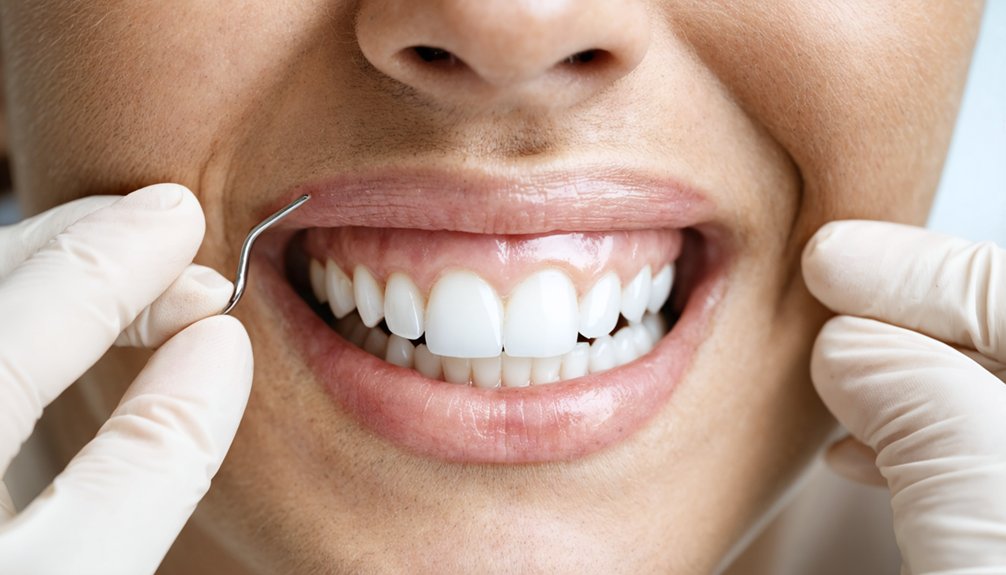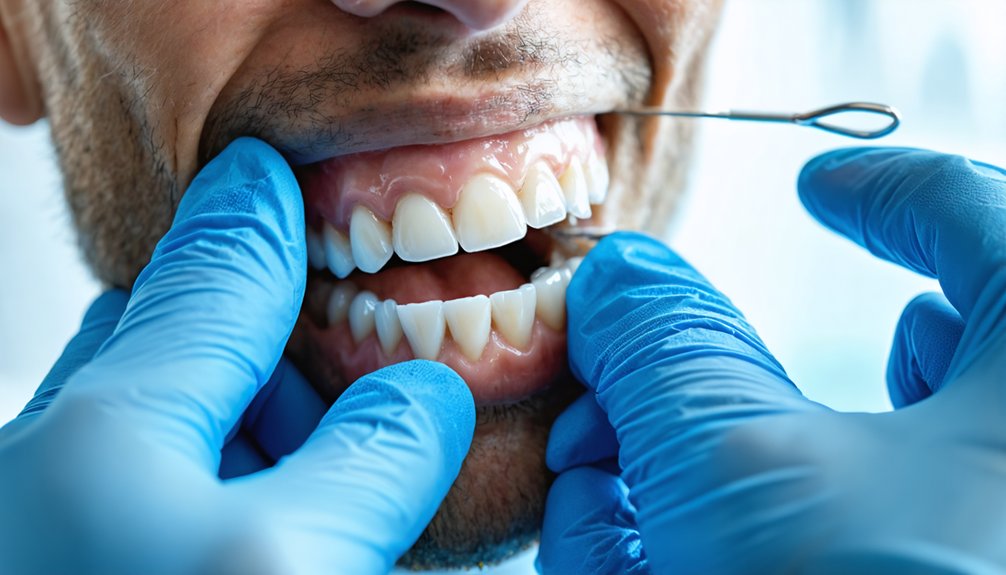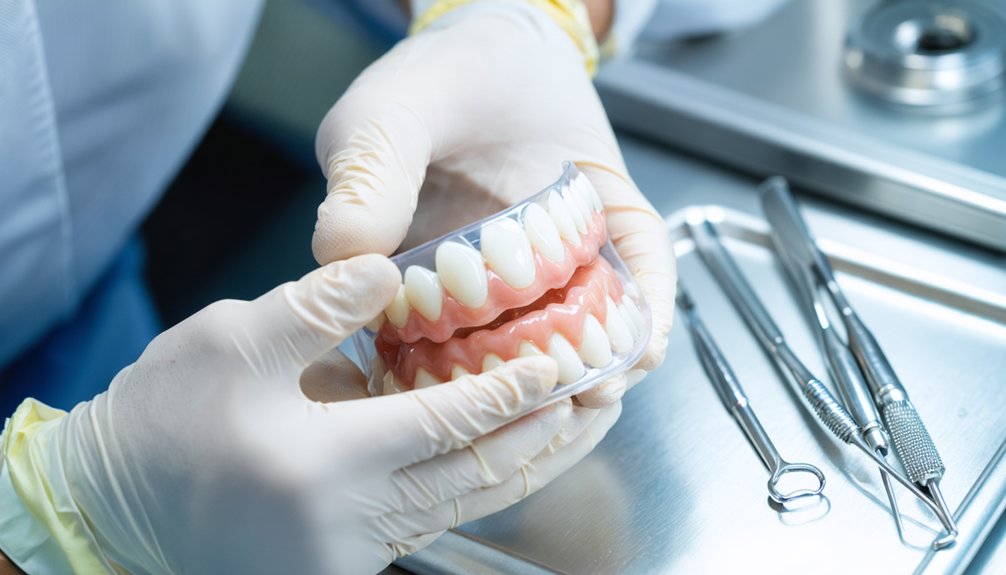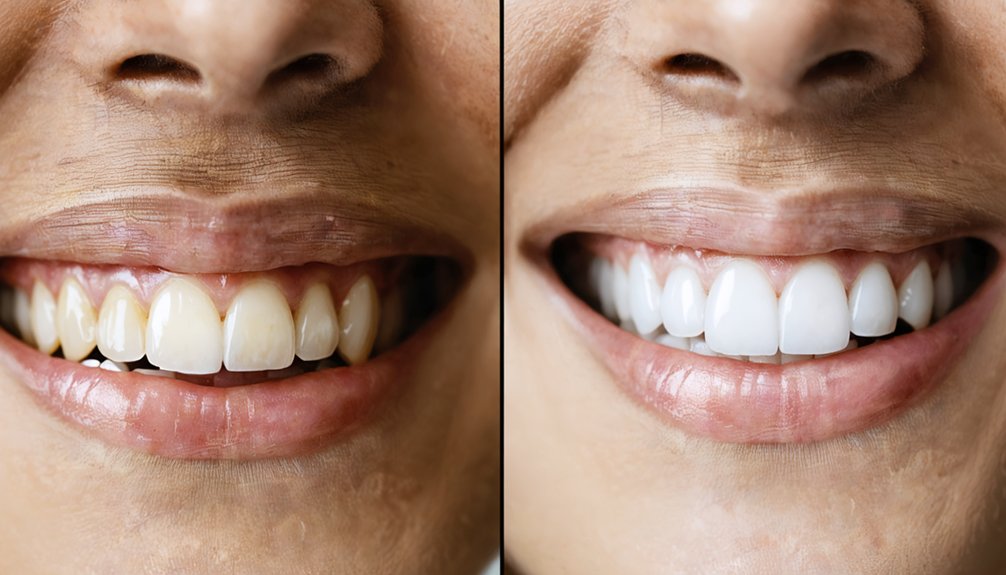
When severe discoloration goes beyond surface stains, over-the-counter products simply can’t reach deep enough. Professional whitening uses hydrogen peroxide concentrations of 25–40%, penetrating enamel layers where stubborn chromogens are embedded. Your dentist evaluates stain origin, enamel thickness, and sensitivity to build a treatment plan tailored specifically to your teeth. This clinical precision delivers measurable, even results that OTC strips can’t match. The details behind each step reveal exactly why professional care makes all the difference.
Key Takeaways
- Professional whitening uses 25–40% hydrogen peroxide concentrations, penetrating deeper than OTC products to effectively break down severe, stubborn stains.
- Dentists customize treatment plans based on enamel thickness, stain origin, and sensitivity levels, ensuring targeted results for severe discoloration.
- Protective barriers and desensitizing agents are applied during treatment, minimizing gum irritation and managing sensitivity throughout the whitening process.
- Heat activation accelerates whitening within 30–60 minutes, with dentist supervision ensuring even, measurable results unavailable through at-home methods.
- Professional results last 6–12 months, with touch-up trays, in-office boosters, and maintenance strategies helping sustain lasting brightness effectively.
Why Severe Stains Need Professional Teeth Whitening
Severe dental discoloration, whether caused by smoking, medication use, aging, or trauma, often involves intrinsic stains that penetrate beyond the enamel surface—making over-the-counter products clinically insufficient.
When you’re dealing with these discoloration causes, standard whitening strips or gels can’t deliver the concentration or depth of penetration required for meaningful results.
Professional treatment options utilize 25–40% hydrogen peroxide formulations that break down deep-set stains more effectively than anything available without a prescription.
Your dentist evaluates enamel thickness, stain origin, and overall oral health before recommending a protocol—ensuring you’re not wasting time on ineffective solutions.
You need a clinically supervised approach that targets the actual source of discoloration, not just surface buildup.
Professional whitening gives you that precision.
What Makes Professional Whitening Formulas More Effective
When you undergo professional teeth whitening, you’re exposed to hydrogen peroxide concentrations ranging from 25% to 40%—significantly higher than the 3% to 10% found in over-the-counter products.
These stronger formulations penetrate beyond surface-level discoloration, reaching intrinsic stains embedded within the enamel’s structural layers.
As a result, you achieve a level of whitening that store-bought options simply can’t replicate, particularly for severe or deep-set discoloration.
Higher Hydrogen Peroxide Concentrations
One of the primary distinctions between professional and over-the-counter whitening products lies in hydrogen peroxide concentration.
Professional formulas contain 25–40% hydrogen peroxide, enabling deep cleaning that penetrates enamel to target intrinsic stains. Store-bought alternatives typically reach only 3–10%, limiting their stain removal capacity considerably.
Here’s what higher concentrations deliver:
- Deeper penetration — reaches intrinsic discoloration embedded within enamel layers
- Faster oxidation — breaks down stubborn molecular compounds causing severe staining
- Stronger efficacy — addresses tobacco, medication, and trauma-related discoloration OTC products can’t resolve
- Controlled application — your dentist calibrates concentration based on your enamel thickness and sensitivity threshold
You’re not guessing with professional-grade formulas.
You’re working with a precisely dosed, clinically validated solution designed to produce measurable results.
Deeper Enamel Stain Penetration
Higher hydrogen peroxide concentrations wouldn’t matter if the formula couldn’t reach the stain’s origin—and that’s precisely where professional whitening pulls ahead.
Professional-grade stain removal techniques use optimized delivery systems that drive active agents past surface enamel and into deeper structural layers where intrinsic discoloration originates.
Unlike over-the-counter products that address only superficial buildup, professional formulas penetrate enamel systematically, targeting chromogens embedded within the tooth’s dentin.
This depth of action is critical when you’re dealing with discoloration caused by aging, trauma, or long-term medication use.
Your enamel health remains protected throughout this process because clinicians control concentration, application time, and activation methods precisely.
You’re not guessing—you’re executing a calculated approach that targets stains at their source while preserving structural integrity.
How Your Dentist Designs a Treatment Plan Around Your Teeth
Before recommending any whitening protocol, your dentist evaluates your enamel thickness, discoloration type, and overall oral health to identify the most appropriate treatment approach.
This clinical assessment allows your dentist to customize a plan that targets your specific stains while accounting for pre-existing sensitivity or other dental conditions.
Evaluating Your Oral Health
When you sit down for a professional whitening consultation, your dentist conducts a thorough oral health assessment to identify the root cause of your discoloration, measure enamel thickness, and assess existing dental conditions.
This enamel evaluation determines which whitening protocol delivers safe, effective results for your specific case.
Key diagnostic factors your dentist examines include:
- Discoloration origin — intrinsic versus extrinsic staining from medications, trauma, aging, or lifestyle
- Enamel thickness and integrity — confirming sufficient enamel density before applying concentrated peroxide
- Existing restorations — identifying crowns, veneers, or fillings that won’t respond to bleaching agents
- Sensitivity levels — detecting nerve exposure or erosion that requires protocol modifications
This data-driven approach guarantees your treatment targets the actual problem, not just surface symptoms.
Customizing Your Whitening Plan
Once your dentist has mapped your oral health profile, they translate that diagnostic data into a structured whitening protocol built around your specific dental conditions.
They select whitening techniques matched to your stain type, enamel thickness, and sensitivity thresholds—ensuring each variable is controlled before treatment begins.
This personalized approach eliminates guesswork. If intrinsic staining from medications or trauma is present, your dentist adjusts concentration levels and exposure duration accordingly.
If sensitivity is a documented concern, they incorporate desensitizing agents into the protocol.
You’re not receiving a generalized procedure—you’re receiving a clinically designed plan that accounts for your exact oral condition.
That precision directly influences your outcome, reducing adverse effects while maximizing whitening efficacy across targeted areas of discoloration.
Addressing Sensitivity And Needs
Sensitivity isn’t a barrier to professional whitening—it’s a clinical variable your dentist actively manages when designing your treatment plan. Through individualized care, your dentist adjusts concentration levels, application time, and protective protocols based on your enamel thickness and sensitivity threshold.
- Desensitizing agents are applied pre- or post-treatment to reduce nerve response.
- Lower peroxide concentrations get selected when enamel erosion or sensitivity is documented.
- Protective barriers shield gum tissue and exposed dentin from chemical contact.
- Treatment intervals are spaced strategically to prevent cumulative sensitivity buildup.
This sensitivity management approach means your results aren’t compromised by discomfort. Your dentist controls every variable—product strength, exposure duration, and aftercare protocol—so your whitening outcome stays both effective and clinically appropriate for your specific dental profile.
What Happens During an In-Office Whitening Session
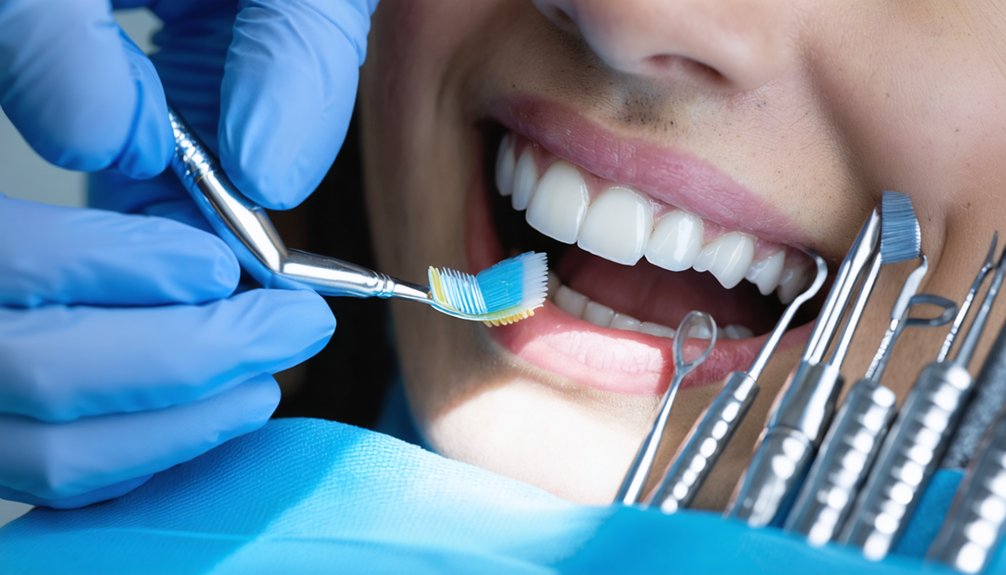
Before the whitening agent is applied, your dentist conducts a thorough oral health evaluation to assess enamel thickness, identify discoloration causes, and confirm you’re a suitable candidate for treatment. This evaluation shapes the entire in-office technique, ensuring precision from start to finish.
Once cleared, your dentist applies protective barriers to your gums and soft tissues, minimizing irritation. A professional-grade hydrogen peroxide solution—ranging from 25–40%—is then carefully placed on your teeth.
Professional-grade hydrogen peroxide, applied with precision and protective care, delivers controlled whitening results your smile deserves.
Controlled light or heat activation accelerates the whitening process, delivering results within 30 to 60 minutes.
Throughout the patient experience, your dentist monitors progress and adjusts application as needed. This level of supervision isn’t available with at-home methods, giving you measurable, even whitening results while maintaining your oral health integrity.
How Your Dentist Protects Your Enamel and Gums
Protecting your enamel and gums isn’t an afterthought—it’s a structured, protocol-driven process your dentist follows before a single drop of whitening agent touches your teeth.
Enamel protection and gum health remain central priorities throughout every stage of treatment.
Your dentist implements precise safeguards, including:
- Gum barriers: Resin or rubber dam shields block peroxide from contacting soft tissue
- Enamel assessment: Pre-treatment evaluation identifies vulnerabilities, dictating concentration selection
- Controlled application: Precise gel placement prevents migration onto unintended surfaces
- Sensitivity protocols: Fluoride treatments or desensitizing agents reinforce enamel integrity post-procedure
These measures aren’t optional additions—they’re clinical standards.
Each layer of protection directly reduces your risk of irritation, enamel softening, and post-treatment sensitivity, giving you predictable, measurable outcomes without compromising your oral health.
How Long Professional Whitening Results Actually Last
Professional whitening results don’t fade overnight—most patients retain noticeable brightness for 6 to 12 months, with some achieving sustained results beyond that range through consistent maintenance.
Your lifestyle impact directly determines longevity. Tobacco use, frequent consumption of chromogenic foods and beverages, and inadequate oral hygiene accelerate re-staining and shorten your results considerably.
Applying effective whitening maintenance tips gives you measurable control over outcome duration. Dentist-prescribed touch-up trays, periodic in-office boosters, and limiting stain-causing exposures extend your investment considerably.
You’ll also benefit from twice-daily brushing with a whitening-formulated dentifrice and routine professional cleanings.
Unlike over-the-counter alternatives, professional treatments deliver a baseline brightness that’s markedly easier to maintain.
Your adherence to a structured post-treatment protocol determines whether your results reach 12 months or fall short.
Frequently Asked Questions
Can Professional Whitening Treat Discoloration Caused by Certain Antibiotics?
Stubborn stains stemming from antibiotic effects, like tetracycline, represent challenging discoloration types. Professional whitening’s stronger formulations penetrate deeply, targeting intrinsic discoloration effectively. You’ll achieve noticeably brighter results that over-the-counter products simply can’t deliver.
Is Professional Teeth Whitening Safe for Patients With Dental Restorations?
Professional whitening won’t alter restoration materials like crowns or veneers, so you’ll notice uneven whitening effectiveness. Your dentist evaluates your restorations beforehand, ensuring a personalized, safe plan that minimizes risks while optimizing natural tooth results.
How Much Does a Professional Teeth Whitening Session Typically Cost?
Biting the bullet, you’ll invest $300–$1,000 per session. Professional treatments deliver superior whitening effectiveness compared to at-home alternatives, ensuring precise, evidence-based results tailored to your severe discoloration—giving you complete control over your outcome.
Can Pregnant or Nursing Women Safely Undergo Professional Teeth Whitening?
You shouldn’t undergo professional teeth whitening while pregnant or nursing due to safety concerns around hydrogen peroxide exposure. Consult your dentist about alternative treatments, as they’ll recommend waiting until after pregnancy for ideal safety.
How Soon After Whitening Can Patients Eat or Drink Normally?
Ironically, your newly brightened smile’s worst enemy is your next meal. You’ll wait 48 hours before eating normally, managing post-whitening sensitivity by following ideal aftercare practices: avoiding staining foods, hot beverages, and acidic substances throughout recovery.
References
- https://valleycreekdentalcare.com/blog/the-benefits-of-professional-teeth-whitening-a-comprehensive-guide
- https://www.loudfamilydentistry.com/blog/professional-teeth-whitening-benefits-and-what-to-expect-during-treatment
- https://www.gordon-dental.com/blog/benefits-professional-teeth-whitening/28157
- https://grossofamilydentistry.com/blog/the-pros-and-cons-of-teeth-whitening-treatments/
- https://comfortdentalspa.com/blog/teeth-whitening/5-benefits-of-professional-teeth-whitening/
- https://dworkindental.com/blog/10-key-benefits-of-choosing-professional-teeth-whitening/
- https://pmc.ncbi.nlm.nih.gov/articles/PMC4058574/
- https://www.michianafamilydental.com/blog/5-benefits-of-professional-teeth-whitening/