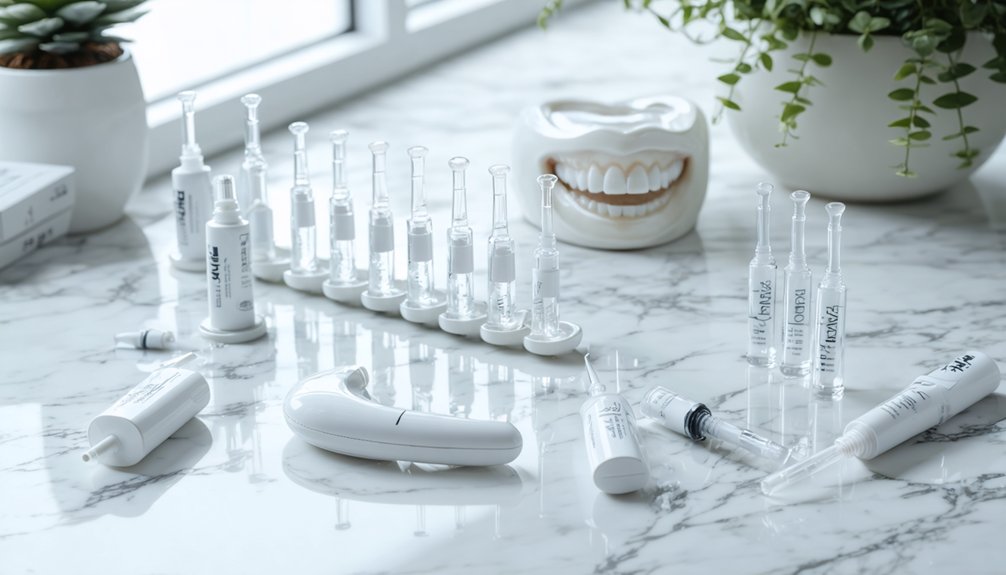
If you’re looking for effective teeth whitening without the dental office price tag, today’s home kits range from $11.49 budget strips to $44.99 professional-grade options. Strips work well for surface stains, while tray-based systems tackle deeper discoloration. LED kits accelerate results and manage sensitivity better than high-concentration formulas. Most users see noticeable changes within seven to fourteen days of consistent use. The right kit depends on your stain type, sensitivity level, and budget — all covered ahead.
Key Takeaways
- Budget-friendly options like Plus White start at $11.49, while mid-range kits like Zimba offer strong value between $20–$28.
- Strips effectively treat mild surface stains from coffee or tobacco, typically showing results within seven to ten days.
- Tray-based systems with peroxide gel provide deeper whitening results for more significant discoloration than strips offer.
- LED-activated kits compress treatment timelines, improve sensitivity management, and cost significantly less than professional in-office treatments.
- Sensitivity-prone users should prioritize natural ingredient formulas or LED-based kits like the Rembrandt 1 Week Whitening Kit.
The Best Affordable Home Teeth Whitening Kits in 2026
Whether you’re tackling mild surface stains or preparing for a special occasion, choosing the right at-home whitening kit in 2026 comes down to matching product type, budget, and sensitivity level to your specific needs.
Options range from $11.49 five-minute kits to $44.99 professional-grade strips, giving you precise control over spending. User reviews consistently highlight tray-based systems and LED-activated gels as the most effective formats, while strips suit mild staining and touch-ups.
Kits formulated with natural ingredients appeal to sensitivity-prone users seeking gentler peroxide alternatives. Treatment timelines span one to three weeks for most home kits, with one-week options available.
Prioritizing consistency, proper application, and stain severity assessment guarantees you select a kit that delivers measurable, reliable results.
What Does Each Kit Actually Cost: and Is It Worth It?
How much you spend on a whitening kit directly shapes the results you can realistically expect. A thorough cost breakdown reveals clear tiers: budget options like Plus White run $11.49, mid-range strips like Zimba offer strong value assessment around $20–$28, and professional-grade kits like Crest 3D Whitestrips Professional Effects reach $44.99.
LED systems climb toward $150. Home kits universally undercut professional in-office treatments priced at $300–$700, but they demand consistent daily use over one to three weeks. You’re trading speed for savings.
Higher-priced kits typically deliver more dramatic shade changes, while budget strips handle mild stains effectively. Match your investment to your stain severity and timeline—spending more only makes sense if your whitening goals require it.
Which Whitening Format Works Best for At-Home Use?
Once you’ve matched your budget to your whitening goals, the next decision is format—and each type performs differently depending on your stain severity and lifestyle.
Strips effectiveness peaks with mild surface stains and routine touch-ups, making them the most accessible entry point.
Strips shine brightest on mild surface stains, offering the simplest, most accessible starting point for whiter teeth.
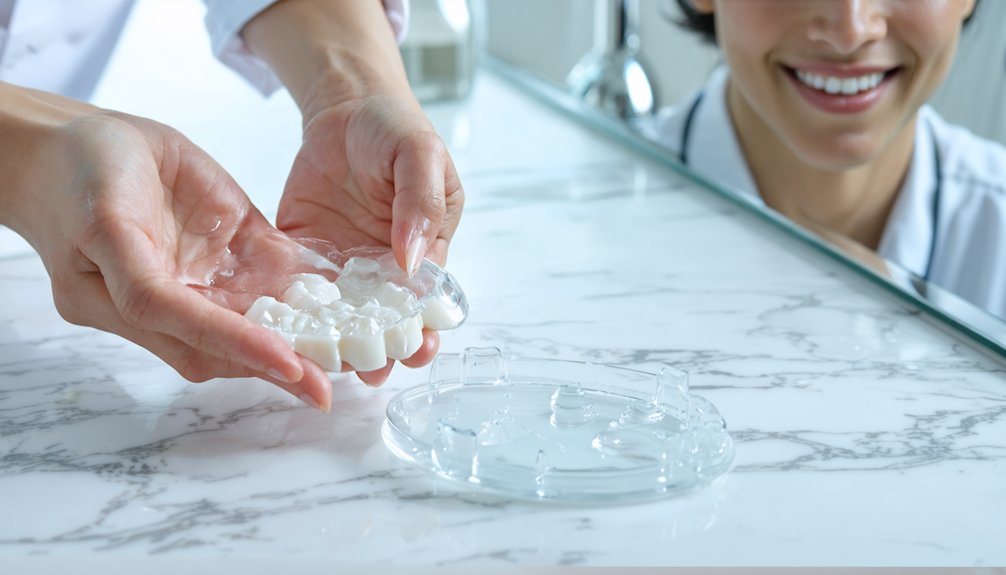
Tray convenience suits deeper discoloration, delivering the most noticeable at-home results through consistent peroxide gel contact across all tooth surfaces.
LED kits accelerate gel activation, reducing overall treatment duration without sacrificing efficacy.
Whitening pens address isolated spots but won’t produce dramatic shade changes.
If you’re managing sensitivity, LED systems offer a gentler alternative to high-concentration trays.
Ultimately, your stain severity, schedule, and sensitivity threshold should dictate your format choice—not price alone.
Consistency across any format remains the primary driver of measurable results.
Does Your Sensitivity or Stain Type Change Which Kit You Need?
Sensitivity and stain type directly determine which whitening kit will work for you—and choosing the wrong one risks either ineffective treatment or unnecessary discomfort.
Your sensitivity levels dictate format first. If you experience tooth or gum sensitivity, LED-based kits and custom trays reduce irritation more effectively than standard strips. The Rembrandt 1 Week Whitening Kit specifically targets sensitive users.
Stain types require equal precision. Surface stains from coffee or tobacco respond well to strips and serums. Deeper, intrinsic discoloration demands tray-based peroxide systems, which deliver the most noticeable at-home results.
Whitening pens handle localized spots but won’t address widespread staining.
Match your kit to both variables simultaneously. Ignoring either your sensitivity levels or your stain types produces suboptimal outcomes regardless of product quality or consistency.
How Long Before Home Teeth Whitening Shows Real Results?
Realistic timelines for home teeth whitening depend on the product type, stain severity, and how consistently you use the kit.
Most home kits require daily use across one to three weeks before you’ll notice a visible results shift. Strips targeting mild stains typically produce changes within seven to ten days.
Tray-based systems with peroxide gel deliver the most noticeable outcomes but still demand consistent daily application. LED kits can accelerate gel activation, compressing your whitening timeline slightly.
One-week kits like Rembrandt suit tighter schedules without sacrificing measurable improvement. Skipping sessions directly delays outcomes.
If you’re managing heavier staining, expect the longer end of any projected range before significant shade change occurs.
Frequently Asked Questions
Can Teeth Whitening Kits Damage Enamel With Prolonged Use?
Walk the fine line carefully: yes, prolonged overuse can cause enamel erosion and whitening sensitivity. You’re in control—stick to recommended cycles, avoid daily overuse, and you’ll protect your enamel while achieving effective whitening results.
Are Home Whitening Kits Safe to Use During Pregnancy?
You should avoid home whitening kits during pregnancy. Limited safety data exists on peroxide absorption, and teeth sensitivity may intensify due to hormonal changes. Consult your obstetrician before attempting any whitening treatment to guarantee pregnancy safety.
Do Whitening Kits Work Effectively on Dental Crowns or Veneers?
Whitening kits don’t affect crowns whitening or improve veneers effectiveness—they’re resistant to peroxide. You’ll notice uneven results as natural teeth brighten while restorations stay unchanged, creating visible color mismatches you’ll want to avoid.
How Should Whitening Kits Be Stored to Maintain Their Effectiveness?
Whitening gels lose up to 50% potency when stored incorrectly. You’ll preserve effectiveness by maintaining cool, dry storage conditions, keeping products away from heat and light, and checking expiration dates regularly to confirm active peroxide remains fully potent.
Can Children or Teenagers Safely Use Home Teeth Whitening Kits?
Most kits aren’t recommended for children; teenagers should consult a dentist first. You’ll face heightened teeth sensitivity risks with developing enamel. Check age restrictions on packaging and prioritize professional guidance before you begin any whitening regimen.
References
- https://elegantdentistry.net/best-teeth-whitening-kit-guide-2026-elegant-dentistry/
- https://shopremi.com/blogs/night-mouth-guard-blog/affordable-teeth-whitening-kits
- https://www.youtube.com/watch?v=bb4NrHAt3RY
- https://www.goodhousekeeping.com/health-products/g28723133/best-at-home-teeth-whitening-products/
- https://nhdentistrybeverlyhills.com/press/6-of-the-best-teeth-whitening-kits-in-the-drugstore/
- https://dentisttreeheights.com/teeth-whitening/best-at-home-teeth-whitening/
- https://mysmilesteeth.com/es/blogs/mysmiles-blog/best-at-home-teeth-whitening-kits