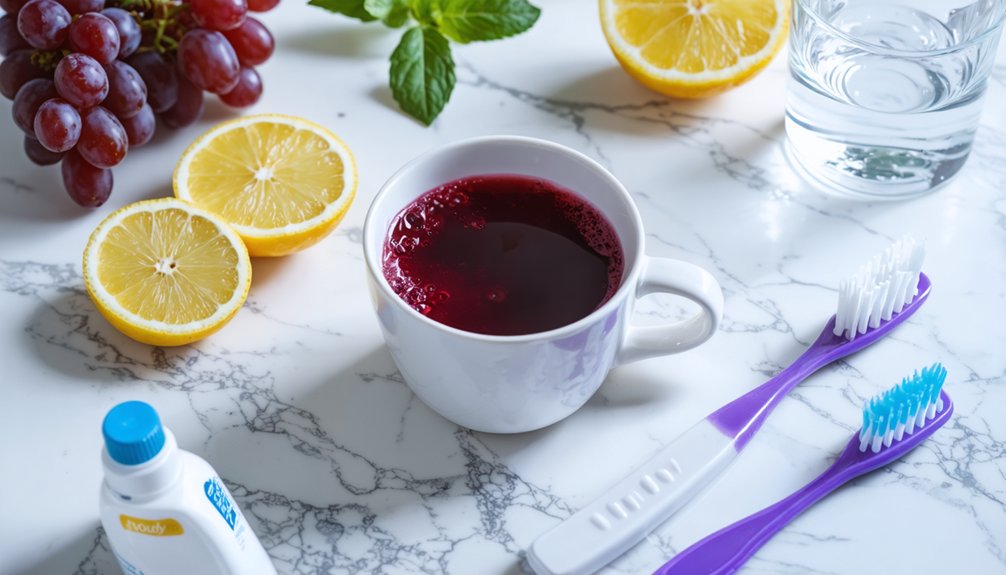
Grape juice chromogens bond to enamel within minutes, making rapid intervention essential. You can markedly reduce staining by rinsing immediately after drinking, using a straw, and chasing each sip with water to dilute residual pigment. Flossing daily disrupts plaque biofilm that traps chromogens, while crunchy produce and xylitol gum stimulate saliva to neutralize acids. Wait 30 minutes before brushing to protect softened enamel. Each tip below builds a stronger, more complete defense.
Key Takeaways
- Rinse your mouth with water immediately after drinking grape juice to dilute pigment and reduce acid contact on enamel.
- Use a straw positioned toward the back of your mouth to minimize pigment contact with front teeth.
- Wait 30 minutes before brushing to allow saliva to restore pH and prevent acid-accelerated enamel damage.
- Eat crunchy foods like apples or carrots after drinking to mechanically dislodge pigment and stimulate saliva flow.
- Schedule professional dental cleanings every six months to remove embedded stains and tartar that trap grape pigments.
Rinse With Water Right After Drinking Grape Juice
Rinsing your mouth with water immediately after drinking grape juice is one of the most effective first-line defenses against surface staining. Darker grape varieties—Concord or black grape—contain higher concentrations of chromogens, which intensify stain adhesion to enamel.
Rinsing immediately after grape juice is your strongest defense—darker varieties cling hardest to enamel.
A thorough water rinse dilutes residual pigment and reduces prolonged acid contact, which is critical if you have enamel sensitivity. Weakened enamel absorbs stain particles more readily.
Swish vigorously for 30 seconds to mechanically displace pigment before it bonds to surface irregularities. Don’t swallow—expectorate fully to clear the oral environment.
This single intervention lowers cumulative discoloration risk without requiring additional products. Incorporating this habit consistently after every grape juice exposure gives you direct, immediate control over stain progression before it becomes a cosmetic or structural concern.
Use a Straw to Limit Grape Juice Contact With Front Teeth
While rinsing addresses pigment after contact has already occurred, using a straw lets you reduce that contact in the first place. Positioning a straw toward the back of your mouth diverts grape juice away from your front teeth, limiting the tooth contact that drives visible staining.
Apply this method deliberately:
- Choose a reusable straw to make the habit sustainable without added waste.
- Position it past your front teeth so grape juice bypasses your most visible enamel surfaces entirely.
- Keep the straw angled consistently throughout the drink to maintain reduced tooth contact from first sip to last.
This single mechanical adjustment gives you direct, measurable control over how much pigment your enamel encounters during every serving.
Drink Quickly to Shorten How Long Pigment Sits on Teeth
The longer grape juice sits on your teeth, the more time its dark pigments have to bind to enamel. Extended contact accelerates teeth staining by giving chromogens repeated opportunity to penetrate microscopic enamel irregularities. You can disrupt this process by drinking grape juice efficiently rather than sipping it leisurely over extended periods.
Slow, prolonged sipping keeps your enamel continuously bathed in pigment and acid, compounding both staining and erosion risk. Drinking more decisively shortens total exposure time, reducing cumulative pigment adhesion. This doesn’t mean gulping carelessly — it means avoiding the habit of nursing a glass over an hour.
Once you’ve finished, rinse immediately with water to further minimize residual pigment contact and help restore a neutral oral environment.
Chase Each Sip of Grape Juice With Water to Dilute Stain
Alternating each sip of grape juice with a swallow of water dilutes residual pigment before it can adhere to enamel surfaces. Darker grape varieties—Concord, black muscat—carry heavier chromogen loads, accelerating enamel penetration with every uninterrupted contact cycle. Water interrupts that cycle decisively.
Alternate each sip of grape juice with water—interrupting chromogen contact before darker varieties permanently penetrate enamel.
Apply this protocol during every glass:
- Swallow your grape juice sip, then immediately follow with a full swallow of water to mechanically flush lingering pigment from enamel surfaces.
- Swish the water briefly before swallowing to reach interproximal zones where stain particles concentrate fastest.
- Maintain this alternating rhythm throughout the entire drink to prevent cumulative pigment buildup from compounding across each sip.
You’re not eliminating grape juice—you’re controlling its biochemical impact on your enamel with precision.
Wait 30 Minutes Before Brushing After Grape Juice
Water-based rinsing protocols reduce pigment exposure, but your next instinct—reaching for your toothbrush—can actually accelerate enamel damage if timed incorrectly.
Grape juice temporarily disrupts oral pH balance, leaving enamel in a softened, demineralized state. Brushing during this window creates mechanical abrasion against structurally compromised enamel, deepening micro-surface irregularities where stain particles accumulate more readily.
You’ll want to enforce a strict 30-minute waiting period. This interval allows saliva to restore oral pH balance and initiate enamel remineralization, rebuilding mineral density before abrasive contact occurs.
Once remineralization progresses sufficiently, brushing effectively removes loosened pigment without compounding structural damage.
Treat this delay as a non-negotiable clinical protocol, not an optional preference. Premature brushing undermines both enamel integrity and your long-term stain-prevention strategy.
Brush With a Soft Toothbrush to Clear Stains Without Damaging Enamel
When you brush with a soft-bristled toothbrush, you remove surface stain particles without abrading the enamel layer that hard bristles can progressively wear down.
Pair soft bristles with a gentle, circular technique rather than aggressive back-and-forth scrubbing, which compounds enamel erosion risk—especially after acidic beverages like grape juice.
Protecting enamel integrity is essential because damaged enamel develops micro-irregularities that trap pigment more readily, accelerating future staining.
Soft Bristles Protect Enamel
Brushing with a soft-bristled toothbrush is one of the most practical steps you can take to manage grape juice staining without accelerating enamel wear. Grape juice temporarily weakens enamel through acidity, making aggressive brushing counterproductive for enamel preservation.
Follow these precise guidelines:
- Select soft or extra-soft bristles to minimize mechanical abrasion against already-vulnerable enamel surfaces.
- Apply light, controlled pressure using circular strokes — hard scrubbing increases oral sensitivity and strips protective enamel layers irreversibly.
- Replace your toothbrush every three months because frayed bristles deliver uneven contact and reduce stain-clearing efficiency.
Hard-bristled brushes feel thorough but actively compromise enamel integrity over time. You’re not scrubbing a surface — you’re maintaining a biological structure that doesn’t regenerate. Choose your tools accordingly.
Gentle Technique Reduces Damage
Technique matters as much as tool selection — a soft toothbrush delivers results only when paired with controlled, deliberate strokes. Apply light, circular motions along the gumline rather than aggressive horizontal scrubbing.
Excessive pressure disrupts oral mineralization by physically abrading the enamel surface, accelerating erosion that grape juice’s acidity already initiates. You’re targeting stain particles lodged in microscopic enamel irregularities, not stripping layers away.
Angle the bristles at roughly 45 degrees toward the gumline to maximize plaque disruption without traumatizing tissue. Short, precise strokes outperform long, forceful sweeps every time.
Consistent gentle brushing preserves enamel resilience, maintaining the structural integrity that shields dentin from pigment penetration. Remember: controlled repetition over time removes surface staining far more effectively than aggressive sessions that compromise your enamel’s protective capacity.
Floss Daily to Stop Plaque Trapping Grape Juice Pigment
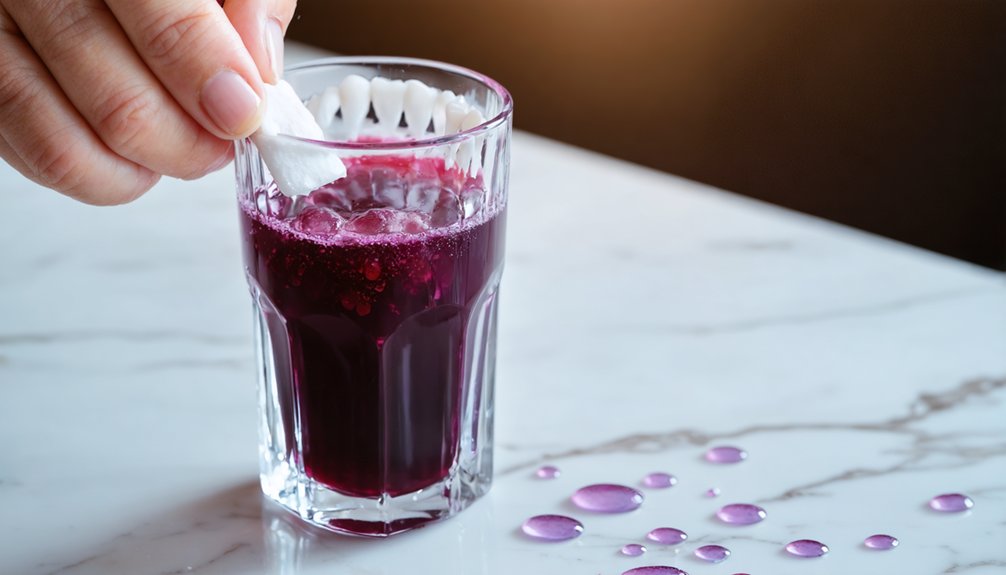
Plaque accumulates along your gumline and between teeth, creating a porous matrix that actively binds grape juice pigments to enamel surfaces.
When you skip daily flossing, that plaque layer remains intact, increasing both stain retention and the risk of deeper discoloration over time.
Flossing once daily disrupts the plaque before it mineralizes, removing the primary surface that traps and holds chromogens from staining beverages.
Plaque Traps Pigment
While brushing handles exposed tooth surfaces, it can’t reach the tight interproximal spaces where plaque accumulates and traps pigment from grape juice. Plaque’s biofilm matrix binds chromogens before salivary enzymes can neutralize them. Enamel erosion from grape juice’s acidity worsens pigment retention in these zones.
Daily flossing disrupts this mechanism directly:
- Removing interproximal plaque eliminates the primary pigment-trapping structure before staining compounds embed permanently.
- Disrupting biofilm daily prevents plaque maturation, reducing its capacity to absorb and retain chromogens long-term.
- Clearing debris between teeth allows salivary enzymes to contact enamel surfaces more effectively, supporting natural stain resistance.
Skipping floss means surrendering control over the spaces most vulnerable to cumulative, irreversible grape juice discoloration.
Daily Flossing Benefits
Flossing daily gives you direct mechanical control over the interproximal zones where plaque biofilm accumulates and binds grape juice chromogens before saliva can clear them. These contact points between teeth are inaccessible to brushing alone, making them primary sites for pigment retention and progressive discoloration.
By disrupting plaque architecture once daily, you eliminate the adhesive scaffold that locks stain particles onto enamel surfaces.
Integrate flossing into your oral hygiene routine before brushing so dislodged debris and pigment-laden plaque exit the mouth entirely rather than redistribute. This sequencing maximizes stain prevention efficiency.
Consistent daily execution matters more than technique variation — maintain firm contact against each tooth surface and work beneath the gumline where biofilm concentrations are highest and chromogen binding most persistent.
Eat Crunchy Produce After Grape Juice to Help Clear Pigment
Reaching for crunchy produce after drinking grape juice can actively work to reduce pigment retention on your enamel. Regardless of grape variety or juice temperature, mechanical chewing action and increased saliva production work together to clear residual pigment before it sets.
Crunchy produce after grape juice actively fights pigment retention, using chewing action and saliva to clear enamel before stains set.
Three reasons crunchy produce gives you an advantage:
- Saliva surge — chewing fibrous foods floods your mouth with neutralizing enzymes that actively dilute stain compounds.
- Mechanical scrubbing — firm textures physically dislodge pigment particles clinging to enamel surfaces.
- Acid neutralization — elevated saliva flow restores mouth pH, reducing enamel vulnerability to further staining.
Prioritize apples, carrots, or celery immediately after drinking. This targeted dietary choice puts you in direct control of your post-juice oral environment.
Chew Xylitol Gum When You Can’t Brush After Drinking
Sugar-free xylitol gum is your best immediate option when brushing isn’t possible after drinking grape juice. Xylitol benefits your oral environment by stimulating saliva production, which mechanically clears residual pigment and neutralizes lingering acidity.
Elevated salivary flow dilutes staining compounds before they bond firmly to enamel surfaces.
Chew one or two pieces for approximately five minutes after finishing your drink. This window matters because pigment adhesion accelerates as the mouth returns to a resting state.
If xylitol gum isn’t available, gum alternatives such as plain water rinsing or crunchy produce can partially replicate the saliva-stimulating effect, though with reduced efficiency.
Xylitol’s additional antimicrobial properties also limit plaque accumulation, reducing the surface sites where grape juice stain particles preferentially collect.
Get Regular Dental Cleanings to Clear What Brushing Misses
At-home habits like xylitol gum and daily brushing control stain accumulation between visits, but they can’t fully remove what’s already embedded in fine enamel irregularities or calcified into tartar.
Professional cleanings restore what home care cannot, directly supporting both teeth whitening outcomes and long-term enamel health.
Schedule cleanings every six months to systematically eliminate:
- Calcified tartar deposits that trap grape pigment beneath the surface, beyond any brush’s reach
- Embedded surface stains in microscopic enamel cracks that silently deepen discoloration over time
- Plaque biofilm that accelerates pigment adhesion and progressively compromises enamel health
Skipping appointments lets stain burden compound. Professional polishing resets your baseline, making your daily prevention routine considerably more effective and keeping discoloration from gaining an irreversible foothold.
Frequently Asked Questions
Can Grape Juice Staining Become Permanent if Left Untreated for Years?
Yes, you’re risking long-term damage if you neglect grape juice stains. Prolonged exposure deepens pigment penetration into enamel, increasing stain permanence. You’ll require professional intervention, as surface stains can become intrinsic discoloration that’s resistant to standard home care.
Does Drinking Grape Juice Through a Straw Completely Eliminate Staining Risk?
Straw color selection won’t fully shield your smile. Using a straw reduces but doesn’t eliminate staining risk, as pigments still reach teeth. Refining your drinking habits with rinsing and brushing remains clinically essential for thorough stain control.
Are Certain Toothpaste Ingredients More Effective at Removing Grape Juice Stains?
Yes, toothpaste formulation directly impacts stain removal effectiveness. You’ll find that whitening toothpastes containing mild abrasives or polishing agents target surface pigments, but you should prioritize enamel-safe options to avoid long-term abrasive damage.
Does Grape Juice Stain Dental Crowns, Veneers, or Implants Differently Than Enamel?
Yes, grape juice stains dental crowns, veneers, and implants differently than enamel. Their non-porous surfaces resist dental discoloration better, yet surface roughness accelerates staining. You’ll optimize staining prevention by applying identical rinsing and hygiene protocols consistently.
Can Children’s Teeth Stain More Easily From Grape Juice Than Adult Teeth?
Yes, your child’s developing enamel is thinner and more porous, increasing pediatric tooth sensitivity and stain absorption. Grape juice acidity further compromises enamel integrity, so you’ll want to implement protective rinsing and dietary controls immediately.
References
- https://www.bupa.co.uk/newsroom/ourviews/teeth-staining-foods
- https://lowrymainstreetdental.com/keep-favorite-drinks-staining-teeth/
- https://www.youtube.com/watch?v=jTwljM7Kqeo
- https://rutgershealth.org/news/how-prevent-wine-teeth-holiday
- https://www.brauerfamilydentistry.com/blogs/foods-that-stain-your-teeth
- https://www.mydentaloffice.com/natural-whitening-remedies-for-coffee-and-wine/
- https://www.webmd.com/oral-health/features/foods-stain-teeth-feature
- https://auraglow.com/blogs/articles/food-that-stain-teeth