After braces, you’ll want to wait at least one month before starting any whitening treatment, though six months is ideal for enamel stabilization. Braces trap plaque and cause uneven staining, so a professional cleaning and dental assessment should come first. You can choose from in-office bleaching, custom trays, or OTC strips, each varying in speed and effectiveness. The sections ahead break down exactly what works, what doesn’t, and how to maintain your results long-term.
Key Takeaways
- Wait at least 1 month after braces removal, ideally 6 months, before starting whitening treatments to allow enamel stabilization.
- Visit your dentist before whitening to assess enamel health, address white spots, and undergo professional cleaning.
- In-office bleaching delivers the fastest results, producing noticeable shade changes in a single appointment using high-concentration peroxide.
- Custom professional whitening trays offer a supervised at-home alternative, with daily gel applications over 1–2 weeks.
- Maintain results by brushing twice daily, avoiding stain-causing foods and beverages, and scheduling regular dental cleanings.
When Can You Start Whitening After Braces?
Once your braces come off, you shouldn’t rush straight into whitening. Your enamel and gums need recovery time following braces removal.
Most dentists recommend waiting at least one month before using any strong whitening agents, while many advise a full six-month delay to allow enamel to fully stabilize and sensitivity to subside.
Waiting six months after braces allows enamel to fully stabilize and sensitivity to fade before whitening begins.
Teeth whitening applied too soon after braces removal risks aggravating already-sensitive enamel, causing discomfort or uneven results. Your orthodontist or dentist can assess whether your enamel and gum tissue are ready for treatment. Don’t self-diagnose readiness.
Use the waiting period strategically. Focus on rebuilding oral hygiene habits, strengthening enamel with fluoridated toothpaste, and attending a professional cleaning.
That preparation directly improves whitening outcomes once you’re cleared to begin.
Why Braces Leave Your Teeth Stained
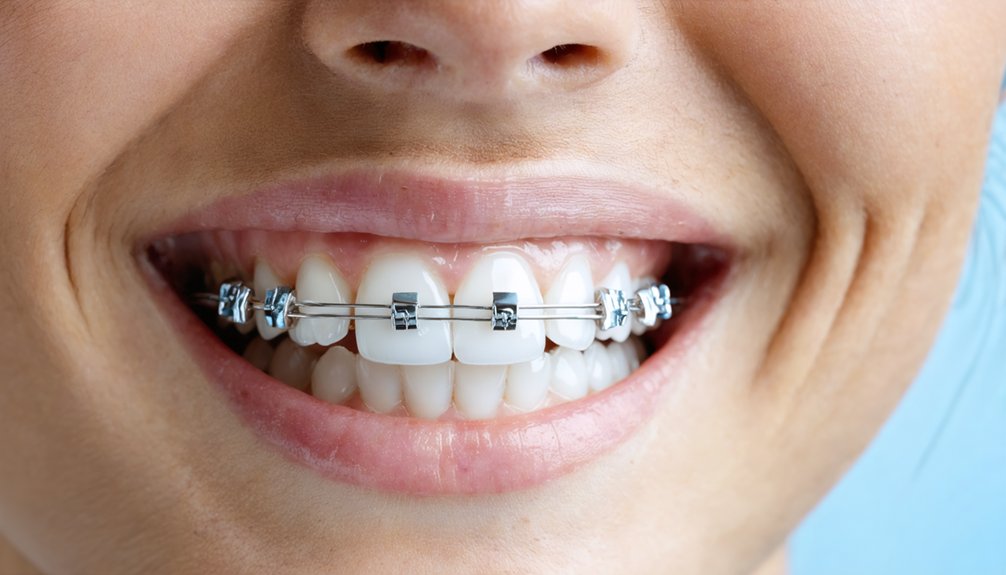
Braces create conditions that make staining nearly unavoidable. Brackets and wires trap food particles and plaque against enamel surfaces, accelerating discoloration—particularly around bracket edges. Without precise oral health education before and during treatment, most patients underestimate how quickly staining progresses.
Diet modifications also play a direct role. Consuming coffee, tea, dark sodas, or pigmented sauces while wearing braces intensifies staining because brackets obstruct thorough cleaning.
Demineralization compounds the problem: prolonged plaque contact weakens enamel, sometimes producing white spot lesions that appear distinctly after bracket removal.
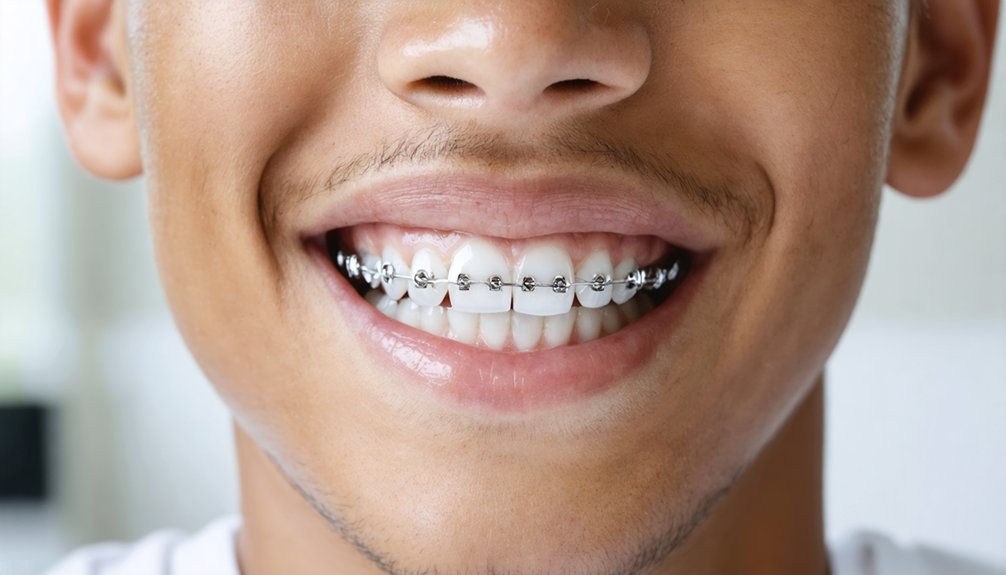
Traditional metal brackets also prevent even whitening during treatment, leaving uneven color patterns once removed.
Understanding these mechanisms gives you a clear advantage—you can target the specific causes rather than simply reacting to discoloration after the fact.
The Fastest Ways to Whiten Teeth After Braces
Once your braces come off, you have several targeted options for restoring tooth brightness, ranging from rapid professional treatments to slower over-the-counter alternatives.
In-office bleaching delivers the fastest results, often lifting stains in a single appointment, while custom professional trays offer a more gradual but still clinically effective at-home approach.
If cost or access is a barrier, over-the-counter strips and trays containing hydrogen peroxide or carbamide peroxide can work, though they typically produce slower and less dramatic results than professional treatment.
Professional In-Office Bleaching
If you want the fastest results after braces, professional in-office bleaching is your most effective option. A dentist applies high-concentration peroxide directly to your teeth, activating it with specialized light or heat. Most patients achieve noticeable shade changes within a single appointment, giving you precise control over your outcome.
Before scheduling, confirm whether your dental insurance covers any portion of the procedure, since coverage varies significantly by plan. Out-of-pocket costs are higher than over-the-counter alternatives, but the results are measurably superior.
After treatment, commit to whitening maintenance by avoiding stain-causing foods and beverages, using a straw when possible, and following your dentist’s recommended schedule for touch-up treatments. Without consistent maintenance, discoloration will return regardless of the method used.
Custom Professional Whitening Trays
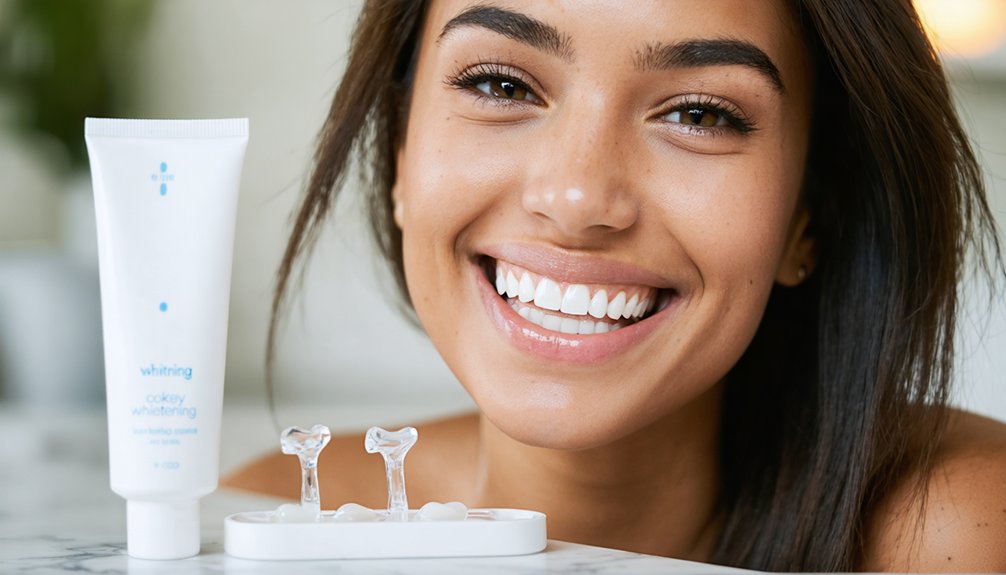
Custom professional whitening trays offer a clinically effective middle ground between in-office bleaching and over-the-counter products. Your dentist takes precise impressions to fabricate trays that fit your enamel exactly, minimizing gel contact with gum tissue and reducing whitening sensitivity.
You’ll apply a prescribed carbamide peroxide or hydrogen peroxide gel at home on a controlled schedule, typically one to two hours daily over one to two weeks. This approach lets you manage treatment intensity based on how your teeth respond post-braces.
Dental insurance rarely covers cosmetic whitening, so confirm costs upfront. Results are measurable and consistent when you follow the prescribed protocol.
If sensitivity increases, reduce session frequency rather than discontinuing treatment entirely, and consult your dentist before resuming.
Over-The-Counter Whitening Options
Professional trays deliver reliable results, but not everyone has immediate access to a dentist or the budget for a clinical-grade option.
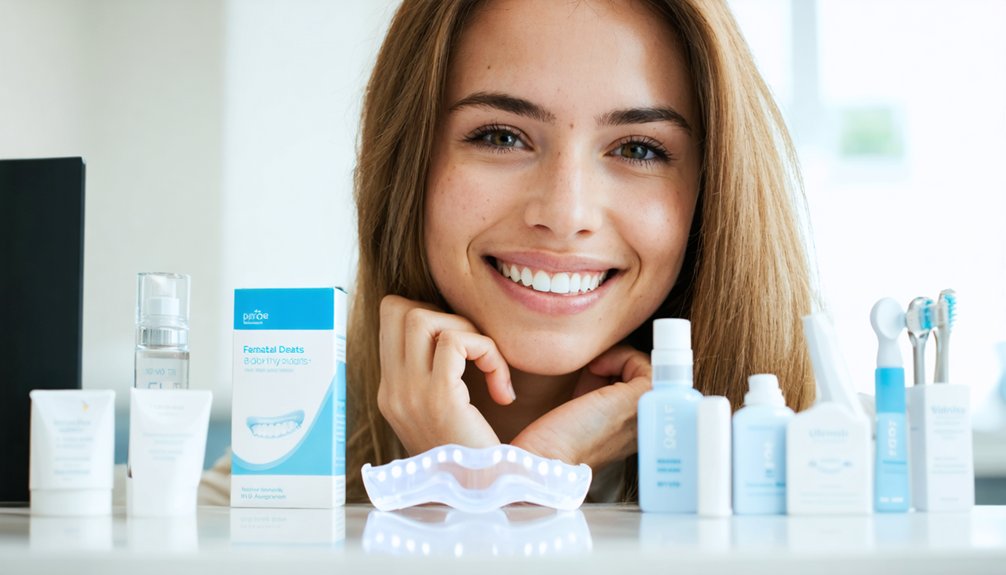
Over-the-counter strips, pens, and trays containing hydrogen peroxide or carbamide peroxide can produce gradual shade improvements over several weeks. These remain your most evidence-supported self-directed choices.
Whitening toothpastes work through mild abrasives and are better suited for maintenance than correcting significant post-braces discoloration.
Avoid natural remedies and DIY treatments like activated charcoal or lemon juice — both carry documented enamel erosion risks that outweigh any cosmetic benefit.
When selecting an OTC product, prioritize those listing an active peroxide ingredient, follow usage instructions precisely, and discontinue use if sensitivity develops.
Results will be slower than professional treatment but achievable with consistent application.
Does Professional Whitening Work Better After Braces?
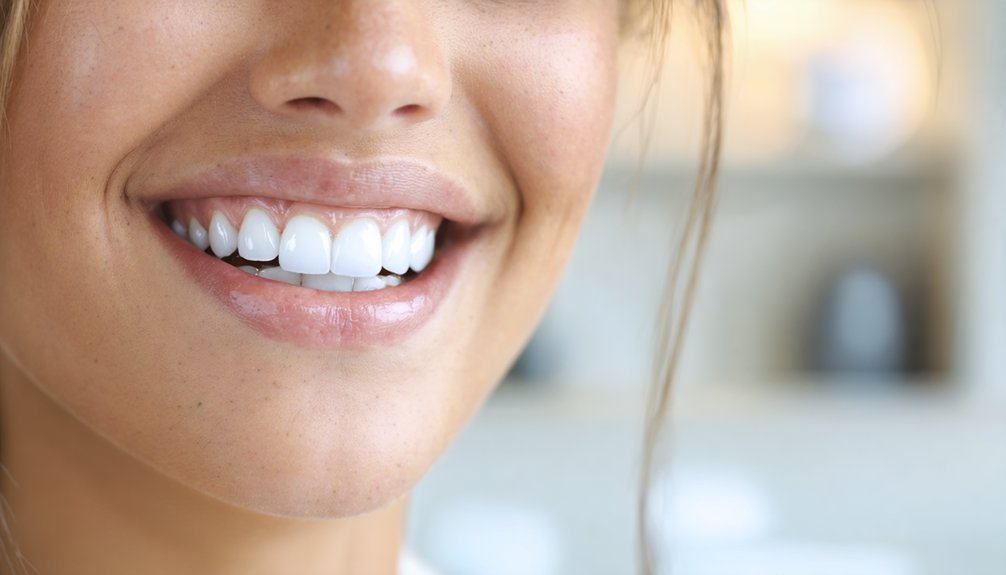
When it comes to post-braces whitening, in-office bleaching consistently outperforms over-the-counter alternatives in both speed and effectiveness. A single appointment can deliver measurable shade changes that strips or trays take weeks to approximate.
However, tooth sensitivity is a real consideration, so confirming enamel stability beforehand is essential. Check whether dental insurance covers any portion of professional treatment to manage costs strategically.
- Concentrated bleaching agents penetrating deeply discolored enamel in one session
- A dentist precisely controlling application to protect vulnerable gum tissue
- Custom-fitted trays delivering even, controlled coverage across every tooth surface
- Before-and-after shade comparisons confirming measurable, documented results
- Professional monitoring catching early sensitivity signals before damage occurs
Professional treatment gives you precise, supervised control over your whitening outcome.
Whitening Ingredients That Actually Change Your Tooth Shade
Not all whitening ingredients are created equal—hydrogen peroxide and carbamide peroxide are the only agents consistently shown to alter tooth shade rather than simply scrub surface debris away. These compounds penetrate enamel and break down chromogenic molecules responsible for discoloration.
Over-the-counter strips and pens containing these ingredients can produce gradual results, while professional-grade concentrations work faster and more predictably.
Natural remedies like activated charcoal or lemon juice lack clinical evidence for shade change and actively threaten enamel health through abrasion and acid erosion—avoid them entirely.
Whitening toothpastes rely on mild abrasives that address surface stains only, not structural discoloration.
When selecting a product, confirm it contains hydrogen peroxide or carbamide peroxide. If you’re post-braces, have your dentist verify your enamel’s readiness before starting any active bleaching agent.
How to Keep Your Teeth White After Whitening
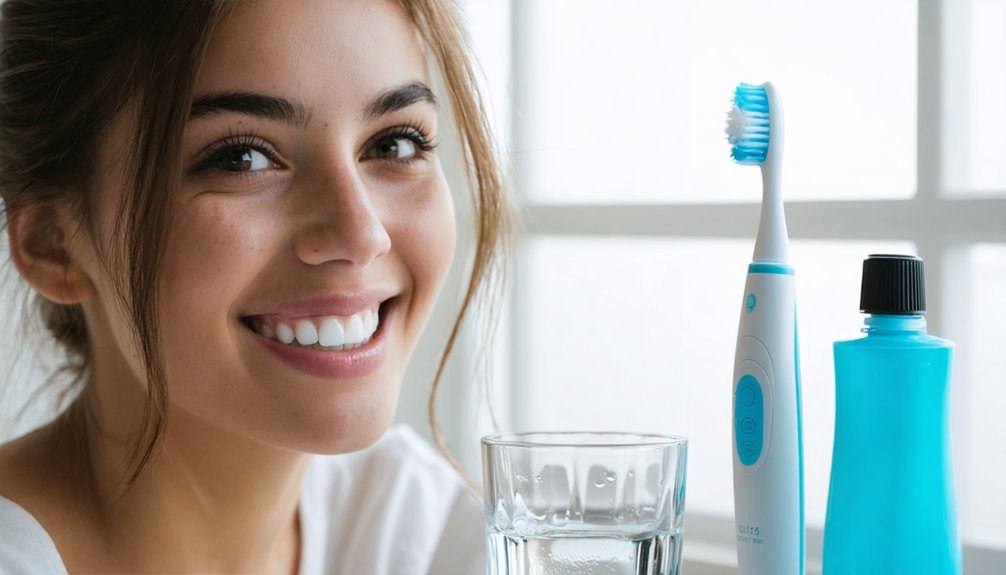
Once you’ve achieved your desired shade, maintaining results comes down to consistent daily habits. Brush twice daily for at least two minutes using fluoridated toothpaste, and floss daily to remove plaque from areas most prone to staining.
You’ll also want to limit coffee, tea, red wine, dark sodas, and other pigment-heavy foods and drinks. Using a straw when possible can help minimize enamel contact.
Daily Oral Hygiene Habits
Keeping your teeth white after whitening depends heavily on consistent daily habits. Your oral habits and diet tips directly determine how long your results last.
- Brush twice daily for at least two minutes using fluoridated toothpaste to remove surface stains before they penetrate enamel.
- Floss daily to clear plaque from between teeth where discoloration builds undetected.
- Rinse with a fluoridated mouthwash to reduce staining plaque and reinforce enamel strength.
- Drink coffee, tea, and dark sodas through a straw to minimize direct enamel contact.
- Rinse your mouth with water immediately after consuming pigmented foods or beverages to limit stain absorption.
Attend professional cleanings at least twice yearly so early staining and enamel concerns are identified and corrected before they compromise your whitening results.
Avoid Stain-Causing Foods
Daily habits protect your enamel, but what you eat and drink plays an equally direct role in how long your whitening results hold. Dietary restrictions during and after whitening aren’t optional—they’re essential for stain prevention.
Coffee, tea, red wine, dark sodas, tomato sauce, soy sauce, and dark berries all deposit pigment directly onto enamel. Tobacco compounds this damage, producing deep yellow and brown discoloration that resists standard whitening.
To reduce enamel contact, drink pigmented beverages through a straw and rinse with water immediately after consuming staining foods.
During active whitening, follow a low-pigment “white diet” to protect emerging results.
Long-term, limit high-stain foods and schedule regular dental cleanings to intercept buildup before it becomes embedded in your enamel.
Are White Spots After Braces Hiding a Bigger Problem?
White spots that appear on teeth after braces come off aren’t just a cosmetic nuisance—they can signal demineralization, a condition where plaque acid has weakened dental enamel over time.
White spots after braces aren’t cosmetic—they’re a warning sign that plaque acid may have permanently weakened your enamel.
Compromised enamel increases stain absorption, making discoloration harder to reverse with standard whitening alone.
Watch for these indicators that warrant professional evaluation:
- Chalky, opaque patches that don’t respond to whitening products
- Uneven texture you can feel with your tongue across the tooth surface
- Increased sensitivity to cold, heat, or sweet foods
- Spreading discoloration beyond the original bracket contact points
- Pitting or roughness visible under bright light or magnification
A dentist can assess whether remineralization therapy, microabrasion, or resin infiltration is needed before any whitening protocol begins.
Frequently Asked Questions
Can Whitening Strips Damage Retainers Worn After Braces Are Removed?
Yes, whitening strips can compromise retainer durability by warping plastic and reducing whitening effectiveness since strips don’t contact covered surfaces. You should remove your retainer before applying strips and consult your orthodontist for compatible whitening protocols.
Is Teeth Whitening Safe for Teenagers Who Just Finished Orthodontic Treatment?
Studies show 65% of teens experience post-braces staining. Teen oral health demands caution—you can safely explore whitening options, but wait six months post-treatment and consult your dentist first to protect sensitive, vulnerable enamel.
How Many Shades Whiter Can Teeth Realistically Get After Braces?
You can realistically achieve 6–10 shades lighter by addressing tooth discoloration through professional whitening. Whitening longevity depends on your dietary habits and maintenance routine, so you’ll need consistent upkeep to sustain those measurable results long-term.
Does Dental Insurance Ever Cover Whitening Treatments Following Orthodontic Care?
Most dental coverage excludes whitening since insurers classify it under cosmetic benefits. You’ll typically pay out-of-pocket, so confirm your plan’s specifics directly with your provider before scheduling any post-orthodontic whitening treatment.
Can Whitening Worsen Existing Tooth Sensitivity Caused by Orthodontic Treatment?
Yes, whitening gels can worsen orthodontic-related sensitivity because your tooth enamel may already be vulnerable post-treatment. You’ll want to delay strong whitening agents until sensitivity subsides and your dentist confirms enamel stability.
References
- https://www.kingstownedentist.com/post/whitening-your-teeth-after-braces-everything-you-need-to-know
- https://orthodonticsaustralia.org.au/teeth-whitening-braces/
- https://www.youtube.com/watch?v=FJRptFIY61Q
- https://www.mybackbaydentist.com/blog/2025/04/16/can-you-get-teeth-whitening-after-braces/
- https://www.corylissortho.ca/how-to-whiten-your-teeth-after-braces-safe-effective-methods/
- https://www.daileyortho.com/dailey-ortho-explains-how-to-whiten-teeth-after-braces-safely
- https://www.belmarorthodontics.com/teeth-whitening-after-braces/
- https://www.healthline.com/health/whitening-with-braces