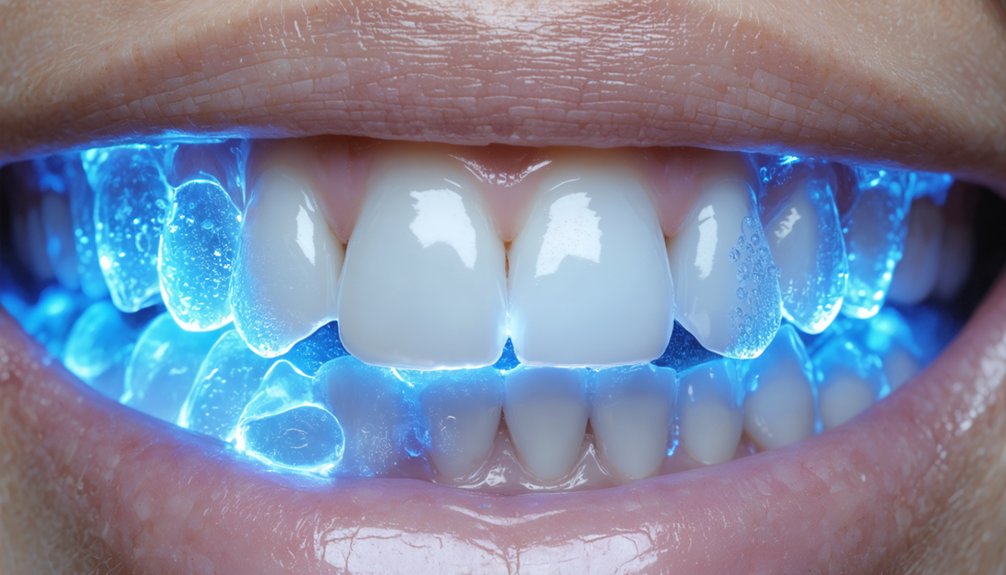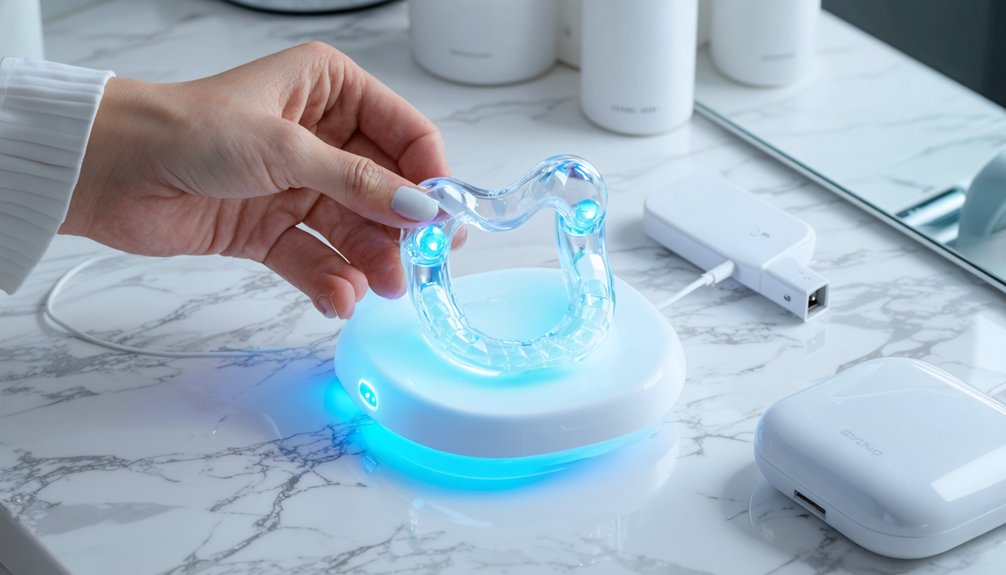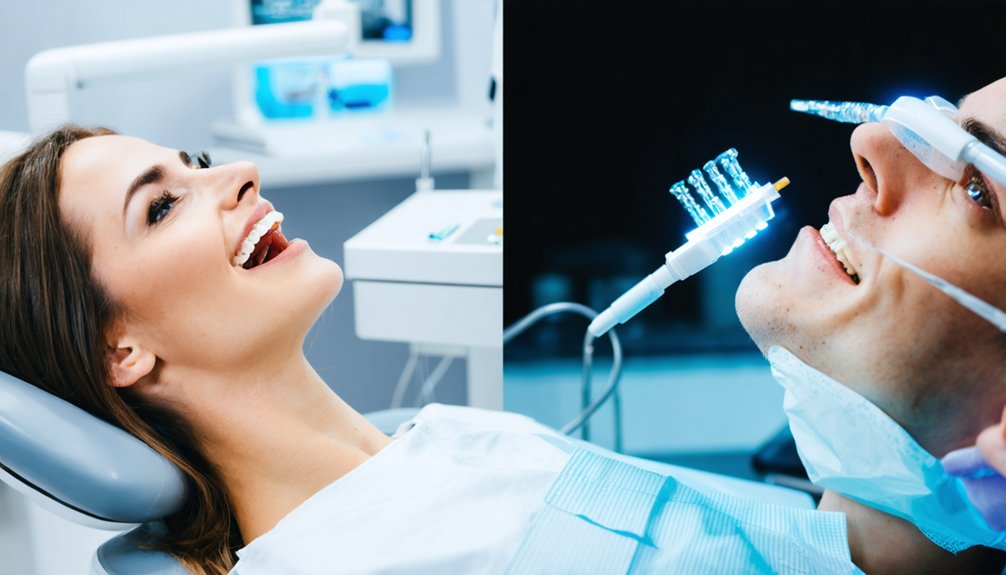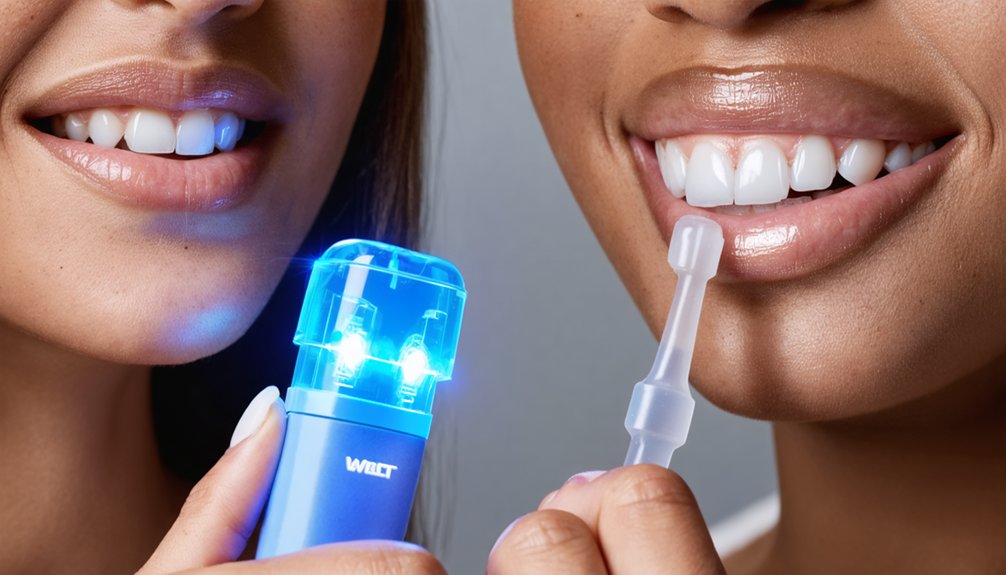
Both LED whitening kits and whitening strips can deliver comparable final results—the peroxide formula does the real work, not the light. LED kits tend to show visible changes faster, often within 3–10 days, while strips typically take 7–21 days but are gentler on sensitive teeth and cost less upfront. Your best choice depends on your timeline, sensitivity, and budget. The details behind each method will help you decide with confidence.
Key Takeaways
- Both LED kits and whitening strips deliver comparable final whitening results, as effectiveness depends on peroxide contact time, not light activation.
- LED kits show visible results within 3–10 days, while strips typically take 7–21 days, making LED better for quick deadlines.
- Whitening strips are gentler on sensitive teeth due to lower peroxide concentrations and increased saliva flow during use.
- LED kits cost more upfront; strips offer comparable results at lower prices, making them more cost-effective for most users.
- Strips suit mild stains, sensitivity, and maintenance; LED kits suit those needing faster results with a higher budget.
Do LED Whitening Kits Actually Work Better Than Strips?
When comparing LED whitening kits to strips, the evidence doesn’t clearly favor the pricier option. A 2023 systematic review found no statistically significant difference in shade change between peroxide-only and peroxide-plus-LED groups when concentration and exposure time were controlled.
The aesthetic benefits you’re chasing come primarily from peroxide contact time, not light activation.
The whitening results you want depend on peroxide contact time, not whether a light is shining on your teeth.
In a longevity comparison, strips may actually hold an edge. One dataset showed 32% of LED users reported inconsistent use beyond week two, which directly undermines results. Strips require no device management, making compliance more realistic.
Some LED marketing cites up to 30% greater effectiveness, but those claims conflict with controlled research. You’re better served by evaluating peroxide concentration and wear time than assuming the light delivers meaningful added whitening.
How Fast Does Each Method Produce Visible Results?
Speed is where LED kits make their strongest case, even if effectiveness data doesn’t fully back the premium. You’ll typically see visible changes within 3–10 days using an LED system, compared to 7–21 days with strips. That faster timeline matters when you’re managing a deadline rather than a long-term routine.
Strips trade speed for home convenience and color stability over time. Their gradual peroxide exposure tends to produce steadier, more consistent shade changes across the full treatment course.
LED kits can show faster initial shifts, but 32% of users reported inconsistent use beyond week two, which directly undermines color stability.
What drives results in both cases is peroxide contact time, not light. If you can stay consistent, strips often close the speed gap more than marketing suggests.
Which Is Harder on Sensitive Teeth: LED Kits or Strips?
Sensitivity risk differs meaningfully between these two methods, and the evidence generally points to LED kits as the harder option on teeth. Higher peroxide concentrations in LED formulas penetrate tooth enamel more aggressively, and the added light source can introduce heat-related discomfort that strips don’t produce.
Saliva effects compound this: trays used with LED gels reduce natural saliva contact, limiting your mouth’s ability to buffer acidity and remineralize enamel during treatment.
LED trays block saliva, stripping your mouth of its natural defense against enamel damage.
Strips, by contrast, use lower concentrations, allow more natural saliva flow, and are consistently positioned as the gentler option for sensitivity-prone users.
If you experience baseline sensitivity, strips offer more controlled exposure.
For either method, sensitivity varies by formula, so reviewing peroxide concentration before committing is the most precise way to manage your risk.
Do LED Whitening Kits Justify the Higher Cost?
LED whitening kits typically cost more upfront because you’re paying for a reusable light device on top of the peroxide gel. However, a 2023 systematic review found no statistically significant difference in shade change between peroxide-only and peroxide-plus-LED groups when concentration and exposure time were controlled.
This means the light itself may not be driving your results. If the peroxide formula does the real work, strips deliver comparable whitening at a lower price point, making them the stronger value choice for modest whitening goals.
What LED Kits Cost
Most LED whitening kits carry a higher upfront cost than strips, largely because you’re paying for a reusable light device on top of the peroxide gel. In a direct cost comparison, kits typically run markedly higher than a standard strip package.
Manufacturers often justify this through product longevity claims, suggesting the device lasts two to three years with gel refills as the only recurring expense. That framing shifts the math over time, but it’s a promotional argument, not a clinically validated one.
If the light component doesn’t meaningfully improve outcomes—which current evidence suggests—you’re absorbing a higher initial cost for hardware that may not drive better whitening.
Your actual value depends on how heavily you weight speed versus verified, peroxide-driven results.
Light Versus Peroxide Results
When you strip away the marketing, the central question is whether the light component actually drives whitening—and current evidence says it largely doesn’t.
A 2023 systematic review found no statistically significant difference in shade change between peroxide-only and peroxide-plus-LED groups when concentration and exposure time were controlled.
Aesthetic improvements you see from LED kits are attributable to the peroxide formula, not the light activation.
This matters for long-term durability, too. If the light isn’t meaningfully accelerating or deepening results, you’re paying a premium for an unproven variable.
Wirecutter found no evidence blue-light systems outperform trays or strips alone.
Your whitening outcome is determined by peroxide concentration and contact time—two factors strips deliver effectively at a fraction of the cost.
When Strips Win
For most whitening goals, strips deliver comparable results at a lower cost—and the evidence backs that up. A 2023 systematic review found no statistically significant difference in shade change between peroxide-only and peroxide-plus-LED groups when concentration and contact time were controlled.
That matters when you’re deciding whether celebrity endorsements and fashion trends are driving your purchase rather than clinical data. Strips typically produce 1–3 VITA shade units of improvement, suit mild-to-moderate staining, and carry lower sensitivity risk.
They’re also simpler to use consistently, and compliance directly affects outcomes. If you’re not chasing rapid pre-event results, the added cost of an LED device isn’t justified by the evidence.
Your whitening outcome depends primarily on peroxide exposure—not the light delivering it.
When LED Whitening Kits Are Worth It
LED whitening kits offer a practical advantage in two specific scenarios: you need faster visible results before an event, or you’re targeting moderate staining rather than mild surface discoloration. Visible aesthetic improvements can appear within 3–10 days, compared to 7–21 days with strips.
LED kits make the most sense when:
- You have a deadline. Shorter per-session treatment windows suit event-driven timelines.
- Your staining is moderate. Light activation may support faster peroxide delivery on denser discoloration.
- You can commit to consistent use. Roughly 32% of users report inconsistent adherence past week two, undermining results.
- Cost considerations align with your budget. Higher upfront costs become justifiable only if your whitening goals genuinely require faster, more intensive treatment than strips provide.
When Whitening Strips Are the Smarter Choice
Strips make more sense for most users outside those narrow scenarios. If you’re managing mild surface stains, maintaining existing whiteness, or dealing with sensitivity, strips give you reliable peroxide contact time without the added cost of a light device that research hasn’t confirmed adds measurable benefit. You’re paying for the active ingredient, not the hardware.
Strips also beat most alternative whitening methods and natural remedies, which lack clinical support entirely, while still offering a lower-risk, lower-cost entry point than LED kits. Compliance is simpler too — no device to charge, position, or replace.
If your goal is gradual, consistent improvement rather than accelerated short-term change, the evidence suggests strips deliver comparable final results. Your budget and sensitivity tolerance should drive the decision, not marketing claims about light activation.
Frequently Asked Questions
Can You Use LED Whitening Kits and Strips Together?
You can combine them, but weigh the safety considerations carefully—stacking peroxide sources raises sensitivity risk. Evidence doesn’t confirm combination effectiveness beyond single-method use, so you’d likely gain little benefit while increasing irritation potential.
How Long Do Whitening Results Typically Last With Either Method?
Results typically last 3–6 months with either method. You’ll extend longevity through consistent maintenance, but the LED group showed 32% inconsistent use, undermining cost comparison gains. Treatment convenience favors strips for sustainable, long-term whitening control.
Are LED Whitening Kits and Strips Safe During Pregnancy?
You should avoid both options during pregnancy. Safety concerns around peroxide absorption make either method inadvisable, and pregnancy considerations demand caution since no established clinical evidence confirms they’re safe for you or your baby.
Can Whitening Strips or LED Kits Damage Existing Dental Restorations?
Peroxide products potentially pose restoration compatibility risks—you’ll find whitening agents can discolor composite bonding, degrade cement, or dull porcelain surfaces. Prioritizing dental safety means consulting your dentist before applying strips or LED kits near existing restorations.
How Soon After Whitening Can You Eat or Drink Normally?
You should wait at least 48 hours before resuming normal eating and drinking. Follow diet restrictions by avoiding staining foods and acids. Monitor sensitivity concerns closely, as your enamel remains temporarily porous and vulnerable post-treatment.
References
- https://www.nytimes.com/wirecutter/blog/teeth-whitening-kits-vs-strips/
- https://www.switchtogbt.com/articles/led-vs-uv-teeth-whitening
- https://www.whitebitepro.com/blogs/blog/led-whitening-kits-vs-whitening-strips-which-one-works-better
- https://www.trysnow.com/blogs/news/led-whitening-vs-strips-vs-pens
- https://pmc.ncbi.nlm.nih.gov/articles/PMC3466022/
- https://teethcare360.co.uk/led-whitening-vs-strips-uk-comparison/
- https://dentalcarefree.com/blogs/Whitening-Kits-with-LED-Lights-vs-Strips–Which-is-More-Effective.html
- https://www.alibaba.com/product-insights/teeth-whitening-strips-vs-led-whitening-kit-do-home-kits-match-dentist-grade-results.html
- https://smilescience.co.uk/led-whitening-vs-whitening-strips/