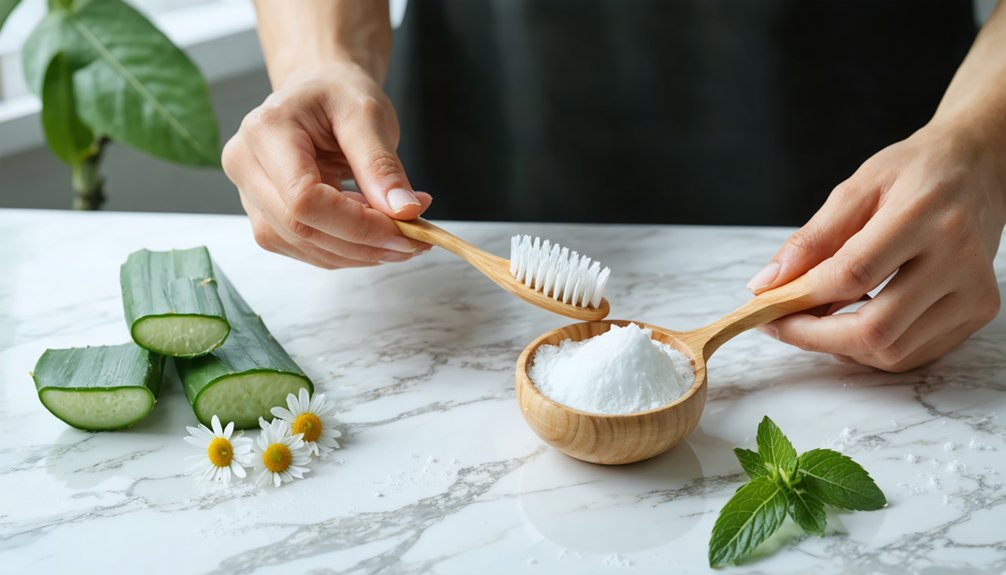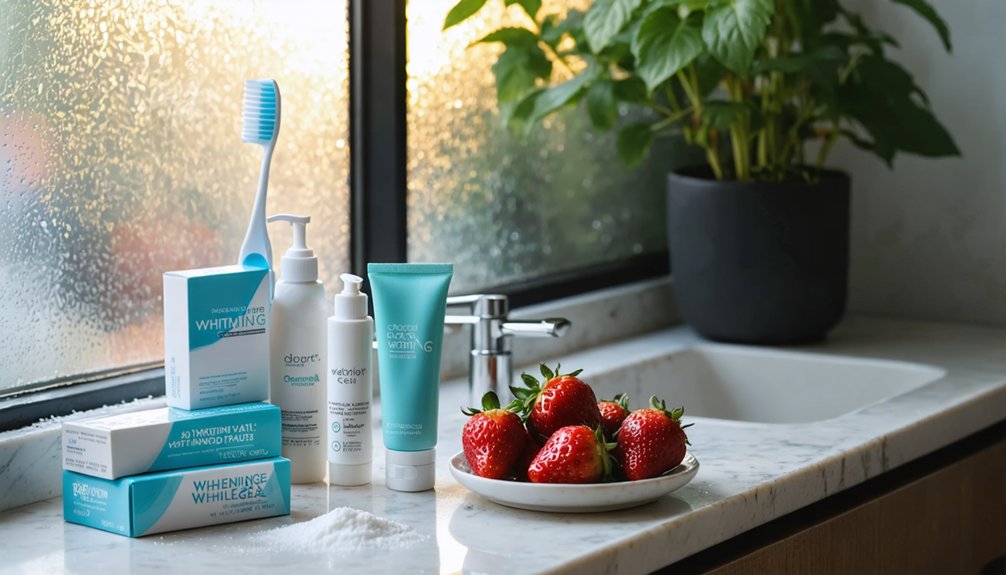
For sensitive teeth, your best budget-friendly whitening options include Lumineux peroxide-free strips ($15–$25), Crest 3D Whitestrips Sensitive ($40, 5.25% hydrogen peroxide), and Sensodyne Extra Whitening toothpaste ($5–$15). You can also try coconut oil pulling as a gentle, cost-free alternative. Prepping with potassium nitrate toothpaste two weeks before whitening considerably reduces nerve irritation. Matching the right formula to your sensitivity level makes all the difference—and there’s much more to contemplate when choosing the best approach for your specific needs.
Key Takeaways
- Lumineux peroxide-free whitening strips ($15–$25) offer a gentle, budget-friendly option ideal for those with severe tooth sensitivity.
- Sensodyne Extra Whitening toothpaste (~$5–$15) provides daily enamel protection and gradual whitening without causing nerve irritation.
- Crest 3D Whitestrips Sensitive (~$40) contain 5.25% hydrogen peroxide, balancing effective whitening with sensitivity-friendly formulation.
- Coconut oil pulling is a free, natural alternative that gently lifts stains while avoiding reactive chemicals entirely.
- Using potassium nitrate toothpaste two weeks before whitening significantly reduces sensitivity during any budget whitening treatment.
Why Standard Whitening Products Cause Sensitivity (And What to Use Instead)
Standard whitening products cause sensitivity because high concentrations of hydrogen peroxide penetrate the enamel and reach the dentin, irritating the pulp’s nerve endings. When you’re managing sensitivity, you need products formulated with ≤6% hydrogen peroxide or ≤10% carbamide peroxide to minimize that nerve disruption.
Your oral hygiene routine also matters. Compromised enamel from acidic dietary triggers—citrus, soda, vinegar-based foods—creates additional permeability, intensifying sensitivity during treatment. Addressing these variables before whitening gives you greater control over outcomes.
Instead of standard formulas, consider Crest 3D Whitestrips Sensitive at 5.25% hydrogen peroxide or Opalescence Go, which pairs 10% hydrogen peroxide with potassium nitrate for desensitizing effects. Both options deliver measurable whitening while significantly reducing the risk of nerve irritation.
How Much Should You Spend on Whitening for Sensitive Teeth?
You don’t need to spend a fortune to whiten sensitive teeth effectively, but choosing the wrong product to save money can worsen discomfort and set back your progress.
Budget-friendly options like Crest 3D Whitestrips Sensitive run around $40, while peroxide-free strips from Lumineux cost as little as $15–$25, giving you clinically reasonable choices at accessible price points.
Matching your spending to your sensitivity level and whitening goals guarantees you get measurable results without paying for unnecessary concentration or technology.
Setting a Realistic Budget
When budgeting for whitening products designed for sensitive teeth, expect to spend anywhere from $15 to $70 depending on the format you choose. Peroxide-free strips typically range from $15–$25.
Low-peroxide strip kits average $30–$70 for 10–20 treatments. If you’re incorporating a mouth guard or custom tray system, factor in additional costs, as professional custom trays carry higher upfront expenses but deliver superior gel control and reduced gum exposure.
Pair your chosen whitening method with an ADA-approved sensitivity toothpaste priced between $5–$15 per tube for daily maintenance. Don’t overlook supporting tools like dental floss to maintain gum health throughout treatment.
Prioritize products containing potassium nitrate or ≤6% hydrogen peroxide to manage sensitivity without exceeding a practical budget.
Balancing Cost and Effectiveness
Knowing your budget range is only half the equation—what you’re getting for that spend matters just as much. Balancing cost against dental health outcomes and cosmetic results requires evaluating ingredients, concentration levels, and sensitivity-specific formulations.
Consider these benchmarks when appraising value:
- Under $25: Lumineux peroxide-free strips or coconut oil pulling—low risk, modest cosmetic results
- $25–$40: Crest 3D Whitestrips Sensitive—5.25% hydrogen peroxide, clinically recognized, stronger cosmetic results
- $40–$60: Opalescence Go trays—10% hydrogen peroxide plus desensitizing additives for measurable dental health protection
- $60+: Dentist-dispensed custom trays—highest precision, best long-term cosmetic results
You’re not just buying whitening—you’re investing in a formulation that won’t compromise your dental health. Prioritize concentration-appropriate products with desensitizing agents over the cheapest available option.
How to Prep Sensitive Teeth Before You Start Whitening
Before you begin any whitening regimen, use an anti-sensitivity toothpaste or rinse containing potassium nitrate for at least two weeks to desensitize your tooth nerves.
Potassium nitrate works by calming nerve activity within the tooth, reducing the sharp sensitivity response that peroxide can trigger.
Pairing a potassium nitrate-based toothpaste with an anti-sensitivity rinse like Listerine Advanced Enamel and Sensitivity strengthens this protective effect before your first whitening session.
Pre-Whitening Sensitivity Management
Prepping your teeth before you start whitening can make the difference between a comfortable experience and one that sends you reaching for pain relief. Start your sensitivity management protocol at least two weeks before your first session:
- Use a potassium nitrate-based toothpaste daily to desensitize tooth nerves before exposure to whitening agents.
- Pair it with an anti-sensitivity rinse like Listerine Advanced Enamel and Sensitivity for enhanced nerve protection.
- Use dental floss consistently to remove plaque buildup, which can compromise enamel restoration efforts.
- Continue both the toothpaste and rinse before and after each whitening session to maintain desensitization.
Avoid stannous fluoride-based products during this period, as they increase staining risk.
Potassium nitrate is your most clinically supported tool for controlling sensitivity before whitening begins.
Potassium Nitrate Treatment Benefits
Potassium nitrate works by penetrating the dentinal tubules and calming the nerve endings inside your teeth, which is why it’s the most clinically supported desensitizing agent for whitening preparation.
By blocking pain signal transmission at the nerve level, it gives you measurable control over sensitivity before treatment begins.
Start using a potassium nitrate-based toothpaste at least two weeks before your first whitening session.
Pair it with an anti-sensitivity rinse like Listerine Advanced Enamel and Sensitivity to reinforce protection across your tooth enamel and surrounding tissue.
Continue this routine after each session to maintain nerve desensitization throughout the process.
This preparation strategy directly supports your long-term dental health by reducing the inflammatory response that whitening agents can trigger, making your regimen both safer and more sustainable.
Best Low-Peroxide Strip Options for Sensitive Teeth
When sensitivity limits your whitening options, low-peroxide strips offer a clinically sound middle ground between effectiveness and comfort. These formulations support teeth stain removal while prioritizing enamel protection through reduced chemical exposure.
Key options worth considering:
- Crest 3D Whitestrips Sensitive — contains 5.25% hydrogen peroxide, roughly half the standard concentration, minimizing nerve irritation
- SmilePro Advanced Whitening Kit — uses a 6% hydrogen peroxide formula, staying within the ≤6% threshold recommended for sensitive users
- Lumineux Peroxide-Free Strips — priced at $15–$25, these use coconut oil and lemon peel oil for stain removal without bleaching agents
- Crest 3D Whitestrips Sensitive White Kit — ranked as the premier strip option for sensitivity, available around $40
Each option lets you control treatment intensity while managing discomfort effectively.
Peroxide-Free Strips for Sensitive Teeth That Actually Work
For individuals with extreme tooth sensitivity, peroxide-free strips deliver measurable stain removal without triggering nerve discomfort. Despite common teeth whitening myths, peroxide isn’t required for effective dental stain removal. Lumineux Bright² strips use coconut oil and lemon peel oil as active agents, extracting surface stains through natural binding mechanisms rather than chemical oxidation.
You’ll find Lumineux Peroxide-Free Strips priced between $15–$25, making them a practical, budget-conscious choice. These strips avoid bleaching agents entirely, eliminating the sensitivity risk associated with hydrogen peroxide formulas.
The Lumineux whitening kit is specifically recommended for users with extreme sensitivity who require a non-chemical approach.
Results develop gradually rather than immediately, so consistent application is essential. You maintain full control over your whitening pace without compromising comfort or enamel integrity.
Whitening Toothpastes Under $20 That Won’t Hurt Sensitive Teeth
Whitening toothpastes priced under $20 offer sensitive users a low-risk daily maintenance option without the concentrated peroxide exposure of strips or trays. Paired with dental floss and mouth rinses, they form a complete sensitivity-conscious oral care routine.
Consider these clinically supported options:
- Burt’s Bees Whitening Toothpaste delivers budget-friendly performance with strong customer satisfaction ratings.
- ADA-approved whitening toothpastes provide verified stain removal for $5–$15 per tube.
- Sensodyne Extra Whitening offers enamel protection alongside whitening at $19 for a 3-pack.
- Non-peroxide formulas using aloe vera and coconut oil remove stains without triggering nerve discomfort.
Carbamide peroxide toothpastes cause less sensitivity than hydrogen peroxide alternatives because their whitening action occurs gradually. You’ll maintain progress daily while keeping irritation controlled.
Coconut Oil Pulling and Other Peroxide-Free Natural Options
Peroxide-free natural methods offer a viable alternative if chemical bleaching agents trigger sensitivity or discomfort. Coconut oil pulling involves swishing oil through your teeth for 10–20 minutes, using careful dental brushstrokes of fluid motion to dislodge surface stains without irritating nerves. It’s cost-effective and doesn’t compromise enamel integrity.
Lumineux peroxide-free strips, priced between $15–$25, use coconut oil and lemon peel oil to lift stains while supporting enamel strengthening rather than degrading tooth structure like stronger bleaching agents can. Aloe vera-based products similarly remove discoloration through gentle biochemical interaction rather than oxidation.
These options suit you if you experience extreme sensitivity or prefer avoiding reactive chemicals entirely. While results develop more gradually, you maintain meaningful control over the whitening process without triggering nerve discomfort.
Shorten Sessions and Skip Brushing Right After
If sensitivity persists despite using a lower-concentration formula, shortening your whitening sessions to 30 minutes or less reduces nerve exposure to active ingredients without sacrificing long-term results. Controlled exposure supports gradual dental stain removal while protecting enamel integrity.
After each session, skip brushing immediately. Waiting at least 30 minutes prevents additional irritation to already-sensitized surfaces and supports enamel strengthening over time.
Apply these adjustments strategically:
- Limit sessions to 30 minutes maximum when discomfort occurs
- Resume brushing only after a 30-minute post-whitening window
- Use a potassium nitrate toothpaste after that window for nerve protection
- Maintain consistent session intervals rather than extending single-session duration
These modifications keep you in control of your whitening outcomes while minimizing avoidable sensitivity triggers.
Which Budget Whitening Option Fits Your Sensitivity Level?
Adjusting session length and timing addresses how you whiten, but the product you select determines how much sensitivity you’re exposed to from the start. Match your choice to your tolerance level:
- Mild sensitivity: Crest 3D Whitestrips Sensitive (5.25% hydrogen peroxide, ~$40) delivers effective teeth stain removal with reduced irritation risk.
- Moderate sensitivity: Opalescence Go (10% hydrogen peroxide with potassium nitrate) combines whitening with built-in enamel strengthening agents.
- Severe sensitivity: Lumineux Peroxide-Free Strips ($15–$25) eliminate chemical exposure entirely using coconut oil and lemon peel oil.
- Daily maintenance: Sensodyne Extra Whitening ($19 for a 3-pack) supports ongoing stain control without aggressive bleaching.
Selecting the right concentration isn’t guesswork—it’s a clinical decision that directly controls your risk.
Frequently Asked Questions
Can Whitening Products Worsen Existing Cavities or Tooth Decay Issues?
Yes, whitening gels can worsen existing cavities by penetrating damaged dental enamel and irritating exposed dentin or pulp. You should consult your dentist to treat decay before starting any whitening regimen.
How Long Do Whitening Results Typically Last for Sensitive Teeth Users?
Like sand through your fingers, results fade—you’ll typically retain whitening effects for three to six months. With cost comparison favoring home remedies, you can maintain your results using budget-friendly sensitivity-safe products consistently.
Are Whitening Products Safe to Use During Pregnancy or Breastfeeding?
You should avoid whitening products during pregnancy and breastfeeding. Pregnancy safety guidelines recommend delaying treatment, as peroxide absorption risks aren’t fully studied. Breastfeeding considerations also warrant caution—consult your dentist before resuming any whitening regimen.
Can Children or Teenagers Safely Use Budget Whitening Products for Sensitivity?
Like unfinished porcelain, developing teeth aren’t ready for whitening. Children’s safety demands avoidance of budget whitening products, and you should delay teenager whitening until adulthood, as immature enamel and open pulp chambers heighten sensitivity and damage risks considerably.
Does Diet Affect How Long Whitening Results Last After Treatment Ends?
Yes, diet impact directly affects longevity factors of your whitening results. You’ll extend outcomes by avoiding staining foods and drinks like coffee, tea, and red wine consistently after treatment ends.
References
- https://www.forbes.com/sites/forbes-personal-shopper/article/best-teeth-whitening-kit/
- https://www.gentledental.com/resources/articles/teeth-whitening-products
- https://www.reddit.com/r/hygiene/comments/1e2l8mp/best_cost_effective_teeth_whitening/
- https://www.sbdental.com/blog/budgetfriendly-teeth-whitening-options-that-deliver-real-results
- https://www.forbes.com/sites/forbes-personal-shopper/article/best-whitening-product-for-sensitive-teeth/
- https://www.allure.com/gallery/best-teeth-whiteners-for-sensitive-teeth
- https://www.goodhousekeeping.com/health-products/g28723133/best-at-home-teeth-whitening-products/
- https://www.youtube.com/watch?v=Gn6JHl-3wkI