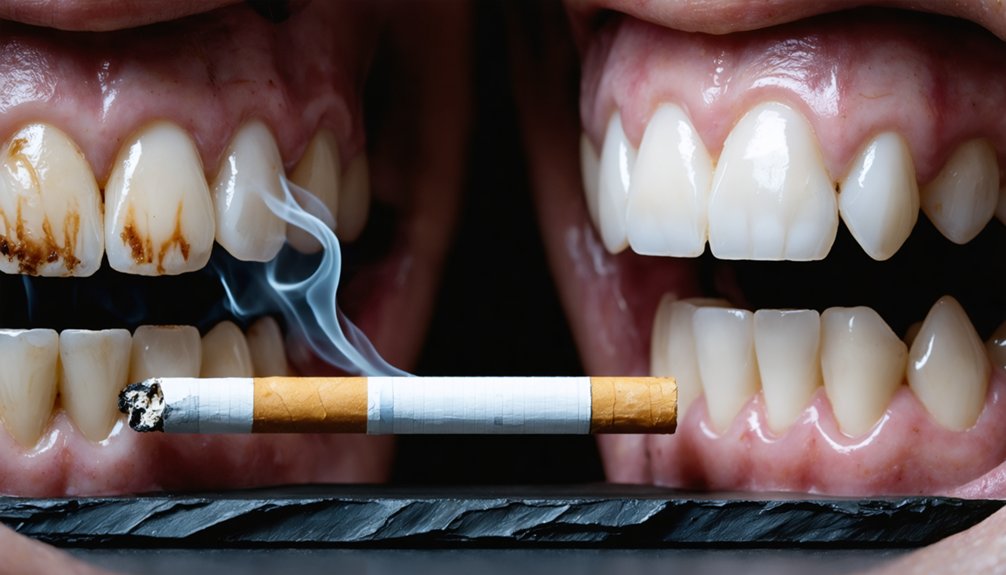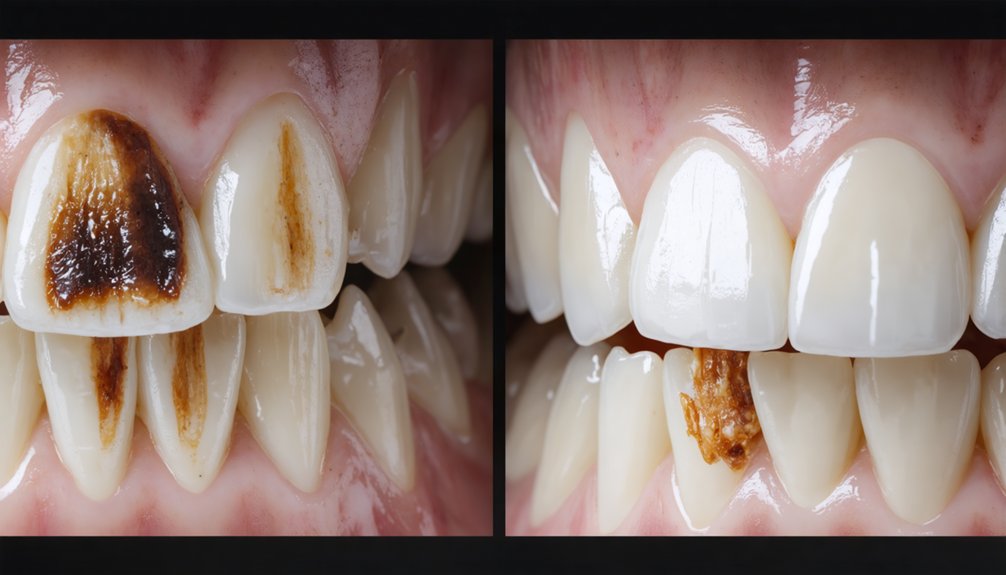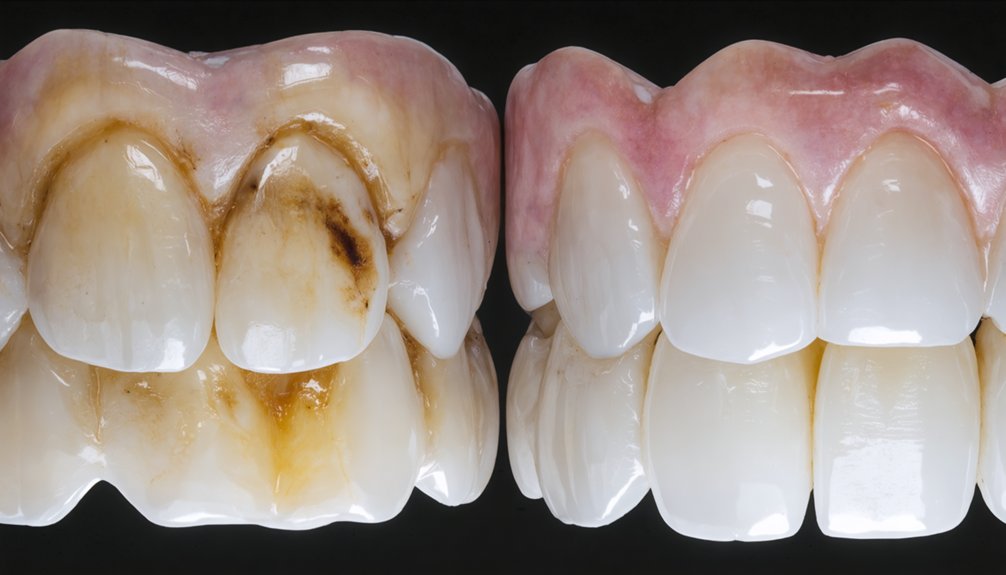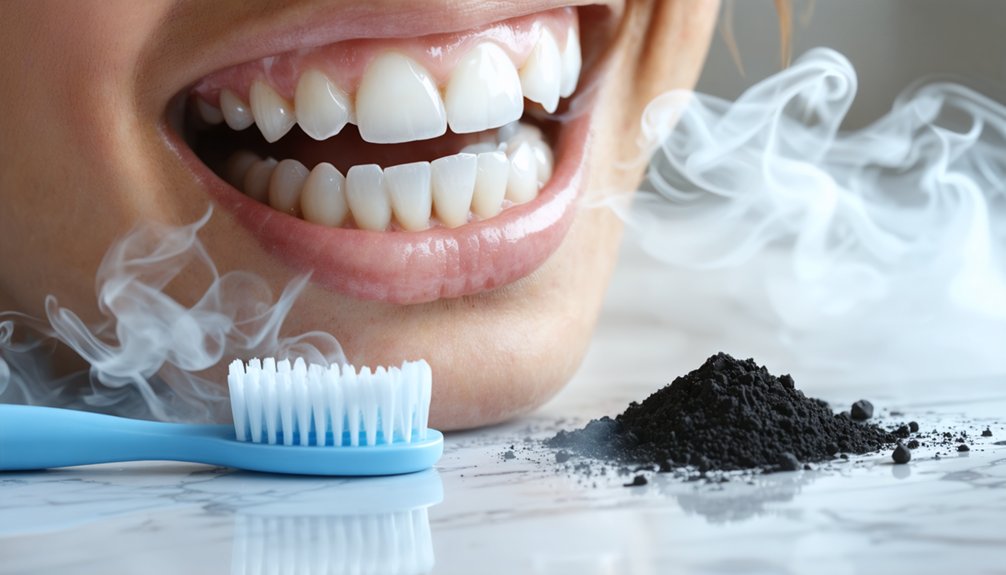
Tobacco stains penetrate deeper than surface discoloration, but you can restore your smile with the right approach. Professional laser whitening delivers the most dramatic results, while at-home peroxide kits and whitening toothpaste tackle milder buildup. Natural remedies like baking soda paste and crunchy foods provide additional support. The right mouthwash and smart lifestyle habits stop new stains before they set. Each solution works better when you understand exactly how and when to apply it.
Key Takeaways
- Professional laser whitening treatments use high-strength hydrogen peroxide activated by light to deliver dramatic results on deep tobacco stains.
- OTC whitening strips with peroxide gel produce visible results within 10-14 days when used consistently as directed.
- A baking soda and hydrogen peroxide paste applied twice weekly gently removes surface stains without causing significant enamel erosion.
- Daily brushing with smoker’s whitening toothpaste, flossing, and an electric toothbrush significantly reduces tar and tobacco stain buildup.
- Smoking cessation remains the most effective long-term solution, eliminating stains at their source while improving overall oral health.
Professional Whitening Treatments That Erase Heavy Smoker Stains
Heavy nicotine use leaves deep, stubborn stains that over-the-counter products simply can’t reach — but professional whitening treatments can. Your dentist applies high-strength hydrogen peroxide gel, often activated by LED light or laser technology, to break down tar-embedded discoloration at the enamel level.
Professional whitening treatments break down deep nicotine stains that no over-the-counter product can touch.
Laser whitening delivers the most dramatic results for severe tobacco stains, making it a powerful cosmetic dentistry option worth prioritizing.
When staining exceeds what bleaching can correct, porcelain veneers or dental bonding restore your desired shade effectively. Schedule professional cleanings every six months to maintain results and protect your oral health.
Note that most dental insurance plans classify whitening as cosmetic, so confirm your coverage before committing. Taking control of your treatment plan starts with understanding exactly what’s available to you professionally.
At-Home Whitening Kits That Actually Work on Tar Stains
When professional visits aren’t an option, at-home whitening kits offer a clinically viable alternative for managing tar-related discoloration. Over-the-counter whitening strips, coated with peroxide-based gel, deliver measurable results within 10 to 14 days of consistent daily use.
For stronger outcomes, prescription-strength take-home kits from your dentist provide higher peroxide concentrations without the risk of enamel erosion associated with overuse.
To maximize effectiveness, pair your whitening routine with daily dental floss use, which clears interproximal debris that undermines gel penetration.
Apply strips for the manufacturer-recommended duration — typically 30 minutes — without exceeding frequency guidelines. Overuse accelerates enamel erosion, compromising long-term dental integrity.
Controlled, consistent application gives you measurable whitening progress while preserving enamel structure, keeping your results sustainable rather than temporary.
Whitening Toothpaste and Daily Brushing Habits for Smokers
Whitening toothpaste formulated for smokers contains mild abrasives and chemical agents that scrub and break down surface discoloration caused by tar and nicotine.
You should follow the “3-2 rule” — brushing twice daily for 3 minutes each session — to consistently combat tobacco stains before they penetrate deeper into the enamel.
Pairing an electric toothbrush with daily flossing further strengthens your oral hygiene routine by removing more plaque and reducing gum inflammation that accelerates staining.
Whitening Toothpaste Benefits
Smokers deal with two types of tooth discoloration: surface stains from tar and nicotine deposits, and deeper enamel discoloration from prolonged exposure to tobacco chemicals. Whitening toothpaste targets the first layer effectively. Its mild abrasives scrub away surface deposits while chemical agents break down discoloration without damaging enamel.
Beyond aesthetics, whitening toothpaste formulated for smokers often integrates fluoride compounds for cavity prevention and enamel strengthening, giving you dual-action protection with every brush. You’re not just removing stains — you’re reinforcing tooth structure against tobacco’s corrosive effects.
Regular use also supports gum line integrity, reducing inflammation that accelerates staining. For maximum control over discoloration, pair whitening toothpaste with consistent brushing technique and frequency, which the following section addresses directly.
Brushing Habits for Smokers
Getting the most from whitening toothpaste depends entirely on how and when you brush. For smokers, technique and timing directly determine results.
Follow these targeted habits to maximize stain removal:
- Brush immediately after smoking to prevent tar and chemicals from embedding into enamel.
- Apply the 3-2 rule—brush twice daily for 3 minutes each session to thoroughly clear tobacco residue.
- Prioritize dental flossing daily to eliminate hidden debris between teeth and reduce gum inflammation that accelerates discoloration.
- Incorporate tongue cleaning into your routine to remove bacteria and residue that contribute to staining and bad breath.
An electric toothbrush outperforms manual brushing by removing plaque more effectively, giving you greater control over stain prevention between professional cleanings.
DIY Remedies to Brighten Tobacco-Stained Teeth Naturally
If professional treatments aren’t accessible, you can turn to simple household ingredients for moderate stain relief.
Mix baking soda with hydrogen peroxide into a paste, gently rub it onto your enamel for 30 seconds, then rinse thoroughly—this combination acts as a mild bleach while scrubbing surface discoloration.
You can also mash strawberries with baking soda for a natural fruit-based remedy.
Alternatively, dilute hydrogen peroxide with water for a rinsing solution that lightly brightens teeth before a thorough water rinse.
Baking Soda Paste Benefits
Baking soda mixed with hydrogen peroxide forms a mild bleaching paste that effectively scrubs surface stains from tobacco-stained enamel. Apply it carefully to avoid dental sensitivity or enamel erosion from overuse.
Follow this precise protocol for best results:
- Combine baking soda with hydrogen peroxide into a consistent paste
- Gently rub the mixture onto enamel for exactly 30 seconds
- Rinse thoroughly with water to remove all residue
- Limit applications to twice weekly to prevent enamel erosion
Alternatively, swish a baking soda and water slurry for 30 seconds twice weekly for a gentler approach. This method reduces abrasive risk while still brightening your teeth.
Monitoring for increased dental sensitivity signals overuse—adjust frequency immediately if discomfort develops. Consistency within safe limits delivers measurable stain reduction.
Natural Fruit Remedies
Natural fruit remedies offer a surprisingly practical approach to brightening tobacco-stained teeth without harsh chemicals. Mashed strawberries combined with baking soda create an effective paste you can apply directly to enamel for a few minutes before rinsing thoroughly.
Similarly, herbal extracts derived from guava leaves, when crushed into a coarse paste, actively break down surface discoloration when left on teeth briefly. These remedies target staining compounds without compromising enamel integrity when used correctly.
However, you should recognize their limitations. Natural solutions address surface stains but won’t penetrate deeper discoloration the way professional treatments do.
If your dentist has applied dental sealants, consult them before using abrasive fruit-based pastes, as certain compounds may affect sealant adhesion.
Reserve these remedies as supplementary tools within a broader, dentist-approved whitening strategy.
Hydrogen Peroxide Rinse
Diluting a small amount of hydrogen peroxide with water creates a mild bleaching rinse that actively lifts surface discoloration from tobacco-stained enamel. This controlled approach supports stain removal without aggressive chemical exposure to dental enamel.
Follow these application guidelines for best results:
- Mix ratio: Combine equal parts hydrogen peroxide and water before each use
- Technique: Swish the solution thoroughly for 30 seconds, targeting all tooth surfaces
- Frequency: Use before brushing to maximize the rinse’s brightening effect
- Follow-up: Rinse thoroughly with plain water afterward to clear residual peroxide
Consistency determines your results. Incorporating this rinse into your daily routine gives you a practical, cost-effective method for managing tobacco stains between professional cleanings while protecting dental enamel from prolonged chemical contact.
Foods That Naturally Fight Tobacco Stains on Teeth
What you eat can work quietly against tobacco stains between brushing sessions. Crunchy produce like apples, carrots, and celery mechanically scrub enamel surfaces while delivering vitamin C that supports gum integrity. Their fibrous texture disrupts plaque before it bonds with tobacco pigments.
You’ll also benefit from strategic beverage choices. Herbal teas without added tannins hydrate without deepening discoloration, unlike coffee or black tea.
Sugar-free chewing gums stimulate saliva production, your mouth’s natural cleansing mechanism, which neutralizes acids and rinses residual tar compounds from enamel surfaces.
Antioxidant-rich foods further neutralize pigment damage at a cellular level. Incorporating these dietary choices gives you consistent, low-effort stain resistance that complements your broader whitening strategy without requiring additional products.
The Right Mouthwash for Smoker Stains
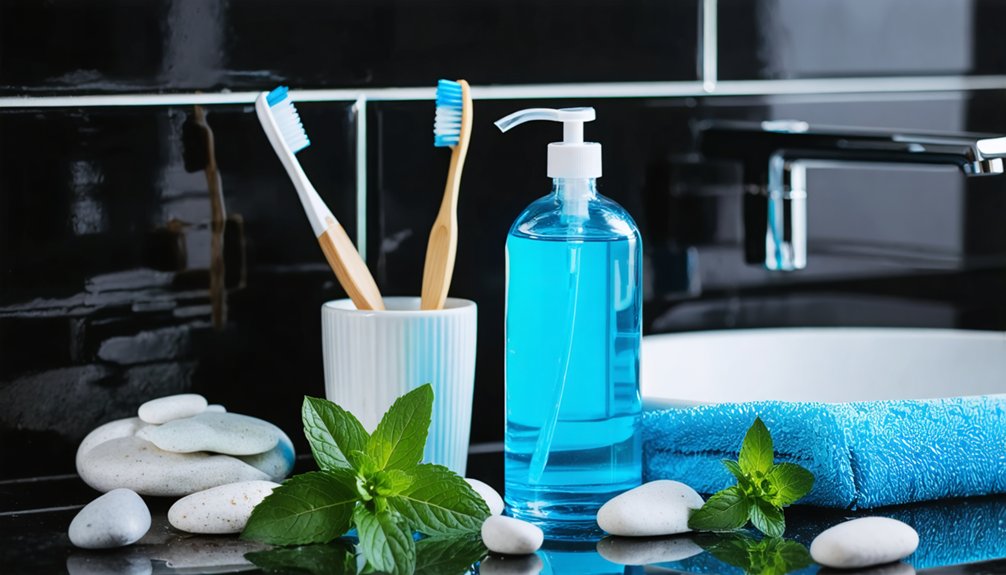
Choosing the right mouthwash considerably amplifies your stain-fighting routine when standard brushing falls short. Mouthwash effectiveness depends on selecting formulas specifically engineered for smokers’ needs, directly targeting tar-based discoloration and bacterial buildup.
Prioritize these options for optimal stain prevention:
- Anti-tar mouthwash: Formulated specifically for smokers, it sustains lighter teeth when used consistently alongside whitening toothpaste.
- Alcohol-free fluoride mouthwash: Prevents dryness midday, since dry mouths accelerate staining.
- Hydrogen peroxide rinse: Dilute a small amount with water for a mild bleaching effect before thoroughly rinsing.
- Pre-brush rinsing technique: Hold mouthwash in your mouth before brushing to maximize surface contact and brightness.
Consistency determines your results. Integrating the correct mouthwash into your daily regimen gives you measurable control over progressive tobacco discoloration.
Lifestyle Habits That Stop Smoke Stains Before They Set
Preventing smoke stains before they bond to enamel requires simple, targeted habits integrated into your daily routine. Rinse with water immediately after smoking to flush pigments before they penetrate enamel. Brush within 30 minutes of each cigarette to remove embedded tar and chemicals. When drinking coffee or tea, use a straw to minimize tooth contact.
Prioritize oral hydration throughout the day, as a dry mouth accelerates staining by reducing saliva’s natural cleansing action. Incorporate crunchy foods like apples, carrots, and celery, which mechanically scrub surface deposits while delivering vitamin C to protect gum tissue.
Ultimately, smoking cessation remains the single most effective intervention. Cutting back or quitting eliminates the primary stain source, making every other whitening strategy profoundly more effective and longer-lasting.
Frequently Asked Questions
Can Teeth Whitening Treatments Affect Existing Dental Crowns or Fillings?
Like immovable anchors, your crowns and fillings won’t respond to whitening agents. Dental crown compatibility remains unaffected, but surrounding teeth lighten, creating mismatches. Prioritize whitening product safety by consulting your dentist before beginning any treatment.
How Long Do Professional Whitening Results Typically Last for Smokers?
Your professional whitening results typically last 6–12 months, but your smoking habits considerably accelerate staining. To protect your dental health, you’ll need touch-ups every 6 months alongside consistent oral hygiene practices.
Is Teeth Whitening Safe for Smokers With Sensitive Gums or Teeth?
Like walking a tightrope, you can whiten safely with sensitive gums or teeth—but you’ll need precision. Manage teeth sensitivity by choosing gentler formulas, and minimize gum irritation by avoiding prolonged gel contact with soft tissue.
Does Smoking After Whitening Treatment Immediately Reverse the Whitening Results?
Smoking immediately after whitening doesn’t fully reverse results instantly, but it’ll rapidly re-stain your teeth. You should prioritize smoking cessation and strict oral hygiene to preserve your investment and maintain lasting whitening outcomes effectively.
Are Teeth Whitening Treatments Covered by Dental Insurance for Smokers?
Like a closed door, dental insurance rarely covers whitening treatments—they’re cosmetic. Your smoking habits and mouth health don’t change this reality, so you’ll typically need to fund these procedures out-of-pocket yourself.
References
- https://clearclub.com/blogs/clearclub/10-effective-ways-to-whiten-teeth-after-smoking-or-taking-medications
- https://www.healthline.com/health/how-to-remove-nicotine-stains-from-teeth
- https://crest.com/en-us/oral-care-tips/teeth-stains/how-to-remove-nicotine-stains-from-teeth
- https://activedentalonline.com/blog/how-remove-smoking-stains-from-teeth/
- https://sunbit.com/knowledge-center/dental/dental-tips/smokers-teeth-whitening/
- https://guelphdentist.com/remove-teeth-stains-caused-smoking/
- https://whiterockdental.in/blog/teeth-whitening-solutions-for-heavy-smokers/
- https://www.youtube.com/watch?v=sEfTNZ0hODU