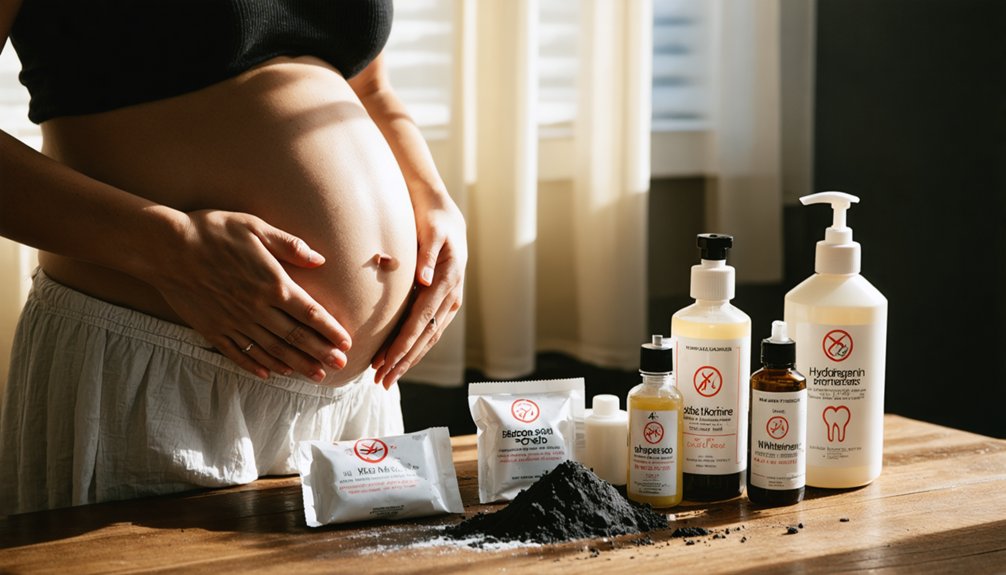
During pregnancy, you should avoid hydrogen peroxide, carbamide peroxide, chlorine dioxide, sodium lauryl sulfate, and sodium hydroxide in whitening products. These chemicals can absorb through your gums, enter your bloodstream, and potentially reach your developing baby. Hormonal changes also make your gums more sensitive, increasing chemical uptake. Since no safe exposure thresholds exist for these ingredients during pregnancy, dentists strongly recommend avoiding them. There’s much more to reflect upon before making any decisions about your oral care routine.
Key Takeaways
- Hydrogen peroxide and carbamide peroxide can enter the bloodstream through enamel, potentially exposing the fetus to harmful chemical compounds.
- Sodium lauryl sulfate irritates sensitive pregnancy gums, triggering mouth sores and accelerating peroxide absorption into the bloodstream.
- Chlorine dioxide erodes tooth enamel, increasing cavity risk and posing additional dangers to oral health during pregnancy.
- Sodium hydroxide risks causing maternal alkalosis, particularly threatening for pregnant women experiencing kidney-related complications.
- Harsh bleaching agents lack safety data for pregnant populations, making avoidance the recommended precautionary approach during pregnancy.
Why Dentists Tell Pregnant Patients to Skip Teeth Whitening
When you’re pregnant, dentists almost universally advise against teeth whitening—and for good reason. Current safety guidelines reflect a straightforward reality: most whitening agents haven’t been tested on pregnant populations, leaving critical data gaps that responsible clinicians won’t ignore.
Chemicals like hydrogen peroxide and carbamide peroxide can absorb into your bloodstream in small amounts. While minimal absorption may seem inconsequential, your developing baby’s vulnerability during key growth stages changes the risk calculation entirely.
Even small amounts of whitening chemicals can enter your bloodstream—and what’s minor for you may matter enormously for your developing baby.
Your oral health also shifts during pregnancy. Hormonal changes make your gums more reactive and your enamel more susceptible to irritation—conditions that whitening agents actively worsen.
Dentists aren’t being overly cautious; they’re applying the precautionary principle where definitive evidence is absent, protecting both you and your baby until safer alternatives exist.
The Real Risks of Peroxide-Based Whitening Products
When you use peroxide-based whitening products, the active chemicals—hydrogen peroxide and carbamide peroxide—can penetrate your enamel and enter your bloodstream in small but measurable amounts, raising legitimate concerns about fetal exposure during critical developmental windows.
Although no definitive studies confirm direct harm, the absence of safety data during pregnancy means you’re accepting an unquantified risk that most dental providers consider unacceptable.
Pregnancy also amplifies the physical consequences, as hormonal changes make your gums and enamel more susceptible to the sensitivity and irritation these chemicals routinely cause.
Peroxide Absorption Risks
During pregnancy, peroxide-based whitening products carry absorption risks you shouldn’t overlook. Both hydrogen peroxide and carbamide peroxide penetrate enamel and enter your bloodstream in measurable amounts.
Once absorbed, these compounds reach your developing baby through placental transfer, raising legitimate concerns about fetal exposure.
Peroxide safety during pregnancy remains inadequately studied, leaving no definitive threshold considered risk-free. The absorption effects aren’t fully understood, yet the precautionary principle strongly advises avoidance.
Your body’s pregnancy-related physiological changes also heighten gum tissue sensitivity, increasing peroxide uptake potential.
You’re making an informed choice by recognizing that minimal absorption doesn’t equal zero risk. Until thorough research establishes clear safety parameters, avoiding peroxide-based whitening products protects both you and your baby from unnecessary chemical exposure.
Fetal Development Concerns
Peroxide absorption doesn’t stop at your bloodstream—it extends its reach to your developing baby through placental transfer, and that’s where fetal development concerns become real.
Carbamide peroxide breaks down into hydrogen peroxide, which can cross the placental barrier and expose fetal tissue to oxidative stress.
No definitive studies confirm safe exposure thresholds for fetal health, meaning you’re assuming unknown risk with every whitening session.
Your baby’s developing organs and cellular structures are particularly vulnerable during the first trimester.
Prenatal safety guidelines consistently recommend avoiding elective chemical exposure when research gaps exist—and whitening ingredients represent exactly that gap.
Until thorough studies establish clear safety parameters, you maintain the greatest control over fetal protection by eliminating these chemical exposures entirely from your pregnancy routine.
Pregnancy Sensitivity Complications
Pregnancy transforms your oral environment in ways that dramatically amplify the risks of peroxide-based whitening products. Hormonal changes increase blood flow to gum tissue, making it hypersensitive and more permeable to chemical absorption.
When you apply hydrogen peroxide or carbamide peroxide to already-compromised gum tissue, you’re accelerating sensitivity symptoms that include sharp pain, persistent inflammation, and accelerated enamel erosion.
Your gums’ heightened vulnerability during pregnancy isn’t temporary discomfort—it’s a physiological warning signal. Peroxide compounds penetrate inflamed tissue faster, potentially entering your bloodstream at higher concentrations than under normal circumstances.
Sodium lauryl sulfate compounds these complications further, stripping protective mucous membranes and intensifying irritation. Controlling your whitening choices now means recognizing that pregnancy-altered oral tissues can’t safely tolerate the same chemical exposures you’d otherwise manage without consequence.
Other Whitening Ingredients That Can Irritate During Pregnancy
While hydrogen peroxide and carbamide peroxide receive the most attention, other whitening ingredients can also irritate your mouth and raise safety concerns during pregnancy. Rather than risking exposure, consider natural remedies that support gum health without harsh chemicals.
Harsh whitening chemicals aren’t the only pregnancy concern — many lesser-known ingredients pose hidden risks to your oral health.
Three additional ingredients to avoid:
- Chlorine Dioxide — Found in low-quality whitening kits, it permanently erodes enamel and increases cavity risk, making it particularly dangerous during pregnancy.
- Sodium Lauryl Sulfate — This foaming agent heightens gum sensitivity, triggering mouth sores in already vulnerable pregnancy gums.
- Sodium Hydroxide — A tissue-toxic alkalizing agent with zero pregnancy safety data, carrying risks of maternal alkalosis, especially if you have kidney complications.
Scrutinizing ingredient labels gives you direct control over what enters your body during this critical period.
Why Chlorine Dioxide Makes Cheap Whitening Kits Unsafe During Pregnancy
Chlorine dioxide stands out among whitening ingredients as one of the most aggressive compounds you’ll encounter in budget whitening kits. Unlike regulated bleaching agents, chlorine dangers extend directly to your enamel, where this harsh disinfectant chemical actively erodes your tooth’s protective surface.
Repeated exposure accelerates decay and heightens sensitivity—conditions already intensified by pregnancy hormones.
Whitening safety becomes particularly critical here because chlorine dioxide originates from non-reputable manufacturing sources with minimal quality oversight. You’re fundamentally applying an industrial disinfectant to your teeth.
No established safety threshold exists for oral application, and zero research supports its use during pregnancy. Your safest course is straightforward: avoid any whitening product that doesn’t clearly disclose its ingredient list, particularly cheap kits offering dramatic whitening results at suspiciously low price points.
Whitening Ingredients That Pose the Least Risk During Pregnancy
Not all whitening ingredients carry equal risk during pregnancy, and understanding which ones pose the least concern helps you make more informed decisions.
While no whitening ingredient is entirely risk-free during pregnancy, certain gentle alternatives present lower concern levels than harsh chemicals.
While no whitening ingredient is fully safe in pregnancy, gentler alternatives exist with meaningfully lower risk profiles.
- Baking soda — A mild abrasive found in natural remedies, it polishes surface stains without chemical absorption risks.
- Activated charcoal — Used cautiously, it adsorbs surface stains mechanically rather than chemically, minimizing systemic exposure.
- Sodium monofluorophosphate — When used as directed, it strengthens enamel while limiting systemic fluoride entry, making it a comparatively safer option.
You should still consult your provider before using any whitening product.
Prioritizing gentle alternatives over chemical-heavy treatments remains the most cautious, controlled approach throughout pregnancy.
Safer Alternatives to Whitening During Pregnancy
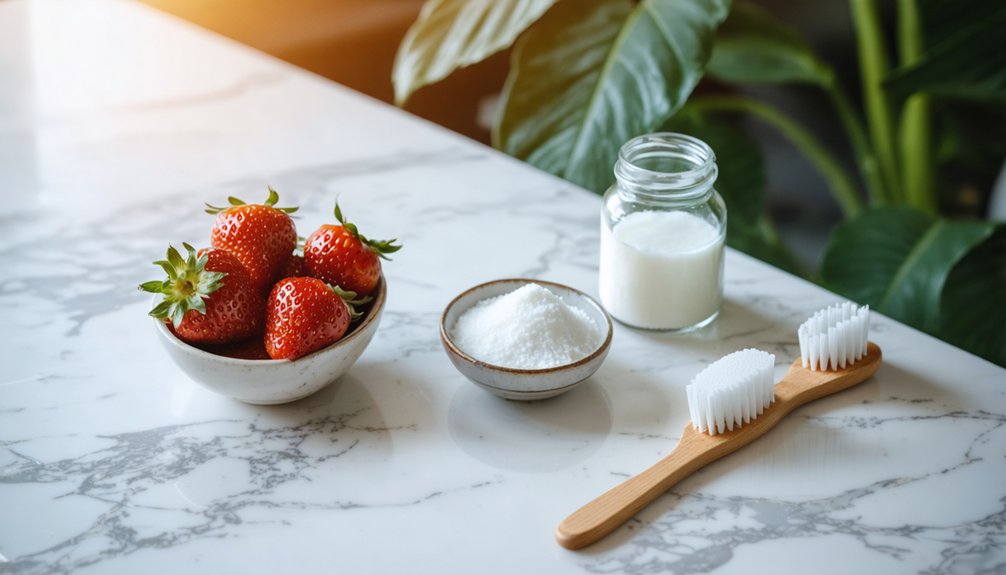
If you’re looking to maintain a brighter smile during pregnancy without chemical risks, several safer alternatives exist that your dentist can help you navigate.
Baking soda toothpaste offers mild abrasive action to remove surface stains without the systemic concerns tied to peroxide-based products.
Oil pulling—though limited in clinical evidence—may reduce oral bacteria and improve overall tooth appearance.
For more targeted results, consulting your dentist about pregnancy-approved options guarantees you’re making choices that prioritize both your oral health and fetal safety.
Baking Soda Toothpaste
Key considerations:
- Effectiveness: Baking soda removes surface stains mechanically, avoiding chemical absorption risks associated with peroxide-based products.
- Baking soda risks: Its abrasive nature can wear enamel with excessive use, particularly concerning during pregnancy when enamel may already be compromised by acid reflux or vomiting.
- Safety profile: It contains no ingredients linked to fetal development concerns, making it a cautious, practical choice.
Use baking soda toothpaste sparingly—two to three times weekly—and confirm product selection with your dental provider before incorporating it into your routine.
Oil Pulling Benefits
Baking soda addresses surface stains through mechanical action, but oil pulling works differently—it targets oral bacteria and reduces inflammation without introducing abrasive or chemical agents.
You swish one tablespoon of coconut or sesame oil through your teeth for ten to twenty minutes, then spit it out. This process, known as “pulling,” draws bacteria from gum pockets and reduces plaque accumulation.
Among natural remedies, oil pulling stands out because it doesn’t penetrate systemic circulation, making it a lower-risk option during pregnancy.
Clinical evidence remains limited, so don’t treat it as a replacement for professional dental care. However, its mechanical, chemical-free approach aligns with the precautionary standards most providers recommend when you’re managing oral health while pregnant.
Dentist-Approved Whitening Options
While conventional whitening treatments remain off-limits during pregnancy, dentist-approved alternatives let you maintain a brighter smile without exposing your developing baby to peroxide-based chemicals or harsh bleaching agents.
These safe practices prioritize your oral health while minimizing chemical exposure.
Consider these dentist-approved natural whitening options:
- Baking soda toothpaste – Mildly abrasive formulas gently polish surface stains without peroxide-based ingredients or systemic absorption risks.
- Professional dental cleanings – Scaling and polishing remove extrinsic stains effectively, offering clinically controlled results safe during pregnancy.
- Activated charcoal-free whitening toothpastes – Select ADA-accepted formulas specifically formulated without bleaching agents, sodium lauryl sulfate, or abrasive compounds.
Always consult your dentist before introducing any new oral care product, ensuring every choice aligns with evidence-based, pregnancy-safe protocols.
Frequently Asked Questions
Can Teeth Whitening Ingredients Affect Breast Milk Composition After Birth?
You should avoid whitening ingredients post-birth, as breast milk research remains incomplete. Whitening safety studies don’t confirm these chemicals are safe, so they could potentially transfer through breast milk, affecting your baby’s development.
Does Morning Sickness Vomiting Increase Sensitivity to Whitening Ingredients?
Yes, morning sickness vomiting erodes your enamel, worsening your oral health and amplifying the nausea impact of whitening ingredients like hydrogen peroxide and sodium lauryl sulfate, making your teeth and gums considerably more vulnerable to irritation and sensitivity.
Are Whitening Ingredient Risks Different in Each Trimester of Pregnancy?
Like a shifting tide, trimester safety varies—you face heightened ingredient absorption risks in the first trimester during organ development. You should avoid whitening chemicals entirely, as each stage carries distinct, evolving vulnerabilities throughout your pregnancy.
Can Partners’ Whitening Product Use Indirectly Affect Pregnant Women Nearby?
Your partner’s whitening product formulations pose minimal but real partner exposure risks. You’re inhaling volatile compounds like hydrogen peroxide vapors nearby, so guarantee adequate ventilation and limit your proximity during their whitening sessions.
Do Pregnancy Hormones Change How Whitening Chemicals Absorb Into Tissues?
Yes, your hormonal changes increase blood flow and alter tissue absorption, making whitening chemicals penetrate more readily. You’re at heightened risk, so it’s best to avoid these products entirely during pregnancy.
References
- https://mothertobaby.org/baby-blog/whitening-teeth-during-pregnancy-or-breastfeeding-lets-bite-into-the-subject/
- https://nvdentists.com/pregnancy-safe-teeth-whitening/
- https://bellevuedentaloasis.com/blog/teeth-whitening-ingredients-to-avoid/
- https://honestcaredental.com/your-complete-guide-to-teeth-whitening-while-expecting/
- https://www.womenscare.com/cosmetic-and-beauty-ingredients-to-avoid-while-pregnant/
- https://kidshealth.org/BarbaraBushChildrens/en/parents/tooth-whitening-pregnancy.html
- https://www.adentalplace.com/blog/is-teeth-whitening-safe-during-pregnancy/
- https://www.colgate.com/en-us/oral-health/oral-care-during-pregnancy/teeth-whitening-when-pregnant-is-it-safe