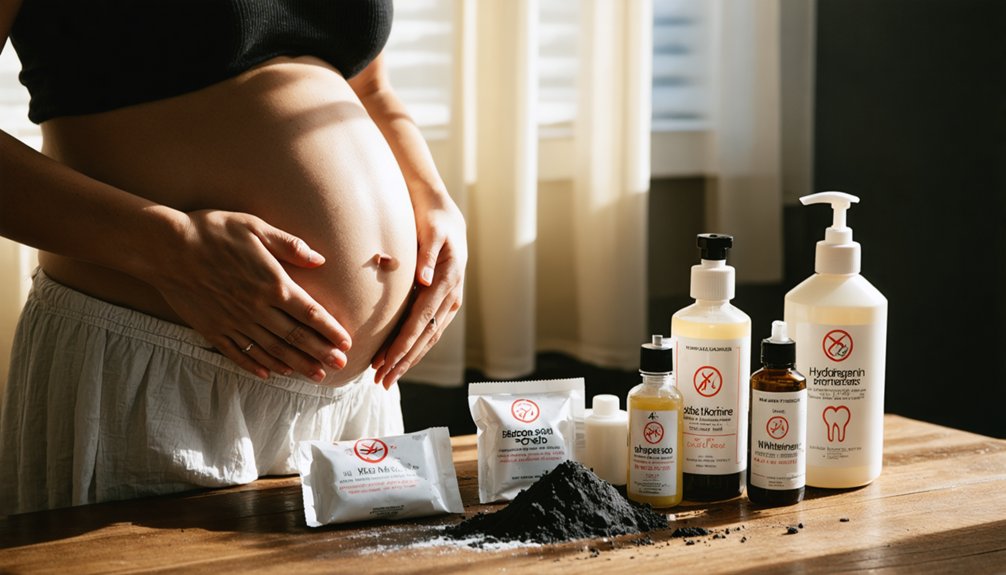
Yes, hormonal changes during pregnancy can directly affect your tooth color. Rising estrogen and progesterone levels alter your saliva’s composition, reducing its cleansing capacity and allowing plaque to accumulate more readily. That trapped plaque binds pigments from foods and beverages, creating visible yellowing. Gum inflammation adds further discoloration by creating contrast along your gumline. Understanding each mechanism behind these changes will help you take targeted action to protect your smile.
Key Takeaways
- Rising estrogen and progesterone levels compromise saliva composition, reducing its cleansing capacity and increasing plaque retention that traps pigments.
- Elevated hormones heighten gum sensitivity to plaque, causing inflammation that creates visual contrast, making teeth appear duller overall.
- Hormonal fluctuations increase acid erosion from morning sickness, exposing yellow dentin beneath enamel and visibly altering tooth color.
- Reduced salivary flow caused by hormonal changes disrupts microbial balance, accelerating plaque accumulation and worsening tooth discoloration.
- Gum inflammation from hormonal changes causes redness and swelling along the gumline, further emphasizing the appearance of tooth discoloration.
How Do Pregnancy Hormones Change Your Tooth Color?

During pregnancy, rising levels of estrogen and progesterone don’t directly alter the pigment inside your teeth, but they trigger a cascade of oral changes that visibly affect tooth color.
Hormonal fluctuations compromise saliva composition, reducing its buffering and cleansing capacity. This accelerates plaque retention on enamel surfaces, trapping pigments from foods and beverages.
Simultaneously, gum inflammation develops, making your gumline appear redder and your teeth visually duller by contrast.
Inflamed gums during pregnancy create a stark visual contrast, making even healthy teeth appear noticeably duller and discolored.
Enamel changes from acid erosion—often linked to morning sickness—expose underlying yellow dentin.
Nutrition impact matters too; deficiencies in calcium and vitamin D further weaken enamel integrity.
Tooth sensitivity may discourage thorough brushing, compounding discoloration.
Maintaining strict oral hygiene, scheduling regular dental check-ups, and consulting your dentist before pursuing safe whitening options keep these compounding effects under your control.
Does Plaque During Pregnancy Make Your Teeth Yellow?
When plaque accumulates on your teeth, it acts as a trap for pigments from the foods and drinks you consume, leading to visible yellowing on tooth surfaces.
During pregnancy, elevated levels of estrogen and progesterone heighten your gums’ sensitivity to plaque, making it harder for your mouth to resist plaque retention and the staining it causes.
Plaque Traps Food Pigments
Plaque that accumulates on your teeth during pregnancy doesn’t just sit there passively—it actively traps pigments from the foods and drinks you consume.
Plaque composition includes bacteria, proteins, and sticky polysaccharides that bind chromogens directly to your enamel surface, increasing pigment retention considerably.
These pigments come from sources you likely consume daily:
- Coffee and tea deposit tannins that penetrate plaque layers rapidly.
- Red wine introduces anthocyanins that bind stubbornly to bacterial biofilm.
- Tomato-based sauces carry carotenoids that stain through prolonged contact.
- Dark berries release polyphenols that embed deeply within plaque matrix.
Each exposure compounds discoloration progressively.
Controlling your oral hygiene routine with consistent brushing and professional cleanings directly limits how much pigment plaque captures and retains against your teeth.
Hormones Increase Plaque Sensitivity
Pregnancy hormones—particularly estrogen and progesterone—alter your gum tissue’s inflammatory response, making it considerably more reactive to plaque than it would be under normal conditions.
This heightened hormonal sensitivity means even minimal plaque retention triggers disproportionate gum inflammation, increasing bleeding, swelling, and redness along the gumline.
Discomfort from inflamed gums often discourages thorough brushing and flossing, which accelerates plaque accumulation further.
As plaque builds on enamel surfaces, it traps pigments from foods and beverages, producing visible yellow or brown staining.
The relationship is cyclical—hormonal changes amplify your gum tissue’s reaction to plaque, reduced hygiene allows more plaque to accumulate, and increased staining follows.
Addressing plaque retention consistently and early is the most effective way to interrupt this cycle and preserve tooth appearance.
Reducing Plaque Prevents Yellowing
Given that hormonal changes make your gums considerably more reactive to plaque, it follows that controlling plaque buildup is the most direct way to prevent pregnancy-related tooth yellowing.
Consistent oral hygiene and targeted plaque prevention give you measurable control over discoloration.
Prioritize these four evidence-based steps:
- Brush twice daily with fluoride toothpaste to disrupt plaque before pigments embed into enamel.
- Floss daily to eliminate interproximal plaque your brush can’t reach.
- Schedule professional cleanings every trimester to remove hardened deposits driving surface stains.
- Rinse with an antimicrobial mouthwash to reduce bacterial load between brushing sessions.
Each step directly interrupts the plaque-staining cycle that pregnancy hormones accelerate, preserving both enamel integrity and visible tooth brightness.
How Does Morning Sickness Cause Enamel Damage and Yellowing During Pregnancy?
When you experience morning sickness and vomit frequently, stomach acid repeatedly contacts your tooth enamel, weakening its mineral structure and exposing the yellow dentin layer beneath.
This acid erosion also roughens your enamel surface, making it more susceptible to staining from foods and beverages.
After vomiting, you can limit further enamel damage by rinsing with water immediately and waiting at least 30 minutes before brushing, since brushing too soon spreads acid across more enamel surfaces.
Acid Erosion and Yellowing
Morning sickness exposes your teeth to repeated surges of gastric acid, and this acid contact is the primary driver of enamel erosion during pregnancy.
Without adequate enamel protection, the yellowing process accelerates structurally.
Acid exposure damages your teeth through four measurable stages:
- Enamel softening — gastric acid dissolves the mineral matrix, weakening your outermost protective layer.
- Demineralization — repeated acid contact strips calcium and phosphate, thinning enamel progressively.
- Dentin exposure — once enamel thins sufficiently, the naturally yellow dentin layer becomes visible through the surface.
- Surface roughening — eroded enamel develops microscopic irregularities that trap pigments from food and drink.
Rinsing with water immediately after vomiting neutralizes residual acid.
Avoid brushing for 30 minutes to prevent abrading softened enamel further.
Protecting Enamel After Vomiting
Each vomiting episode during pregnancy deposits gastric acid—with a pH as low as 2.0—directly onto your enamel, triggering immediate mineral dissolution.
Brushing immediately afterward accelerates abrasion on already-softened enamel, worsening structural loss. Instead, rinse thoroughly with water or a sodium bicarbonate solution to initiate acid neutralization without mechanical damage.
Wait at least 30 minutes before brushing, allowing saliva to begin enamel restoration through natural remineralization.
Fluoride toothpaste and prescription-strength fluoride gels reinforce this process by replenishing lost minerals and rebuilding enamel integrity.
If you’re experiencing hyperemesis gravidarum, the frequency of acid exposure greatly heightens erosion risk, making these protective steps non-negotiable.
Consistent application of these protocols directly limits dentin exposure, reducing the yellowing that acid erosion accelerates throughout pregnancy.
Does Dry Mouth During Pregnancy Stain Your Teeth?
Dry mouth during pregnancy can quietly undermine your teeth’s natural defenses, setting the stage for stubborn staining. Reduced salivary flow is among the primary dry mouth causes, and its consequences directly compromise saliva effects on enamel protection.
Without adequate saliva, your mouth loses its ability to:
- Neutralize acids that demineralize enamel and expose yellow dentin
- Flush away pigment-containing debris from foods and beverages
- Buffer bacterial byproducts that accelerate surface discoloration
- Maintain the microbial balance that controls plaque accumulation
Each failure compounds the next. You’re left with a surface that attracts stains faster and resists natural cleansing.
Staying hydrated, using alcohol-free mouth rinses, and consulting your dentist about saliva substitutes gives you measurable control over this preventable discoloration pathway.
How Does Pregnancy Gingivitis Make Teeth Look Less White?
When estrogen and progesterone levels surge during pregnancy, they trigger an exaggerated inflammatory response in your gum tissue that directly alters how white your teeth appear.
Gingivitis effects include redness, swelling, and bleeding along your gumline, and this visible inflammation creates a stark contrast that makes your teeth look yellower or dingier by comparison.
Gum inflammation also compromises your brushing and flossing routine because tender, bleeding gums discourage thorough cleaning, which accelerates plaque accumulation and surface staining.
The inflamed tissue can also partially obscure the natural tooth-gum margin, distorting how light reflects off your teeth.
Managing pregnancy gingivitis through consistent oral hygiene and professional cleanings directly counters these visual effects and gives you measurable control over your smile’s appearance during pregnancy.
Is Teeth Whitening Safe When You Have Pregnancy-Related Discoloration?

Pregnancy-related discoloration is understandably frustrating, but whitening treatments introduce considerations that make timing and safety genuinely important during this period. Current pregnancy guidelines recommend deferring elective whitening procedures until after delivery.
Here’s why that decision protects you:
- Whitening agents like hydrogen peroxide haven’t been tested for fetal safety, making whitening safety genuinely uncertain.
- Inflamed, compromised gum tissue absorbs chemicals more readily, increasing systemic exposure risk.
- Acid-eroded enamel responds poorly to bleaching agents, potentially worsening sensitivity and structural damage.
- Treating the underlying causes—plaque, erosion, gingivitis—produces more durable results than premature whitening.
Your dentist can address discoloration through professional cleanings and targeted oral hygiene strategies now, reserving whitening assessment for your postpartum visit when your tissues have stabilized.
Daily Habits That Prevent Tooth Discoloration During Pregnancy
Although pregnancy introduces oral conditions that accelerate discoloration, consistent daily habits directly counteract plaque retention, acid damage, and gum inflammation.
Brush twice daily with fluoride toothpaste, and floss once daily to disrupt plaque before it traps pigments. After vomiting, rinse immediately with water rather than brushing, since acid-softened enamel abrades easily.
Your hydration habits matter clinically — adequate water intake supports salivary flow, which buffers acids and clears debris from tooth surfaces.
Monitor your snack choices carefully; fermentable carbohydrates and acidic foods accelerate enamel erosion and staining. Choose crunchy vegetables, dairy, and water over sugary or pigment-heavy options.
Attend scheduled dental cleanings, since professional debridement removes calcified deposits that daily brushing can’t eliminate.
These combined strategies preserve enamel integrity and minimize visible discoloration throughout pregnancy.
Frequently Asked Questions
Can Tooth Discoloration From Pregnancy Become Permanent After Giving Birth?
Yes, it can. If enamel erosion progresses unchecked during pregnancy, you’ll face lasting discoloration and tooth sensitivity postpartum. You must address plaque buildup and acid exposure promptly to prevent permanent structural damage to your enamel.
Does Breastfeeding Continue to Affect Tooth Color After Delivery?
Breastfeeding’s impact on tooth color remains possible, as hormonal fluctuations continue postpartum. You’ll notice enamel variation if saliva changes, plaque buildup, or acid exposure persist. Maintaining rigorous oral hygiene actively controls continued discoloration risk during lactation.
Are Certain Teeth More Prone to Pregnancy-Related Discoloration Than Others?
Like a fading shield, your front teeth face greater enamel sensitivity from acid and hormonal fluctuations. Dietary impacts and oral hygiene lapses make incisors and canines more vulnerable to pregnancy-related discoloration than molars.
Can Prenatal Vitamins or Supplements Contribute to Changes in Tooth Color?
Prenatal vitamins don’t directly stain tooth enamel, but inadequate calcium intake can weaken enamel integrity. You’ll optimize vitamin absorption and protect your smile by maintaining consistent oral hygiene alongside your supplement regimen.
Does Tooth Color Change Differently Across Each Trimester of Pregnancy?
Tooth color changes aren’t uniform across each trimester. You’ll notice trimester effects tied to shifting hormonal impacts—rising estrogen and progesterone increase plaque sensitivity early, while prolonged acid exposure and reduced saliva worsen discoloration later.
References
- https://www.eastridgedentalgreenbay.com/managing-yellow-teeth-during-pregnancy/
- https://www.anewsmiledentalcenter.com/how-pregnancy-hormones-affect-your-teeth-and-gums/
- https://alexanderfamilydental.com/blog/understanding-the-influence-of-pregnancy-hormones-on-your-smile/
- https://torontodentistry.info/dental-concerns-unique-to-pregnancy-2/
- https://www.maddenfamilydentistry.com/pregnancy-hormones-and-oral-health
- https://pmc.ncbi.nlm.nih.gov/articles/PMC11596282/
- https://www.voyagehealthcare.com/how-does-pregnancy-affect-my-teeth/
- https://pmc.ncbi.nlm.nih.gov/articles/PMC6883753/
- https://pashadental.com/resource/dental-care-during-pregnancy/
- https://www.90210dentist.net/blog/has-pregnancy-ruined-your-smile/