As your enamel thins and gums recede with age, you need gentler, more targeted whitening strategies to avoid sensitivity and damage. Dentist-supervised treatments using controlled peroxide concentrations are your safest option, while ADA-accepted strips and fluoride toothpastes offer lower-risk at-home alternatives. You should avoid DIY methods like undiluted hydrogen peroxide or baking soda, which accelerate enamel erosion. If you have restorations, uneven coloration becomes a real risk without proper evaluation first. There’s much more to uncover ahead.
Key Takeaways
- Professional whitening with dentist supervision minimizes risks by controlling peroxide concentrations and exposure times, reducing sensitivity and enamel damage in mature teeth.
- ADA-accepted whitening strips, gels, and toothpastes with lower peroxide concentrations offer safer alternatives to high-concentration or DIY whitening methods.
- Dental evaluations before whitening identify enamel thickness and restorations, ensuring tailored treatments that avoid uneven coloration or unnecessary damage.
- Gum protection using physical barriers or liquid resin dams during professional whitening prevents peroxide irritation to sensitive soft tissues and exposed cementum.
- Spacing whitening sessions, using fluoride toothpaste, and modifying diet help maintain results while minimizing cumulative peroxide irritation on aging enamel.
Why Mature Teeth Require a Different Whitening Approach
As you age, your teeth undergo structural changes that make standard whitening protocols less appropriate and potentially more harmful.
Aging teeth aren’t just older — they’re structurally different, and standard whitening protocols haven’t caught up.
Mature enamel thins progressively, amplifying sensitivity concerns and increasing peroxide risks when standard concentrations are applied without clinical oversight. Age-related changes also include gum recession, which exposes cementum — a surface far more vulnerable to chemical irritation than enamel.
Whitening effectiveness is further complicated by restoration impacts. Crowns, fillings, and veneers don’t respond to peroxide, meaning unsupervised whitening often produces uneven results.
You need tailored treatments that account for your specific oral conditions, not generic formulations designed for younger, intact dentition. A dentist-supervised approach lets you control outcomes precisely — adjusting peroxide concentration, application time, and tray fit to match your actual clinical profile.
What Restorations Mean for Your Whitening Results
If you have crowns, bridges, fillings, or dentures, you need to understand that these restorations don’t respond to peroxide-based whitening agents the way natural tooth enamel does.
Whitening your remaining natural teeth without accounting for existing restorations can create uneven, mismatched coloration that’s cosmetically counterproductive.
A dental evaluation before treatment lets your dentist map your restorations, assess your baseline shade, and build a whitening plan that minimizes the risk of visible color discrepancies.
Restorations Don’t Whiten
One important limitation to understand before starting any whitening regimen is that crowns, bridges, fillings, and dentures don’t respond to peroxide-based treatments the way natural tooth enamel does.
These restoration types are fabricated from ceramic, composite, or acrylic materials engineered for color stability—not peroxide reactivity. Bleaching agents won’t penetrate or alter their shade.
This creates a practical problem with whitening expectations: if your natural teeth lighten considerably while existing restorations remain unchanged, the color mismatch becomes visible and potentially more pronounced than before treatment.
Anterior restorations are especially conspicuous in this scenario.
Before beginning any whitening protocol, you need a clinical assessment that maps the location, shade, and material of every restoration.
That evaluation determines whether whitening is appropriate and what cosmetic outcome you can realistically achieve.
Uneven Color Risks
The mismatch risk becomes clinically significant once natural teeth begin to lighten while bonded restorations hold their original shade. Crowns, veneers, bridges, and composite fillings resist peroxide entirely, creating visible contrast against whitened enamel.
This color matching problem is particularly pronounced in anterior restorations, where aesthetic discrepancy is immediately noticeable.
Managing this outcome requires pre-treatment planning with your dentist. You should document existing restoration shades before initiating any whitening protocol. Your dentist can then sequence treatment strategically—whitening first, then replacing restorations to match the new shade.
Sensitivity management also intersects here; aggressive whitening near exposed restoration margins can amplify discomfort. Controlled peroxide concentrations and professional supervision reduce both uneven results and irritation risk, giving you measurable, predictable outcomes rather than unpredictable cosmetic consequences.
Dental Evaluation Matters
Pre-treatment dental evaluation directly shapes whether whitening produces consistent, predictable results across your entire smile. A thorough dental assessment identifies existing crowns, bridges, veneers, and composite fillings before any bleaching agent is applied.
These restorations don’t respond to peroxide, so their shade remains fixed while surrounding natural enamel lightens. Without this step, you risk visible color mismatches that compromise your outcome.
Treatment planning allows your dentist to map restoration placement, assess enamel thickness, document recession levels, and select appropriate peroxide concentrations accordingly.
This structured approach gives you precise control over which areas can be treated, what results are achievable, and whether restoration replacement should follow whitening.
Skipping evaluation doesn’t save time—it increases the likelihood of uneven, clinically unsatisfactory results requiring costly correction.
Why Dentist-Supervised Whitening Is the Safest First Step
When mature teeth are involved, starting with a dentist-supervised whitening plan reduces risk more effectively than self-directed approaches.
You benefit from a structured assessment that identifies thinning enamel, gum recession, and existing restorations before any whitening agent is applied. These dentist benefits extend directly into whitening safety — your provider can match peroxide concentration to your specific oral conditions, reducing irritation and uneven results.
The ADA recognizes professional oversight as the most controlled method for both extrinsic and intrinsic staining.
Dentists regulate exposure time, select appropriate agents, and account for crowns or fillings that won’t respond to bleaching. Without that evaluation, you risk sensitivity, patchy outcomes, and enamel damage.
Supervised whitening isn’t a premium option — for mature teeth, it’s the most clinically sound starting point.
Custom Tray Whitening for Sensitive, Aging Teeth
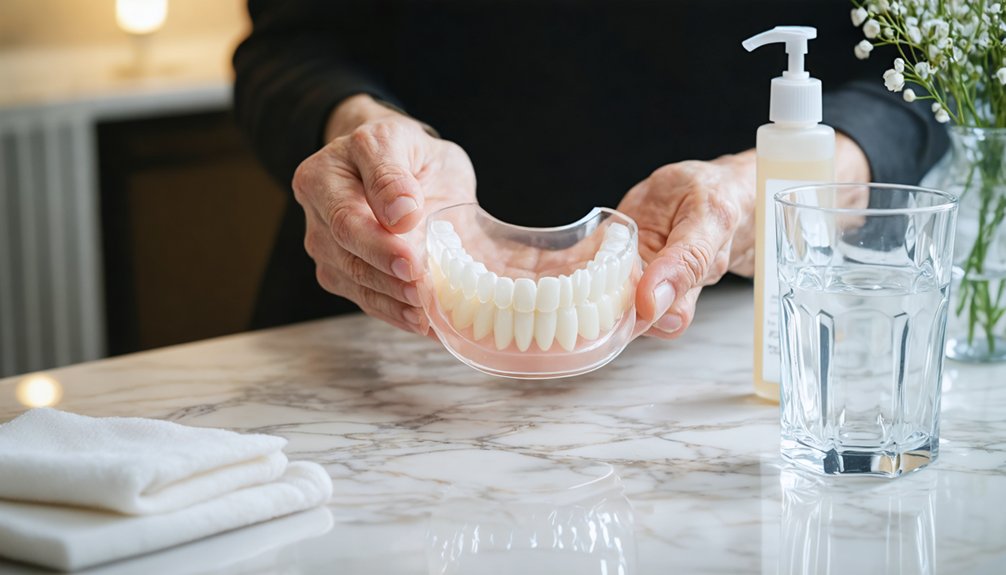
Custom-fitted tray whitening builds directly on that supervised framework by giving you a controlled, take-home method that accounts for the specific vulnerabilities of aging teeth.
Your dentist fabricates trays precisely molded to your dental arch, which minimizes peroxide contact with receding gum tissue—a critical custom tray benefit for those managing sensitive teeth and thinning enamel.
Carbamide peroxide formulations, typically ranging from 10–16%, release hydrogen peroxide gradually, reducing pulpal irritation risk compared to higher-concentration in-office gels.
Mayo Clinic data indicates measurable whitening after approximately two weeks of consistent use. You control application timing and frequency, allowing you to pause if sensitivity develops.
Results typically persist for up to two years, contingent on dietary habits and maintenance compliance.
What Actually Happens During an In-Office Whitening Visit
When you arrive for an in-office whitening session, your dentist begins by applying a protective barrier—typically a resin or rubber dam—to shield your gum tissue from high-concentration hydrogen peroxide.
The clinician then applies the bleaching agent directly to the enamel surfaces, controlling both exposure time and chemical quantity with a precision that OTC products can’t replicate.
Understanding each step of this procedure helps you recognize why professional oversight matters, particularly when aging has thinned your enamel or recession has left root surfaces more vulnerable to chemical irritation.
Step-By-Step Procedure Breakdown
Before the bleaching agent ever touches your teeth, your dentist conducts a thorough oral exam to assess enamel thickness, gum recession, existing restorations, and sensitivity levels. This evaluation directly determines whitening frequency and protocol intensity.
Once cleared, your dentist isolates your gums using a protective barrier or rubber dam, minimizing peroxide contact with soft tissue. A high-concentration hydrogen peroxide gel is then applied precisely to enamel surfaces.
Exposure time is carefully controlled—typically in intervals—to limit teeth sensitivity while maximizing penetration. Some protocols incorporate a curing light to activate the bleaching compound.
After each interval, your dentist reassesses response before reapplying. The session concludes with gel removal, tissue inspection, and post-treatment sensitivity monitoring, giving you a clear, documented outcome you can build future maintenance decisions around.
Gum Protection During Treatment
Gum protection is a non-negotiable step in professional whitening, and your dentist applies a physical barrier or liquid resin dam to soft tissue before any bleaching agent contacts your teeth. This barrier directly reduces gum irritation risk during the entire treatment duration.
Once the dam cures or sets, high-concentration hydrogen peroxide gel is applied exclusively to enamel surfaces, keeping chemical exposure precisely controlled. Your dentist monitors the application throughout each timed cycle, typically ranging from 15 to 20 minutes per session.
If sensitivity signals emerge mid-treatment, exposure is adjusted immediately. This level of oversight isn’t available with over-the-counter alternatives, making professional protection protocols especially critical for mature teeth where receding gum tissue and thinner enamel amplify vulnerability to chemical burns and post-treatment discomfort.
DIY Whitening Methods That Harm Aging Enamel
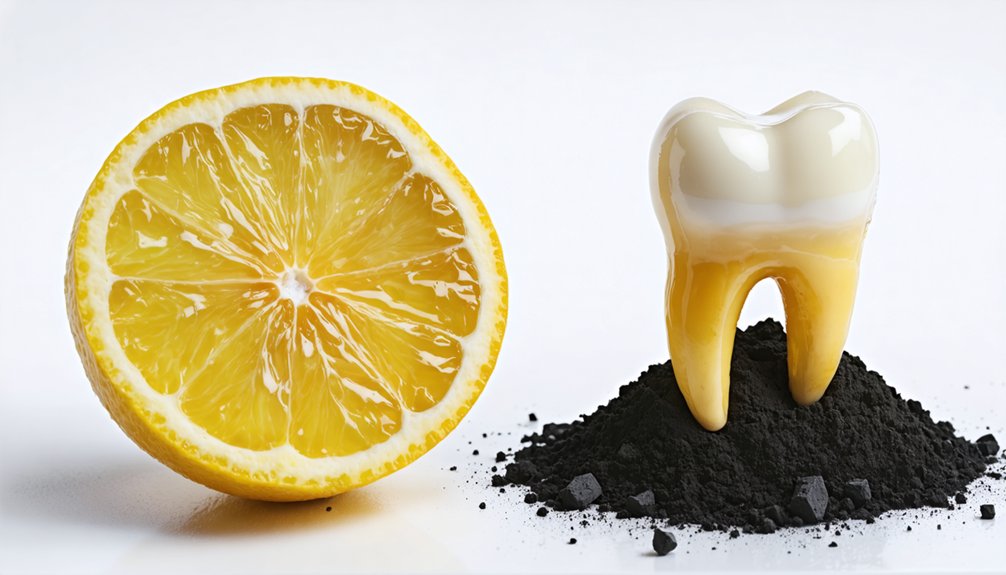
Although DIY whitening trends can seem appealing, several common home methods pose measurable risks to aging enamel that’s already thinning and more vulnerable to damage.
The DIY dangers aren’t trivial—undiluted hydrogen peroxide, acidic vinegar rinses, and highly abrasive baking soda pastes can accelerate enamel erosion in ways that professional treatments are specifically designed to avoid.
Vinegar lacks evidence as a whitening agent and introduces acidity that degrades enamel structure directly. Overused abrasive toothpastes compound sensitivity and surface wear.
Vinegar doesn’t whiten teeth—it erodes enamel. Abrasive toothpastes only worsen sensitivity and accelerate surface wear.
Because mature teeth often have receding gumlines and thinner protective enamel, uncontrolled chemical or mechanical exposure creates disproportionate harm.
You’re working with a narrower safety margin than younger patients, making unsupervised DIY approaches particularly unsuitable compared to professionally regulated alternatives.
ADA-Accepted Strips, Gels, and Toothpastes Worth Trying
Not every whitening product requires a dentist’s chair to be safe and effective. ADA approved products—including strips, gels, and toothpastes—offer clinically validated options you can incorporate into your routine without professional intervention.
Whitening strips and gels use lower-concentration peroxide formulas, making them a practical choice if you’re managing sensitivity. Follow directions precisely; overuse increases irritation risk.
For surface stains from coffee or tea, whitening toothpastes provide safe whitening through mild abrasion and chemical action. Formulas containing blue covarine deliver an immediate optical brightening effect without bleaching agents.
You should confirm the ADA Seal before purchasing any OTC product. That seal signals independent efficacy and safety testing.
For mature teeth with restorations or recession, pair OTC use with periodic dental evaluation to avoid uneven results.
Keeping Teeth White Without Triggering Sensitivity
Maintaining your whitening results long-term requires balancing cosmetic goals against the physiological vulnerabilities of mature teeth.
You’ll need to identify your personal sensitivity triggers — acidic foods, thermal extremes, and high-frequency peroxide exposure among the most common. Spacing whitening sessions reduces cumulative peroxide-induced pulpal irritation.
Fluoride-containing toothpaste applied post-treatment supports enamel remineralization and lowers nerve hypersensitivity.
When peroxide-based methods consistently cause discomfort, whitening alternatives like low-abrasion polishing toothpastes with blue covarine deliver optical brightening without chemical penetration.
Dietary modifications — reducing coffee, tea, and red wine — slow extrinsic restaining effectively.
Your dentist can calibrate maintenance schedules around your enamel thickness, recession extent, and restoration placement, ensuring sustained cosmetic outcomes without compromising structural integrity or producing uneven color adjacent to crowns or fillings.
Frequently Asked Questions
Can Whitening Treatments Reverse Yellowing Caused by Certain Medications?
Whitening treatments can’t fully reverse medication-induced yellowing. You’ll find professional bleaching addresses some discoloration, but age considerations and intrinsic medication effects often limit results. Consult your dentist to determine your realistic whitening outcome.
How Does Fluoride Use Interact With Peroxide-Based Whitening Agents?
Fluoride doesn’t block whitening—it actually supports it. You’ll find fluoride benefits include strengthening enamel post-treatment, while peroxide interactions remain minimal. Using fluoride after whitening reduces sensitivity and helps you maintain structural integrity effectively.
Are Whitening Results Covered by Dental Insurance for Older Adults?
Dental insurance policies typically don’t cover whitening for older adults, as insurers classify it as cosmetic. You’ll likely pay out-of-pocket, so confirm coverage details directly with your provider before scheduling any whitening procedure.
How Soon After a Dental Extraction Can Whitening Safely Begin?
Ironically, rushing whitening risks undoing your extraction recovery. You’ll want to wait at least 2 weeks, prioritizing post extraction timing and sensitivity management before starting any peroxide-based treatment your dentist formally approves.
Does Whitening Affect the Bond Strength of Existing Dental Adhesives?
Whitening can temporarily reduce bond strength and compromise adhesive durability in existing restorations. You’ll want to delay bonding procedures for at least two weeks post-whitening, as peroxide residues actively interfere with adhesive polymerization and overall bond integrity.
References
- https://pmc.ncbi.nlm.nih.gov/articles/PMC4058574/
- https://askthedentist.com/teeth-whitening/
- https://www.healthpartners.com/blog/safe-teeth-whitening/
- https://www.goodrx.com/conditions/dental-care/is-teeth-whitening-safe
- https://newsnetwork.mayoclinic.org/discussion/mayo-clinic-q-and-a-many-safe-choices-available-to-help-whiten-teeth/
- https://mtviewfamilydentaltn.com/teeth-whitening-for-older-adults-special-considerations/
- https://www.aarp.org/health/conditions-treatments/teeth-whitening/
- https://www.ada.org/resources/ada-library/oral-health-topics/whitening
- https://www.colgate.com/en-us/oral-health/teeth-whitening/whitening-aging-teeth
- https://news.llu.edu/patient-care/7-dentist-approved-tips-safely-whiten-your-teeth