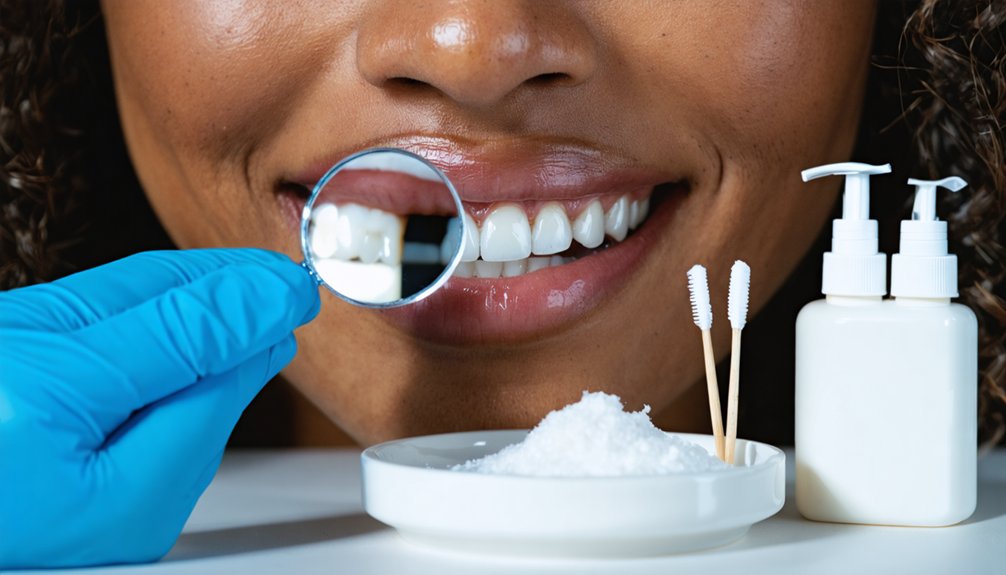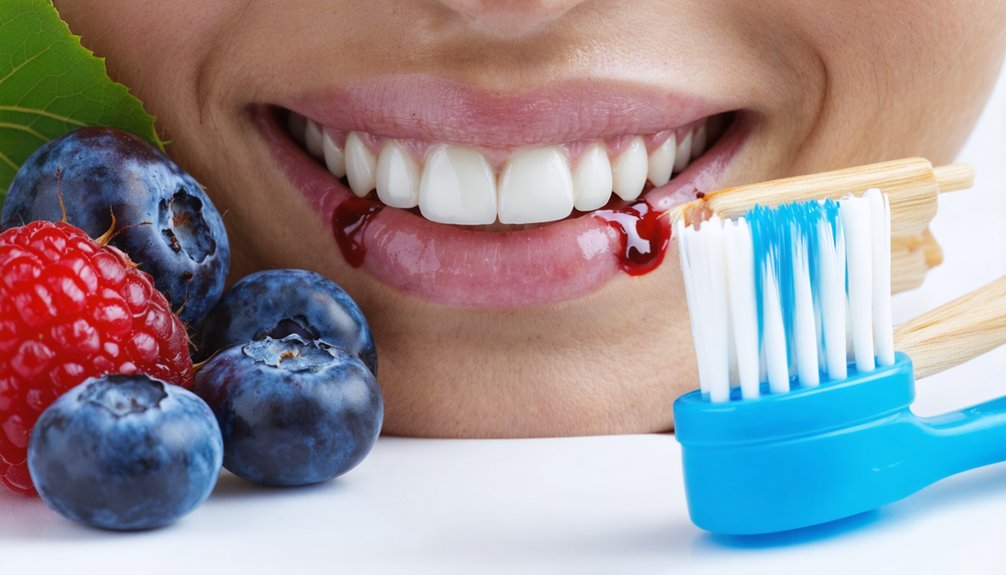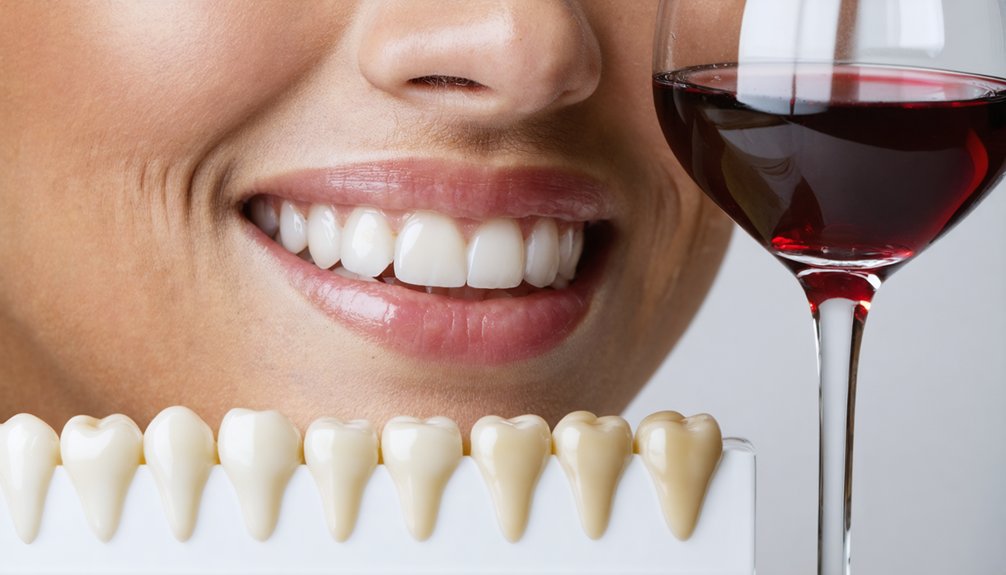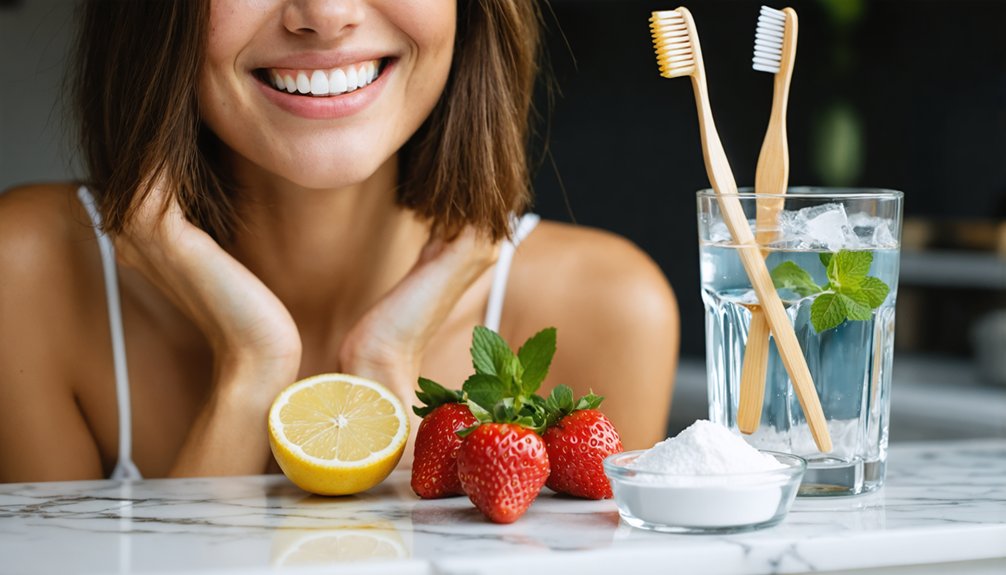
Lifestyle stains from coffee, tea, wine, and tobacco embed into your enamel’s microscopic pores, making your teeth look dull and discolored over time. You can fight back by brushing twice daily with fluoride toothpaste, rinsing after staining drinks, and using proven at-home remedies like baking soda paste. When surface stains persist, OTC whitening products or professional treatments offer stronger solutions. Keep going to discover exactly which strategies work best for your specific situation.
Key Takeaways
- Brush twice daily with fluoride toothpaste, floss regularly, and rinse with water immediately after consuming staining beverages like coffee or red wine.
- Limit acidic foods and drinks that erode enamel, and wait 30–60 minutes before brushing after acidic exposure.
- Use baking soda paste or diluted hydrogen peroxide rinses sparingly for safe, mild at-home stain removal.
- OTC whitening strips and toothpastes effectively target mild to moderate extrinsic stains with consistent, structured use.
- For persistent or deeper stains, consult a dental professional for bleaching, laser whitening, veneers, or crowns.
What Causes Lifestyle Stains on Your Teeth
Everyday habits play a larger role in tooth discoloration than most people realize. Coffee, tea, red wine, soda, and dark-colored foods deposit chromogens directly onto enamel surfaces, creating extrinsic stains that deepen with repeated exposure.
Tobacco accelerates this process considerably, embedding nicotine compounds into microscopic enamel pores.
Acidic foods and drinks compound the problem through enamel erosion, weakening your protective surface layer and making it far more susceptible to pigment absorption.
Citrus and carbonated beverages also disrupt salivary pH, reducing your mouth’s natural ability to neutralize damaging acids and rinse away staining compounds.
As enamel thins with age, underlying dentin—which is naturally yellow—becomes more visible.
Understanding these mechanisms gives you precise control over the choices that either protect or compromise your smile.
Daily Habits That Prevent Tooth Stains From Forming
Building a stain-resistant smile starts with brushing twice daily and flossing every day to clear the plaque and surface pigments that cause discoloration.
After drinking coffee, tea, wine, or soda, rinse your mouth with water immediately to flush staining compounds before they bond to your enamel.
Regular professional cleanings reinforce these habits by removing stubborn buildup that your toothbrush can’t reach on its own.
Brush And Floss Daily
Brushing at least twice a day and flossing daily form the foundation of any stain-prevention routine. Plaque buildup creates a sticky surface that traps pigments from coffee, tea, and wine, accelerating visible discoloration. When you brush consistently with fluoride toothpaste, you disrupt that buildup before it hardens into stubborn deposits.
Flossing targets the spaces your brush can’t reach, removing debris that contributes to both staining and enamel erosion along the gumline. Without it, pigment-trapping plaque accumulates in those gaps unchecked.
Together, these two habits give you direct control over the most preventable form of tooth discoloration. They’re not optional steps you can skip on busy mornings — they’re the non-negotiable actions that determine whether your other whitening efforts actually hold.
Rinse After Staining Drinks
Every time you sip coffee, tea, red wine, or soda, pigment compounds begin adhering to your enamel almost immediately. Rinsing with water afterward disrupts that adhesion before stains set. This single habit strengthens your stain resistance without changing your beverage choices entirely.
Make rinsing a non-negotiable response to these common culprits:
- Coffee and tea – Rinse within minutes of finishing your cup
- Red wine – Swish water between sips during longer sessions
- Soda and dark juices – Follow each glass with a water rinse
- Dark sauces and berries – Rinse after meals containing deeply pigmented foods
You don’t need to eliminate what you enjoy. You need to control how long those pigments stay in contact with your enamel.
Schedule Regular Dental Cleanings
Daily rinsing handles what forms between visits, but it can’t remove the buildup that’s already hardening below the gumline or setting into surface grooves. Dental plaque that calcifies into tartar requires professional instruments to eliminate—no home method touches it.
Once tartar anchors itself to enamel, it creates a textured surface that traps pigments faster and holds them longer.
Scheduling cleanings every six months gives your hygienist the opportunity to intercept staining before it compounds. They’ll also catch early enamel erosion, which accelerates discoloration by thinning the protective layer that shields dentin’s natural yellow tone.
You’re not just maintaining appearance—you’re protecting the structural integrity that makes whitening efforts actually last. Consistent professional cleanings are the foundation every other habit builds on.
At-Home Remedies That Remove Surface Tooth Stains
When lifestyle habits leave behind surface stains, a few evidence-backed at-home remedies can help you lift discoloration without an immediate trip to the dentist. These natural remedies target stain absorption at the enamel surface, giving you measurable results when applied correctly and consistently.
- Baking soda paste: Mix with water and apply gently to polish stained enamel without harsh abrasion.
- Baking soda and hydrogen peroxide: Combine for a stronger short-term treatment targeting stubborn surface discoloration.
- Diluted hydrogen peroxide rinse: Use occasionally to support mild whitening without overexposing enamel.
- Oil pulling: Swish coconut or sesame oil as an adjunct habit, never a brushing replacement.
Avoid lemon juice, vinegar, and charcoal—these damage enamel faster than they remove stains.
DIY Whitening Methods That Can Damage Your Teeth
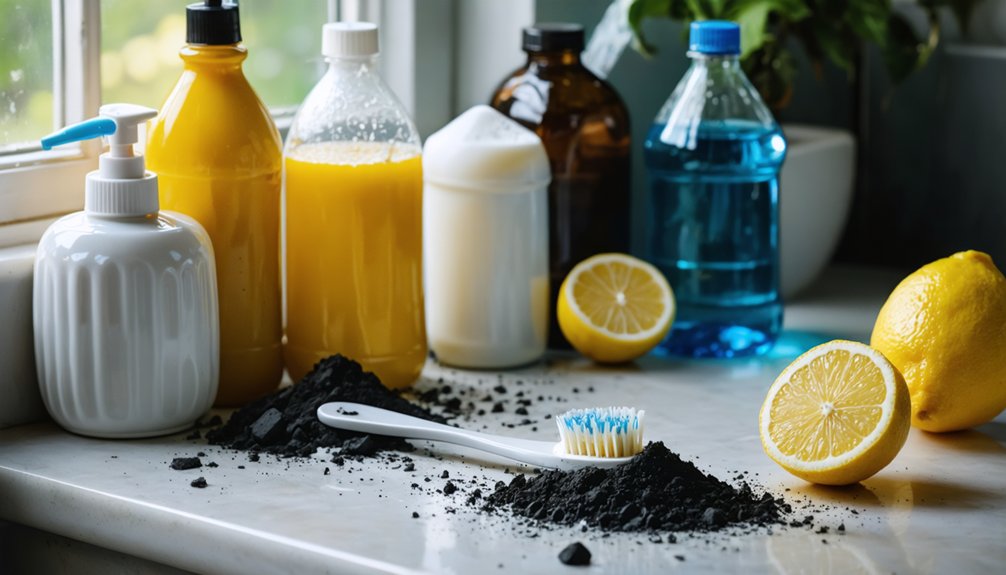
Although it’s tempting to reach for quick, inexpensive fixes, several popular DIY whitening methods actively harm your enamel rather than restore it.
Not all DIY whitening methods are created equal — some cause far more harm than good.
Lemon juice, apple cider vinegar, and orange juice are frequently promoted as natural remedies, but their high acidity erodes enamel permanently. Once that protective layer thins, your teeth become more vulnerable to staining and sensitivity — the opposite of your goal.
Activated charcoal carries serious abrasive risks. Dental sources consistently flag it for wearing down enamel surfaces over repeated use.
Similarly, brushing immediately after consuming acidic foods softens enamel further, compounding the damage.
These methods may produce minor short-term visual changes, but the structural cost isn’t worth it. Stick to evidence-backed approaches and consult your dentist before experimenting with any unverified whitening technique.
Do Over-the-Counter Whitening Products Actually Work?
Once you’ve ruled out the methods that do more harm than good, over-the-counter whitening products become a far more practical starting point. Unlike unreliable natural remedies or risky home ingredients, these products contain clinically tested peroxide concentrations designed for controlled results.
Used exactly as directed, they deliver measurable improvement within roughly two weeks. Here’s what works:
- Whitening strips target mild to moderate extrinsic stains using peroxide-based formulas
- Whitening toothpaste gradually polishes surface discoloration through daily use
- OTC whitening kits offer structured treatment cycles for more consistent outcomes
- Peroxide rinses provide supplemental support when used occasionally and carefully
These options give you direct control over your results. For deeper or resistant discoloration, professional bleaching remains the most reliable next step.
When Does Tooth Staining Require Professional Whitening?

Over-the-counter products handle surface stains well, but they hit a clear ceiling when discoloration runs deeper. If you’re dealing with intrinsic staining rooted in genetic predisposition, certain medical conditions, or long-term antibiotic exposure, store-bought kits won’t deliver meaningful results. These cases demand clinical intervention.
Surface stains yield to store-bought solutions — deeper discoloration demands professional intervention.
Professional bleaching penetrates deeper enamel layers, while laser whitening, veneers, and crowns address resistant or structural discoloration that no home remedy can correct. If stains persist after two consistent weeks of OTC treatment, that’s your signal to escalate.
Don’t waste time cycling through ineffective products. Identify the source of your discoloration, consult a dental professional, and pursue targeted treatment.
Precision beats guesswork when you’re serious about reclaiming control over your smile.
How to Keep Your Teeth Whiter Between Dental Visits
Keeping your teeth white between visits comes down to consistent, targeted habits rather than reactive fixes. You control enamel health daily through deliberate choices that prevent stains from setting in.
Prioritize these four protective actions:
- Rinse immediately after coffee, tea, wine, or soda to remove pigments before they bond to enamel
- Use a straw for dark beverages to minimize front-tooth contact
- Brush twice daily with fluoride toothpaste and floss to eliminate plaque-related discoloration
- Apply natural remedies sparingly, such as baking soda paste, to lift mild surface stains without compromising enamel health
Avoid prolonged sipping, limit acidic foods, and wait 30–60 minutes before brushing after acidic exposure.
These habits compound over time, delivering measurable, lasting brightness.
Frequently Asked Questions
Can Certain Medications Cause Tooth Staining That Whitening Cannot Fix?
Coincidentally, just as you’re mastering natural stain removal, medication side effects can cause intrinsic discoloration—tetracycline and fluorosis stain dentin deeply. You’ll likely need veneers or crowns, since whitening can’t reverse these embedded stains.
Does Teeth Whitening Work on Dental Crowns, Veneers, or Fillings?
Whitening won’t change the color of your crowns, veneers, or fillings. You’ll need a dentist consultation to evaluate your treatment options, ensuring all restorations match your newly whitened natural teeth effectively.
How Does Pregnancy Affect Tooth Color and Safe Whitening Options?
Like tides shifting the shore, pregnancy reshapes your oral health. Hormonal changes can darken your teeth, but you’ll want to pause whitening treatments. Stick to pregnancy dental care basics until you’ve delivered—safe whitening methods resume postpartum.
Are Whitening Results Permanent or Do Teeth Restain Quickly Afterward?
Whitening results aren’t permanent—you’ll restain quickly without long-term maintenance. Natural remedies help minimally, but you must rinse after staining foods, brush consistently, and schedule professional cleanings to sustain your results and stay ahead of discoloration.
Is Tooth Sensitivity After Whitening Treatments a Sign of Damage?
Like tiny nerve endings exposed to a cold breeze, whitening sensitivity signals temporary irritation, not damage. Your tooth enamel isn’t harmed if you follow directions, but overuse can cross the line into real risk.
References
- https://www.medicalnewstoday.com/articles/322421
- https://azdentist.com/conditions/stained-teeth/
- https://drchrisamott.com/natural-ways-to-remove-brown-tooth-stains/
- https://mypenndentist.org/dental-tips/2024/02/13/how-to-remove-stains-from-teeth/
- https://gentledental.interdent.com/resources/5-fixes-for-stained-teeth
- https://thedentistinlouisville.com/what-are-the-best-treatments-for-stained-teeth/
- https://thetealumbrella.ca/stained-teeth-ways-to-remedy-it/
- https://www.dentistsanfrancisco.com/how-to-clean-stained-teeth/