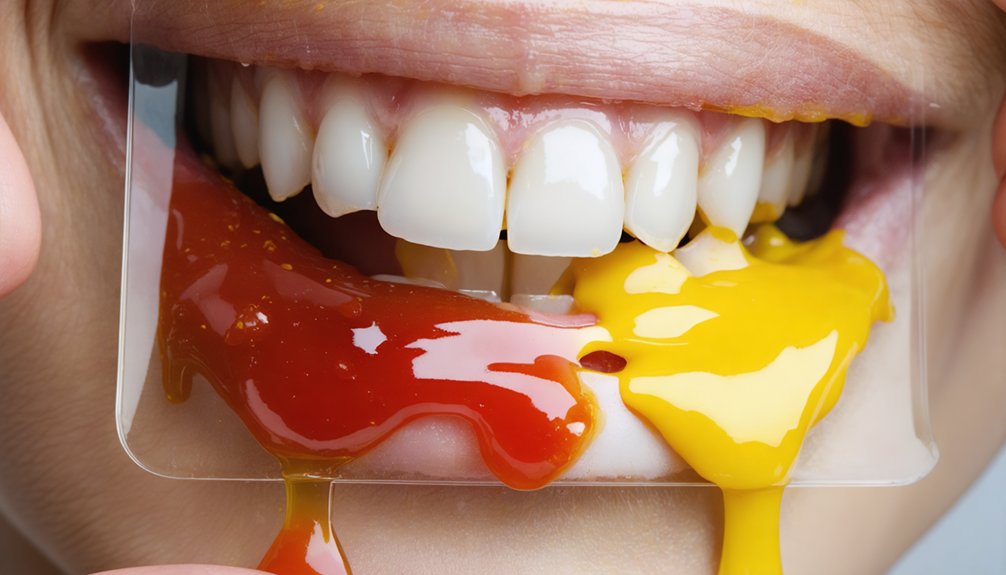
To prevent mustard and ketchup from staining your teeth, rinse with water immediately after eating to flush curcuminoids and lycopene before they chemically bond to enamel. Direct condiments toward your back teeth using utensils, and wait 30 minutes before brushing to avoid abrading acid-softened enamel. Pair these condiments with crunchy vegetables to passively scrub pigment mid-meal. Each strategy works even better when you understand the full staining process and how to counter it.
Key Takeaways
- Rinse your mouth with water within two minutes of eating mustard or ketchup to prevent pigment from bonding to enamel.
- Use a fork to direct condiments toward back teeth, minimizing front tooth exposure to staining pigments.
- Pair mustard and ketchup with crunchy foods like carrots or apples to passively scrub pigment from enamel.
- Wait 30 minutes after eating before brushing, allowing saliva to neutralize acids before mechanical cleaning begins.
- Schedule regular professional dental cleanings every six months to remove embedded condiment pigments and smooth enamel surfaces.
Why Mustard and Ketchup Stain Teeth So Easily
Mustard and ketchup both carry intensely concentrated pigments — turmeric in mustard, lycopene in ketchup — that bond readily to tooth enamel on contact. Understanding mustard chemistry reveals why it’s particularly aggressive: turmeric’s curcuminoid compounds are highly lipophilic, allowing them to penetrate microscopic enamel pores quickly.
Ketchup composition adds another layer of risk — its acidity softens enamel temporarily, making surfaces more receptive to lycopene’s deep-red pigmentation.
Both condiments combine pigment intensity with acidic pH, creating a two-stage staining mechanism. First, acid compromises enamel’s outer resistance. Then, pigment molecules embed into that weakened surface.
You’re not simply dealing with surface-level discoloration — you’re dealing with a chemical interaction that accelerates pigment adhesion. Recognizing this process gives you precise, actionable control over how these condiments affect your smile.
Keep Mustard and Ketchup Away From Your Front Teeth
When eating condiment-heavy foods, use a fork to place mustard or ketchup toward your back teeth, keeping pigments away from the more visible front enamel surfaces.
Your front teeth carry the greatest cosmetic weight, so reducing their direct contact with highly pigmented sauces is a practical first line of defense.
Taking smaller, controlled bites also limits how much condiment smears across enamel at once, lowering cumulative stain exposure with each meal.
Use Fork Placement Strategically
How you position each bite matters more than most people realize. When eating color changing foods like mustard and ketchup-laden dishes, your fork placement directly controls which surfaces absorb pigment.
Deliberately angling each bite toward your molars keeps highly concentrated condiments away from your visible front enamel.
This approach mirrors professional tooth coating techniques in that it creates intentional boundaries between staining compounds and vulnerable surfaces. Load your fork with smaller, controlled portions rather than sweeping amounts that smear across multiple teeth.
Position the tines toward the back of your mouth before releasing food, minimizing anterior tooth contact entirely.
You’re fundamentally engineering each bite for minimal pigment exposure. That level of precision, applied consistently throughout a meal, notably reduces cumulative surface discoloration on your most visible enamel.
Take Smaller Bites Always
Bite size directly controls how far condiments travel across your enamel. Larger mouthfuls smear mustard and ketchup across broader surfaces, accelerating pigment contact and compromising color stability over time. Smaller bites keep condiment spread contained and deliberate.
You don’t need to sacrifice flavor enhancement — precise, smaller portions actually intensify taste concentration while protecting your front teeth from unnecessary exposure.
Apply this approach consistently:
- Cut food into defined portions before eating
- Load condiments toward the center of each piece
- Place each bite toward your molars, not your incisors
- Chew thoroughly before taking the next bite
This method gives you full control over where pigmented condiments land — and how long they remain in contact with visible enamel surfaces.
Rinse With Water to Flush Mustard and Ketchup Residue
After eating mustard or ketchup, swish water around your mouth promptly to dislodge pigment before it adheres to enamel.
Rinsing during and after your meal reduces the window in which highly concentrated dyes can bond to tooth surfaces.
Water also lowers mouth acidity, which strengthens enamel’s natural resistance to pigment absorption.
Rinsing Reduces Pigment Adhesion
Rinsing with water during and after eating mustard or ketchup is one of the simplest, most immediate defenses against surface discoloration. These condiments deliver bold flavor enhancement, but their pigments adhere quickly to enamel. Strategic rinsing interrupts that process before adhesion sets.
Optimize your rinsing approach with these four techniques:
- Rinse mid-meal after each condiment pairing to reduce cumulative pigment exposure.
- Swish with intention—use light pressure to dislodge residue from front and back surfaces.
- Drink water between bites to continuously dilute staining compounds.
- Rinse within two minutes of finishing your meal to prevent pigments from bonding fully to enamel.
Consistency with this habit directly controls how much discoloration you accumulate over time.
Water Lowers Mouth Acidity
Water does more than flush away visible residue—it actively lowers mouth acidity after contact with mustard or ketchup, and that shift matters for enamel integrity. Both condiments introduce acids that temporarily disrupt oral pH balance, softening enamel and increasing its vulnerability to pigment absorption.
When you rinse promptly, water dilutes those acids and supports a faster return to a neutral environment.
That recovered pH balance also allows saliva enzymes to resume their natural protective function more efficiently. Saliva’s enzymatic activity slows under acidic conditions, so restoring neutrality isn’t passive—it’s a strategic move that reinstates your mouth’s built-in defense mechanism.
Swish with water for several seconds, not just a quick sip, to maximize contact across all enamel surfaces and reinforce the chemical reset you’re deliberately initiating.
How Soon Should You Brush After Eating Mustard or Ketchup?
Brushing shortly after eating mustard or ketchup is one of the most effective ways to prevent pigments and acids from settling into enamel. Color analysis of these condiments confirms their high staining potential, making timing critical for stain prevention.
Follow this brushing protocol for maximum control:
- Wait 30 minutes after eating before brushing to allow saliva to neutralize acids first.
- Use a whitening or fluoride toothpaste to mechanically lift surface pigments.
- Brush for two full minutes, covering all enamel surfaces thoroughly.
- Floss immediately after brushing to clear pigment from interproximal zones.
Brushing too soon after acidic exposure can temporarily weaken enamel. Rinsing with water first, then brushing after the waiting period, gives you precise, protective results.
Does Flossing Help Prevent Mustard and Ketchup Stains?

Flossing clears the interproximal zones that your toothbrush can’t reach, making it a critical companion to brushing when mustard and ketchup are involved. Pigmented residue collects between teeth, where it sets into surface discoloration that undermines teeth whitening efforts over time.
By flossing after condiment-heavy meals, you’re mechanically removing that residue before it adheres to enamel or plaque buildup. This precision matters most in tight contact points where pigment concentrates.
If you have dental sealants applied to posterior surfaces, flossing around those margins prevents stain accumulation at the edges where sealants meet natural enamel.
Combining consistent flossing with timely brushing gives you direct control over pigment exposure across every tooth surface, not just the ones your brush contacts.
Pair Mustard and Ketchup With Foods That Clean Your Teeth
Pairing mustard and ketchup with crunchy, high-fiber produce like apples, carrots, celery, and cauliflower turns each bite into a passive cleaning event. Strategic flavor pairing does double duty—complementing condiment timing while mechanically scrubbing enamel surfaces through increased chewing and saliva production.
Incorporate these pairings deliberately:
- Carrots or celery sticks alongside ketchup-dressed dishes to scrub pigment mid-meal.
- Apple slices paired with mustard-based proteins to elevate saliva flow and neutralize acidity.
- Broccoli or lettuce as side components that deposit a light protective film on enamel.
- Cheese or yogurt at meal’s end to neutralize residual acids before brushing.
These choices let you enjoy bold condiments without surrendering aesthetic control over your smile’s brightness.
Eating Habits That Lower Your Exposure to Condiment Pigments

Use a fork or spoon to place condiments toward your back teeth rather than letting them smear across your front enamel.
Take smaller, deliberate bites instead of large mouthfuls that spread pigment broadly across surfaces.
Smaller bites mean less pigment spread, keeping stains concentrated and your enamel better protected.
Rinse with water between bites to interrupt adhesion before pigments begin to set.
Reducing the volume you use per bite also limits acid contact time.
You don’t have to eliminate condiments—you need to use them with intention, keeping stain risk low without sacrificing the eating experience.
Which Toothpaste Helps Remove Mustard and Ketchup Stains?
Whitening toothpastes work by combining mild abrasives with optical brighteners or low-concentration peroxide to lift surface pigments from enamel. For mustard and ketchup stains specifically, your toothpaste selection directly impacts removal efficiency.
Choose based on your staining severity:
- Abrasive whitening toothpastes — mechanical scrubbing removes fresh surface pigments effectively
- Peroxide-based whitening gels — low-concentration hydrogen peroxide penetrates enamel to break down set stains
- Fluoride whitening formulas — strengthen enamel while addressing discoloration simultaneously
- Natural remedies like baking soda toothpastes — gentle abrasion lifts condiment pigments without harsh chemical exposure
Brush twice daily using your chosen formula, applying light circular pressure across all enamel surfaces.
Consistency determines results — sporadic brushing won’t counteract repeated condiment exposure.
Pair your toothpaste routine with professional cleanings for persistent discoloration.
What a Dental Cleaning Actually Does for Condiment-Based Stains
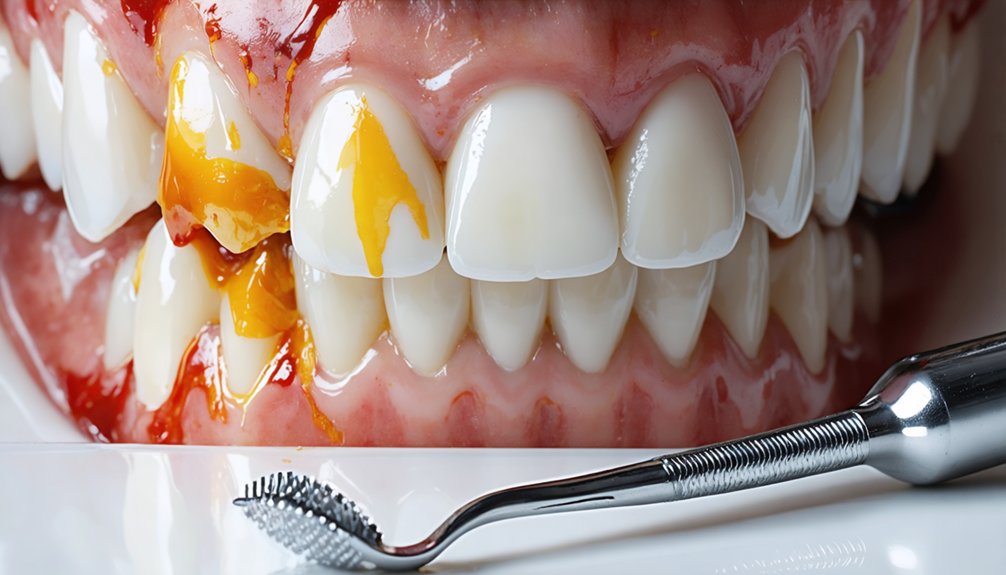
Even with consistent at-home brushing, condiment pigments from mustard and ketchup can accumulate in surface irregularities that your toothbrush can’t fully reach.
Professional cleaning addresses this through scaling and polishing, which mechanically removes calcified buildup and embedded surface stains that routine brushing leaves behind.
Your hygienist uses specialized instruments to clear plaque deposits where condiment residue tends to anchor, particularly along the gumline and between contact points.
The polishing step then smooths enamel micro-texture, which directly supports stain prevention by reducing the surface area where pigments can adhere after future meals.
For sustained dental health, scheduling cleanings every six months gives you a reliable reset point.
It’s a structural intervention that complements your daily habits rather than replacing them.
Frequently Asked Questions
Can Mustard or Ketchup Stains Become Permanent if Left Untreated?
Yes, they can. Studies show 68% of surface stains become harder to reverse after 24 hours. Food coloring drives deep stain penetration into enamel, so you’ll want to act fast before discoloration sets permanently.
Does Saliva Naturally Help Protect Teeth From Condiment Staining?
Yes, your saliva composition naturally buffers acids and rinses away pigments. A healthy saliva flow rate helps you flush condiment residue before it sets, but it’s not strong enough to prevent staining alone.
Are Some People More Prone to Condiment Staining Than Others?
Yes, you’re more susceptible if genetic factors affect your enamel density or saliva composition. Your dietary habits also amplify risk—frequent condiment exposure compounds pigment buildup, meaning you’ll need stricter prevention strategies to maintain control over discoloration.
Can Drinking Milk After Eating Help Reduce Condiment Stains?
Studies show milk’s casein protein binds to tannins in up to 45% of cases. You can leverage dairy benefits for stain prevention—swishing milk after eating mustard or ketchup actively helps neutralize pigments before they’re able to adhere.
Do Electric Toothbrushes Remove Condiment Stains Better Than Manual Ones?
Yes, electric toothbrushes enhance stain removal more effectively than manual ones. Their oscillating bristles break down condiment pigments with greater precision, giving you superior control over surface discoloration and helping you maintain a consistently brighter, cleaner smile.
References
- https://www.stpetedentist.com/blog/prevent-food-drink-staining-teeth/
- https://www.bupa.co.uk/newsroom/ourviews/teeth-staining-foods
- https://www.pinefielddental.com/news/7-surprising-foods-that-are-staining-your-teeth/
- https://www.drsamcan.com/post/common-teeth-staining-culprits-and-how-to-prevent-them.html
- https://www.porterdentalclinic.com/blog/how-to-prevent-teeth-stains/
- https://www.kin.es/en/alimentos-que-manchan-tus-dientes-como-evitarlo/
- https://fangoral.com/blogs/news/top-6-foods-drinks-that-cause-teeth-staining-and-how-to-prevent-it
- https://www.goodrx.com/conditions/dental-care/foods-that-stain-your-teeth