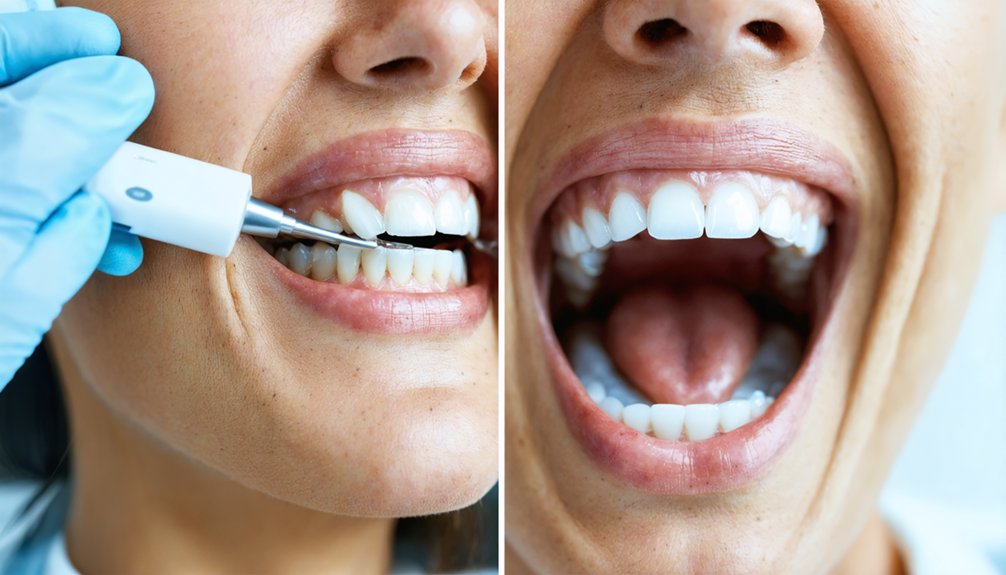
At-home whitening kits can lighten your teeth by one to two shades, but your results depend on peroxide concentration, delivery format, and stain type. Hydrogen peroxide and carbamide peroxide disrupt discoloration bonds in your enamel, while tray-based systems outperform strips by ensuring precise gel contact. You’ll need to manage sensitivity risks and maintain results through consistent touch-ups. The specifics of concentration, format selection, and side effect prevention are worth understanding before you start.
Key Takeaways
- Custom trays fitted by dentists outperform strips by ensuring precise gel placement, consistent coverage, and better control over contact time.
- Carbamide peroxide formulas between 12% and 15% are recommended for overnight wear, balancing effectiveness with enamel safety.
- At-home kits typically lighten teeth one to two shades; results depend on stain origin and natural tooth color.
- Manage sensitivity by using potassium nitrate rinses two weeks before treatment and fluoridated rinses afterward.
- Whitening results last months to over a year; avoid coffee, tea, and red wine to extend brightness.
Do At-Home Whitening Kits Actually Work?
At-home whitening kits do work, but their effectiveness depends on the active ingredients, concentration levels, and product format you choose. Hydrogen peroxide and carbamide peroxide drive the chemical oxidation that disrupts discoloration bonds within enamel. Kits typically lighten teeth one to two shades, a result influenced by stain origin and your natural tooth color.
Dismissing whitening myths matters here — strips aren’t universally ineffective, but they deliver variable results compared to tray-based systems, which provide superior gel contact and precision.
Treatment frequency is equally critical; excessive application damages enamel and triggers permanent sensitivity. You control outcomes by selecting the correct concentration, adhering to wear-time guidelines, and maintaining consistent oral hygiene. Strategic, disciplined use separates meaningful results from wasted effort.
What Peroxide Concentration Should You Actually Use?
Choosing the right peroxide concentration determines whether you get results or damage your enamel in the process. Concentration guidelines exist for a reason—ignore them and you risk permanent sensitivity.
For extended overnight wear, select formulas between 12% and 15% carbamide peroxide. These lower concentrations maintain peroxide safety while sustaining prolonged enamel contact without causing tissue irritation.
For faster results, higher concentrations reaching 20% deliver visible changes within 30 minutes, but you’ll need to strictly limit wear time. Gradually increase duration as your tolerance builds.
Carbamide peroxide breaks down into hydrogen peroxide, so even modest percentages generate meaningful oxidation activity.
Match your concentration choice to your sensitivity threshold, not your impatience. Precision here protects your enamel while maximizing the whitening outcome you’re targeting.
Custom Trays vs. Strips: What Dentists Recommend
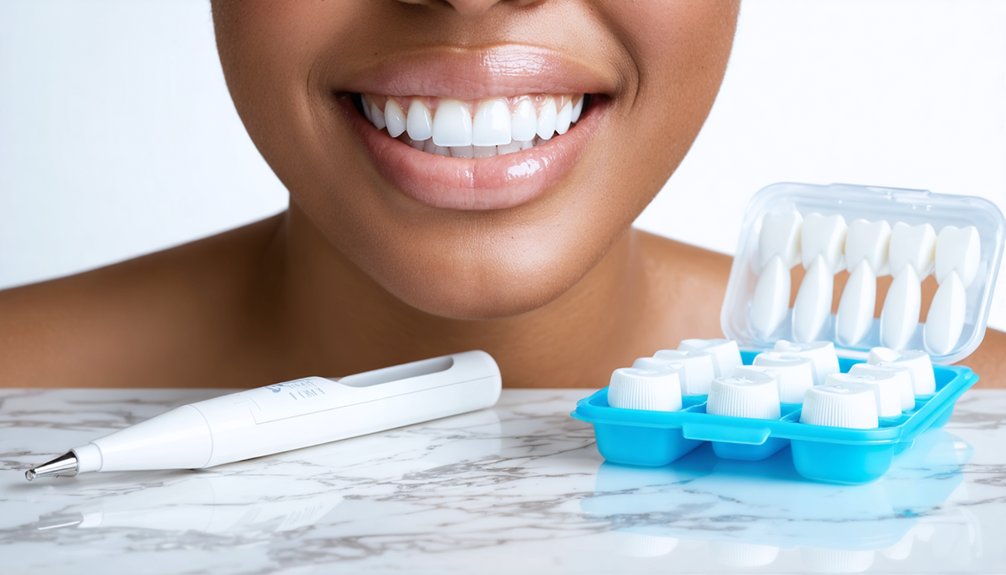
Once you’ve locked in the right concentration, delivery method determines how effectively that gel actually contacts your enamel. Custom trays, fitted by your dentist, position gel precisely against tooth surfaces while minimizing leakage onto gum tissue. That controlled placement translates directly into more consistent, uniform results.
Whitening strips, by contrast, deliver variable outcomes. Specialists characterize them as “hit or miss” because their one-size design can’t conform reliably to individual tooth geometry. Gel migrates, coverage gaps form, and results suffer accordingly.
If you’re serious about outcome precision, custom trays are the clinically superior choice. They put you in control of both gel concentration and contact time.
Strips offer convenience, but convenience doesn’t guarantee efficacy—and when you’re targeting specific stain patterns, placement accuracy matters more than portability.
How Long Do At-Home Whitening Results Last?
Results from at-home whitening kits typically last anywhere from a few months to over a year, depending on stain cause, product concentration, and your daily habits.
Yellow-hued natural enamel responds well but requires consistent whitening maintenance tips to sustain brightness. Stain bonds reform over time, so periodic touch-ups with your original product concentration prevent regression without damaging enamel structure.
Implementing stain prevention strategies directly extends your results. Eliminate coffee, tea, and red wine consumption within 24 hours post-treatment, and maintain twice-daily brushing with flossing to reduce surface stain accumulation.
Desensitizing toothpaste manages sensitivity during scheduled touch-up cycles. You control longevity by treating whitening as an ongoing protocol rather than a single intervention—disciplined maintenance preserves your results far longer than any single application achieves independently.
Side Effects to Know Before Starting At-Home Whitening
Sustaining your whitening results demands consistency, but before committing to any regimen, you need to understand the side effects that peroxide-based products can produce.
Hydrogen peroxide penetrates enamel to oxidize stain bonds, but that same chemical action can trigger temporary tooth sensitivity and gum irritation.
Sensitivity management starts before treatment: use potassium nitrate rinses for two weeks prior to your first application.
Avoid brushing immediately after whitening — wait at least one hour to prevent enamel abrasion.
Enamel protection post-treatment requires fluoridated rinses to stabilize the enamel structure.
Excessive application frequency compounds these risks, potentially causing permanent sensitivity.
Monitor your response to concentration levels carefully, and reduce wear time if irritation persists.
You control the variables; use that control precisely.
Frequently Asked Questions
Can Whitening Pens Effectively Treat Localized Discoloration Spots on Teeth?
Like a scalpel in a surgeon’s hand, whitening pens offer precise localized treatment for discoloration spots. You’ll find pen effectiveness ideal for targeting specific areas, delivering controlled peroxide application exactly where you need it most.
Should You Use Potassium Nitrate Rinses Before Starting Whitening Treatments?
You should use potassium nitrate rinses for two weeks before whitening treatment preparation. The potassium nitrate benefits your enamel by considerably reducing sensitivity risks, ensuring you’re maximizing control over your whitening outcomes effectively.
How Soon After Whitening Can You Safely Consume Coffee or Tea?
Wait at least 24 hours after your whitening duration ends before consuming staining foods like coffee or tea. You’ll protect your enamel and prevent new discoloration from bonding to freshly treated tooth surfaces.
Does Brushing Immediately After Whitening Sessions Damage Your Enamel?
You’re practically scrubbing away mountains of enamel! Avoid brushing immediately after whitening sessions — wait at least one hour for enamel protection. Managing whitening frequency alongside post-treatment care prevents irreversible sensitivity and preserves your enamel’s structural integrity long-term.
Can Desensitizing Toothpaste Reduce Discomfort During Frequent Whitening Sessions?
Yes, desensitizing toothpaste can reduce your discomfort during frequent whitening sessions. Its desensitizing agents actively block pain signals in exposed tubules, letting you manage whitening frequency confidently without sacrificing enamel comfort or compromising your treatment protocol.
References
- https://www.forbes.com/sites/forbes-personal-shopper/article/best-teeth-whitening-kit/
- https://www.indy100.com/wishlist/at-home-teeth-whitening-best-kits-reviews-dentists-recommend-9561866
- https://www.yahoo.com/lifestyle/this-is-the-best-way-to-whiten-your-teeth-at-home-according-to-dentists-162037024.html
- https://www.elle.com/beauty/health-fitness/g63920540/best-at-home-teeth-whitening/
- https://www.gentledental.com/resources/articles/teeth-whitening-products
- https://www.newbeauty.com/best-at-home-teeth-whitening-products/
- https://www.goodhousekeeping.com/health-products/g28723133/best-at-home-teeth-whitening-products/
- https://www.nbcnews.com/select/shopping/best-home-teeth-whitening-products-ncna1253852
- https://www.infodentis.com/cosmetic-dentistry/best-at-home-teeth-whitening-products.php
- https://www.nbcnews.com/select/shopping/best-at-home-teeth-whitening-products-rcna201604