Home teeth whitening kits are recommended because they’re affordable, convenient, and clinically supported. You can whiten during your daily routine without scheduling clinic visits, and ADA-approved formulas with hydrogen or carbamide peroxide deliver real results — typically one to two shades of improvement within weeks. They cost a fraction of professional treatments, ranging from $20 to $100. If you want to know which kit works best for your specific situation, there’s a lot more to uncover.
Key Takeaways
- Home whitening kits are cost-effective, ranging from $20 to $100, compared to professional treatments costing $300 to $1,000 per session.
- They offer convenience, requiring only 10 to 30 minutes per application and fitting seamlessly into daily routines.
- ADA-approved kits are clinically proven safe when instructions are followed, with millions of users utilizing them regularly.
- Active ingredients like hydrogen peroxide effectively remove surface stains, delivering one to two shades of improvement within weeks.
- Users control their treatment schedule without clinic visits, making whitening accessible and flexible for various lifestyles.
The Real Advantages of Whitening Your Teeth at Home
While professional whitening delivers faster, more dramatic results, at-home kits offer a compelling trade-off: meaningful improvement at a fraction of the cost. You gain at home convenience without scheduling appointments or commuting to a clinic.
That user flexibility lets you treat your teeth during dinner, a commute, or a lunch break.
Whiten your teeth during dinner, a commute, or a lunch break—on your schedule, not a clinic’s.
These cost effective solutions typically deliver one to two shades of improvement using ADA-approved active ingredients like hydrogen peroxide and carbamide peroxide. Clinical evidence confirms their safety when you follow instructions carefully, giving you genuine safety assurance.
Gradual improvement also reduces sensitivity risks common with high-concentration in-office treatments.
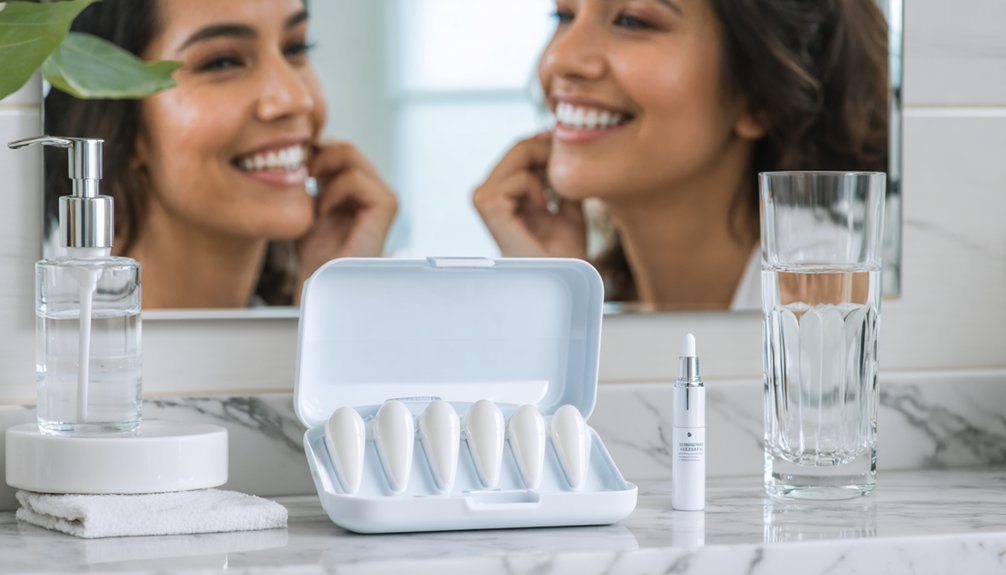
Product variety extends your control further. You can choose strips, custom trays, LED devices, or whitening pens based on your stain type, sensitivity level, and lifestyle demands.
The Real Cost Difference Between Home and Professional Whitening
When you choose an at-home whitening kit, you’re looking at a fraction of the cost compared to professional in-office treatments.
Professional whitening can run hundreds to over a thousand dollars per session, while home kits typically cost between twenty and one hundred dollars.
You’ll gain one to two shades of improvement at home versus up to eight shades professionally, but the savings are substantial if gradual results meet your needs.
Home Kit Savings
The price gap between professional whitening and at-home kits is significant. In-office treatments can cost hundreds to thousands of dollars per session, while budget-friendly home kits deliver results at a fraction of that expense.
You’re not sacrificing safety for cost savings—clinical studies confirm that ADA-approved at-home products are effective and safe when used correctly.
Professional treatments can lighten teeth up to eight shades, but home kits typically achieve one to two shades of improvement without requiring expensive appointments. You control the process, applying treatments on your schedule without clinic visits.
For maintaining results between professional cleanings, home kits offer a practical, evidence-backed solution. If dramatic results aren’t your priority, at-home whitening gives you measurable improvement while keeping your budget intact.
Professional Treatment Costs
Professional in-office whitening treatments typically run anywhere from $300 to $1,000 per session, with some advanced procedures pushing costs even higher depending on your location and provider.
That’s a significant investment, especially when results often require follow-up sessions to maintain. When you do a straightforward cost comparison, home kits deliver one to two shades of improvement at a fraction of that price.
You’re not just saving money—you’re keeping control over your timeline and budget. Professional treatment uses higher peroxide concentrations for faster, more dramatic results, but that speed comes at a steep premium.
For most people managing everyday surface stains, a quality at-home kit offers a practical, clinically supported alternative without the financial commitment that in-office procedures demand.
Are Home Teeth Whitening Kits Actually Safe to Use?
Safety is a reasonable concern when considering home teeth whitening kits, but current clinical evidence confirms these products are generally safe when you follow the instructions. Millions of users, including dental professionals, use these products regularly without increased cavity risk.
Ingredient transparency matters here — active ingredients like hydrogen peroxide and carbamide peroxide work through oxidation, and ADA-approved formulations meet established safety standards you can trust.
Some users experience temporary tooth sensitivity or mild soft tissue irritation, but these effects resolve on their own. You reduce those risks considerably by adhering to safety protocols, such as avoiding overuse and selecting concentrations appropriate for your sensitivity level.
When you stay informed and follow directions, home whitening kits deliver results without compromising your oral health.
Which Kit Format Works Best for Your Stain Type?
Choosing the right kit format depends entirely on what type of staining you’re dealing with. For surface stains from coffee or wine, standard whitening strips deliver reliable results through straightforward application methods.
The right kit format starts with identifying your stain type — surface discoloration responds well to standard whitening strips.
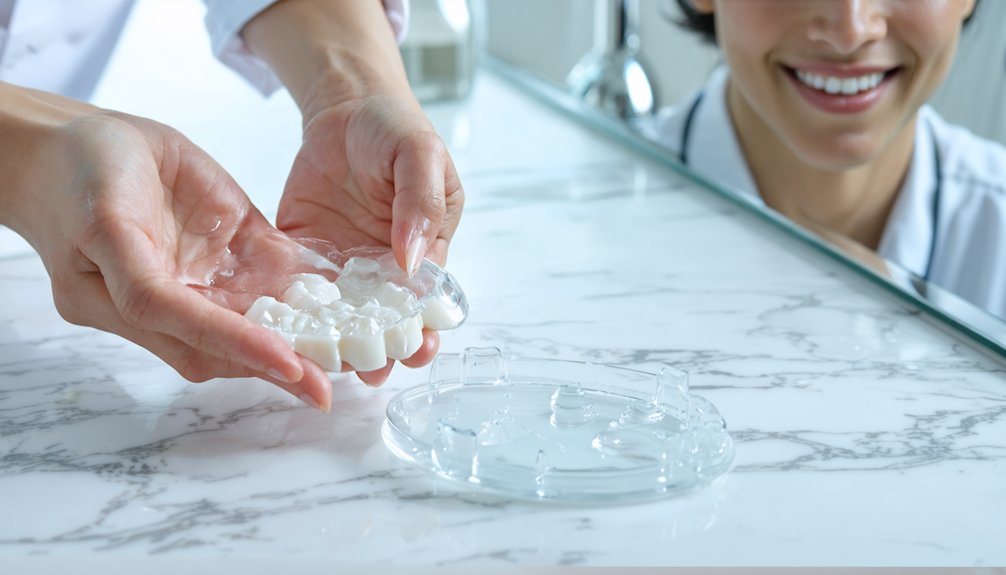
If you’re managing deeper discoloration, custom-fitted trays with carbamide peroxide offer better penetration and outperform basic store-bought options in direct product comparisons.
Sensitivity issues matter when selecting active ingredients. Peroxide-free formulas work better if your teeth react poorly to standard concentrations.
LED kits can enhance outcomes but only when paired consistently with peroxide gels.
Your user preferences should also guide format selection. Strips suit busy schedules, while trays demand more commitment.
For maintenance tips, combine your chosen kit with whitening toothpaste and avoid stain-causing foods to extend results across all stain types.
What Results Can You Realistically Expect at Home?
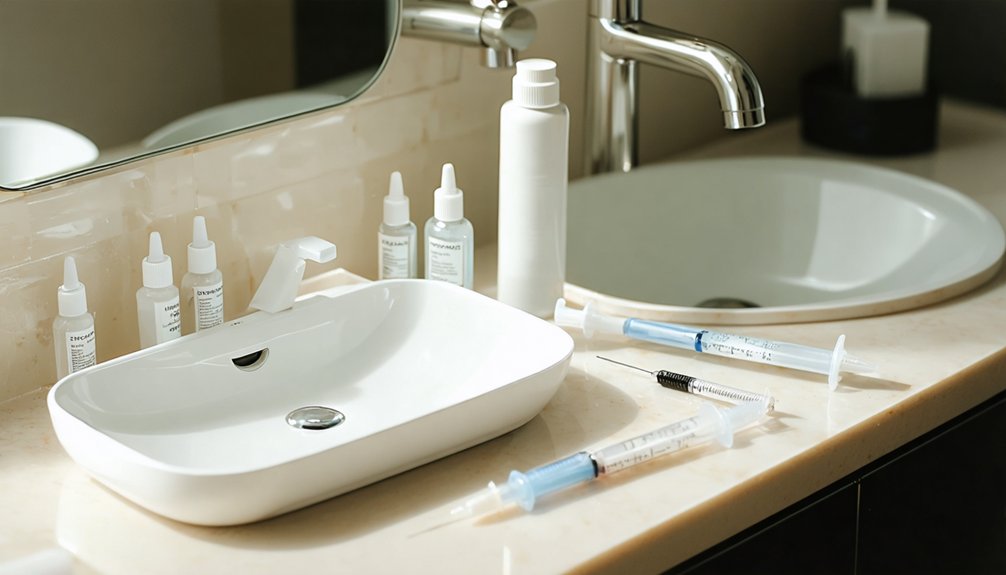
When using an at-home whitening kit, you can realistically expect one to two shades of improvement rather than the dramatic eight-shade results professional treatments deliver.
Most users see visible changes within two to three weeks of consistent daily application, depending on the product and stain type.
You’ll get the best outcomes by selecting a kit with proven active ingredients and committing to the full treatment cycle without skipping applications.
Realistic Shade Improvement
At-home teeth whitening kits typically deliver one to two shades of improvement, a modest but noticeable result compared to the eight shades professional in-office treatments can achieve. Your shade expectations should align with this reality before you begin.
Gradual improvement is the defining characteristic of home-based whitening, requiring consistent daily application over two to three weeks for visible results.
You’re trading speed for affordability and convenience, which suits your schedule and budget. Surface stains from coffee, tea, and wine respond best to standard strips and peroxide gels, making results more predictable.
If your discoloration runs deeper, professional take-home kits using carbamide peroxide deliver stronger outcomes than over-the-counter options. Understanding what your kit can realistically achieve helps you stay committed and measure progress accurately.
Timeline for Visible Results
Patience is your most important tool when using an at-home whitening kit. Timing expectations vary by product, but most users see gradual improvement within one to three weeks of consistent application.
Key factors shaping your timeline include:
- Stain type: Surface stains from coffee or wine respond faster than deep discoloration.
- Product strength: Higher peroxide concentrations accelerate results while lower concentrations protect sensitivity.
- Consistency: Daily application without skipping sessions determines how quickly shades shift.
Clinical evidence supports that home kits realistically deliver one to two shades of improvement over two to three weeks.
You control the pace by following instructions precisely and maintaining habits like avoiding stain-causing foods. Managing timing expectations upfront prevents frustration and keeps your whitening journey on track.
How Home Kits Fit Into Your Daily Routine
One of the biggest advantages of at-home whitening kits is how seamlessly they integrate into your existing routine. Whether you apply strips while cooking dinner, wear a tray during your evening wind-down, or use a whitening pen before bed, daily convenience is built into every format. You don’t need to rearrange your schedule or commute to a clinic.
This flexibility drives user empowerment. You decide when, where, and how often you treat your teeth, fitting sessions around work, family, and other commitments.
Most kits require only 10 to 30 minutes per application, two to three times weekly. Pair them with your electric toothbrush and whitening toothpaste for compounded results. Consistency, not complexity, is what delivers gradual, lasting improvement on your terms.
When Home Kits Won’t Give You the Results You Need
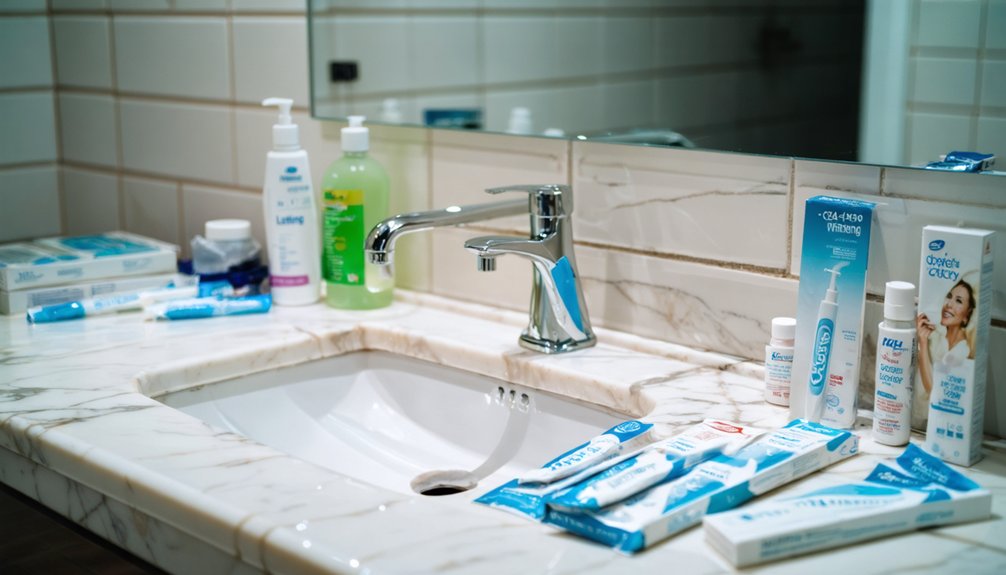
While at-home whitening kits deliver real results for many users, they’ve clear limitations of effectiveness you shouldn’t overlook.
Certain types of discoloration simply don’t respond to peroxide-based home treatments, no matter how consistently you apply them.
Home kits struggle with:
- Intrinsic stains caused by tetracycline antibiotics, fluorosis, or trauma, which originate beneath the enamel surface
- Gray or brown discoloration that oxidizing agents can’t effectively target at low concentrations
- Dental restorations like crowns, veneers, or bonding, which don’t whiten like natural enamel
If your staining falls into these categories, you need professional intervention.
A dentist can assess your specific discoloration type and recommend in-office treatments or custom professional-grade trays that deliver results home kits simply can’t match.
Frequently Asked Questions
Can Home Whitening Kits Damage Existing Dental Crowns or Veneers?
Home whitening kits won’t damage crowns or veneers, but you’ll notice crown sensitivity or veneer discoloration mismatch since peroxide doesn’t alter restorations. You should consult your dentist before starting treatment to guarantee color consistency.
How Long Do Home Whitening Results Typically Last Before Fading Occurs?
“Nothing lasts forever” — your home whitening results duration typically spans three to six months. You’ll maintain whitening effectiveness longer by avoiding stain-causing foods, using whitening toothpaste, and scheduling regular dental cleanings to sustain your brightened smile.
Are Home Whitening Kits Safe to Use During Pregnancy or Breastfeeding?
You shouldn’t use home whitening kits during pregnancy or breastfeeding due to safety concerns. Pregnancy effects and breastfeeding guidelines recommend avoiding peroxide exposure. Consult your dentist to protect your dental health and make an informed, controlled decision.
Can Children or Teenagers Safely Use Home Teeth Whitening Kits?
Want to protect your child’s smile? You shouldn’t use home whitening kits on children due to age recommendations suggesting 18+. Teenagers face heightened sensitivity concerns from developing enamel, so consult your dentist before considering any whitening treatment.
Do Home Whitening Kits Interact Negatively With Any Common Medications?
Home whitening kits don’t widely document medication interactions, but you should review safety guidelines carefully. If you’re taking blood thinners or immunosuppressants, consult your doctor before use to guarantee your whitening journey stays safe and controlled.
References
- https://www.forbes.com/sites/forbes-personal-shopper/article/best-teeth-whitening-kit/
- https://www.mydentistgrandprairie.com/blog/professional-take-home-kits-vs-store-bought/
- https://www.vogue.com/article/best-teeth-whitening-kits
- https://www.trysnow.com/blogs/news/best-at-home-teeth-whitening-kits
- https://www.salvatoredental.com/dental-services/blog/do-home-teeth-whitening-kits-work-which-ones-are-best
- https://www.advancedsmilesmarion.com/resources/best-at-home-professional-teeth-whitening-kit
- https://www.goodhousekeeping.com/health-products/g28723133/best-at-home-teeth-whitening-products/
- https://www.canada.ca/en/health-canada/services/healthy-living/your-health/lifestyles/safe-use-home-tooth-whitening-kits.html
- https://www.menshealth.com/health/g33486702/best-teeth-whitening-products-kit/
- https://deandentalsolutions.com/the-best-at-home-teeth-whitening-worth-trying/