When you drink carbonated beverages, carbonic and phosphoric acids lower your oral pH and dissolve hydroxyapatite crystals in your enamel. This demineralization creates microscopic pores that trap chromogens, artificial dyes, and pigmented compounds at a structural level. Bacterial acids from sugar metabolism compound this erosive damage, deepening surface porosity and intensifying discoloration. Standard brushing can’t reverse this structural compromise. Understanding each mechanism gives you the clearest path toward protecting your teeth.
Key Takeaways
- Carbonated drinks form carbonic acid, lowering oral pH and dissolving hydroxyapatite crystals, which erodes enamel and increases surface porosity.
- Eroded, porous enamel allows chromogens and artificial dyes to penetrate deeper, causing discoloration that standard brushing cannot remove.
- Artificial dyes in sodas bond electrostatically to exposed enamel proteins, creating stains resistant to standard cleaning methods.
- Sugar in carbonated drinks fuels bacterial acid production, compounding enamel erosion and amplifying chromogen retention and staining.
- Repeated soda exposure progressively widens enamel micropores, intensifying pigment infiltration and making discoloration increasingly difficult to reverse.
How Does Carbonation Damage Your Enamel and Cause Staining?
When carbonated drinks contact your teeth, the dissolved carbon dioxide reacts with water to form carbonic acid, immediately lowering the oral pH and initiating enamel demineralization.
This acid drives enamel erosion by dissolving hydroxyapatite crystals, the mineral matrix that gives enamel its hardness and density.
Once erosion progresses, your enamel’s surface becomes increasingly porous, creating microscopic channels where chromogens and artificial dyes penetrate deeply.
Eroded enamel becomes a sponge for stains, letting chromogens and dyes seep into microscopic channels beneath the surface.
You can’t reverse this structural compromise through standard brushing.
Dark sodas compound the problem by delivering pigmented compounds directly onto acid-weakened surfaces, accelerating discoloration.
Each exposure cycle softens enamel further, allowing greater chromogen retention over time.
Understanding this mechanism gives you the precise knowledge needed to make deliberate choices that protect your enamel from progressive, cumulative damage.
Why Soda-Damaged Enamel Absorbs Stains So Easily?
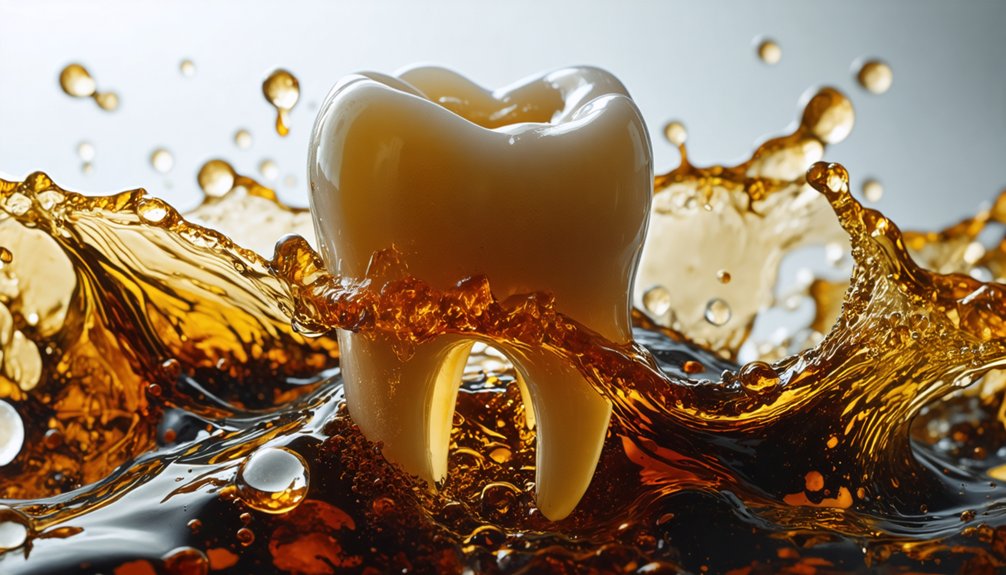
Once carbonic and phosphoric acids dissolve hydroxyapatite crystals from your enamel’s surface, they leave behind a microscopically roughened, porous matrix that functions like a sponge for chromogens and artificial dyes.
This increased enamel porosity fundamentally alters how your teeth interact with pigmented compounds. Instead of sliding off an intact, smooth surface, chromogens from dark colas and artificial dyes penetrate the compromised matrix and bind at a structural level.
These staining mechanisms operate cumulatively. Each soda exposure widens existing micropores, allowing deeper chromogen infiltration during subsequent consumption.
Bacterial acid byproducts from sugar metabolism further degrade the surface, compounding porosity. Over time, brownish and yellowish pigments become embedded within the weakened crystalline lattice, making surface-level removal increasingly difficult and requiring professional intervention to address the structural discoloration effectively.
How Dyes and Dark Pigments Stick to Your Teeth?
Artificial dyes and dark chromogens bond to eroded enamel through electrostatic attraction and physical entrapment within the compromised surface matrix. Once acid weakens your enamel, dye adhesion accelerates greatly. Understanding this mechanism gives you control:
- Phosphoric and citric acids open microscopic pores, creating entrapment sites for pigmented molecules.
- Yellow and brown cola dyes carry ionic charges that bind electrostatically to exposed enamel proteins.
- Pigment retention intensifies as repeated soda exposure deepens surface porosity over time.
- Dark chromogens from cola beverages penetrate demineralized zones, producing brownish-yellow discoloration resistant to standard removal.
Your enamel’s structural integrity directly determines staining severity. Compromised surfaces don’t passively discolor—they actively accumulate pigmented compounds through measurable chemical and physical bonding mechanisms you can interrupt with deliberate behavioral adjustments.
Does Sugar in Soda Cause Staining or Just More Enamel Damage?
Sugar doesn’t directly stain your teeth, but it triggers a destructive cascade that makes staining far worse.
When you consume soda, oral bacteria metabolize its high fructose corn syrup through sugar metabolism, producing lactic and acetic bacterial acids as byproducts. These acids compound the erosive damage already initiated by phosphoric and carbonic acid in the drink itself.
The result is accelerated enamel demineralization, creating deeper surface porosity than acid alone would generate. Your enamel becomes increasingly compromised, absorbing chromogens and artificial dyes more aggressively.
Sugar’s role isn’t direct discoloration — it’s structural destruction that amplifies staining potential. You’re fundamentally dealing with a dual mechanism: chemical erosion from the beverage itself, followed by bacterially driven acid production prolonging and intensifying enamel vulnerability.
How to Drink Soda Without Staining Your Teeth?
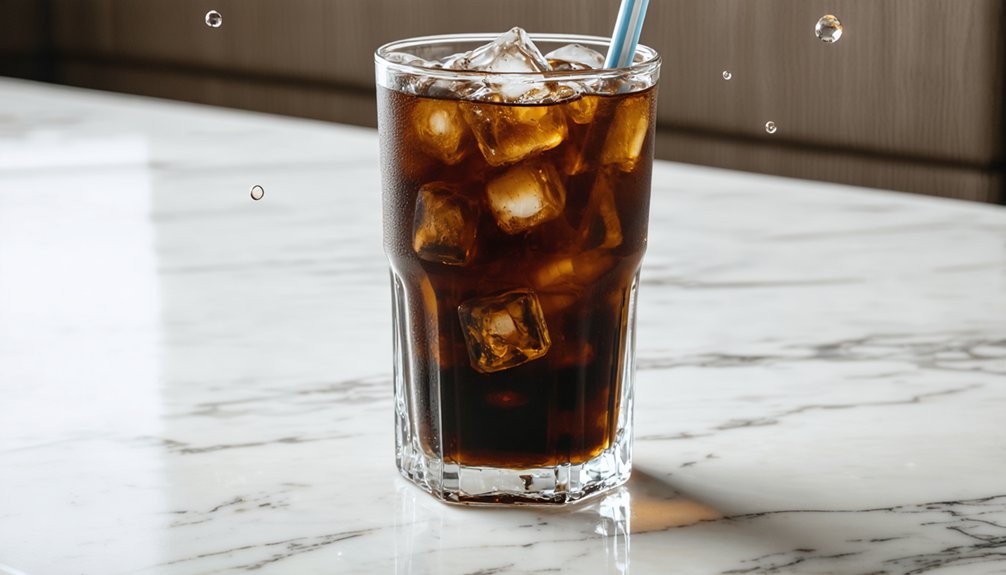
Understanding how sugar amplifies enamel vulnerability shifts the focus toward practical harm reduction strategies. You can minimize staining and erosion by implementing evidence-based behavioral modifications during soda consumption.
Knowing how soda damages enamel empowers smarter drinking habits that actively reduce staining and erosion risk.
- Use a straw — redirects acidic and chromogen-laden liquid away from anterior tooth surfaces.
- Drink quickly — reduces total acid exposure time, limiting enamel softening and chromogen adhesion.
- Rinse with water immediately — neutralizes residual acids and dilutes pigmented compounds before absorption occurs.
- Wait 30 minutes before brushing — brushing softened enamel accelerates structural loss rather than preventing it.
Exploring soda alternatives like sparkling water supports enamel protection without sacrificing carbonation preference.
You retain control over discoloration risk by systematically reducing acid contact duration and chromogen concentration against vulnerable tooth surfaces.
Frequently Asked Questions
Can Carbonated Drinks Stain Dental Veneers or Crowns Like Natural Teeth?
Carbonated drinks can stain your veneers and crowns. For proper veneer care and crown maintenance, you’ll want to limit exposure, as chromogens and dyes adhere to restoration surfaces, causing discoloration over time.
Does Sparkling Water Cause the Same Discoloration as Flavored Sodas?
Sparkling water acidity won’t discolor your teeth like flavored soda ingredients do. You’re exposed to carbonic acid alone, lacking chromogens and dyes. It can soften enamel slightly, but it doesn’t produce the same staining mechanisms.
Are Certain People Genetically More Prone to Soda-Related Teeth Staining?
Genetics genuinely govern your vulnerability—you may carry a genetic predisposition toward heightened enamel sensitivity, making your teeth absorb chromogens faster. Thinner, more porous enamel accelerates soda-related staining, so you’ll want proactive preventive strategies.
Can Professional Whitening Treatments Reverse Stains Caused by Carbonated Drinks?
Yes, professional whitening treatments can reverse soda-induced stains, but whitening effectiveness depends on erosion severity. You’ll achieve better results by combining treatment with stain prevention strategies, like limiting carbonated drink exposure and rinsing afterward.
Do Carbonated Energy Drinks Stain Teeth More Severely Than Regular Sodas?
Yes, energy drinks stain your teeth more severely due to higher acidity levels and aggressive flavor additives. They erode enamel faster, increasing chromogen absorption and accelerating discoloration beyond what regular sodas typically cause.
References
- https://ijrar.org/papers/IJRAR19J3024.pdf
- https://pmc.ncbi.nlm.nih.gov/articles/PMC10096725/
- https://softouchdentalcare.com/blog/teeth-staining-soda-cola-and-other-carbonated-drinks/
- https://austincreekdental.com/blog/how-carbonated-beverages-affect-teeth/
- https://www.colgate.com/en-sa/oral-health/teeth-whitening/what-foods-stain-your-teeth
- https://pmc.ncbi.nlm.nih.gov/articles/PMC9683888/
- https://www.marzbandds.com/soda-cola-and-other-carbonated-drinks-and-teeth-staining/
- https://pmc.ncbi.nlm.nih.gov/articles/PMC12135410/
- https://softouchdentalcare.com/blog/why-does-soda-stain-teeth/
- https://www.mouthhealthy.org/nutrition/the-truth-about-sparkling-water-and-your-teeth