Red wine, coffee, tea, dark fruit juices, tomato-based sauces, and beetroot are among the top culprits for staining your teeth. These foods and drinks combine deep pigments, tannins, and acids that erode enamel and lock in discoloration over time. You can reduce staining by rinsing with water immediately after consuming them, using a straw, and incorporating whitening toothpaste. The sections below break down exactly why these stains form and how you can effectively prevent and remove them.
Key Takeaways
- Red wine causes significant staining through tannins, chromogens, and acids that erode enamel and lock deep pigments onto teeth surfaces.
- Tomato-based sauces, soy sauce, beetroot, and curries deposit heavy pigments onto enamel, especially when combined with acidic foods.
- Coffee, tea, and dark fruit juices contain tannins and concentrated pigments that adhere strongly to enamel over time.
- Rinsing with water immediately after consuming staining foods and beverages removes residual pigments before they penetrate enamel.
- Whitening toothpaste, peroxide-based treatments, and professional cleanings effectively remove surface and deeper stains caused by dark foods.
Foods and Drinks That Stain Teeth Like Red Wine
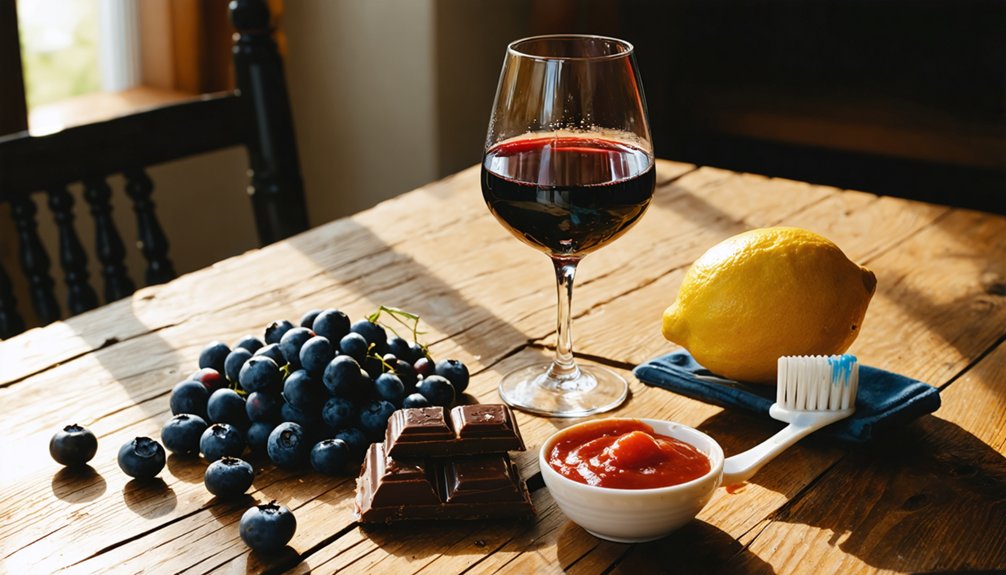
While red wine is the most well-known culprit for tooth discoloration, several other foods and drinks can leave your teeth just as stained. Tea, coffee, and dark fruit juices like cranberry, grape, and pomegranate cause significant pigment adhesion due to their tannins and concentrated color compounds.
Tomato-based sauces, soy sauce, beetroot, and curries also deposit heavy pigments onto enamel surfaces.
Acidic foods worsen the situation by triggering enamel erosion, which roughens the tooth surface and makes it easier for pigments to penetrate and linger. The combination of acidity and deep pigmentation creates the highest staining risk.
You can reduce your exposure by limiting portion sizes, rinsing with water immediately after eating, and identifying which foods most frequently affect your smile.
Why Red Wine Stains Your Teeth So Easily
Red wine stains teeth so easily because it contains three compounding agents: tannins, chromogens, and acidic compounds.
Red wine contains three compounding agents—tannins, chromogens, and acidic compounds—that make staining nearly unavoidable.
Together, they don’t just sit on your enamel—they break it down and embed color into it. Acidity increases enamel permeability, while tannins activate pigment adhesion by binding chromogens directly to tooth surfaces.
Here’s what’s working against you with every sip:
- Tannins act as adhesives, locking pigments onto enamel
- Chromogens are intensely colored compounds that penetrate weakened surfaces
- Acidic compounds erode enamel, making it more porous and receptive to staining
Frequency matters too. Regular sipping extends contact time, compounding the effect.
Understanding this process gives you the power to make smarter choices before, during, and after consumption.
How to Stop Wine and Dark Foods From Staining Teeth
Preventing stains from wine and dark foods comes down to a few consistent habits that interrupt the staining process before it sets in. Rinse with water immediately after consuming red wine, coffee, tea, or dark sauces to clear residual pigments before they bind to enamel.
Wait roughly an hour before brushing, since acidic foods temporarily soften enamel and brushing too soon increases erosion risk. Use a straw with dark beverages to reduce front-tooth exposure.
Strengthen your oral hygiene routines by incorporating whitening toothpaste that targets surface discoloration from chromogens and tannins.
On the dietary side, dietary modifications such as reducing sipping frequency and limiting portion sizes of high-pigment foods considerably lower cumulative stain buildup.
Consistent habits prevent discoloration more effectively than any corrective treatment applied afterward.
Lower-Risk Alternatives That Reduce Staining
Alongside those prevention habits, choosing lower-risk foods and drinks reduces your staining exposure before it starts. You don’t have to eliminate enjoyment — you just have to make smarter swaps that keep your enamel stronger and your teeth cleaner.
Consider these lower-risk alternatives:
- White wine or lighter beverages carry markedly less pigment than red wine, reducing visible discoloration.
- Milk-added tea or coffee binds tannins before they reach your enamel, lowering staining potential.
- Water remains your strongest after-drink rinse, clearing pigments without adding acid or color.
You can also support enamel strengthening through fluoride-based products and dietary supplements containing calcium and vitamin D.
Stronger enamel resists pigment penetration more effectively, giving you greater long-term control over discoloration.
How to Remove Wine Stains From Teeth
When wine stains have already settled on your teeth, you still have effective options for restoring brightness. Start with whitening toothpaste, which targets mild surface discoloration from wine, coffee, and tea.
For deeper staining, peroxide-based whitening treatments offer stronger results when used consistently and correctly.
Professional cleaning remains the most reliable stain removal technique, especially when buildup has accumulated over time. Your dentist can also assess whether discoloration reflects surface staining or underlying enamel erosion, which requires a different approach.
Supporting enamel remineralization through fluoride products strengthens weakened enamel, making teeth less vulnerable to future staining.
Don’t ignore persistent discoloration — it may signal enamel wear rather than simple pigment buildup. Acting early gives you greater control over long-term results.
Frequently Asked Questions
Can Genetics Make Some People More Prone to Tooth Staining?
Yes, your genetic predisposition can affect tooth enamel variability, making you more vulnerable to staining. If you’ve got naturally thinner or more porous enamel, you’ll want to rinse after staining foods and maintain consistent oral hygiene.
Does Drinking Red Wine Through a Straw Actually Prevent Staining?
Sipping strategically still subjects your smile to staining. Red wine through a straw reduces front-tooth contact, but it doesn’t eliminate risk. Straw usage helps minimize exposure, so combine it with water rinsing for stronger protection.
How Long Does Professional Whitening Last After Wine Stain Removal?
Professional whitening typically lasts six months to two years, but it’s up to you. Your dietary habits—limiting wine and dark foods—combined with consistent oral hygiene will substantially extend your results and keep stains from returning quickly.
Can Tooth Staining From Wine Affect Enamel Strength Permanently?
Wine doesn’t permanently weaken enamel, but repeated exposure erodes it over time. You can protect your strength by adjusting your dietary habits and maintaining consistent oral hygiene before irreversible damage occurs.
Are Certain Medications Known to Worsen Wine-Related Tooth Discoloration?
Yes, certain medications can worsen wine-related discoloration. Antihistamines, antihypertensives, and chemotherapy drugs affect dental health through dry mouth, accelerating staining. You’ll want to discuss medication interactions with your dentist to stay proactive.
References
- https://www.bupa.co.uk/newsroom/ourviews/teeth-staining-foods
- https://www.colgate.com/en-us/oral-health/teeth-whitening/how-to-avoid-red-wine-teeth-this-holiday-season
- https://familydentistottawa.com/7-foods-staining-teeth/
- https://crest.com/en-us/oral-care-tips/teeth-stains/20-foods-and-drinks-that-stain-your-teeth
- https://www.healthline.com/health/foods-that-stain-teeth
- https://pmc.ncbi.nlm.nih.gov/articles/PMC9683888/
- https://www.goodrx.com/conditions/dental-care/foods-that-stain-your-teeth
- https://www.lwdentist.com/20-foods-and-drinks-that-cause-stains-on-teeth/
- https://championdentistry.org/blog/top-foods-and-habits-that-stain-your-teeth-and-how-to-avoid-them
- https://advancedwhitening.com.au/blogs/oral-hygiene/foods-that-stain-teeth