To make an effective DIY whitening toothpaste, mix two parts baking soda with one part water and brush gently for two minutes, no more than twice weekly. It works by abrading surface stains from coffee, tea, and smoke — but it won’t touch deeper, intrinsic discoloration. Overuse risks irreversible enamel erosion. Keep your fluoride toothpaste in the daily rotation for cavity protection. There’s considerably more to get right if you want results without causing damage.
Key Takeaways
- Mix two parts baking soda with one part water, optionally adding a drop of peppermint oil for flavor, to create a basic whitening paste.
- For stronger whitening, combine one tablespoon baking soda with two tablespoons of 1–3% hydrogen peroxide and apply for no longer than one minute.
- Baking soda removes extrinsic surface stains through mild abrasion but cannot treat intrinsic discoloration caused by aging, medication, or trauma.
- Limit baking soda toothpaste use to twice weekly, brushing gently in circular motions for two minutes, then rinsing thoroughly.
- Continue daily fluoride toothpaste use alongside any DIY whitening routine, as baking soda mixtures provide no cavity protection.
How Baking Soda Actually Whitens Your Teeth
Baking soda whitens teeth through mild abrasion rather than any chemical bleaching process — it physically scrubs away surface stains from substances like coffee, tea, wine, and smoke. It also disrupts dental plaque buildup, which contributes to a cleaner appearance. You’re not changing your enamel’s underlying color; you’re removing what’s sitting on top of it.
Results depend on repeated, controlled use rather than a single application. Alternative ingredients like hydrogen peroxide can enhance surface stain removal, but they introduce additional risks if misused. Overuse of any abrasive formula accelerates enamel wear, which is irreversible.
Before committing to a DIY whitening routine, seek professional advice from your dentist — especially if you have existing enamel erosion, sensitivity, or restorations that abrasive pastes may damage.
Which Stains Respond Best to Baking Soda?
Baking soda works best on surface stains—the kind that build up from repeated exposure to coffee, tea, and wine. Its mild abrasive action scrubs away pigment deposits sitting on enamel.
But it can’t penetrate deeper discoloration caused by aging or medication. If your staining comes from daily beverages, you’re more likely to see a noticeable improvement than if your teeth are intrinsically discolored.
Surface Stains Only
Not all tooth discoloration responds equally to baking soda, and understanding the distinction can help you set realistic expectations. Baking soda targets extrinsic stains—surface-level discoloration caused by coffee, tea, wine, and smoke. Its mild abrasive action scrubs these deposits away without altering your enamel’s underlying color.
Intrinsic stains, however, originate within the tooth structure itself. Baking soda won’t reach them. If your discoloration stems from aging, medication, or trauma, you’ll need to explore professional whitening options that penetrate deeper than surface abrasion allows.
Before assuming alternative natural remedies will deliver comparable results, assess the actual source of your staining. Misidentifying the stain type leads to wasted effort and potential overuse.
When surface treatment isn’t enough, consulting a dental professional gives you the most controlled, effective path forward.
Coffee, Tea, Wine
Among the extrinsic stains baking soda addresses, coffee, tea, and red wine respond particularly well because they share a common mechanism: chromogens—deeply pigmented compounds—that bind to enamel‘s surface protein film rather than penetrating the tooth structure itself. These stain types sit within baking soda’s effective range. Here’s what you should know:
- Coffee deposits tannin-rich chromogens that accumulate with daily intake.
- Tea contains both tannins and polyphenols, creating stubborn surface discoloration.
- Red wine combines chromogens with acidic compounds that temporarily soften enamel.
- Smoke residue also responds well, though results vary by exposure duration.
Prioritize enamel health by limiting baking soda use to twice weekly. Acidic beverages already weaken enamel—aggressive scrubbing compounds that risk considerably.
The Basic Baking Soda Toothpaste Recipe
Making a basic baking soda toothpaste requires only two ingredients: baking soda and water. Combine two parts baking soda with one part water to form a thick, workable paste.
Apply it using a soft-bristled toothbrush and brush gently for two minutes using circular motions. Avoid scrubbing hard, as excessive pressure accelerates enamel wear.
Use a soft-bristled toothbrush, brushing gently in circular motions for two minutes to protect enamel from unnecessary wear.
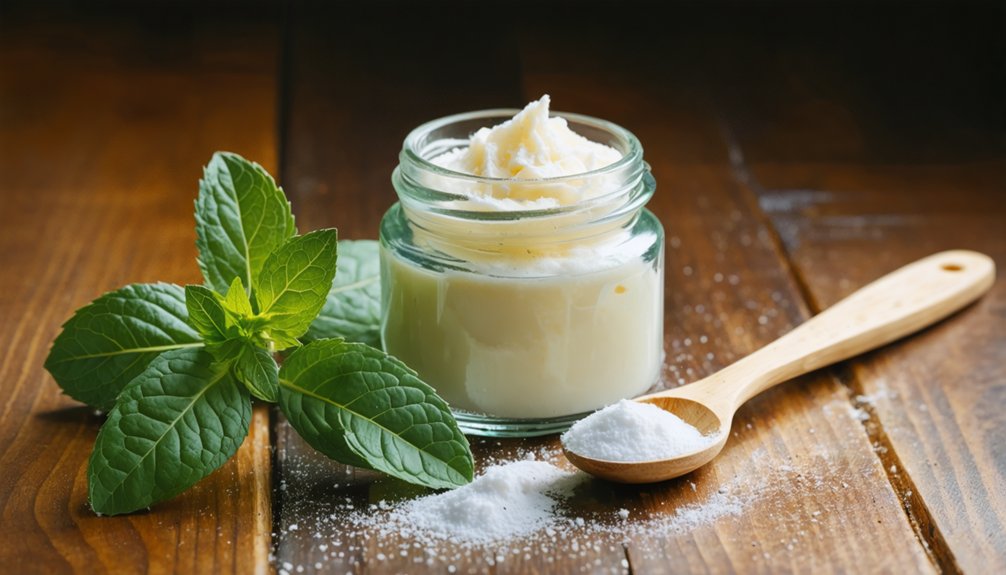
You can adjust flavor combinations by adding a drop of peppermint essential oil, which improves palatability without altering the abrasive mechanism.
For storage tips, transfer any prepared mixture into a small lidded jar and keep it in a cool, dry location. Discard unused paste within a few days to prevent contamination.
Limit use to twice per week maximum, and continue brushing daily with a standard fluoride toothpaste to maintain cavity protection.
How to Brush With Baking Soda Paste Correctly
Preparing the paste correctly only gets you halfway there—how you apply it determines whether you’re protecting or damaging your enamel. Improper technique accelerates dental erosion and worsens enamel sensitivity over time.
Follow these four application rules precisely:
- Use a soft-bristled toothbrush. Medium or hard bristles increase abrasion risk considerably.
- Apply gentle, circular motions for two minutes. Aggressive scrubbing doesn’t improve results—it causes damage.
- Limit sessions to twice weekly maximum. Frequency directly correlates with enamel wear progression.
- Rinse thoroughly afterward. Residual baking soda left on teeth continues abrading enamel between sessions.
You’re managing a mildly abrasive compound, not a gentle cleanser. Controlling pressure, duration, and frequency gives you whitening benefits without compromising structural integrity.
Adding Hydrogen Peroxide for Stronger Whitening
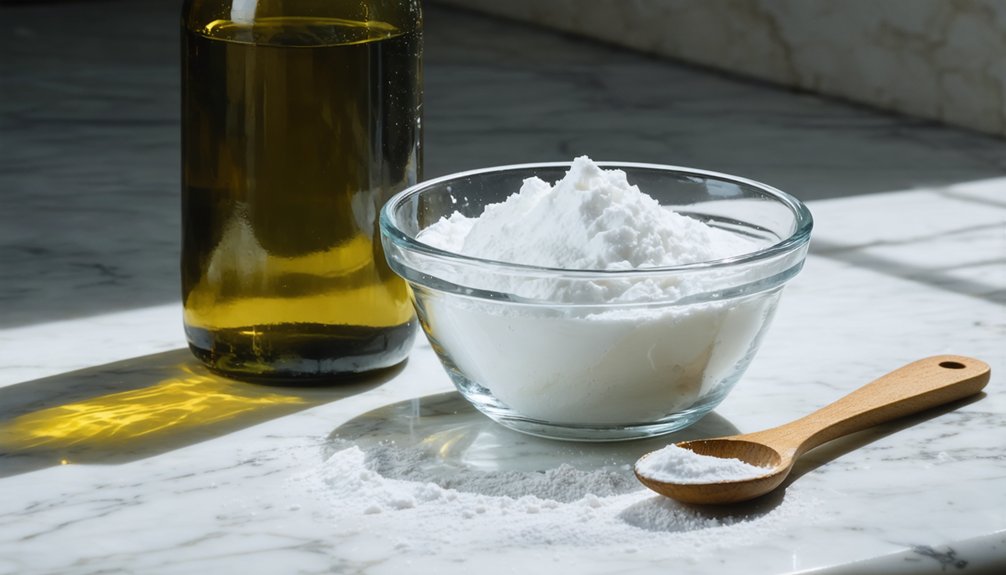
If you want stronger whitening results, you can combine 1 tablespoon of baking soda with 2 tablespoons of 1–3% hydrogen peroxide to form a paste.
Apply it for no longer than 1 minute before rinsing thoroughly, as extended contact may irritate soft tissues.
Limit use to once or twice per week to reduce the risk of enamel wear.
Peroxide Paste Basic Formula
For a stronger whitening effect, you can add hydrogen peroxide to your baking soda paste. This combination targets surface stain removal more aggressively than baking soda alone. Use only 1–3% hydrogen peroxide to minimize dental sensitivity risks.
Follow this basic formula precisely:
- Measure 1 tablespoon of baking soda into a small bowl.
- Add 2 tablespoons of 1–3% hydrogen peroxide gradually.
- Mix until you achieve a uniform paste consistency.
- Apply with a soft-bristled toothbrush, brushing gently for 1 minute, then rinse thoroughly.
Limit this method to once per week. Exceeding that frequency increases your risk of enamel wear and dental sensitivity. Continue using fluoride toothpaste regularly, as this paste doesn’t provide cavity protection.
Recommended Contact Time
After one minute, rinse completely and avoid eating or drinking acidic substances immediately afterward. Your enamel remains temporarily vulnerable post-application.
Controlling both application duration and your dietary habits directly following use reduces cumulative damage. Don’t assume longer contact means better results—it doesn’t.
Precision with timing protects your enamel while still allowing the peroxide mixture to address surface staining effectively.
Safety And Usage Limits
Controlling contact time is only one part of using peroxide-based whitening pastes safely—how often you use them matters just as much. Overuse compromises both ingredient safety and long-term dental health.
Follow these evidence-based limits:
- Use the paste no more than twice per week—some guidance restricts it to once weekly.
- Never substitute it for fluoride toothpaste—baking soda doesn’t protect against cavities.
- Apply only gentle pressure—aggressive scrubbing accelerates enamel wear regardless of frequency.
- Discontinue use if sensitivity increases—this signals potential enamel or gum irritation.
These boundaries aren’t arbitrary. Baking soda’s abrasiveness, combined with peroxide’s chemical action, creates cumulative risk when misused. Staying within recommended limits keeps you in control of your results without sacrificing structural tooth integrity.
Other DIY Variations: Coconut Oil, Clay, and More
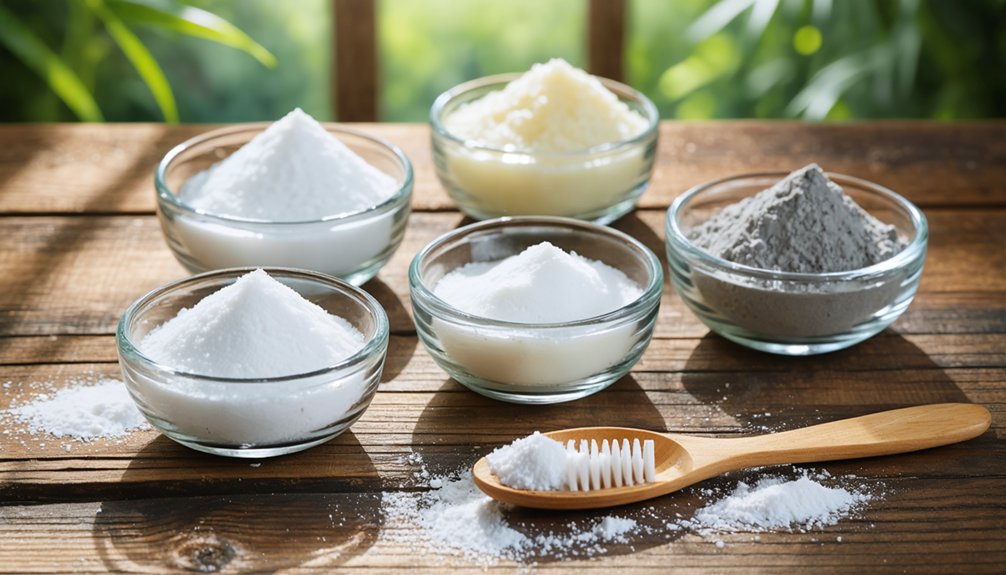
While baking soda and hydrogen peroxide form the foundation of most DIY whitening pastes, several recipes incorporate additional ingredients like coconut oil, bentonite clay, sea salt, xylitol, or peppermint essential oil. Each additive serves a specific purpose: coconut oil acts as a binding base, peppermint oil improves flavor, and xylitol may support bacterial reduction.
However, you should approach these variations carefully. Bentonite clay and sea salt introduce additional abrasives, which can compound risks of dental erosion when combined with baking soda. If you’re already experiencing tooth sensitivity, layering multiple abrasive agents increases potential damage to enamel.
Store any DIY mixture in a small, lidded jar and use it sparingly. These formulas remain cosmetic tools, not substitutes for clinically proven dental care products.
How Often Should You Use Baking Soda Toothpaste?
Because baking soda is mildly abrasive, you should limit its use to no more than twice per week. Overuse accelerates enamel wear, which you can’t reverse. Maintain control over your routine with these four guidelines:
Baking soda is mildly abrasive—limit use to twice weekly. Overuse causes irreversible enamel damage.
- Apply baking soda toothpaste one to two times weekly, never daily.
- Continue using fluoride toothpaste on all remaining brushing sessions to protect against cavities.
- Use dental floss daily, regardless of your whitening schedule, to remove plaque between teeth.
- Follow each session with a mouth rinse to clear residue and neutralize acidity.
These boundaries aren’t suggestions—they’re protective limits. DIY whitening targets surface stains only, and exceeding recommended frequency won’t improve results. It’ll compromise your enamel instead.
Signs You’re Using Baking Soda Too Aggressively
Even with a twice-weekly limit, you can still damage your enamel if you brush too hard or leave the paste on too long.
Watch for these warning signs of enamel erosion: increased tooth sensitivity to hot, cold, or sweet stimuli, a yellowish tint as dentin becomes exposed beneath thinning enamel, or visible surface roughness.
If your gums feel raw or bleed beyond what’s typical after dental flossing, aggressive brushing may be the cause. Reduce pressure immediately if you notice any of these signs.
Switch to a softer toothbrush, shorten contact time, and cut back frequency.
Persistent sensitivity warrants a dental consultation.
Cosmetic improvement isn’t worth compromising structural integrity—enamel doesn’t regenerate, making early recognition of overuse critical to long-term dental health.
When DIY Whitening Isn’t Enough on Its Own
Knowing when to stop is one part of safe DIY whitening—knowing when baking soda simply can’t do the job is the other. Surface stain removal has limits, and recognizing those limits protects you from chasing results that require professional intervention.
Seek dental care when you notice:
- Stains that persist after consistent, limited use—these may be intrinsic discoloration baking soda can’t reach.
- Sensitivity or visible enamel erosion, which signals structural damage requiring clinical assessment.
- Discoloration between teeth that dental floss and brushing together can’t address—a sign of decay or deeper staining.
- Yellowing that’s worsening despite correct technique.
DIY whitening handles cosmetic surface stains. It doesn’t treat decay, enamel erosion, or internal tooth discoloration. Continuing past these signs doesn’t give you control—it removes it.
Frequently Asked Questions
Can Children Safely Use Baking Soda Toothpaste for Whitening Purposes?
Carefully consider children’s safety before proceeding — you shouldn’t use baking soda for whitening effectiveness in kids. It’s too abrasive for developing enamel. Consult your pediatric dentist first to protect their dental health appropriately.
Does Baking Soda Toothpaste Interact Negatively With Dental Crowns or Veneers?
Baking soda’s abrasiveness raises dental crown compatibility concerns, as it can scratch surfaces. You should also note veneer staining concerns, since baking soda won’t whiten restorations, potentially creating visible color mismatches. Consult your dentist first.
How Should Baking Soda Paste Be Stored Between Uses Safely?
You might think any container works, but you’ll want airtight storage containers to prevent contamination. Shelf life is short — refrigerate your paste and discard it after one week to maintain safety and effectiveness.
Can Baking Soda Toothpaste Worsen Existing Tooth Sensitivity Over Time?
Yes, it can. If you overuse baking soda, you’ll gradually wear down tooth enamel, disrupting oral pH balance and exposing sensitive nerve pathways. Limit application to twice weekly to maintain protective enamel integrity.
Is Baking Soda Whitening Safe to Use During Pregnancy or Breastfeeding?
You shouldn’t assume baking soda whitening is risk-free; pregnancy safety and breastfeeding concerns warrant consulting your doctor first. Hydrogen peroxide, a common add-in, lacks sufficient evidence for safe use during these sensitive periods.
References
- https://www.armandhammer.com/en/articles/how-to-whiten-teeth-with-baking-soda
- https://www.healthline.com/health/baking-soda-toothpaste
- https://www.whitesandsdentistry.com/blog/natural-homemade-toothpaste
- https://draxe.com/beauty/homemade-baking-soda-toothpaste/
- https://www.youtube.com/watch?v=0QlPvTTskNM
- https://clubwhitesmile.com/effective-diy-toothpaste-with-baking-soda-for-whitening/
- https://www.youtube.com/watch?v=lMCj8fijgCw
- https://www.wikihow.com/Whiten-Teeth-With-Baking-Soda
- https://www.youtube.com/watch?v=AkxU84XTdzY
- https://www.freebiefindingmom.com/diy-teeth-whitening-baking-soda-toothpaste-recipe/