Mastering tetracycline teeth whitening requires understanding why these stains resist standard treatments. Because tetracycline bonds chemically within your dentin and enamel during tooth development, it creates intrinsic discoloration that ordinary whitening can’t dissolve. You’ll need custom trays, extended protocols spanning months, professional-strength peroxide, and disciplined dietary habits to achieve meaningful results. Sensitivity management and post-treatment care are equally critical to your success. The tips ahead will transform how you approach this challenging whitening journey.
Key Takeaways
- Custom trays with 10-16% carbamide peroxide outperform OTC products by ensuring consistent peroxide contact with stained dentin over months.
- Tetracycline stains require 3-12 months of consistent treatment; over 55% of lightening occurs within the first month.
- Combining in-office hydrogen peroxide sessions with extended at-home tray whitening yields stronger, more lasting results.
- Manage sensitivity proactively using potassium nitrate or fluoride gels before and after bleaching sessions.
- Severe dark blue-gray or banded stains rarely respond to bleaching and are better treated with veneers.
Why Tetracycline Stains Are Harder to Whiten Than Regular Discoloration
Tetracycline stains are uniquely difficult to treat because the antibiotic incorporates itself into the dentin and enamel structure during tooth development, making the discoloration intrinsic rather than a surface deposit you can simply scrub or dissolve away.
Unlike extrinsic stains, which diet modifications and routine cleaning can address, tetracycline pigment is chemically bonded within the tooth matrix. Over-the-counter whitening products can’t penetrate deeply enough to reach it effectively.
You’re dealing with structural discoloration, not surface buildup. Severe cases involving blue-gray or banded patterns respond especially poorly to bleaching.
Extended treatment timelines—often six months to a year—are standard, and enamel remineralization support becomes essential when prolonged peroxide exposure is involved.
Managing expectations from the start helps you pursue the right protocol without wasted effort.
How Severe Is Your Tetracycline Staining?
Before choosing a whitening approach, you need to identify where your staining falls on the severity scale.
Mild to moderate tetracycline staining typically presents as uniform yellow or light gray discoloration that responds more predictably to extended bleaching protocols.
Severe staining—characterized by dark blue-gray or banded pigmentation—often resists bleaching and may require veneers to achieve an acceptable cosmetic outcome.
Identifying Your Stain Level
Knowing how severe your tetracycline staining is will directly shape which whitening approach makes sense for your situation. Mild to moderate staining typically responds to extended bleaching protocols using custom trays and prescription-strength peroxide.
Severe third- or fourth-degree staining — characterized by deep blue-gray or black banding — often resists bleaching entirely, making veneers the more practical solution.
Classify your staining by shade intensity, banding distribution, and cervical involvement. Cervical zones consistently prove hardest to lighten and require longer treatment cycles.
Your oral hygiene baseline and dietary habits also factor in — existing surface deposits or heavy staining from coffee and wine can complicate accurate assessment.
Consult a dentist for a clinical classification before committing to any protocol. Accurate severity identification prevents wasted time and mismatched treatment.
Mild Versus Severe Staining
How severely tetracycline has stained your teeth determines whether bleaching is a viable path or whether you’ll need a restorative solution like veneers. Stain classification directly controls your treatment strategy.
- Mild to moderate staining: Responds well to extended bleaching with enamel remineralization support afterward.
- Severe blue-gray banding: Poor bleaching candidate; veneers typically deliver more predictable outcomes.
- Cervical zones: Require longer treatment durations than other tooth regions.
- Third- and fourth-degree stains: Bleaching rarely achieves satisfactory results.
- Dietary restrictions: Eliminating coffee, tea, and red wine becomes especially critical when staining is moderate, maximizing bleaching investment.
Knowing your classification prevents wasted time and positions you to choose the most effective intervention confidently.
Which Tetracycline Stain Patterns Actually Respond to Bleaching?
Not all tetracycline stain patterns respond equally to bleaching, and understanding the difference can save you months of ineffective treatment. Uniform yellow or gray discoloration typically responds best to extended peroxide protocols.
Banded patterns, where darker horizontal striations run across the tooth, respond inconsistently. Blue-gray or black banding classified as third- or fourth-degree staining rarely achieves meaningful improvement through bleaching alone.
Cervical regions resist treatment longest due to thinner enamel and dentin structure. Your dietary habits also influence outcomes, since chromogenic foods accelerate restaining during active bleaching cycles.
Saliva composition affects peroxide diffusion rates, meaning individuals with altered salivary pH or flow may experience slower response. If your staining falls into the severe banded category, veneers deliver more predictable results than prolonged bleaching attempts.
When Tetracycline Staining Is Too Severe for Bleaching Alone
When banding severity pushes your staining into the third- or fourth-degree range, bleaching stops being a practical solution and becomes an exercise in frustration. Genetic factors influencing enamel porosity and salivary pH can further compromise peroxide penetration, making outcomes even less predictable.
At this threshold, veneers or crowns become your most reliable path forward:
At this threshold, veneers and crowns aren’t a last resort—they’re the most reliable path forward.
- Porcelain veneers mask deep blue-gray or black banding completely
- Ceramic crowns restore severely compromised structural cases
- Composite veneers offer a lower-cost interim alternative
- Salivary pH assessment helps your dentist predict bonding success
- Genetic enamel variations affect adhesive protocol selection
Accepting bleaching’s limitations isn’t a failure—it’s a strategic decision. Pursuing veneer-based restoration gives you precise, durable control over your final aesthetic outcome rather than months of uncertain incremental progress.
Why Custom Trays Outperform OTC Whitening for Tetracycline Teeth
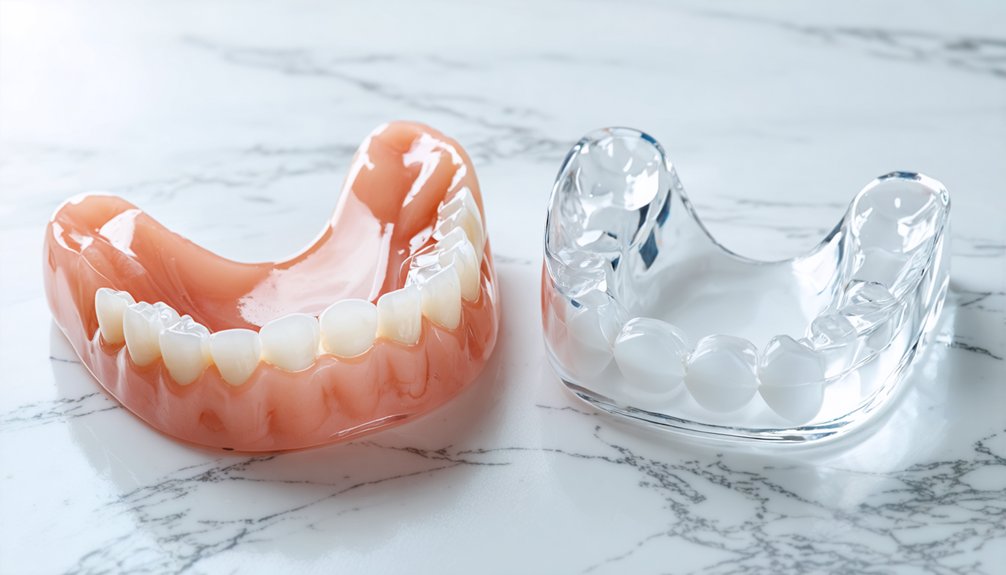
Because tetracycline staining is intrinsic rather than surface-level, OTC whitening strips and paint-on gels simply can’t deliver enough peroxide to where it needs to go. Their lower concentrations and poor contact time make them ineffective against pigment embedded within dentin.
Custom trays solve both problems. Your dentist fabricates trays that fit precisely against your tooth contours, ensuring 10%–16% carbamide peroxide maintains consistent contact across every surface throughout nightly wear. That controlled delivery accumulates meaningful penetration over months—something no OTC product replicates.
This precision matters especially when dietary factors like coffee, tea, and red wine threaten to compound staining. If bleaching still underdelivers, custom trays also establish the baseline your dentist needs to evaluate whether restorative options like veneers are warranted.
The Right Peroxide Strength for Tetracycline Whitening
Selecting the correct peroxide concentration separates productive long-term bleaching from wasted effort. Tetracycline pigment sits within dentin, requiring adequate enamel permeability to allow peroxide molecules to reach discolored tissue. Concentrations too low won’t penetrate; concentrations too high risk dental pulp inflammation.
- 10% carbamide peroxide: Standard entry point for extended nightly protocols
- 16% carbamide peroxide: Preferred ceiling for prolonged home tray use without excessive pulpal stress
- Higher in-office concentrations: Reserved for supervised sessions, not unsupervised extended wear
- Hydrogen peroxide equivalent: 10% carbamide releases approximately 3.5% hydrogen peroxide—factor this into your protocol planning
- Duration compensates for concentration: Consistent nightly application outperforms sporadic high-dose exposure
Your dentist selects concentration based on stain severity, enamel condition, and pulpal sensitivity history—not guesswork.
How In-Office Bleaching Kick-Starts Tetracycline Whitening Results
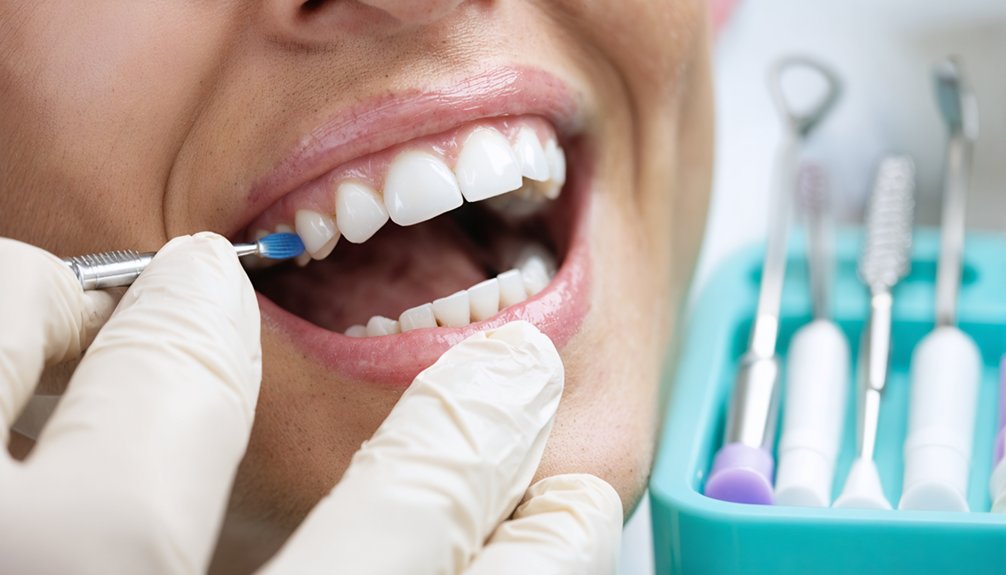
Starting with an in-office session lets your dentist apply clinical-strength hydrogen peroxide that penetrates deeper than over-the-counter products, giving your whitening progress an immediate head start.
You’ll get the strongest results by following that in-office treatment with a consistent at-home regimen using custom trays and prescription-strength carbamide peroxide over several months.
Because extended bleaching can trigger sensitivity, your dentist will likely recommend desensitizing agents like potassium nitrate or fluoride to keep discomfort manageable throughout the combined protocol.
Why In-Office Bleaching Works
How does in-office bleaching give tetracycline whitening a meaningful head start? Your dentist applies clinical-strength hydrogen peroxide directly to enamel, penetrating deeper than any OTC product can reach. Unlike surface staining influenced by dietary habits, tetracycline discoloration is structural—and high-concentration peroxide begins breaking down those embedded pigments immediately.
Key reasons in-office bleaching accelerates results:
- Clinical peroxide concentrations far exceed at-home formulations
- Immediate pigment disruption reduces the total treatment timeline
- Controlled application minimizes soft tissue exposure
Results aren’t compromised by genetic factors affecting enamel porosity unpredictably. High-concentration peroxide begins breaking down those embedded pigments immediately.
– Establishes a measurable baseline before extended home tray protocols begin
This initial session creates conditions your custom trays can build upon systematically, giving you precise control over the progression of your whitening outcome.
Combining Treatments Maximizes Results
Building on what in-office bleaching accomplishes alone, combining it with extended home tray whitening consistently produces stronger outcomes than either method delivers independently.
In-office treatment penetrates intrinsic tetracycline pigment rapidly, creating an immediate foundation. You then sustain and deepen that progress nightly using custom trays with 10%–16% carbamide peroxide over several months.
Tooth mineralization plays a critical role during this phase. Applying fluoride or remineralizing agents between sessions protects enamel integrity during prolonged peroxide exposure.
Diet considerations simultaneously determine whether you preserve or undermine your gains—eliminating coffee, tea, and red wine prevents restaining while bleaching remains active.
This sequenced protocol—power whitening followed by disciplined home maintenance—gives you direct control over cumulative lightening, maximizing the final outcome beyond what single-method treatment achieves.
Managing Sensitivity During Treatment
Extended bleaching protocols create cumulative peroxide exposure that can trigger sensitivity, so managing discomfort proactively keeps your treatment on schedule rather than forcing interruptions that reduce overall progress.
Integrate these targeted controls into your protocol:
- Apply potassium nitrate desensitizing gel inside your custom tray before or after bleaching sessions.
- Use fluoride gel post-treatment to remineralize enamel and reduce nerve hypersensitivity.
- Adjust oral hygiene tools by switching to a soft-bristled brush and sensitivity-formulated toothpaste throughout treatment.
- Modify dietary habits by avoiding acidic, hot, or cold foods within hours of each bleaching session.
- Reduce tray wear time temporarily during sensitivity flare-ups rather than abandoning the protocol entirely.
Consistent sensitivity management protects your tissue while preserving the treatment continuity that tetracycline staining demands.
How Long Does Tetracycline Whitening Actually Take?

Unlike surface stains that respond to whitening in a matter of weeks, tetracycline discoloration is intrinsic—meaning the pigment is embedded within the enamel and dentin structure itself. You’re not addressing a superficial deposit—you’re working against a structural alteration, which demands a fundamentally different timeline.
Expect a minimum of three to six months with consistent tray use, and severe cases often require nine to twelve months of disciplined protocol adherence.
Natural remedies won’t produce measurable results here; the stain depth exceeds their capacity entirely. Dietary influences—particularly coffee, tea, and wine—can counteract progress, so controlling intake isn’t optional.
More than 55% of achievable lightening may occur within the first month, but reaching your ceiling requires sustained, uninterrupted commitment well beyond that initial window.
How to Handle Sensitivity During Long Tetracycline Whitening Treatments
When bleaching tetracycline stains over months, sensitivity becomes a real management challenge that you can’t afford to ignore.
You should use desensitizing agents like potassium nitrate and fluoride—either built into your whitening system or applied separately—to reduce nerve irritation throughout the extended protocol.
During any in-office sessions, your dentist should also apply gingival barriers to protect soft tissue from direct hydrogen peroxide contact.
Desensitizing Agents Help
Because tetracycline whitening protocols can stretch from several months to over a year, sensitivity management isn’t optional—it’s a core part of treatment. Enamel thickness and tooth translucency directly influence how deeply peroxide penetrates, affecting your sensitivity threshold throughout the process.
Incorporate these desensitizing agents strategically:
- Potassium nitrate – calms nerve response by blocking dentinal tubule transmission
- Fluoride gel – applied post-treatment to remineralize and reduce hypersensitivity
- Nano-hydroxyapatite – supports enamel repair during prolonged bleaching cycles
- Desensitizing toothpaste – use daily to build cumulative nerve-calming effect
- In-tray desensitizing gel – applied before or after bleaching sessions for targeted relief
You control the outcome by building sensitivity protocols into your routine rather than reacting to discomfort after it disrupts your progress.
Protect Soft Tissue
Soft tissue damage is a real risk during extended tetracycline whitening protocols, and hydrogen peroxide doesn’t discriminate between enamel and gingival tissue. During in-office sessions, your clinician should apply a gingival barrier before activating any bleaching agent.
For at-home tray use, verify your custom trays fit precisely—excess gel contacting soft tissue compounds irritation over months-long treatment cycles.
Enamel porosity increases as bleaching progresses, making your teeth more reactive to acidic dietary habits like frequent citrus or vinegar consumption; time these carefully.
Apply fluoride gel post-treatment to reinforce enamel structure and reduce permeability.
Use potassium nitrate-based desensitizers between sessions to manage nerve sensitivity.
Consistent soft tissue protection isn’t optional—it’s what allows you to sustain the prolonged protocol tetracycline staining actually requires.
What to Avoid After Tetracycline Whitening to Prevent Restaining
After investing months in tetracycline whitening treatment, you’ll want to protect your results by avoiding the foods and beverages most likely to cause restaining. Strict dietary restrictions and consistent oral hygiene routines are your primary defense against losing hard-earned progress.
Months of tetracycline whitening deserve protection — what you eat and drink next determines whether results last.
Eliminate or markedly limit these high-risk staining agents:
- Coffee and tea – tannins penetrate enamel rapidly after whitening
- Red wine – chromogens and acids accelerate pigment absorption
- Curry and turmeric-based sauces – intense pigmentation transfers easily onto treated surfaces
- Dark sodas and sports drinks – acidic pH weakens enamel, increasing stain susceptibility
- Tobacco products – nicotine and tar cause severe, rapid discoloration
Brush within 30 minutes of consuming staining substances, floss daily, and schedule professional cleanings every six months to sustain your whitening investment.
Frequently Asked Questions
Can Tetracycline-Stained Teeth Ever Be Whitened Without Professional Dental Supervision?
You can try home remedies and over-the-counter options, but they’re largely ineffective against intrinsic tetracycline staining. Since the pigment’s embedded in your dentin, you’ll achieve minimal results without prescription-strength peroxide and professional supervision.
Does Tetracycline Whitening Treatment Affect Dental Restorations Like Crowns or Veneers?
Ironically, whitening won’t touch your crowns or veneers—peroxide only affects natural tooth structure. You’ll face dental material compatibility issues and restoration color matching challenges, as restorations stay their original shade while surrounding teeth lighten.
Are Children With Tetracycline Staining Eligible for Any Whitening Treatments?
Children with tetracycline staining aren’t typically candidates for whitening until adulthood. You’ll want to explore alternative remedies and natural solutions temporarily, as developing teeth require completed growth before you pursue any professional bleaching protocols safely.
Can Pregnancy Affect Tetracycline Whitening Treatment Safety or Effectiveness?
Pregnancy safety demands you pause whitening—though your stains remain, treatment effectiveness takes a back seat. You shouldn’t use peroxide-based bleaching while pregnant, as risks to fetal development currently outweigh any cosmetic benefit you’d gain.
Does Dental Insurance Typically Cover Professional Tetracycline Whitening Procedures?
Dental insurance typically won’t cover tetracycline whitening because insurers classify it as cosmetic. You’ll need to plan for out-of-pocket treatment costs, so confirm your insurance coverage details and explore payment plans with your dental provider.
References
- https://pmc.ncbi.nlm.nih.gov/articles/PMC2741196/
- https://www.korwhitening.com/6-things-know-treating-tetracycline-patient-kor-whitening-products/
- https://www.healthline.com/health/tetracycline-teeth
- https://www.reddit.com/r/Dentistry/comments/1mtcyru/best_way_to_treat_severe_tetracycline_stains/
- https://www.realself.com/question/alameda-ca-absolute-teeth-whitener-tetracycline-stained-teeth-severely-stained
- https://clubwhitesmile.com/proven-tips-for-tetracycline-teeth-whitening/
- https://vegassmilesuite.com/how-to-whiten-teeth-with-tetracycline-stains/
- https://pocketdentistry.com/whitening-treatments-for-tetracycline-discoloration/
- https://www.scrippsdentalcare.com/cosmetic-dentistry/how-can-i-get-rid-of-tetracycline-stains/
- https://dentalreviewed.com/blog/tetracycline-teeth-causes-staining-grades-and-treatment