Removing wine stains starts before you even pour your first glass. Brush beforehand to eliminate plaque, rinse with water immediately after drinking, and wait 30 minutes before brushing again to protect softened enamel. Pair wine with cheese or crunchy vegetables, use a straw, and incorporate baking soda or hydrogen peroxide for stubborn discoloration. When home remedies fall short, professional care restores what you can’t fix alone—and every tip ahead brings you closer to a noticeably brighter smile.
Key Takeaways
- Brush before drinking wine to remove plaque, which attracts stain-causing chromogens and tannins from the first sip.
- Rinse with water immediately after wine to displace chromogens, then wait 30 minutes before brushing to protect enamel.
- Pair wine with cheese or crunchy vegetables to stimulate saliva, neutralize acidity, and physically scrub away pigments.
- Use baking soda paste 2–3 times weekly to neutralize tannin residues and disrupt pigment-enamel bonds before brushing.
- Seek professional dental care if stains persist after four weeks, sensitivity increases, or gray and brown discoloration appears.
Brush Before You Drink to Reduce Wine Staining
Brushing your teeth before you open a bottle of wine is one of the most overlooked protective steps you can take. Plaque creates a sticky surface that actively grabs chromogens and tannins, accelerating discoloration from the first sip. Removing that plaque beforehand eliminates a primary adhesion point for pigments.
Plaque acts like a magnet for wine pigments. Remove it before your first sip, not after.
Pairing pre-drink brushing with fluoride toothpaste adds another layer of defense by supporting enamel strengthening before acidity challenges your teeth. A stronger enamel surface is less porous, meaning pigments penetrate less deeply.
This also contributes to better oral pH balance once wine’s acidity hits, giving your teeth a measurable head start.
You’re not reversing stains here—you’re preventing them from forming. That distinction matters if you’re serious about maintaining a whiter, healthier smile long-term.
Rinse With Water Immediately After Wine
Once the last sip hits, your enamel is temporarily softened by wine’s acidity—and that’s exactly when rinsing with water becomes your fastest, safest intervention. A thorough swish immediately after drinking displaces chromogens and tannins before they bond to weakened enamel surfaces, cutting contact time at its most critical window.
Water also triggers saliva stimulation, activating your mouth’s natural buffering system. That saliva flow contributes to enamel strengthening by reintroducing calcium and phosphate ions lost during acid exposure. You’re not waiting passively for remineralization—you’re actively initiating it.
Critically, water carries none of the abrasion risk that comes with brushing softened enamel. It’s a precise, low-risk move that respects the biology of acid erosion while keeping your whitening strategy both protective and aesthetically purposeful.
Wait 30 Minutes Before Brushing After Wine
After wine, your enamel enters a temporary state of acid softening—and that’s precisely why brushing immediately is counterproductive. The acidity from wine temporarily disrupts enamel’s mineral structure, leaving it vulnerable to abrasion. Brushing during this window accelerates acid erosion prevention failures rather than correcting them.
Instead, rinse immediately with water to neutralize residual acids and support enamel remineralization by clearing chromogens before they bond. Then wait approximately 30 minutes—enough time for saliva to restore a safer pH and for mineral redeposition to begin.
Once you’ve crossed that threshold, brush with fluoride toothpaste using a soft-bristled technique. This sequence gives you precise control over stain removal without compromising structural integrity—turning a simple timing adjustment into a meaningful long-term protection strategy.
Should You Avoid White Wine Before Red?
The sequence in which you drink wine matters more than most people realize. White wine’s acidity accelerates enamel erosion, leaving your teeth more porous and receptive to red wine’s chromogens. Strategic wine pairing isn’t just about flavor—it’s about protecting your enamel.
Consider these sequencing principles:
- Avoid white wine immediately before red—acidic exposure weakens enamel, intensifying pigment absorption from red wine.
- Rinse with water between varietals to neutralize acidity and reduce chromogen contact time.
- Pair both wines with cheese or crunchy vegetables to stimulate saliva and buffer acidity naturally.
Controlling your drinking sequence gives you a measurable advantage against staining. Small, deliberate choices compound over an evening, protecting both your enamel and your smile’s long-term brightness.
Use a Straw to Keep Wine Off Your Front Teeth
While it may seem unconventional, using a straw for cold wine or other chilled staining beverages limits direct liquid contact with your front teeth—the most visible and cosmetically sensitive surfaces in your smile. This simple adjustment supports your teeth whitening efforts by reducing chromogen and tannin exposure on enamel before staining compounds can penetrate.
Position the straw toward the back of your mouth, allowing liquid to bypass your front teeth entirely. You’re fundamentally intercepting the stain before it starts.
Enamel protection remains the underlying priority here. Every measure that reduces pigment contact time preserves your enamel’s surface integrity and keeps future whitening treatments more effective.
For cold-served wines or staining beverages, a straw is one of the most precise, low-effort interventions available.
Cheese, Apples, and Foods That Fight Wine Stains
What you eat alongside your wine can directly influence how much staining occurs. Cheese neutralizes acidity in your mouth, reducing enamel erosion that makes teeth more vulnerable to pigment absorption.
Crunchy foods like apples, celery, and carrots act as natural scrubbers, while chewing anything stimulates saliva production, which continuously rinses chromogens and tannins from your enamel surface.
Cheese Neutralizes Wine Acidity
Pairing cheese with your wine does more than elevate the tasting experience — it actively works against stain-forming chemistry in your mouth. Wine aging concentrates tannins and acids that accelerate enamel erosion, but cheese counteracts both mechanisms simultaneously.
Here’s how cheese works in your favor:
- Stimulates saliva — increased saliva flow naturally clears chromogens and dilutes tannin concentration on enamel surfaces.
- Neutralizes acidity — cheese raises oral pH, directly reducing enamel erosion risk caused by wine’s acidic compounds.
- Creates a protective film — dairy proteins coat enamel, forming a temporary barrier against pigment adhesion.
You’re not just snacking — you’re executing a deliberate defense strategy. Incorporate cheese intentionally during wine sessions to maintain control over your enamel’s long-term stain resistance.
Crunchy Foods Scrub Stains
Crunchy foods like apples, celery, and carrots do more than satisfy hunger during a wine session — their fibrous texture generates mechanical friction against enamel surfaces, physically dislodging loosened chromogens before they can bond.
As natural remedies go, this approach is both practical and evidence-adjacent: chewing stimulates saliva production, which dilutes tannins and raises oral pH, creating conditions less favorable to stain adhesion.
You’re fundamentally deploying your diet as a passive stain prevention tool between sips. Strategic snacking also reduces the window during which pigments remain concentrated on enamel.
Incorporate these foods deliberately — not as an afterthought — and you gain a functional, low-effort layer of protection that complements brushing, rinsing, and professional care within your broader whitening protocol.
Eating Boosts Saliva Production
Beyond mechanical friction, the foods you eat during a wine session influence stain dynamics through biochemistry — specifically, saliva. Elevated saliva flow actively dilutes chromogens, neutralizes acids, and accelerates natural clearance throughout the oral cavity.
Strategic food pairings work in your favor:
- Cheese stimulates saliva production while raising oral pH, directly counteracting wine’s enamel-softening acidity.
- Apples and crunchy produce increase chewing activity, triggering sustained saliva flow that continuously rinses pigment-laden residue.
- Eating throughout your session — rather than drinking on an empty palate — maintains a biochemical buffer against tannin and chromogen adhesion.
You’re not simply snacking; you’re actively managing your oral environment.
Treat food selection as a precision tool, not an afterthought.
How Baking Soda Removes Wine Stains at Home
Baking soda offers two practical advantages for lifting wine stains: mild abrasivity that scrubs away surface chromogens and a slightly alkaline pH that helps neutralize the acidic residues tannins leave behind. These chemical reactions work together, disrupting the bond between pigment molecules and enamel before mechanical brushing clears them away.
Baking soda efficacy depends heavily on technique—mix a small amount with water to form a paste, apply it gently with a soft-bristled brush, and limit use to two or three times per week. Overuse accelerates enamel wear, undermining the results you’re working toward.
For a stronger effect, combining baking soda with diluted hydrogen peroxide adds a bleaching component, though you’ll want to apply that option even more sparingly to protect enamel integrity long-term.
When Baking Soda Isn’t Enough: Does Hydrogen Peroxide Work?
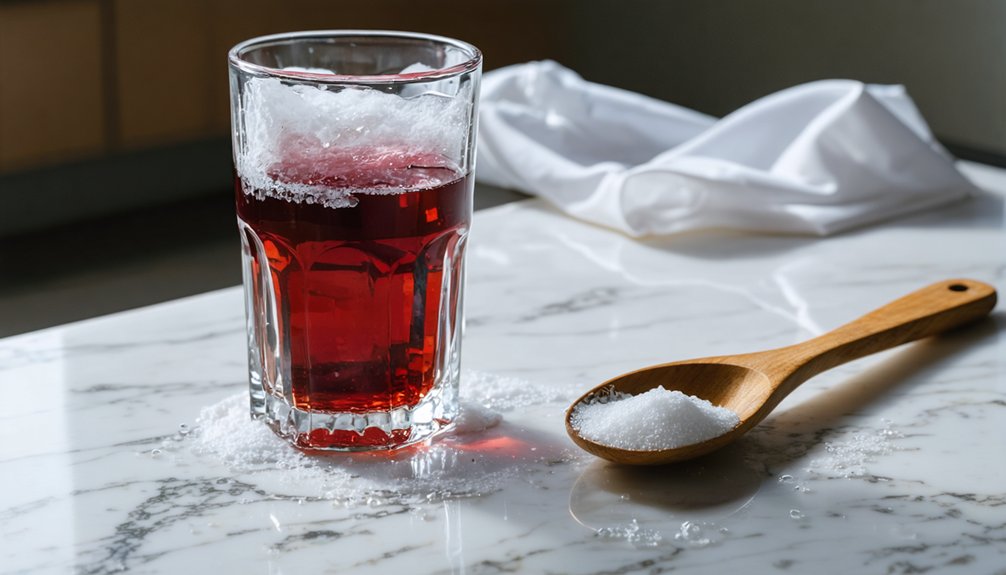
When baking soda alone doesn’t shift persistent wine discoloration, hydrogen peroxide steps in as a legitimate next option. Used correctly, it bleaches surface chromogens that abrasives can’t dislodge. However, hydrogen peroxide safety depends entirely on concentration and frequency.
Misuse raises stain deepening risks by eroding enamel, creating a rougher surface that traps future pigment more aggressively. Keep these guidelines in mind:
- Dilute properly — use a 1.5–3% solution, never undiluted hydrogen peroxide directly on teeth.
- Limit frequency — apply sparingly, not as a daily substitute for toothpaste.
- Follow with fluoride — brush afterward with fluoride toothpaste to reinforce enamel integrity.
You’re managing a chemical process here. Precision protects your results.
How Whitening Toothpaste and Electric Brushes Tackle Wine Stains
Whitening toothpaste and electric toothbrushes work best as a coordinated system rather than isolated tools. Whitening toothpastes contain mild abrasives and low-concentration peroxides that lift surface chromogens left behind by wine, while simultaneously controlling dental plaque that helps those pigments adhere.
Whitening toothpaste and electric toothbrushes work best together—lifting wine’s chromogens while controlling the plaque that locks stains in.
You’ll get more from that formulation when you pair it with an electric toothbrush, which delivers consistent oscillation or sonic vibration that a manual brush rarely replicates.
That mechanical precision matters because wine’s acidity already puts you at risk for enamel erosion. An electric brush with a pressure sensor prevents you from scrubbing too aggressively on temporarily softened enamel.
Use a soft-bristled head, apply your whitening toothpaste, and let the brush’s motion do the controlled work—removing stains without compromising the enamel structure underneath.
When Home Remedies Stop Working and You Need a Dentist
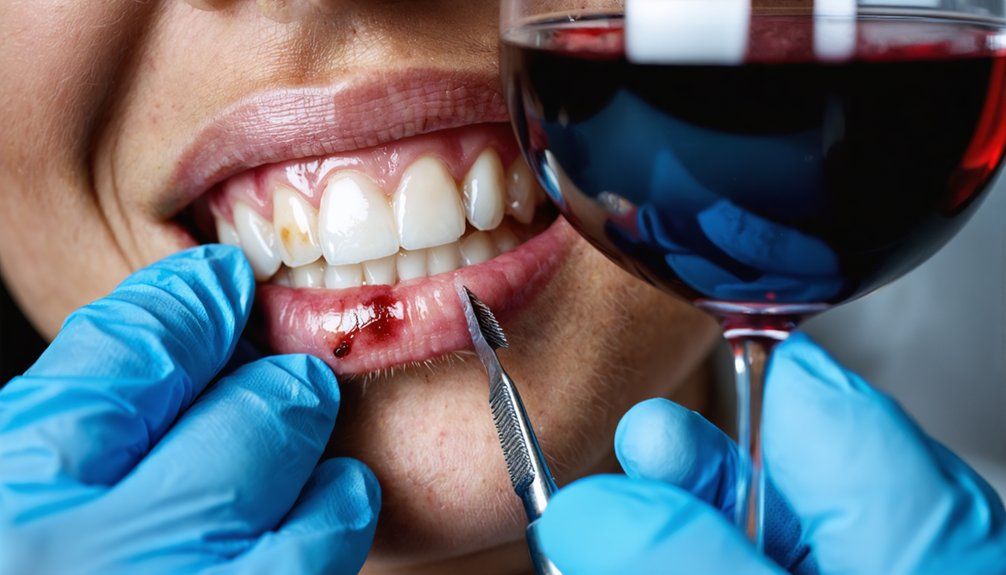
Even a well-executed home routine—whitening toothpaste, electric brush, baking soda, and careful timing—addresses only surface stains.
When stain penetration reaches deeper enamel layers or dental erosion has compromised your tooth structure, professional intervention becomes necessary.
Recognize these signals:
- Discoloration persists after four weeks of consistent home treatment
- Sensitivity increases, indicating possible dental erosion undermining enamel integrity
- Stains appear gray or brown rather than yellow, suggesting intrinsic discoloration
At that point, a professional cleaning removes calcified tartar that traps pigment beyond any brush’s reach.
If discoloration remains afterward, your dentist can evaluate professional whitening options calibrated to your enamel’s condition.
Treating these issues early prevents compounding damage and keeps your results achievable, precise, and lasting.
Frequently Asked Questions
Can Drinking Water Between Wine Sips Actually Prevent Tooth Staining?
Yes, it works. When you drink water between sips, you’re actively flushing chromogens and tannins away, supporting saliva flow for natural stain prevention and maintaining your dental health with precise, effortless control over discoloration.
Does Flossing Help Remove Wine Stains Trapped Between Teeth?
Ironically, your toothbrush can’t reach everywhere. Daily flossing actively removes wine residue and plaque between teeth, stopping stain penetration before it sets—giving you precise control over discoloration where it’s most easily overlooked.
Is Activated Charcoal Effective for Removing Wine Stains From Teeth?
Activated charcoal whitening may help with stain absorption on your tooth surface, but it’s got limited evidence compared to baking soda or peroxide. Use it cautiously—overuse risks enamel abrasion, undermining the precise, controlled results you’re after.
Can Apple Cider Vinegar Safely Break Down Wine Stains on Teeth?
Apple cider vinegar’s acidity can break down wine stains, but you’re risking tooth enamel erosion with overuse. Use it sparingly, then rinse thoroughly to protect your enamel’s integrity and maintain long-term aesthetic results.
Does Fluoride Toothpaste Help Protect Enamel Before Drinking Wine?
Yes, brushing with fluoride toothpaste before drinking wine delivers key fluoride benefits by strengthening your enamel’s mineral structure. This proactive enamel protection strategy reduces acid vulnerability, helping you maintain a cleaner, more stain-resistant smile throughout your evening.
References
- https://www.mydentaloffice.com/natural-whitening-remedies-for-coffee-and-wine/
- https://crest.com/en-us/oral-care-tips/how-to-prevent-and-get-rid-of-red-wine-teeth-stains
- https://mypenndentist.org/dental-tips/2024/02/13/how-to-remove-stains-from-teeth/
- https://thepsdentalstudio.com/how-to-remove-coffee-and-wine-stains-from-teeth/
- https://www.foreveryoungdentistry.com/blog/?p=108
- https://www.encore-dentistry.com/blog/2025/12/11/toasting-to-a-brighter-smile-how-to-avoid-red-wine-stains-for-the-holidays-teeth-whitening/
- https://rutgershealth.org/news/how-prevent-wine-teeth-holiday
- https://www.youtube.com/watch?v=OLMu8rHRAKA
- https://smilepointdental.ca/teeth-whitening-for-wine-lovers/