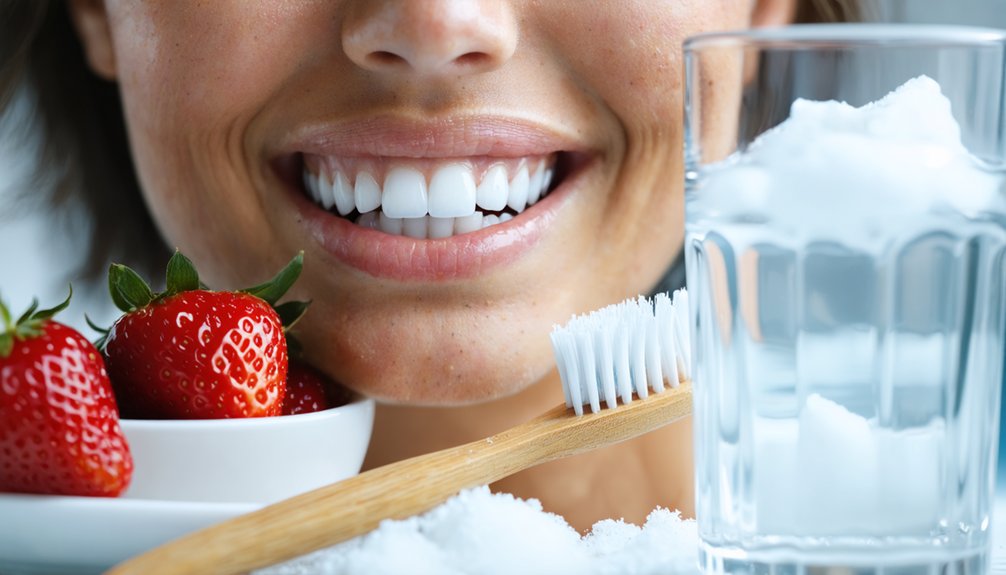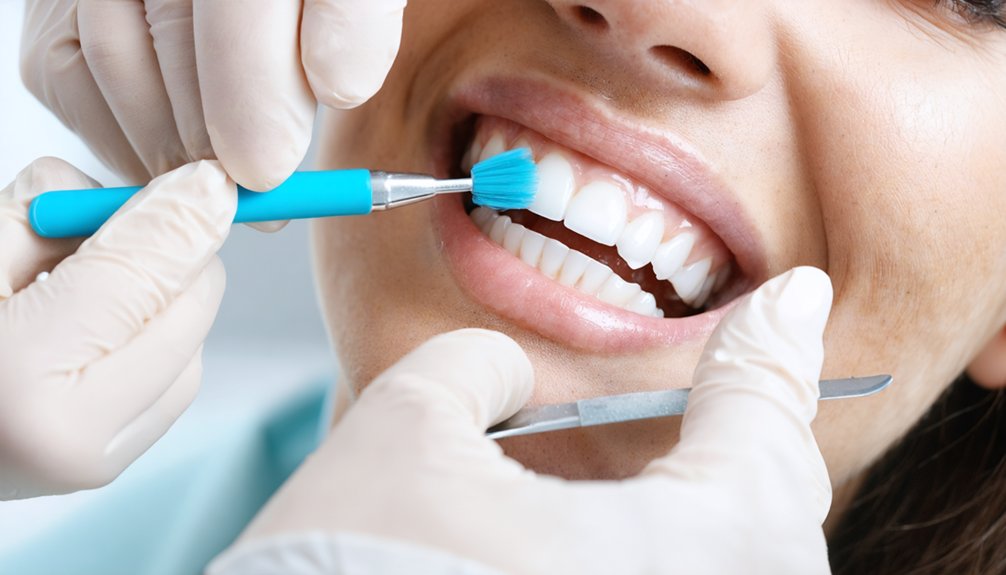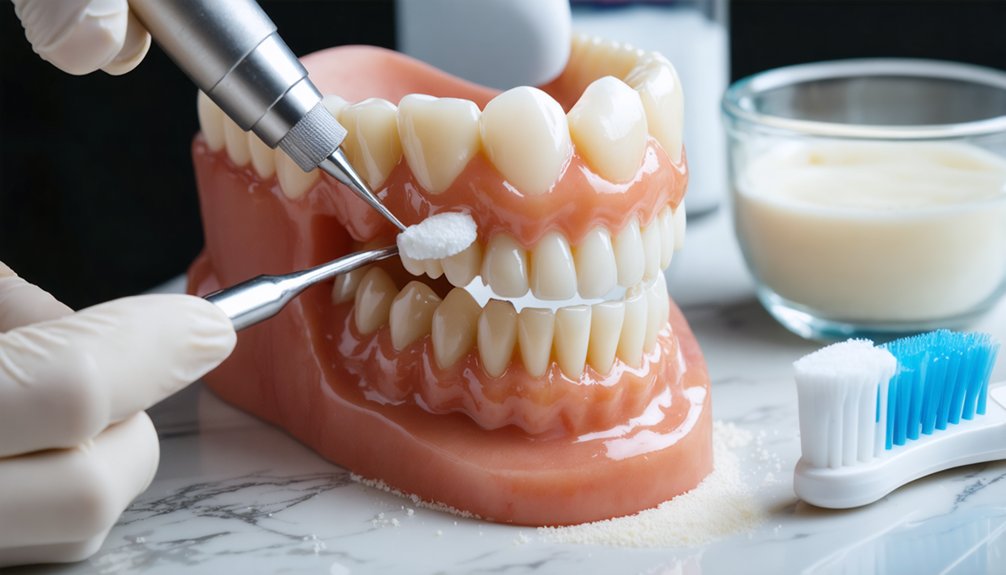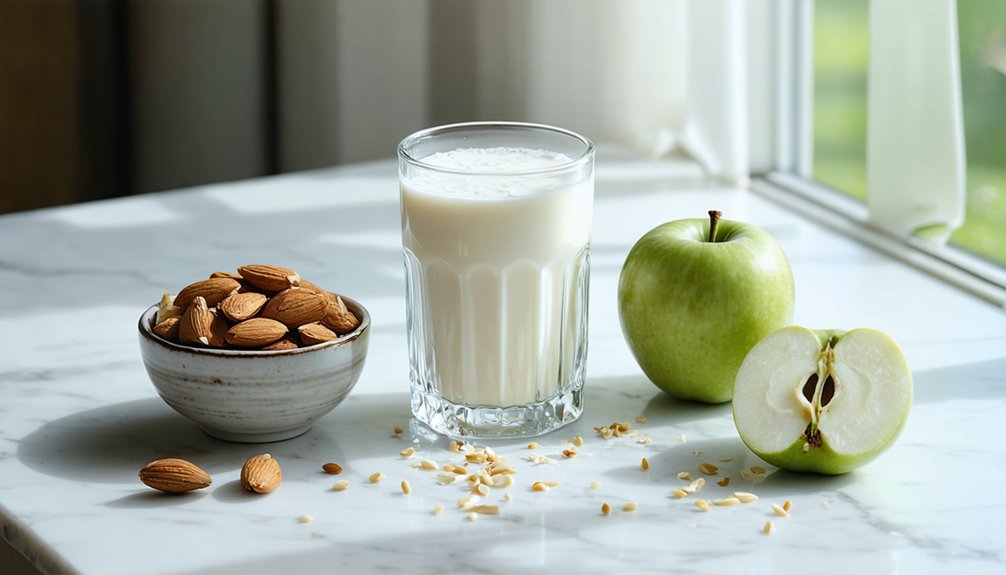
After whitening, your enamel temporarily loses minerals and becomes more porous, making it vulnerable for up to 48 hours. You’ll want to use fluoride or nano-hydroxyapatite toothpaste twice daily, brush gently with a soft-bristled brush, and rinse with alcohol-free fluoride mouthwash. Avoid acidic foods, dark pigments, and abrasive products during recovery. Stick to a white diet and drink plenty of water. The full post-whitening protocol covers everything you need to protect and restore your enamel effectively.
Key Takeaways
- Use fluoride or nano-hydroxyapatite toothpaste twice daily to restore minerals lost during the whitening process.
- Rinse with alcohol-free fluoride mouthwash regularly to support enamel remineralization without causing irritation.
- Avoid acidic foods and drinks for 48 hours, as enamel pores remain open and vulnerable.
- Brush gently with a soft-bristled brush using circular motions, waiting 30 minutes after eating.
- Drink 8–9 glasses of water daily and swish after meals to protect weakened enamel.
Why Whitening Temporarily Weakens Enamel
When you whiten your teeth, the bleaching agents temporarily open your enamel’s pores to lift embedded stains. This process causes short-term mineral loss, reducing enamel elasticity and leaving the surface more porous and reactive.
During this vulnerable state, common whitening side effects include heightened sensitivity and a slight softening of the enamel matrix.
Importantly, this weakening is temporary, not permanent. Your enamel doesn’t regenerate, but it does remineralize when you take deliberate, targeted steps immediately after treatment.
The critical factor is timing. The first 48 hours post-whitening determine how effectively your enamel recovers its strength and resilience.
Understanding this mechanism gives you the control to act precisely, minimizing damage and accelerating recovery through evidence-based remineralization strategies outlined throughout this guide.
The 48-Hour Recovery Window After Whitening
The 48-hour window following your whitening treatment is where recovery is won or lost. During this period, enamel elasticity is compromised, leaving pores open and vulnerable to acids, pigments, and mechanical stress. Whitening side effects like sensitivity peak here, making your behavioral choices clinically significant.
The 48 hours after whitening are critical — your choices during this window determine everything.
Avoid acidic foods, coffee, red wine, and berries entirely. These substances penetrate open enamel pores and accelerate demineralization. Stick to the white diet — chicken, rice, cauliflower, and white fish — and consume everything at room temperature to minimize sensitivity spikes.
Brush gently using a soft-bristled toothbrush, and wait 30 minutes after eating before brushing. Use nano-hydroxyapatite or fluoride toothpaste twice daily. Apply remineralizing products and avoid eating or drinking for 30 minutes afterward.
Precision during these 48 hours determines your long-term enamel outcome.
What to Eat and Avoid After Whitening
Your food and drink choices in the days following whitening directly determine how well your enamel remineralizes. Ignore dietary myths suggesting a single meal won’t matter — repeated acidic or chromogenic exposure during this window compounds vulnerability.
Follow a strict white diet for 48 hours: chicken, white fish, rice, cauliflower, and potatoes are structurally safe choices. Avoid coffee, tea, red wine, berries, and acidic beverages entirely. These aren’t enamel myths; chromogens penetrate open pores with measurable efficiency.
Drink 8–9 glasses of plain water daily. Swish after every meal to clear residual sugars and acids. Use a straw when consuming any liquid beyond water.
Consume foods at room temperature to minimize sensitivity triggered by thermal contrast against healing enamel surfaces.
The Right Way to Brush After Whitening
Dietary control protects healing enamel from chemical attack, but mechanical damage from improper brushing poses an equal threat during recovery. After whitening, your enamel pores remain temporarily open, making the surface vulnerable to abrasion. Switch to a soft-bristled brush immediately and use small, circular motions rather than horizontal scrubbing. Gentle brushing removes plaque effectively without compromising the healing surface.
Timing matters equally. Wait at least 30 minutes after eating or drinking before brushing to avoid abrading acid-softened enamel.
Apply fluoride or nano-hydroxyapatite toothpaste and brush twice daily without excess pressure. Avoid whitening or charcoal-based toothpastes during this window, as their abrasive compounds counteract remineralization efforts.
Consistent, controlled technique during the first 48 hours *considerably* reduces sensitivity and supports structural enamel recovery.
Best Remineralizing Products for Enamel Recovery
Brushing technique shields enamel from mechanical damage, but you’ll also need targeted remineralizing products to actively restore mineral density after whitening. Two evidence-backed options dominate enamel strengthening protocols: fluoride toothpaste and nano-hydroxyapatite toothpaste.
Fluoride integrates into weakened enamel surfaces, restoring lost minerals and reinforcing crystalline structure. Use it twice daily, and avoid eating or drinking for 30 minutes post-application to maximize absorption.
Nano-hydroxyapatite toothpaste mirrors enamel’s natural mineral composition, making it particularly effective during the critical 48-hour recovery window.
Complement these remineralization techniques by rinsing once or twice daily with alcohol-free fluoride mouthwash, which sustains mineral exposure without irritating sensitive tissue.
For accelerated recovery, request a professional-strength fluoride varnish from your dentist to reinforce enamel density at a clinical level.
Frequently Asked Questions
How Soon After Whitening Can I Schedule a Professional Fluoride Treatment?
You can schedule a professional fluoride treatment immediately after whitening. It’ll accelerate enamel hardness restoration within your critical 48-hour window. Maintain diet restrictions—avoid acidic foods—to maximize fluoride absorption and guarantee precise, controlled remineralization outcomes.
Can Enamel Remineralization Fail Even if All Recovery Steps Are Followed Correctly?
Yes, it can. Studies show 8% of patients experience persistent mineral loss despite perfect recovery. Your enamel resilience depends on genetics, diet, and systemic health factors that no protocol fully controls.
Is Nano-Hydroxyapatite Toothpaste Safe for People With Dental Crowns or Veneers?
Nano-hydroxyapatite safety is well-established for natural enamel, but dental crown compatibility varies—it won’t remineralize porcelain or composite restorations. You should consult your dentist to confirm it’s appropriate for your specific restorations before use.
How Many Times per Year Can Teeth Be Safely Whitened Without Causing Damage?
Like a rechargeable battery, your enamel needs recovery time. You can safely whiten 1-2 times yearly; exceeding this whitening frequency risks chronic dental sensitivity and enamel fatigue. Always consult your dentist to personalize your schedule.
Should I Consult a Dentist Before Using Remineralizing Products for the First Time?
Yes, you should consult a dentist before using remineralizing products. They’ll assess your dental sensitivity levels and evaluate any existing enamel erosion, ensuring the selected treatment is safe and clinically appropriate for your specific condition.
References
- https://abundantdentalcare.com/blog/how-to-rehydrate-teeth-after-whitening/
- https://precisiondentalnyc.com/10-tips-for-dealing-with-sensitivity-after-teeth-whitening/
- https://wewhiten.com/remineralizing-enamel-after-teeth-whitening/
- https://www.trysnow.com/blogs/news/will-whitening-damage-my-enamel
- https://northscottsdaledentistry.com/dos-and-donts-after-teeth-whitening/
- https://my.clevelandclinic.org/health/body/24798-tooth-enamel&rut=00ffcd117d556d935464ad3d13ca15506d6905677e385d07089805d7a2de74bc
- https://face.meei.harvard.edu/how-to-rebuild-tooth-enamel