If you have sensitive teeth, you don’t have to sacrifice whitening results to avoid discomfort. Your best options include peroxide-free strips like Lumineux, low-concentration formulas like Crest 3D Sensitive, and professionally fitted custom trays that let you control gel strength. Pairing any whitening method with potassium nitrate toothpaste and n-hydroxyapatite products beforehand considerably reduces nerve irritation. Each option below breaks down exactly how to whiten effectively while keeping sensitivity—and your enamel—fully protected.
Key Takeaways
- Lumineux and Moon Whitening Pen offer peroxide-free, botanical-based formulas that whiten teeth without causing nerve irritation or sensitivity.
- Crest 3D Whitestrips Sensitive uses half the standard peroxide concentration with sessions under 30 minutes to minimize discomfort.
- Professional custom trays allow control over gel concentration and session duration, incorporating desensitizing agents like potassium nitrate for comfort.
- Rembrandt 1 Week Whitening Kit combines low-peroxide gel with potassium nitrate toothpaste, applied once daily for gradual, gentle whitening.
- Using potassium nitrate toothpaste and n-hydroxyapatite toothpaste for two weeks before whitening significantly reduces sensitivity and strengthens enamel.
How to Prep Sensitive Teeth Before You Start Whitening
Before you begin any whitening regimen, prepping your teeth for two weeks can especially reduce sensitivity and improve your overall results. Start by incorporating potassium nitrate toothpaste and an anti-sensitivity mouth rinse into your daily oral hygiene routine. This dual approach calms nerve response before any active whitening agent contacts your enamel.
Prep your teeth for two weeks before whitening—potassium nitrate toothpaste and sensitivity rinse make all the difference.
Adding n-hydroxyapatite toothpaste strengthens enamel further, creating a more resilient surface.
Diet adjustments also matter during this preparatory phase. Reduce acidic foods and beverages that compromise enamel integrity and heighten sensitivity. Avoid stannous fluoride products, as they can increase staining while you’re attempting to manage discomfort.
Prioritize fluoride-based rinses instead. These targeted, evidence-backed steps give you measurable control over your whitening experience before you apply a single strip or gel.
Crest 3D Whitestrips Sensitive: Half the Peroxide for Sensitive Teeth
Crest 3D Whitestrips Sensitive contains half the peroxide concentration of the original formula, making it a clinically practical choice if you’re managing sensitivity while still pursuing visible whitening results. The reduced active ingredient level directly addresses teeth discoloration without triggering the nerve irritation that higher-concentration strips commonly produce.
You’ll apply each strip for 30 minutes or less, giving you precise control over exposure time. For whitening longevity, consistency matters more than intensity—completing the full treatment cycle produces more durable outcomes than sporadic high-dose applications.
If sensitivity surfaces during use, skip a day before resuming. Pair these strips with a potassium nitrate toothpaste beforehand to further reduce discomfort. This approach lets you manage the whitening process methodically without sacrificing your comfort or enamel integrity.
Rembrandt 1 Week Whitening Kit for Sensitive Teeth
The Rembrandt 1 Week Whitening Kit earns its reputation as a top pick for sensitive teeth by pairing a lower-peroxide whitening gel with a desensitizing toothpaste, giving you a two-component system that addresses whitening and comfort simultaneously.
You’ll apply the gel via form-fitting strips once daily for seven days, while incorporating the companion toothpaste into your regular brushing routine to help calm nerve sensitivity throughout the process.
This sensitivity-friendly formula reduces the risk of discomfort without substantially compromising results, making it a clinically practical choice if you’ve struggled to tolerate standard whitening concentrations.
Kit Components Explained
Designed with sensitive teeth in mind, the Rembrandt 1 Week Whitening Kit includes two core components: a whitening toothpaste and pre-coated whitening strips. The toothpaste contains fluoride and mild polishing agents, supporting enamel integrity between strip applications.
The strips deliver a controlled peroxide concentration, allowing you to whiten without the aggressive exposure linked to higher-strength formulas.
Unlike teeth whitening myths suggesting natural remedies like charcoal or lemon juice offer equivalent results, this kit uses clinically substantiated ingredients with predictable outcomes.
You apply the strips once daily for seven days, giving you a structured, manageable protocol.
The toothpaste complements each session by reinforcing enamel and reducing post-treatment discomfort.
Together, both components work systematically, putting you in control of the pace and intensity of your whitening regimen.
Sensitivity-Friendly Formula Benefits
What makes the Rembrandt 1 Week Whitening Kit particularly well-suited for sensitive teeth is its deliberate formulation strategy. It combines potassium nitrate and fluoride within the whitening gel, targeting nerve sensitivity while reinforcing enamel integrity simultaneously.
You’re getting a dual-action formula that addresses discomfort proactively rather than reactively.
The lower peroxide concentration allows you to maintain consistent oral hygiene without interrupting your routine or aggravating existing sensitivity.
You won’t need to impose strict dietary restrictions during the treatment window, giving you greater day-to-day control.
The formula’s balanced pH minimizes tissue irritation, making it clinically appropriate for individuals with documented sensitivity histories.
Recommended Usage Instructions
Knowing what makes the Rembrandt 1 Week Whitening Kit effective is only half the equation—applying it correctly determines whether you’ll see results without triggering unnecessary discomfort.
Start with a couple of applications to assess your tolerance before committing to the full regimen. Limit each session to 30 minutes or less if sensitivity emerges, and skip days as needed using a low-and-slow approach.
Wait at least 30 minutes after each session before brushing.
Pair the kit with enamel strengthening support—specifically n-hydroxyapatite toothpaste—to reinforce mineralization between treatments.
While natural remedies alone won’t match clinical-grade whitening, combining them with proper usage protocol maximizes your control over outcomes.
Potassium nitrate toothpaste used two weeks prior further reduces nerve sensitivity before you begin.
Elims Whitening Strips Designed Specifically for Sensitive Teeth
Elims Whitening Strips are formulated specifically for individuals with sensitive teeth, making them a clinically relevant option when standard peroxide concentrations cause discomfort. Dispelling common teeth whitening myths, effective whitening doesn’t require aggressive peroxide levels to deliver measurable results.
Elims uses a lower-concentration formula that reduces nerve irritation while still targeting surface and light intrinsic stains. You can apply these strips with greater confidence, knowing the formulation prioritizes enamel integrity alongside cosmetic outcomes.
As part of broader oral health tips, pairing Elims strips with a potassium nitrate or nano-hydroxyapatite toothpaste further minimizes sensitivity risk.
Start with shorter application sessions, monitor your response, and adjust frequency accordingly. This controlled approach lets you manage your whitening regimen precisely without compromising comfort or dental health.
Lumineux Peroxide-Free Whitening Strips for Sensitive Teeth
If you’re seeking a whitening solution that completely eliminates peroxide exposure, Lumineux Whitening Strips offer a botanical-based formula clinically designed to avoid the nerve irritation associated with traditional peroxide bleaching agents.
You apply the strips directly to your teeth using the same method as conventional whitening strips, but the absence of peroxide markedly reduces the risk of post-treatment sensitivity.
Their formulation makes them a clinically sound option if you’ve previously experienced discomfort with peroxide-based products and need a gentler, compatible alternative.
Peroxide-Free Formula Benefits
Lumineux Peroxide-Free Whitening Strips offer a clinically viable alternative for patients who can’t tolerate conventional peroxide-based formulas. By eliminating hydrogen peroxide entirely, these strips reduce the risk of pulpal irritation and dentinal hypersensitivity while still delivering measurable whitening outcomes.
The formula relies on natural remedies, including botanical-derived compounds and essential oils, to break down surface stains without compromising enamel integrity.
You’ll benefit from the enamel strengthening properties embedded in the formula, which actively supports mineralization rather than degrading the outer tooth structure. This distinction matters clinically — peroxide-based systems can temporarily demineralize enamel, increasing sensitivity risk.
Lumineux’s approach lets you maintain whitening consistency without interrupting your regimen due to discomfort. It’s a controlled, low-risk protocol suited for sustained, sensitivity-conscious results.
Gentle Whitening Strip Application
Applying peroxide-free strips correctly determines how effectively they deliver results without triggering sensitivity. With Lumineux Whitening Strips, you’ll position each strip flush against your enamel, avoiding gum contact to prevent irritation. Leave them on for the manufacturer’s recommended duration—don’t assume longer exposure accelerates outcomes, as that perpetuates common whitening myths.
Lumineux relies on natural remedies including coconut oil, sage oil, and Dead Sea salt rather than peroxide chemistry. These botanical compounds require consistent, repeated application across several days to show measurable color change.
You’ll manage expectations by tracking gradual progress rather than expecting immediate dramatic shifts.
After removal, avoid rinsing immediately—let the active botanical ingredients continue working briefly. Skipping sessions when irritation appears keeps your protocol sustainable and protects enamel integrity throughout the treatment cycle.
Sensitive Teeth Compatibility
Because Lumineux Whitening Strips contain no peroxide, they’re well-suited for individuals whose enamel or dentin responds poorly to oxidative whitening agents. If you experience heightened nerve sensitivity, this formula lets you address teeth discoloration without triggering the inflammatory cascade that peroxide-based systems often provoke.
The botanical blend used in Lumineux supports oral health by avoiding chemical irritants that compromise soft tissue or weaken enamel integrity over repeated use. You retain greater control over your whitening regimen because the absence of peroxide eliminates the primary driver of post-application sensitivity.
Clinical suitability extends to those managing gum recession or existing enamel erosion. You can apply these strips with confidence that the formulation prioritizes tissue compatibility, making consistent, long-term use a realistic and manageable option.
Moon Whitening Pen: Peroxide-Free Touch-Ups for Sensitive Teeth
The Moon Teeth Whitening Pen offers a portable, peroxide-free solution that’s well-suited for individuals with sensitive teeth seeking convenient touch-ups. It delivers targeted dental stain removal without triggering discomfort, making it a practical tool for controlled, on-demand whitening.
- Precision application: The fine-tip pen lets you apply gel directly to specific teeth, minimizing product contact with gum tissue.
- Enamel strengthening support: Its formula avoids harsh oxidizing agents, reducing the risk of enamel erosion during repeated use.
- Portable convenience: Compact enough to fit in a pocket or bag, you can manage touch-ups discreetly after meals or coffee.
Start with one application daily to assess your tolerance before increasing frequency. If sensitivity remains absent, you can integrate it consistently into your routine.
Glo Vial Whitening Gel: Low-Concentration Relief for Sensitive Teeth
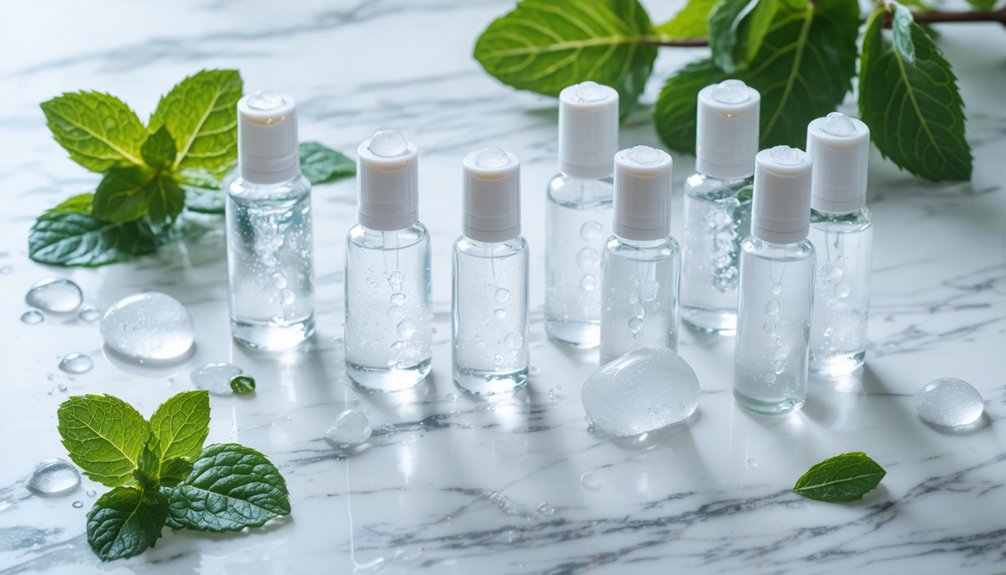
If you’re managing tooth sensitivity but still want effective whitening, the Glo Vial Teeth Whitening Gel Treatment Kit offers a lower peroxide concentration that reduces the risk of nerve irritation during treatment.
You apply the gel with precision, targeting specific teeth without overexposure to surrounding soft tissue.
This controlled, low-concentration formula lets you progress gradually, minimizing discomfort while still achieving measurable whitening results.
Low-Concentration Peroxide Formula
Designed specifically for sensitive teeth, the Glo Vial Teeth Whitening Gel Treatment Kit employs a lower-concentration peroxide formula that reduces the risk of post-treatment discomfort without substantially compromising efficacy. You maintain precise control over application frequency and duration, allowing gradual, measurable results.
- Visualize a gel that penetrates enamel gently, delivering controlled whitening without the sharp sensitivity spikes associated with high-concentration formulas.
- Picture pairing this treatment with alternative natural remedies, such as n-hydroxyapatite toothpaste, to further reinforce enamel between sessions.
- Imagine monitoring dietary influence by reducing staining consumables—coffee, tea, red wine—to maximize and sustain whitening outcomes.
This evidence-supported approach lets you calibrate your regimen precisely, minimizing discomfort while achieving clinically meaningful shade improvements over consistent, measured application cycles.
Gentle Whitening Application Process
Applying the Glo Vial Whitening Gel correctly maximizes the benefit of its low-concentration formula while keeping sensitivity manageable. Begin with a 30-minute session, then assess your tolerance before extending treatment.
You’ll want to avoid brushing immediately after application; wait at least 30 minutes to protect enamel integrity. Pair the gel with enamel strengthening supports like nano-hydroxyapatite toothpaste to reinforce mineral density between sessions.
If discomfort arises, skip a day rather than pushing through consecutive applications. Unlike natural remedies that rely solely on botanical compounds, Glo Vial’s controlled peroxide delivery offers measurable results with clinical precision.
Limit sessions and monitor tooth response consistently. This methodical approach keeps you in control of both your whitening progression and your comfort threshold throughout the regimen.
Sensitivity Management Benefits
Glo Vial’s lower peroxide concentration delivers three core sensitivity management benefits that make it a practical clinical choice for reactive dentition. You reduce nerve irritation, support enamel integrity, and maintain consistent oral hygiene without interruption.
Pairing it with dietary restrictions—avoiding acidic foods and dark pigments post-treatment—amplifies your results while protecting vulnerable tubules.
- Your enamel appears visibly stronger between sessions, with reduced white-spot formation along the gumline
- Your nerve endings remain calm, producing no sharp thermal responses to cold water or air exposure
- Your daily oral hygiene routine continues uninterrupted, with no mandatory brushing delays that compromise plaque control
You’re working with a system that respects your dentition’s limits while delivering measurable whitening within a controlled, repeatable protocol.
Snow Teeth Whitening Kit: Best Device for Sensitive Teeth
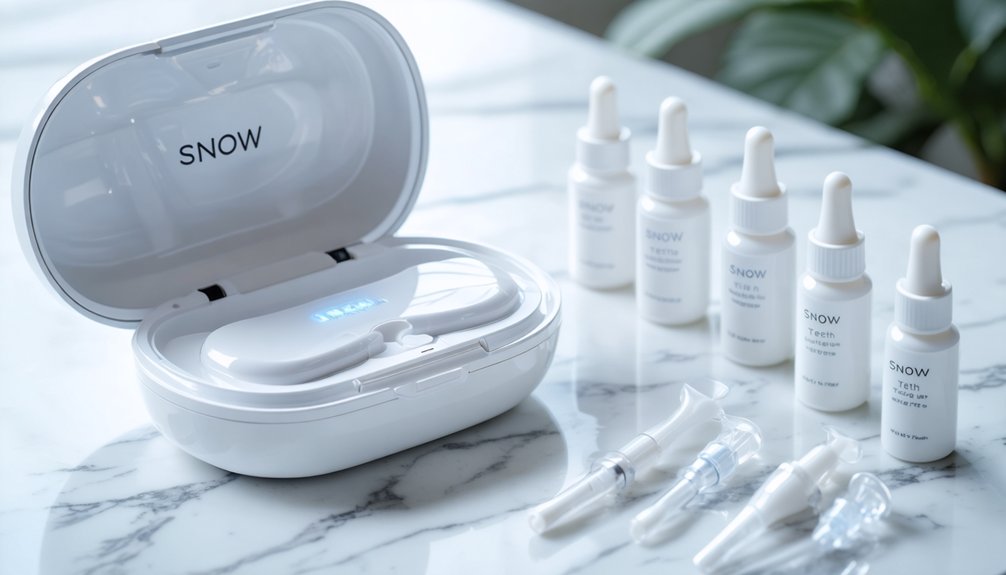
The Snow Teeth Whitening Kit stands out as the top device option for individuals managing tooth sensitivity during whitening treatment. It’s engineered with a lower peroxide concentration, reducing irritation while still delivering measurable whitening results. You maintain control over session duration and frequency, which aligns with evidence-based sensitivity management protocols.
Unlike strips or trays, this device combines light activation with a milder formula, making it compatible with alternative natural remedies like n-hydroxyapatite toothpaste used between sessions.
Integrating supportive lifestyle habits—such as avoiding staining beverages post-treatment and spacing sessions appropriately—enhances your outcomes without intensifying discomfort.
If you experience sensitivity, you can shorten sessions without compromising the system’s overall efficacy. This flexibility makes the Snow Kit a clinically sound choice for sensitive teeth.
Supersmile and Go Smile: Two Gentle Duos for Sensitive Teeth
For those seeking peroxide-free or mild-formula alternatives, Supersmile Professional Teeth Whitening System and Go Smile Professional White Teeth Whitening Gel offer two distinct yet complementary approaches to gentle whitening. Both systems target teeth staining while prioritizing enamel health throughout the process.
- Supersmile combines a whitening toothpaste and accelerator to break down surface stains without harsh oxidizing agents.
- Go Smile delivers a low-concentration gel in single-use vials, giving you precise control over application frequency and dosage.
- Both systems minimize tissue irritation by avoiding high-peroxide formulas that compromise enamel integrity over repeated use.
You can integrate either option into your daily routine incrementally, testing tolerance before committing to a full regimen. These duos suit those prioritizing long-term enamel preservation alongside gradual, controlled whitening results.
Professional Custom Trays: Dentist-Fitted Whitening for Sensitive Teeth
When over-the-counter products fall short, professional custom trays offer a clinically superior alternative for sensitive teeth. Your dentist fits trays precisely to your dental enamel, eliminating gel overflow onto soft tissue and reducing unnecessary irritation. This precision allows you to control both whitening gel concentration and session duration, tailoring treatment to your sensitivity threshold.
Dentist-supervised protocols often incorporate desensitizing agents like potassium nitrate or MI Paste directly into your regimen, further protecting enamel during active treatment.
You can also request lower-strength whitening gel formulas, extended over multiple shorter sessions for gradual, comfortable results.
If sensitivity persists with at-home options, professional custom trays represent the gold standard—giving you measurable outcomes without compromising comfort or long-term dental health.
Frequently Asked Questions
Can Whitening Treatments Worsen Existing Cavities or Gum Disease Symptoms?
Yes, whitening treatments can worsen cavity risk and gum irritation if you have untreated dental issues. You should address existing cavities and gum disease with your dentist before starting any whitening regimen to prevent further complications.
How Long Do Whitening Results Typically Last for People With Sensitive Teeth?
Your smile can last an eternity—realistically, whitening longevity ranges six months to two years. You’ll extend results through consistent sensitivity management, avoiding staining foods, and scheduling periodic touch-up treatments tailored to your tolerance level.
Are Teeth Whitening Products Safe to Use During Pregnancy or Breastfeeding?
You should avoid teeth whitening products during pregnancy due to limited safety data. Pregnancy safety guidelines recommend postponing treatment until after delivery. While breastfeeding precautions are less strict, you’d still benefit from consulting your dentist first.
Can Children or Teenagers With Sensitive Teeth Safely Use Whitening Products?
Is your teen’s smile worth the risk? You should avoid whitening products for children, as pediatric dental safety guidelines caution against them. For teen oral health, consult a dentist before starting any sensitive-teeth whitening regimen.
Does Diet Affect Sensitivity Levels Experienced During a Whitening Regimen?
Yes, diet impact matters during whitening. You’ll worsen sensitivity triggers by consuming acidic foods, cold beverages, or citrus. Avoid these during your regimen to maintain control over discomfort and achieve more consistent, tolerable whitening results.
References
- https://www.forbes.com/sites/forbes-personal-shopper/article/best-whitening-product-for-sensitive-teeth/
- https://www.gentledental.com/resources/articles/teeth-whitening-products
- https://www.reddit.com/r/hygiene/comments/1tf5o5p/best_teeth_whitening_for_sensitive_teeth_that_are/
- https://www.youtube.com/watch?v=Gn6JHl-3wkI
- https://www.goodhousekeeping.com/health-products/g28723133/best-at-home-teeth-whitening-products/
- https://www.forbes.com/sites/forbes-personal-shopper/article/best-whitening-products-for-sensitive-teeth/
- https://www.purpleplumdentistry.com/post/whitening-gel-sensitive-teeth
- https://shopremi.com/blogs/night-mouth-guard-blog/teeth-whitening-for-sensitive-teeth
- https://www.allure.com/gallery/best-teeth-whiteners-for-sensitive-teeth