If you have sensitive teeth, you’ll want to choose whitening products with lower hydrogen peroxide concentrations and apply them every other day rather than daily. Use a desensitizing toothpaste containing potassium nitrate or fluoride before and after each session. Avoid acidic foods and extreme temperatures for 24 to 48 hours post-treatment. Skip sessions if sensitivity persists beyond 48 hours. The strategies below will guide you through safer, more comfortable whitening from start to finish.
Key Takeaways
- Use whitening strips or gels labeled for sensitive teeth, containing lower hydrogen peroxide concentrations to minimize nerve irritation.
- Apply whitening treatments every other day instead of daily, limiting consecutive sessions to prevent enamel degradation.
- Use desensitizing toothpaste with potassium nitrate or fluoride before and after each whitening treatment.
- Avoid hot, cold, and acidic foods for 24-48 hours after whitening to reduce sensitivity triggers.
- Rinse with fluoride mouthwash post-whitening to restore minerals and strengthen enamel against further damage.
Why Does Whitening Hurt Sensitive Teeth?
Why does teeth whitening cause pain for some people? Whitening agents, particularly hydrogen peroxide, penetrate your enamel and reach the dentin layer beneath. When enamel erosion has already thinned your protective outer layer, this penetration happens more rapidly and deeply.
The peroxide then stimulates the nerve endings within your dentin tubules, triggering sharp sensitivity or prolonged discomfort.
If you’ve experienced nerve exposure due to receding gums or existing enamel damage, whitening treatments amplify that vulnerability considerably. Your nerves essentially receive direct chemical stimulation, producing pain that ranges from mild tingling to acute sensitivity.
Understanding this mechanism helps you make informed decisions. You’re not experiencing random discomfort — you’re observing a predictable physiological response that proper product selection and application techniques can meaningfully reduce.
Best Whitening Products for Sensitive Teeth
Choosing the right product makes a significant difference when you have sensitive teeth. Look for whitening strips specifically labeled for sensitive teeth, as they contain lower peroxide concentrations that reduce irritation.
Select toothpaste with potassium nitrate to calm nerve sensitivity and fluoride to support enamel repair between sessions.
If you’re considering professional whitening, consult your dentist first. They’ll assess your enamel’s condition and recommend appropriate concentration levels tailored to your tolerance.
Over-the-counter options with reduced hydrogen peroxide are safer starting points if professional treatment isn’t immediately accessible.
Avoid products containing stannous fluoride, which can increase staining rather than reduce it.
You’ll maintain better control over outcomes by prioritizing clinically tested, sensitivity-formulated products rather than high-strength whiteners that promise faster but potentially damaging results.
How to Whiten Sensitive Teeth Gradually Without Pain
When whitening sensitive teeth, starting with a low-concentration gel over three to four weeks with shorter application times reduces the risk of irritation.
Apply whitening products every other day rather than daily, and skip applications entirely if sensitivity develops. This controlled approach supports enamel repair by giving tissues adequate recovery time between sessions.
For effective pain management, use desensitizing toothpaste containing potassium nitrate before and after each session. Fluoride mouthwash further strengthens enamel and alleviates post-treatment discomfort.
Avoid hot or cold foods for 24 to 48 hours after whitening to minimize nerve irritation.
Always consult your dentist before beginning any whitening regimen. Professional guidance ensures you’re selecting appropriate concentrations and intervals that protect your enamel while still achieving measurable results.
Natural Remedies to Whiten Sensitive Teeth Gently
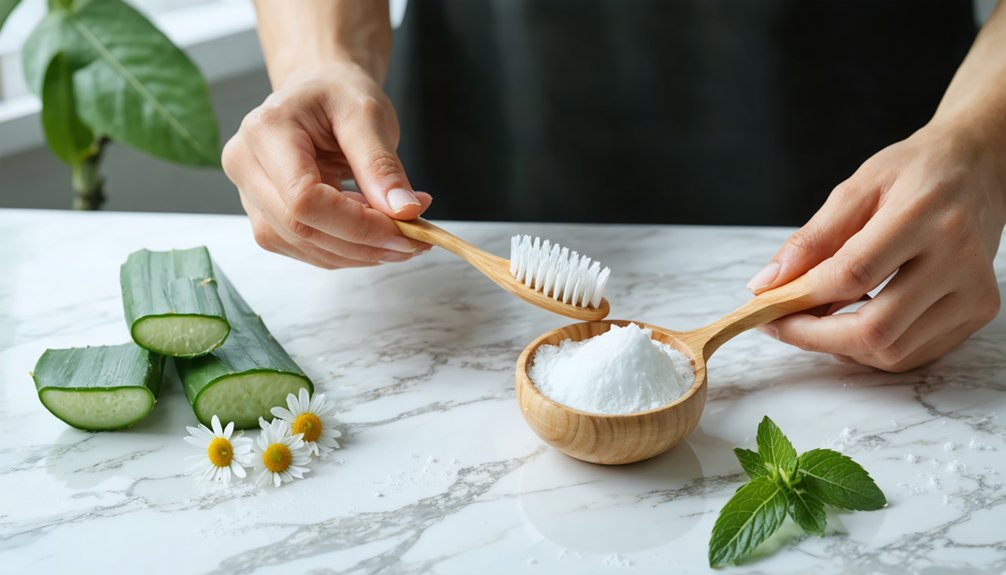
For surface stains, you can mix baking soda with water to form a mild paste and apply it once or twice a week, as its gentle abrasive properties help lift discoloration without harsh chemicals.
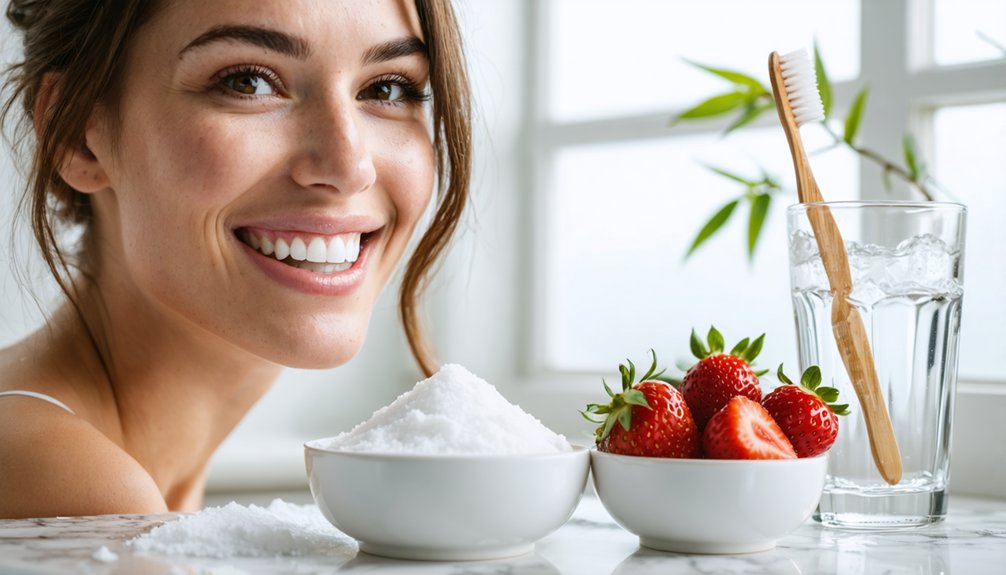
You should also incorporate fiber-rich foods like apples and strawberries into your diet, since their natural texture mechanically scrubs stain-causing residue from enamel.
Both approaches offer low-risk alternatives to peroxide-based products, making them particularly suitable if your teeth are already prone to sensitivity.
Baking Soda Paste Benefits
Baking soda paste offers a gentle, low-abrasion option for addressing surface stains without the harsh chemicals found in many commercial whiteners. It also helps reduce dental plaque while minimizing enamel erosion risk.
Use it strategically by following these evidence-based guidelines:
- Mix baking soda with water to form a thin, consistent paste
- Apply it once or twice weekly—not daily—to avoid cumulative abrasion
- Brush gently using a soft-bristled toothbrush for controlled application
- Rinse thoroughly afterward to remove residual alkaline particles
- Discontinue use if sensitivity increases and consult your dentist
You’re in control of how your teeth respond by limiting frequency and monitoring reactions. This method won’t deliver dramatic results quickly, but it’s a measurably safer starting point for sensitive teeth.
Fiber-Rich Foods Help
Certain fiber-rich fruits work as natural abrasives, scrubbing surface stains from enamel without chemical intervention. Apples and strawberries contain fibrous textures that mechanically lift discoloration while stimulating saliva production, which neutralizes acids and protects enamel integrity. You’re effectively recruiting food itself as a gentle cleansing agent.
However, don’t rely solely on dietary choices. Pair this approach with dental flossing to dislodge stain-producing particles lodged between teeth, where fruits can’t reach. Incorporating tongue scraping also reduces bacterial buildup that contributes to overall oral discoloration.
Together, these habits reinforce a thorough, low-intervention whitening strategy.
Consume apples and strawberries regularly, but rinse your mouth with water afterward, as their natural acids can temporarily soften enamel if left unaddressed. Moderation and consistency yield the most controlled results.
Foods That Stain Teeth and Worsen Sensitivity
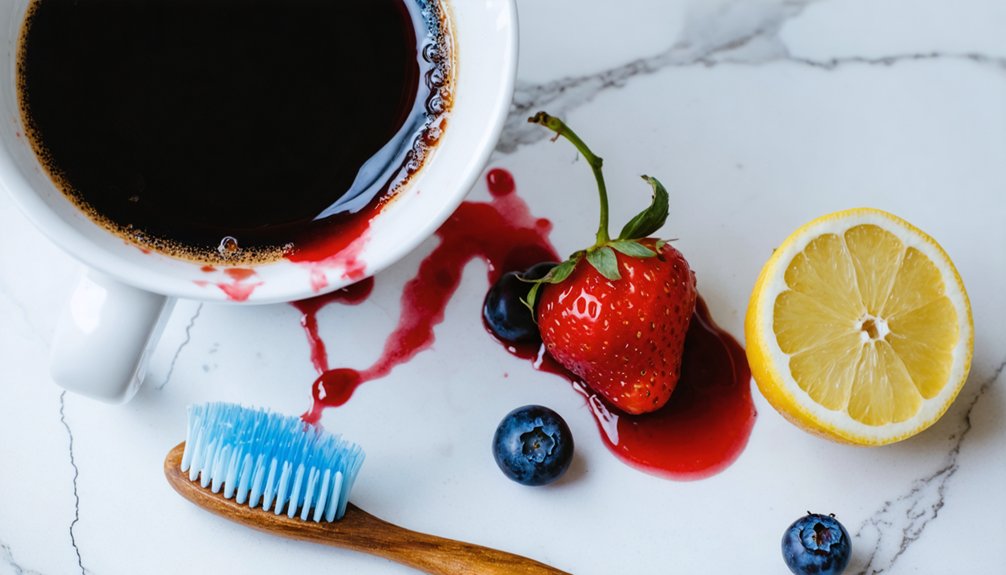
Certain foods and drinks—including coffee, tea, red wine, soda, and berries—contain pigments and acids that stain enamel and heighten tooth sensitivity over time.
You can reduce their impact by drinking acidic beverages through a straw and rinsing your mouth with water immediately after consuming dark-colored foods.
Limiting your intake of these dietary triggers, particularly during and after whitening treatments, helps protect enamel and lowers your risk of increased discomfort.
Common Teeth-Staining Foods
What you eat and drink plays a direct role in both tooth discoloration and enamel sensitivity. Certain foods and beverages accelerate staining, making stain removal techniques more difficult over time.
You’ll want to identify and limit these common culprits:
- Coffee and tea – contain tannins that bind to enamel and deepen teeth discoloration
- Red wine – delivers chromogens and acids that erode enamel while staining surfaces
- Berries – blueberries, blackberries, and pomegranates leave concentrated pigments on enamel
- Soda and acidic drinks – weaken enamel through acid exposure, increasing stain absorption
- Tobacco products – deposit tar and nicotine, producing some of the most persistent stains
Recognizing these sources gives you actionable control over your whitening outcomes and sensitivity management.
Managing Sensitivity From Diet
Beyond avoiding stain-causing foods, you’ll need to understand how certain dietary choices actively worsen tooth sensitivity. Acidic foods like citrus fruits and vinegar erode enamel, exposing sensitive nerve endings and amplifying discomfort during whitening. These are key sensitivity triggers you’ll want to monitor carefully.
Diet modifications should be deliberate and strategic. Avoid acidic foods before and after whitening sessions to prevent compounding irritation. Use a straw when consuming coffee, tea, soda, or wine to minimize direct contact with enamel.
After eating dark-colored or acidic foods, rinse immediately with water to neutralize acids and reduce erosion risk.
You’ll also reduce sensitivity by limiting cold beverages for 24 to 48 hours post-whitening, as temperature extremes aggravate already compromised enamel.
Daily Habits That Protect Sensitive Teeth While Whitening
While whitening your teeth, your daily oral hygiene habits play a critical role in protecting enamel and minimizing sensitivity. Consistent, careful practices reduce irritation and help you maintain progress safely. Incorporate these habits into your routine:
Your daily oral hygiene habits play a critical role in protecting enamel and minimizing sensitivity during whitening.
- Brush twice daily using a soft-bristled toothbrush, applying gentle pressure to avoid enamel wear.
- Practice dental flossing daily to remove stain-causing particles between teeth.
- Add tongue cleaning to your routine to reduce bacteria that contribute to oral irritation.
- Wait at least 30 minutes after whitening before brushing to prevent additional sensitivity.
- Rinse with water immediately after consuming dark-colored foods or beverages to limit staining.
These targeted habits give you direct control over sensitivity levels while supporting your whitening results effectively.
How to Care for Sensitive Teeth After Whitening
Protecting your teeth during whitening builds the foundation, but the care you provide immediately after each session determines how well your enamel recovers.
Apply desensitizing toothpaste containing potassium nitrate or fluoride immediately post-whitening to support enamel repair and reduce nerve activity.
Avoid sensitivity triggers for 24 to 48 hours, including hot beverages, cold drinks, acidic foods, and extreme temperature changes. These exposures stress already-compromised enamel and prolong discomfort.
Rinse with fluoride mouthwash to accelerate mineral restoration and reinforce enamel structure.
Limit consecutive whitening sessions, as overuse degrades enamel progressively.
If sensitivity persists beyond 48 hours, skip your next scheduled session.
You control the pace of your whitening regimen, and cautious post-treatment decisions directly determine both your comfort level and long-term enamel integrity.
Frequently Asked Questions
Can Sensitive Teeth Ever Become Permanently Resistant to Whitening Pain?
Nearly 57% of people report reduced sensitivity over time. You can’t achieve permanent resistance, but consistent tooth desensitization treatments and minimizing enamel erosion gradually lower your pain response, making whitening more tolerable with careful, ongoing care.
Is Professional Whitening Safer Than At-Home Kits for Sensitive Teeth?
Professional whitening’s generally safer for sensitive teeth because your dentist controls the whitening gel concentration, minimizing enamel erosion risks. You’ll receive customized monitoring that at-home kits can’t provide, reducing sensitivity complications effectively.
How Long Should I Wait Before Repeating a Whitening Treatment?
Waiting feels like an eternity, but you should space whitening frequency to every other day, skipping sessions if dental sensitivity flares. You’ll protect your enamel best by allowing 3–4 weeks between full whitening treatment cycles.
Can Children With Sensitive Teeth Safely Use Whitening Products?
You shouldn’t use whitening products on children with sensitive teeth without consulting a dentist first. Prioritize children’s oral health through fluoride treatments instead, as they’re safer and strengthen developing enamel effectively.
Does Teeth Sensitivity From Whitening Indicate Permanent Enamel Damage?
Sensitivity during whitening doesn’t always mean you’ve permanently damaged your tooth enamel. It’s often a temporary response from exposed nerves. You can manage sensitivity causes by using desensitizing toothpaste and spacing out your whitening sessions carefully.
References
- https://www.forbes.com/sites/forbes-personal-shopper/article/best-whitening-product-for-sensitive-teeth/
- https://www.sensodyne.com/en-us/oral-health-tips/whitening-sensitive-teeth/what-to-know/
- https://www.sierrasmiles4u.com/teeth-whitening-for-sensitive-teeth-best-methods-practical-tips/
- https://www.reddit.com/r/beauty/comments/13b8lus/how_to_whiten_extremely_sensitive_teeth/
- https://www.youtube.com/watch?v=E1ln0LeqNnU
- https://www.youtube.com/watch?v=Gn6JHl-3wkI
- https://www.44thstdental.com/how-to-whiten-sensitive-teeth/
- https://www.nextleveldentalstudio.com/post/6-natural-ways-to-safely-try-teeth-whitening-for-sensitive-teeth
- https://supremiadentistry.com/the-5-best-ways-to-whiten-sensitive-teeth/