For dark spots on teeth, your best options include peroxide-based kits like Opalescence Go and Crest 3D Whitestrips, which deliver consistent, clinically supported results. If you have sensitive teeth, peroxide-free alternatives like Lumineux strips use gentler ingredients without sacrificing surface stain removal. Your choice should match the stain type—extrinsic spots respond to OTC peroxide products, while intrinsic discoloration often requires professional treatment. The sections ahead break down exactly what works and why.
Key Takeaways
- Opalescence Go and Crest 3D Whitestrips deliver consistent peroxide-based results proven effective against stubborn dark spots.
- Over-the-counter products containing 3%-10% hydrogen peroxide safely treat surface stains with manageable sensitivity risks.
- Lumineux strips use lemon peel oil, coconut oil, and sage oil, ideal for sensitive teeth avoiding chemical irritants.
- Professional treatments using up to 43% peroxide effectively target intrinsic dark spots resistant to standard whitening products.
- Snow Diamond Wireless Kit uses hydroxyapatite for safe, gentle surface stain removal without harsh chemical exposure.
What Causes Dark Spots on Teeth?
Dark spots on teeth stem from two primary sources: extrinsic stains on the enamel surface and intrinsic discoloration within the tooth structure.
Extrinsic stains develop when pigmented compounds from coffee, tea, red wine, and tobacco bind to your tooth enamel. Saliva protection helps neutralize acids and wash away staining agents, but it can’t eliminate all surface deposits over time.
Intrinsic discoloration originates deeper within the tooth, often resulting from medication exposure, trauma, fluorosis, or developmental irregularities during enamel formation. These internal stains don’t respond to surface-level treatments and typically require professional intervention.
Identifying your stain type determines which whitening approach you’ll need. Surface stains respond well to peroxide-based products, while intrinsic discoloration demands more targeted clinical treatment strategies.
Which Peroxide Strength Is Safe for Dark Spots?
Choosing the right peroxide concentration depends on your stain severity and tooth sensitivity. Over-the-counter products typically contain 3%–10% hydrogen peroxide or 10%–20% carbamide peroxide, making them suitable starting points for mild dark spots.
Start with over-the-counter options containing 3%–10% hydrogen peroxide for mild stains and manageable sensitivity levels.
If you prefer natural remedies, peroxide-free hydroxyapatite or plant-based options offer gentler alternatives with measurable short-term results.
For deeper, more resistant discoloration, professional treatments deliver concentrations up to 43%, providing markedly stronger stain elimination. These in-office options give you precise control over treatment intensity under clinical supervision.
If sensitivity is a concern, start with lower concentrations and progress gradually. Higher peroxide levels correlate directly with greater effectiveness, but they also increase sensitivity risk.
Match your concentration choice to your specific stain depth and tolerance threshold.
Best Whitening Kits for Stubborn Dark Spots
When targeting stubborn dark spots, you’ll find that proven kits like Opalescence Go and Crest 3D Whitestrips deliver measurable results through consistent peroxide-based formulas.
Opalescence Go’s gel-filled trays offer two strength levels, giving you control over treatment intensity based on stain severity.
For effective dark stain removal, you should prioritize kits that maintain direct, prolonged contact with the tooth surface, as molded trays and strips consistently outperform rinses and pastes in clinical outcomes.
Proven Spot-Targeting Kits
Stubborn dark spots require targeted solutions, and the right whitening kit can make a measurable difference in outcomes. While natural remedies offer gentler alternatives, clinically formulated kits deliver more consistent spot-targeting results.
Opalescence Go’s gel-filled trays provide two hydrogen peroxide strength levels, letting you control treatment intensity based on discoloration severity. Its 10% hydrogen peroxide formula matches what professional treatments use in supervised settings.
Crest 3D Whitestrips adhere directly to affected areas, ensuring concentrated contact with dark spots.
SmilePro Advanced Whitening Kit’s integrated timer helps you maintain precise application durations, reducing guesswork.
For sensitive teeth, Opalescence Go’s dual-strength design minimizes discomfort without sacrificing efficacy.
Selecting ADA-approved kits guarantees that safety and effectiveness standards are met before the product reaches you.
Effective Dark Stain Removal
Dark spots that resist standard brushing respond more reliably to clinically formulated whitening kits than to home remedies. Natural remedies like baking soda offer limited penetration against deeply set stains, making peroxide-based systems your stronger option.
Hydrogen peroxide concentrations between 3% and 10% effectively break down discoloration at the surface and subsurface level. Carbamide peroxide formulas, ranging from 10% to 20%, release active agents more gradually, extending contact time with stubborn spots.
Custom-fitted trays and molded LED mouthpieces ensure consistent gel coverage, maximizing stain removal precision. If over-the-counter concentrations don’t produce measurable results within two to three weeks, professional consultations can access treatments reaching up to 43% peroxide concentration, delivering notably stronger outcomes for persistent dark spot cases.
Peroxide-Free Options That Target Dark Spots
For those sensitive to peroxide, natural alternatives like Lumineux strips and the Snow Diamond Wireless Kit effectively target dark spots without harsh chemicals.
Lumineux relies on natural ingredients—lemon peel oil, coconut oil, sage oil, and Dead Sea salt—to break down discoloration while avoiding chemical irritants. These gentle formulations deliver measurable results without compromising enamel integrity.
Lumineux harnesses lemon peel oil, coconut oil, and Dead Sea salt to gently dissolve stains without damaging enamel.
The Snow Diamond Wireless Kit uses hydroxyapatite, a clinically confirmed compound that’s both safe and effective for short-term whitening. Unlike peroxide-based products, hydroxyapatite is considerably less harsh on sensitive teeth while still addressing surface stains.
You’ll find these options particularly useful if you’ve experienced gum sensitivity or enamel discomfort with conventional whiteners. Both products give you precise control over your whitening regimen without sacrificing efficacy.
Trays vs. Strips vs. Pens: Which Method Is Safest?
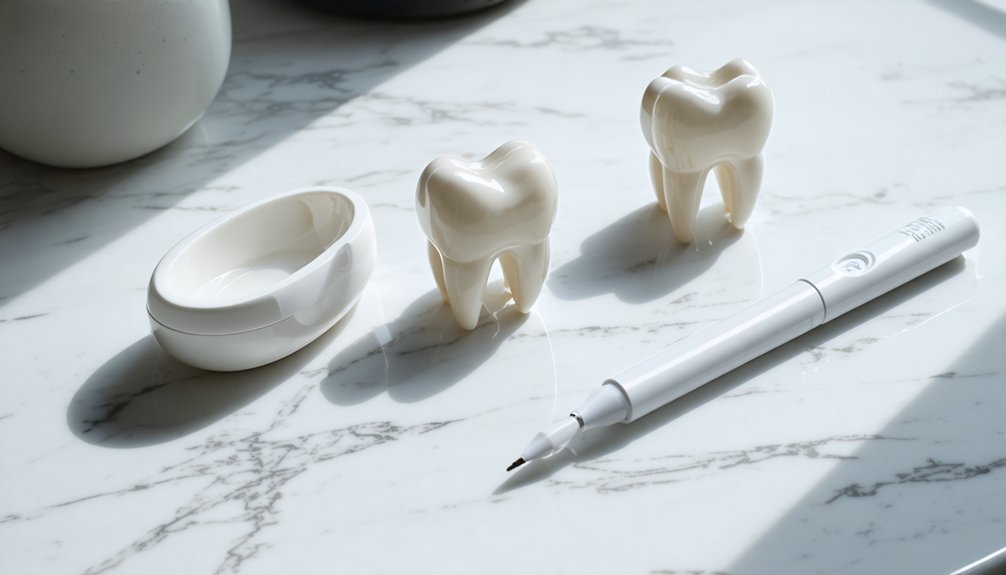
Beyond ingredient choice, delivery method plays a significant role in how safely and effectively a whitening product targets dark spots. Custom-fitted trays and professional treatments deliver the most consistent coverage, minimizing gum exposure and maximizing contact with discolored enamel.
If you prioritize control, molded trays outperform other options.
Strips offer a middle ground—they’re economical, travel-friendly, and effective when applied correctly. However, uneven adhesion can limit results on irregular surfaces where dark spots concentrate.
Pens provide precision for spot treatment but lack the sustained contact needed for deeper stain penetration.
Unlike natural remedies, which offer minimal mechanical delivery, ADA-approved strips, trays, and pens give you verified application methods. Match your method to your specific stain depth for the safest, most targeted outcome.
Daily Habits That Keep Dark Spots From Returning
Once your teeth are whitened, you’ll need to protect that result by cutting back on stain-causing foods and drinks like coffee, tea, red wine, and dark berries.
You should also brush twice daily and floss once daily to clear the plaque and food particles that accelerate discoloration. These two habits form the clinical baseline for preventing dark spots from returning after treatment.
Stain-Causing Foods To Avoid
What you eat and drink daily plays a direct role in whether dark spots return after whitening treatment. Certain foods and beverages actively deposit chromogens onto enamel, reversing progress quickly. Unlike natural remedies or home remedies that address existing stains, avoidance is your most effective preventive tool.
Limit or eliminate these primary offenders:
- Coffee, tea, and red wine – high tannin content accelerates surface staining and penetrates enamel over time.
- Dark berries and sauces – blueberries, soy sauce, and tomato-based products leave concentrated pigment deposits.
- Tobacco products – nicotine and tar create deep, stubborn discoloration resistant to most whitening interventions.
When consumption is unavoidable, rinse with water immediately and wait one hour before brushing to protect enamel integrity.
Daily Brushing And Flossing
Limiting stain-causing foods reduces new pigment deposits, but avoiding them entirely won’t protect you if your daily oral hygiene routine is inconsistent. Dental plaque removal requires brushing twice daily with fluoride toothpaste and flossing once daily.
Plaque accumulation accelerates surface discoloration by trapping chromogens against enamel, making consistent oral health routines non-negotiable for long-term results.
Brush for two full minutes, covering all surfaces systematically. Floss reaches interproximal zones where brushing can’t, eliminating debris that contributes to dark spot formation.
Wait one hour after eating before brushing to avoid abrading softened enamel. Occasional use of a baking soda and hydrogen peroxide mixture can address residual yellow staining.
These controlled, repeatable habits directly determine whether whitening results last or deteriorate.
Frequently Asked Questions
Can Whitening Products Safely Remove Dark Spots on Dental Veneers?
Whitening products can’t treat veneer discoloration—they don’t penetrate porcelain. You’ll need professional veneer removal and replacement to address dark spots effectively. Consult your dentist for evidence-based solutions tailored to your specific condition.
How Long Before Whitening Results on Dark Spots Become Noticeable?
You’ll notice results in what feels like an eternity—typically 1–2 weeks. Home remedies and natural treatments may take longer. Consistent use of ADA-approved peroxide products accelerates visible improvement on dark spots within days.
Are Whitening Products Safe to Use During Pregnancy or Breastfeeding?
You should avoid whitening products during pregnancy and breastfeeding. Pregnancy safety data remains limited, and breastfeeding considerations suggest peroxide absorption risks aren’t fully studied. Consult your dentist before proceeding with any whitening treatment.
Can Dark Spots Return Immediately After Completing a Whitening Treatment?
Yes, they can. Imagine finishing a whitening course, then drinking coffee the next morning—your dark spots may return fast. You’ll need to avoid stain triggers and maintain results with home remedies or natural alternatives like Lumineux strips.
Should Children or Teenagers Use Whitening Products for Dark Spots?
You shouldn’t use whitening products on children without consulting a dentist first. Teen whitening requires professional guidance due to developing enamel. Children’s safety demands evidence-based supervision before applying any peroxide or alternative whitening treatment for dark spots.
References
- https://www.forbes.com/sites/forbes-personal-shopper/article/best-teeth-whitening-kit/
- https://www.health.com/condition/oral-health/teeth-whitening-kits
- https://www.goodrx.com/conditions/dental-care/is-teeth-whitening-safe
- https://www.medicalnewstoday.com/articles/322421
- https://www.goodhousekeeping.com/health-products/g28723133/best-at-home-teeth-whitening-products/
- https://www.health.com/beauty/best-whitening-products-sensitive-teeth
- https://www.gentledental.com/resources/articles/teeth-whitening-products
- https://www.healthline.com/health/dental-and-oral-health/best-teeth-whitening