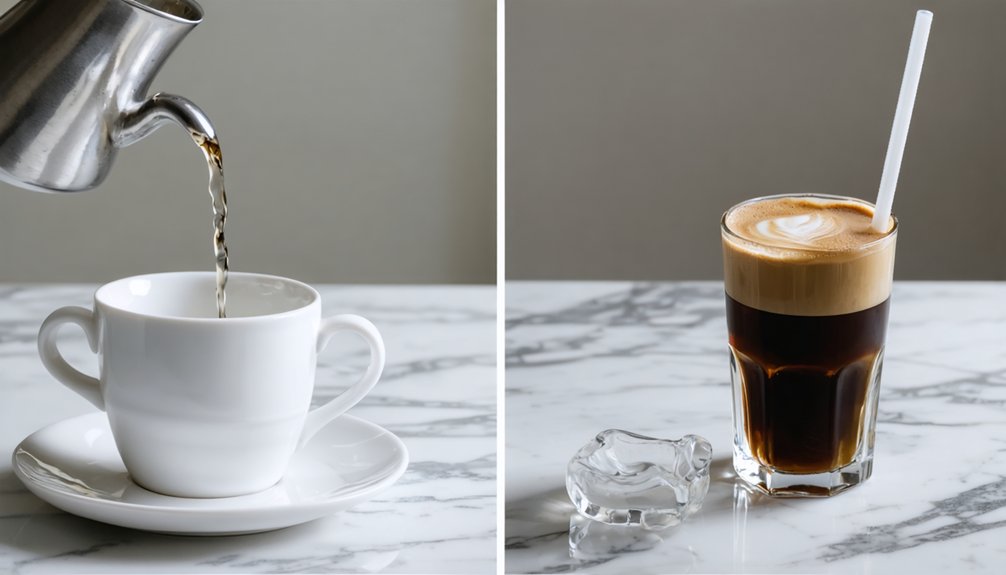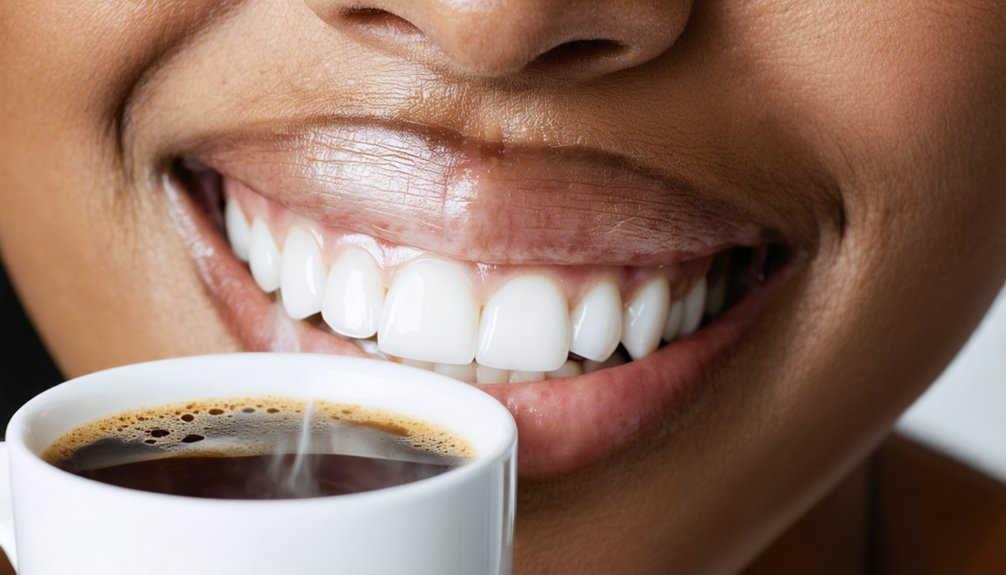
Your best cosmetic dentistry options for coffee stains depend on how deep the discoloration goes. For surface stains, professional in-office whitening can lighten your teeth 6–10 shades in about 90 minutes. Custom tray whitening maintains those results long-term by penetrating into dentin. If you’ve got stubborn intrinsic stains that won’t respond to whitening, bonding or veneers provide complete coverage. The right treatment starts with matching the solution to your stain’s severity—and there’s plenty more to unpack.
Key Takeaways
- In-office whitening uses high-concentration peroxide with LED light, achieving 6–10 shade improvements in approximately 90 minutes for surface coffee stains.
- Custom tray whitening penetrates dentin for longer-lasting results, often bundled with in-office treatment for comprehensive stain correction.
- Whitening treatments are ineffective for deep intrinsic stains; bonding or veneers are required for full cosmetic correction.
- Mild surface stains respond well to whitening toothpaste and consistent brushing, while moderate stains benefit from professional whitening.
- Professional diagnosis distinguishes extrinsic from intrinsic stains, ensuring treatment is precisely matched to stain severity and type.
Why Coffee Stains Teeth in the First Place
Coffee contains tannins—polyphenolic compounds that bind readily to tooth enamel, leaving behind yellow or brown pigment deposits. The coffee brewing process concentrates these tannins, meaning darker roasts and longer brew times increase stain potential.
Your enamel’s microscopic surface pores absorb these pigments on contact, and repeated exposure deepens stain penetration into the dentin layer beneath. Acidity accelerates this process by temporarily softening enamel, making it more porous and vulnerable to pigment absorption.
Saliva can’t fully neutralize this effect fast enough to prevent bonding. Understanding this mechanism gives you a clear advantage—you can target interventions at each stage, from limiting initial contact to disrupting tannin adhesion before permanent discoloration sets in.
Daily Brushing, Rinsing, and Straws That Prevent Coffee Stains
Because tannins bond to enamel on contact, intercepting them before they penetrate is far more effective than reversing damage after the fact. Every coffee bean contains chromogens that initiate stain formation within seconds of contact, so your prevention protocol must be immediate and consistent.
Brush at least twice daily to disrupt plaque that traps pigments against enamel.
After finishing your coffee, rinse vigorously with water for 10–15 seconds to flush tannins and acids before they bind.
Wait 30–60 minutes before brushing, since acid temporarily softens enamel and premature brushing accelerates wear.
Drinking coffee through a straw redirects liquid past your front teeth, markedly reducing chromogen exposure on visible surfaces.
These three habits—brushing, rinsing, and straw use—give you direct, daily control over stain formation.
What Professional Whitening Can Actually Do for Coffee Stains
When daily prevention isn’t enough to reverse existing discoloration, professional whitening delivers measurable results that home remedies can’t match. In-office treatment uses high-concentration peroxide activated by LED light, achieving 6–10 shade lightening in a single 90-minute appointment.
You’ll experience transient cold sensitivity for 1–3 days post-treatment, but results are immediate and significant.
For sustained stain prevention, combining in-office whitening with custom tray maintenance is your most effective long-term strategy. The professional-grade gel penetrates dentin rather than polishing the surface, which means results last far longer than over-the-counter alternatives.
Maintaining consistent dental hygiene alongside this combination approach preserves your lighter shade indefinitely, even with continued coffee consumption.
This two-phase protocol costs $700–$1,000 and outperforms any single-method solution.
How Much Do Professional Coffee Stain Treatments Cost?
When budgeting for professional coffee stain removal, you’ll encounter three main pricing tiers: in-office whitening runs $400–$700 for a single 90-minute session.
While custom tray home whitening offers a more cost-effective long-term alternative.
If you combine both approaches for immediate results plus ongoing maintenance, expect to invest $700–$1,000 total.
Your choice ultimately depends on how quickly you want results and how committed you’re to preserving them despite continued coffee intake.
In-Office Whitening Costs
If you’re considering professional whitening to combat coffee stains, understanding the cost breakdown helps you choose the right treatment. A single in-office whitening appointment typically runs $400–$700, delivering 6–10 shade improvements within 90 minutes using high-concentration peroxide activated by LED light.
Your dentist performs color matching beforehand to document your baseline shade and track measurable results. This precision also guides treatment intensity based on your enamel health, ensuring the peroxide concentration doesn’t compromise tooth structure during the session.
For longer-term control, combining in-office whitening with custom tray maintenance totals $700–$1,000 but sustains results indefinitely despite continued coffee intake.
Custom trays penetrate dentin rather than just polishing the surface, making them significantly more durable than single-session alternatives.
Custom Tray Pricing
Custom tray home whitening stands out as the most cost-effective long-term solution for managing coffee stains. It is typically bundled into the $700–$1,000 combination approach that includes an initial in-office session.
The trays themselves, paired with professional-grade gel, penetrate into dentin rather than just polishing the surface. This gives you results that outlast over-the-counter alternatives markedly.
One of the most persistent whitening myths is that dental insurance covers cosmetic whitening—it doesn’t. You’ll need to budget out-of-pocket.
However, the long-term value justifies the investment, since custom trays allow you to perform periodic touch-ups at home, extending your results indefinitely despite continued coffee consumption.
Compared to repeated professional appointments, maintaining your shade through custom trays keeps your annual costs substantially lower while keeping you in control of your results.
Combination Treatment Expenses
Combining in-office whitening with a custom tray maintenance plan runs $700–$1,000 total, making it the most all-encompassing option for coffee drinkers who want immediate results and long-term control.
You’ll get the immediate 6–10 shade lift from the in-office session, then maintain those results using your custom trays at home.
Treatment longevity is the key advantage here—unlike standalone polishing that reverts within 3–6 months, this combination sustains your results indefinitely with periodic tray use.
Dental insurance rarely covers cosmetic whitening, so you’ll need to budget out-of-pocket.
However, the long-term cost efficiency justifies the upfront investment, since you’re avoiding repeated in-office appointments.
If you’re committed to daily coffee and a consistently bright smile, this combination approach delivers the most durable, clinically validated outcome available.
When Whitening Fails: Bonding and Veneers for Stubborn Coffee Stains
Sometimes, whitening treatments simply can’t penetrate deep enough to correct intrinsic staining caused by years of coffee consumption. When surface and professional methods fail, you have two precise restorative options: dental bonding and veneer placement.
Whitening can’t always fix deep, intrinsic staining—dental bonding and veneers offer precise, targeted correction when bleaching fails.
Dental bonding applies a tooth-colored composite resin directly over isolated dark spots, preserving your natural tooth structure while masking discoloration that bleaching can’t reach. It’s a conservative, cost-effective solution for targeted staining.
When discoloration is widespread, uneven, or accompanied by shape irregularities, veneer placement delivers thorough correction. Porcelain veneers adhere to the front surface of affected teeth, covering intrinsic stains completely. Unlike whitening, veneers aren’t susceptible to future coffee staining on the treated surfaces.
Both options give you precise, lasting control over your smile’s appearance.
Mild Surface Stains vs. Deep Discoloration: Which Treatment Fits?
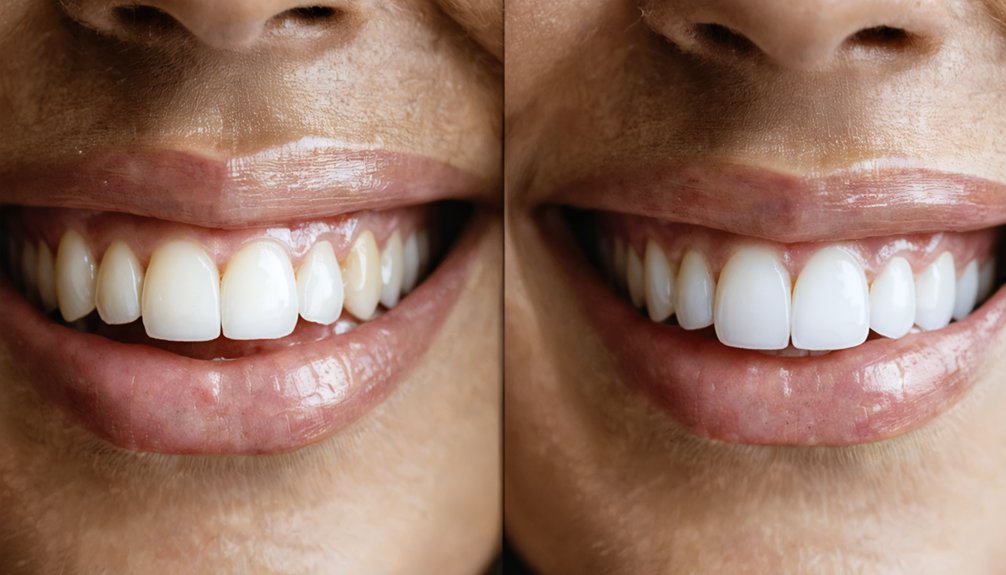
Before choosing a treatment, you need to identify whether your staining is extrinsic—surface-level discoloration caused by tannin buildup—or intrinsic, meaning pigments have penetrated the dentin layer.
Mild surface stains respond well to whitening toothpaste, baking soda paste, or professional in-office bleaching, which can lighten teeth by up to 10 shades in a single session.
Deep, intrinsic discoloration that whitening can’t reach requires bonding or veneers to achieve complete coverage and lasting cosmetic results.
Identifying Your Stain Type
When coffee stains your teeth, not all discoloration responds to the same treatment—so identifying your stain type is the critical first step. Surface stains, or extrinsic stains, accumulate on enamel from tannins and acids in coffee.
You’ll typically notice yellowish-brown deposits that consistent brushing, dental flossing, and whitening toothpaste can address effectively.
Deep, or intrinsic, stains penetrate the dentin layer beneath enamel. These appear grayish or dark brown and won’t respond to standard whitening protocols.
A proper stain analysis by your dentist distinguishes between these two categories through visual examination and sometimes X-ray assessment.
Knowing your stain classification lets you pursue the correct intervention immediately—whether that’s professional whitening for surface discoloration or bonding and veneers for deeper, structurally embedded pigmentation.
Matching Treatments To Severity
Once you’ve identified whether your stains are extrinsic or intrinsic, you can match the appropriate treatment to their severity.
For mild surface stains, consistent brushing eliminates dental plaque that traps coffee pigments, while whitening toothpaste or professional custom trays lift discoloration without compromising enamel integrity. Rinsing immediately after coffee prevents tannin bonding before stains penetrate deeper layers.
For moderate staining, in-office whitening delivers 6–10 shade improvement in a single 90-minute session, with custom tray maintenance extending results indefinitely.
For deep, intrinsic discoloration that whitening can’t reach, bonding or veneers provide complete coverage.
Be cautious with abrasive natural remedies like activated charcoal, as overuse accelerates enamel erosion, permanently weakening tooth structure. Match treatment intensity precisely to stain depth to avoid unnecessary damage.
Do Home Remedies Remove Coffee Stains or Just Waste Your Time?
How effective are home remedies at removing coffee stains? The answer depends on stain depth. Natural remedies and home kits address surface discoloration, but they won’t penetrate dentin where deeper stains reside. Here’s what actually works:
- Hydrogen peroxide rinse (equal parts water) lifts mild surface stains when used consistently but won’t replace professional-grade concentration.
- Baking soda paste applied once or twice weekly removes surface pigmentation without damaging enamel.
- Whitening strips and toothpaste polish surface stains over weeks but can’t correct intrinsic discoloration.
Activated charcoal carries enamel wear risks if overused, and apple cider vinegar requires strict moderation.
You can control mild staining with disciplined home care, but moderate-to-severe discoloration demands professional intervention for measurable, lasting results.
Frequently Asked Questions
Can Teeth Whitening Results Be Maintained While Drinking Coffee Daily?
Yes, you can maintain whitening longevity while drinking coffee daily. Combine in-office treatments with custom trays for effective coffee stain removal, rinse after each cup, and brush twice daily to preserve your results indefinitely.
Are Coffee Stain Treatments Safe for People With Dental Crowns?
Most coffee stain removal methods won’t damage dental crown durability, but they won’t whiten crowns either. You’ll need to match treatments to your natural teeth, ensuring consistent color without compromising existing restorations.
Does Teeth Whitening Affect Gum Health or Cause Long-Term Damage?
Every cloud has a silver lining—teeth whitening’s gum sensitivity is temporary, not permanent. You’ll experience short-term irritation, but long-term effects remain minimal when you follow professional guidelines and don’t overuse treatments beyond recommended intervals.
How Does Coffee Staining Differ Between Natural Teeth and Dental Implants?
Your natural tooth porosity absorbs coffee tannins deeply into enamel, while dental implant discoloration stays surface-level since ceramic crowns don’t absorb pigments. You’ll find implants resist staining better, but they’re not entirely immune.
Can Pregnant Women Safely Undergo Cosmetic Whitening for Coffee Stains?
You shouldn’t undergo cosmetic whitening during pregnancy—it’s an absolute no. Pregnancy considerations demand strict safety precautions, as peroxide compounds may harm fetal development. You’ll want to postpone all whitening treatments until after delivery for complete protection.
References
- https://www.fergusondental.com/what-is-the-best-cosmetic-dental-treatment-for-stained-teeth/
- https://www.giangrecofamilydental.com/6-ways-to-remove-coffee-stains-from-your-teeth/
- https://www.drlattinelli.com/category/veneers/
- https://harborcreekdental.com/can-a-dentist-remove-deep-coffee-stains/
- https://www.healthline.com/health/dental-and-oral-health/what-does-coffee-do-to-your-teeth
- https://glistendentalstudio.com/whiten-coffee-stained-teeth-gilbert/
- https://www.goodrx.com/conditions/dental-care/remove-coffee-stains-teeth
- https://west17avedental.ca/blog/teeth-whitening-for-coffee-stains/