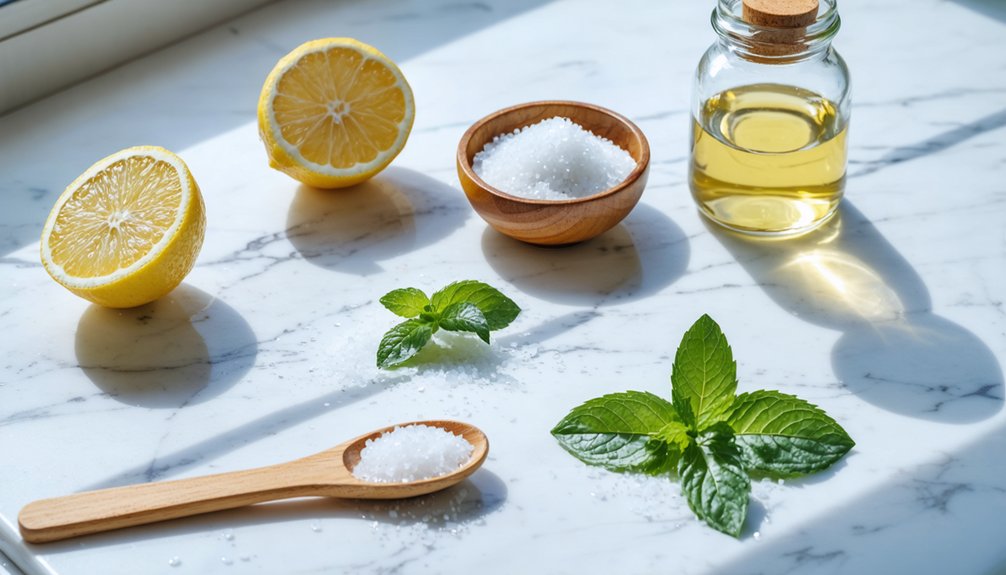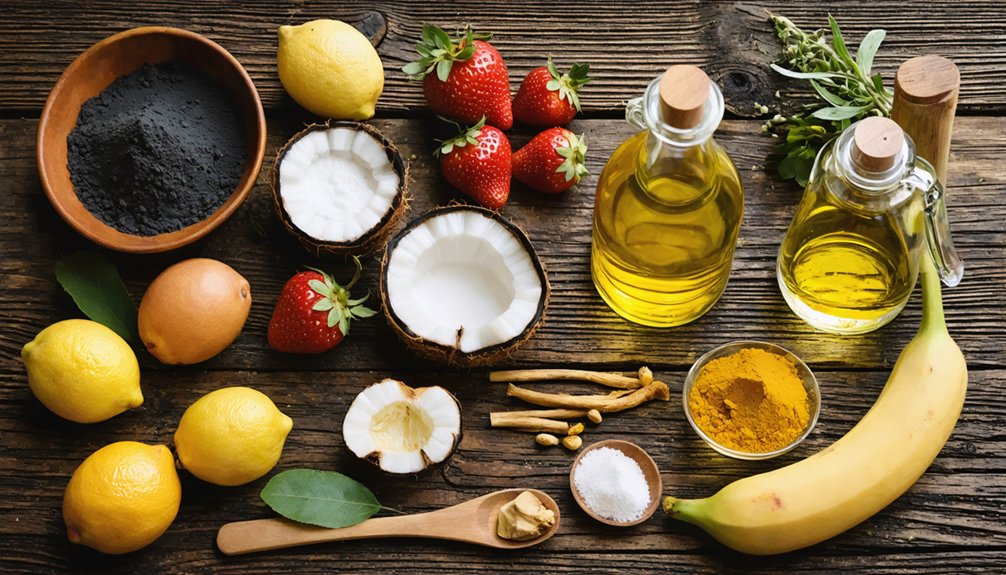
You can whiten stained teeth naturally by brushing twice daily with fluoride whitening toothpaste and flossing consistently to control surface buildup. Use baking soda paste occasionally, try coconut oil pulling for 15–20 minutes, or apply a strawberry-baking soda mixture for gentle stain reduction. Rinse with green tea, rub orange peel on teeth, or use diluted apple cider vinegar sparingly. Over-the-counter whitening strips and pens offer deeper results. Keep exploring to discover exactly how each method works and which suits you best.
Key Takeaways
- Brush with a baking soda and water paste using circular motions a few times weekly to gently lift surface stains.
- Swish one tablespoon of coconut oil for 15–20 minutes daily to reduce surface stains naturally.
- Dilute apple cider vinegar with water and swish briefly a few times weekly to break down coffee and wine stains.
- Rub the inside of an orange or banana peel on teeth for 1–2 minutes before brushing for easy stain reduction.
- Limit staining foods like coffee, red wine, and cola, and rinse with water immediately after consumption.
Brush and Floss Your Way to Whiter Teeth
Brushing at least twice daily with a fluoride whitening toothpaste and flossing once a day remains the most effective natural approach to whiter teeth. Each brushing session should last two minutes, ensuring you cover all surfaces thoroughly.
Dental flossing removes plaque and surface stains lodged between teeth where your brush can’t reach, directly reducing discoloration over time.
Enamel protection is equally critical. After consuming staining foods or acidic beverages, wait 30 to 60 minutes before brushing. Brushing too soon softens and erodes enamel, accelerating discoloration rather than preventing it.
Instead, rinse with water immediately after eating or drinking.
You don’t need expensive treatments to maintain noticeably whiter teeth. Consistent brushing and flossing give you direct, proven control over surface stain buildup.
Foods and Drinks That Stain Teeth Most
Several foods and drinks work against your whitening efforts by depositing pigment-rich compounds directly onto tooth enamel. Coffee, red wine, dark berries, tea, and cola contain chromogens and tannins that bind to enamel and accelerate staining.
Coffee, red wine, and dark berries deposit stain-causing compounds directly onto enamel, accelerating discoloration over time.
Acidic beverages weaken enamel temporarily, making it easier for dental plaque to trap pigments against tooth surfaces.
Sugar-heavy foods feed oral bacteria, producing acids that etch enamel and create rougher surfaces where stains adhere more readily. You don’t have to eliminate these foods entirely, but moderating your intake gives you measurable control over discoloration.
When you do consume staining foods or drinks, rinse your mouth with water immediately and wait 30 minutes before brushing to protect enamel while still limiting pigment absorption.
How Baking Soda Removes Surface Stains Naturally
You can make a simple baking soda paste by mixing 1 teaspoon of baking soda with 2 teaspoons of water, then brushing with it regularly to tackle surface stains.
Baking soda’s mild abrasive properties physically scrub away discoloration on enamel without causing significant damage when used correctly.
Studies confirm that baking soda-based products work effectively on surface stains over time, making this a well-supported, low-cost whitening option.
Baking Soda Paste Formula
Baking soda works as a mild abrasive that physically buffs away surface stains without damaging enamel when used correctly. To make an effective paste, mix 1 teaspoon of baking soda with 2 teaspoons of water until it forms a smooth consistency. Apply it with your toothbrush using gentle circular motions for one to two minutes, then rinse thoroughly.
For stronger results, combine baking soda with a few drops of 3% hydrogen peroxide. Use this formula occasionally—not daily—to avoid enamel sensitivity.
Pair this routine with dental flossing to clear plaque from areas your brush can’t reach.
You’ll also want to check your toothpaste ingredients for sodium bicarbonate, as commercial formulas containing it deliver more consistent whitening than DIY pastes alone.
Surface Stain Removal Benefits
One of baking soda’s most practical advantages is its ability to lift surface stains through mild mechanical abrasion. Unlike harsh dental restoration procedures, it works gently against discoloration caused by coffee, tea, and wine without damaging enamel when used correctly.
Studies consistently show that baking soda-based products outperform non-baking soda formulas in removing surface stains over time, giving you measurable results with regular use.
For your oral health, this matters because surface stains compound over time, making professional intervention more likely if left unaddressed. By incorporating baking soda into your routine strategically, you’re taking direct control over stain accumulation before it progresses.
The evidence supports its effectiveness, making it a reliable, low-cost option for maintaining visibly cleaner teeth between professional cleanings.
How to Use Baking Soda on Your Teeth Safely
When used correctly, baking soda can effectively lift surface stains without damaging your enamel. It’s mildly abrasive, making it useful for removing discoloration without causing enamel erosion when applied properly.
If you experience dental sensitivity, limit use to a few times per week.
Follow these safe application methods:
- Mix 1 teaspoon of baking soda with 2 teaspoons of water to form a controlled, consistent paste
- Brush gently for 1 to 2 minutes, avoiding aggressive scrubbing that accelerates enamel erosion
- Combine with 3 drops of 3% hydrogen peroxide for enhanced stain-lifting power
- Limit sessions to occasional weekly use to prevent dental sensitivity from developing over time
Consistency matters more than frequency—use it strategically alongside your regular fluoride toothpaste routine.
How to Do Coconut Oil Pulling for Whiter Teeth
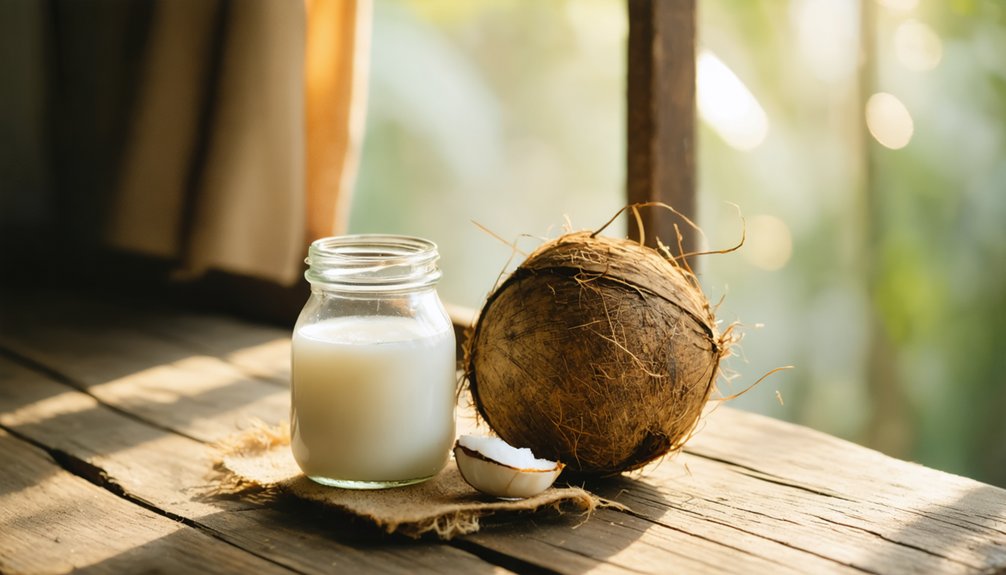
To do coconut oil pulling, place 1 tablespoon of coconut oil in your mouth, let it melt slightly, then swish and pull it through your teeth for 15 to 20 minutes.
Spit the oil out after the session — never swallow it, as it contains pulled bacteria and toxins.
Practice this technique daily, ideally in the morning before eating or brushing, for consistent whitening results over time.
Oil Pulling Steps
Oil pulling takes just a few simple steps to perform effectively. Consistency matters most, so follow this straightforward process to support dental plaque removal and gum health:
- Allow 1 tablespoon of coconut oil to melt slightly at room temperature before starting.
- Swish the oil through your teeth for 15 to 20 minutes, ensuring full coverage.
- Spit the oil into a trash can—never the sink, as it can clog pipes.
- Rinse your mouth thoroughly with water, then brush normally.
You’ll want to perform this routine daily, ideally in the morning before eating.
Over time, oil pulling may reduce surface bacteria that contribute to staining, supporting both a cleaner mouth and visibly brighter teeth.
Timing and Frequency
For best results, you’ll want to practice oil pulling once daily, ideally in the morning before eating or drinking anything. This timing maximizes bacteria removal accumulated overnight, directly supporting your dental hygiene routine.
Consistency matters more than duration. Aim for 15 to 20 minutes per session, but don’t exceed this window — longer sessions won’t accelerate whitening and may cause jaw fatigue. If you’re new to oil pulling, start with 5 minutes and gradually increase.
Incorporate oil pulling into your broader oral health regimen by following each session with thorough brushing and flossing. Results typically appear after several weeks of daily practice.
Skipping sessions frequently will undermine progress, so treat it as a non-negotiable step in your morning routine.
Mix Strawberries and Baking Soda for Natural Whitening
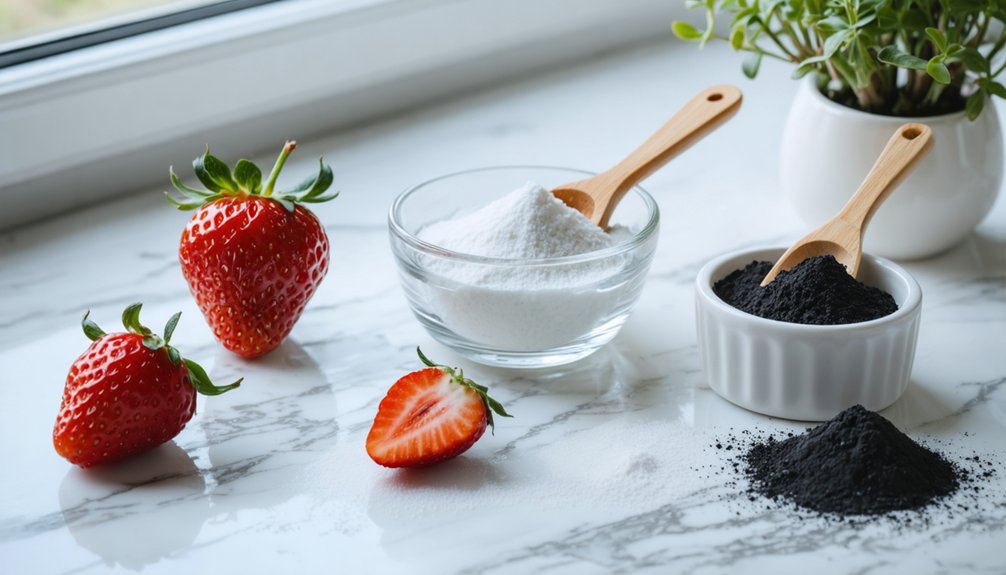
Strawberries contain malic acid, a natural compound that helps break down surface stains on enamel. Combined with baking soda, this DIY treatment becomes one of the more accessible natural remedies for brightening your smile at home.
How to apply this method:
- Mash one ripe strawberry thoroughly until smooth
- Mix in a pinch of baking soda to form a paste
- Apply the mixture to your teeth and leave it on for 2 to 3 minutes
- Rinse completely, then brush with your regular fluoride toothpaste
Use this technique occasionally rather than daily, as malic acid can erode enamel with overuse.
You’re in control of how often you apply it—moderation ensures you whiten effectively without compromising your enamel’s structural integrity.
Is Apple Cider Vinegar Safe for Whitening Teeth?
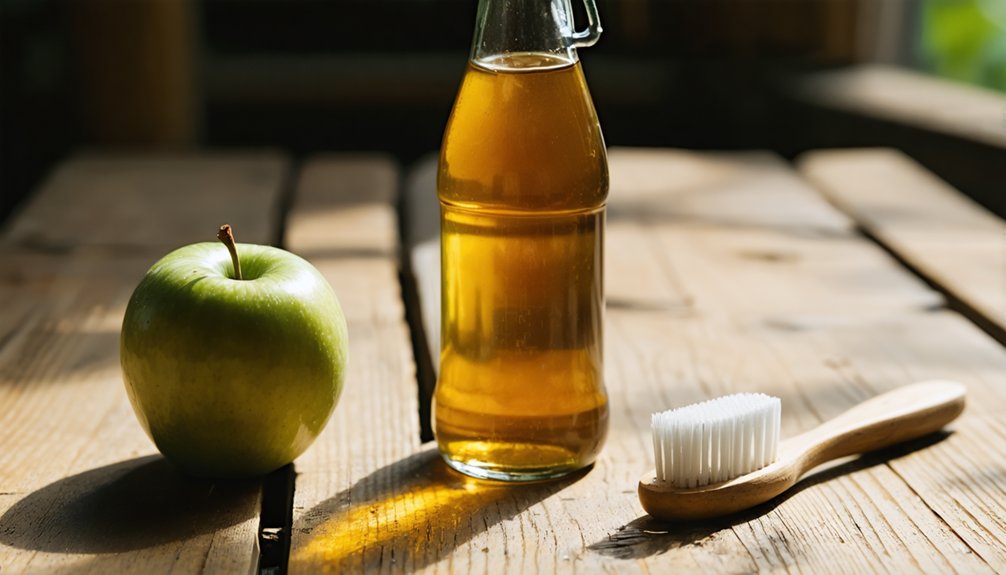
Apple cider vinegar (ACV) offers mild whitening benefits due to its acetic acid content, which can break down surface stains from coffee, wine, and tobacco.
To use it safely, dilute 1 teaspoon of ACV in 2 teaspoons of water, swish for 1 to 2 minutes, then rinse thoroughly.
However, its acidic nature poses real enamel erosion risks, so you shouldn’t use it more than a few times per week.
ACV Whitening Benefits
Many people turn to apple cider vinegar (ACV) as a natural teeth-whitening remedy, but its safety is questionable. ACV contains acetic acid, which may remove surface stains, but repeated exposure erodes enamel permanently. If you choose ACV over alternative herbal remedies or professional whitening options, use it cautiously.
Key benefits and risks to weigh:
- Antibacterial properties may reduce bacteria contributing to discoloration
- Acetic acid breaks down surface stains from coffee, wine, and dark foods
- Diluted application — 1 teaspoon ACV in 2 teaspoons water — minimizes enamel damage
- Limited use is critical; overuse accelerates irreversible enamel erosion
Swish the diluted solution for one to two minutes, then rinse thoroughly. Never brush immediately afterward — wait at least 30 minutes to protect weakened enamel.
Safe Usage Guidelines
While ACV offers some whitening potential, it’s not entirely safe for regular use. Its high acidity can erode enamel safety over time, weakening your teeth and increasing sensitivity.
You should always dilute 1 teaspoon of ACV in 2 teaspoons of water before swishing for 1 to 2 minutes. Never use it undiluted or excessively, as repeated acid exposure accelerates enamel breakdown.
Limit ACV rinses to a few times per week rather than daily. After rinsing, wait 30 minutes before brushing to protect softened enamel.
Pair this practice with consistent dental flossing to remove plaque that contributes to discoloration.
If you experience increased tooth sensitivity, discontinue use immediately and consult your dentist for safer whitening alternatives.
Potential Enamel Risks
Though apple cider vinegar shows some whitening potential, its acidity poses real risks to your enamel. Frequent or undiluted use accelerates enamel erosion, permanently weakening your teeth’s protective layer and increasing tooth sensitivity.
Control your exposure by following these precautions:
- Always dilute — mix 1 teaspoon of apple cider vinegar with 2 teaspoons of water before use
- Limit contact time — swish for no more than 1 to 2 minutes
- Restrict frequency — avoid daily use to prevent cumulative enamel damage
- Rinse thoroughly — follow with water to neutralize residual acidity before brushing
Enamel doesn’t regenerate once lost. If you already experience tooth sensitivity, consult your dentist before incorporating apple cider vinegar into your whitening routine.
How to Use Activated Charcoal to Whiten Teeth
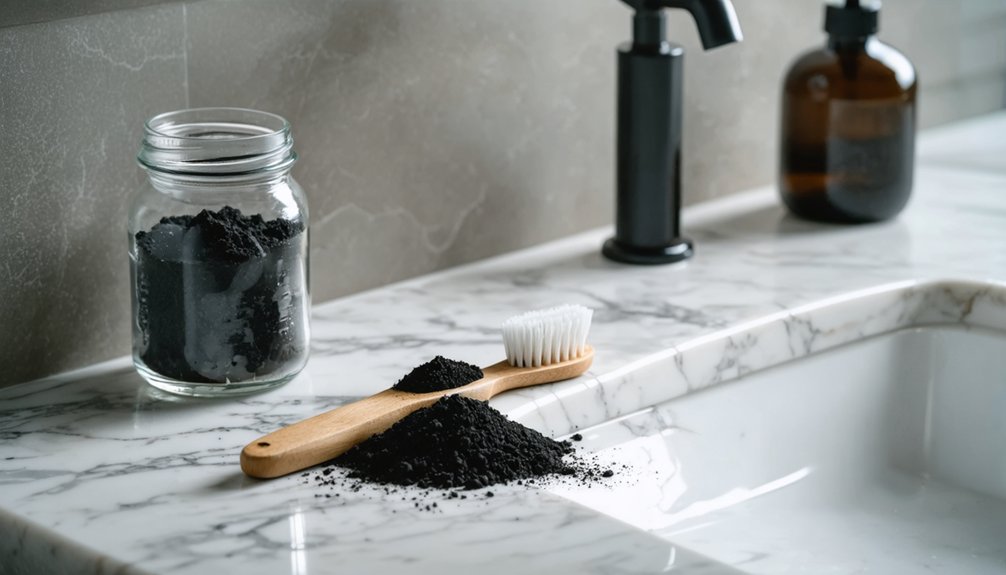
Activated charcoal is a popular natural remedy for surface stains, and using it correctly takes just a few simple steps. Wet your toothbrush, dip it into activated charcoal powder, and brush gently for two minutes. Rinse thoroughly afterward.
Despite teeth whitening myths, charcoal doesn’t bleach enamel or reverse deep discoloration — it only lifts surface stains caused by natural stain causes like coffee, tea, and wine. It works through adsorption, binding to stain-causing compounds on the enamel’s surface.
Use this method sparingly, as frequent application may wear down enamel over time.
If you’re seeking controlled, consistent results, pairing occasional charcoal use with fluoride toothpaste and twice-daily brushing offers a more balanced, evidence-supported approach to maintaining a noticeably brighter smile.
Try Green Tea, Orange Peel, and Other Quick Fixes
Beyond charcoal and baking soda, several everyday ingredients offer quick, low-effort ways to reduce surface staining. These herbal remedies and home remedies let you take direct control over your whitening routine without complex preparation.
Try these targeted approaches:
- Green tea rinse: Brew green tea, let it cool, then swish it daily as a mouth rinse to combat surface stains.
- Orange peel rub: Rub the inside of an orange peel on your teeth for 1–2 minutes before brushing.
- Banana peel rub: Rub a ripe banana peel on your teeth for 2 minutes before your regular brushing session.
- Whitening pen: Apply a hydrogen peroxide gel whitening pen directly after consuming staining foods or beverages for immediate intervention.
Whitening Strips and Pens That Actually Work
When you want reliable, fast results, over-the-counter whitening strips and pens deliver proven performance backed by clinical evidence. Strips containing hydrogen peroxide penetrate enamel to break down deep stains, while whitening pens apply targeted hydrogen peroxide gel directly after consuming staining foods or beverages.
To maximize results, pair these products with consistent dental flossing, which removes plaque and surface stains before treatment, allowing active ingredients better contact with tooth surfaces. Check toothpaste ingredients as well — formulas carrying the ADA Seal of Acceptance with sodium bicarbonate or low-concentration peroxide complement strip and pen treatments effectively.
Always follow manufacturer instructions precisely. Overuse can compromise enamel integrity. When you use these tools strategically alongside strong oral hygiene habits, you’ll achieve measurably whiter teeth faster than most natural remedies alone.
Frequently Asked Questions
Can Banana Peels Really Help Whiten Teeth Naturally at Home?
Like a gentle polish on fine wood, banana peel benefits your smile subtly. For natural teeth whitening, rub the inside of a ripe peel on your teeth for two minutes before brushing daily.
Is Oil Pulling With Sesame or Olive Oil Equally Effective?
You can use sesame vs olive oil interchangeably for oil pulling benefits. Swish either one tablespoon for up to 20 minutes daily to effectively pull bacteria, supporting a cleaner, potentially brighter smile naturally.
Does Cutting Back on Sugar Actually Make Teeth Visibly Whiter?
Sugar reduction acts as a dimmer switch on discoloration—you won’t see dramatic visible improvement, but cutting back supports overall dental health, which indirectly helps you maintain whiter, healthier-looking teeth over time.
How Does Lemon Juice Mixed With Water Affect Tooth Enamel?
When you apply lemon juice mixed with water, you’re risking enamel erosion due to its high acidity, which creates a pH imbalance on your tooth surface. Always rinse thoroughly after application to minimize long-term damage.
Are Whitening Pens Safe to Use After Every Staining Beverage?
Don’t drown your smile in whitening pens after every sip! For solid dental hygiene, you’d select whitening pens with hydrogen peroxide gel post-staining beverages—but professional whitening guidance guarantees you’re not overusing them dangerously.
References
- https://www.healthline.com/nutrition/whiten-teeth-naturally
- https://mypenndentist.org/dental-tips/2024/02/29/safe-ways-to-whiten-teeth-naturally/
- https://www.mydentaloffice.com/10-home-remedies-for-whiter-teeth-that-actually-work/
- https://www.mouthhealthy.org/all-topics-a-z/natural-teeth-whitening
- https://www.medicalnewstoday.com/articles/322421
- https://www.youtube.com/watch?v=S8kPjMd8akI
- https://www.youtube.com/watch?v=6VxphLA7LD8
- https://www.medicalnewstoday.com/articles/321172
- https://www.wikihow.com/Whiten-Teeth
- https://www.webmd.com/oral-health/ss/slideshow-natural-teeth-whitening