Teeth whitening pens work by delivering a peroxide-based gel directly onto your tooth surfaces, where it breaks down into oxygen radicals that penetrate enamel and dissolve stain-causing molecules. You first brush and dry your teeth, activate the pen with a few clicks, then apply a thin, even layer across visible surfaces. After application, you keep your lips away from your teeth and avoid eating or drinking for 20–30 minutes. There’s more to getting this right than most people realize.
Key Takeaways
- Brush and dry teeth thoroughly before application to remove plaque barriers and maximize gel contact with enamel surfaces.
- Activate the pen by clicking or twisting the base two to three times until gel appears on the brush tip.
- Apply a thin, even gel layer across visible tooth surfaces, focusing on stained areas while avoiding gums and soft tissue.
- Keep lips away from teeth during the waiting period and avoid eating or drinking for 20–30 minutes after application.
- Use the pen once daily for 7–14 days, then reduce to 2–3 times weekly to maintain desired whiteness.
What a Teeth Whitening Pen Actually Is
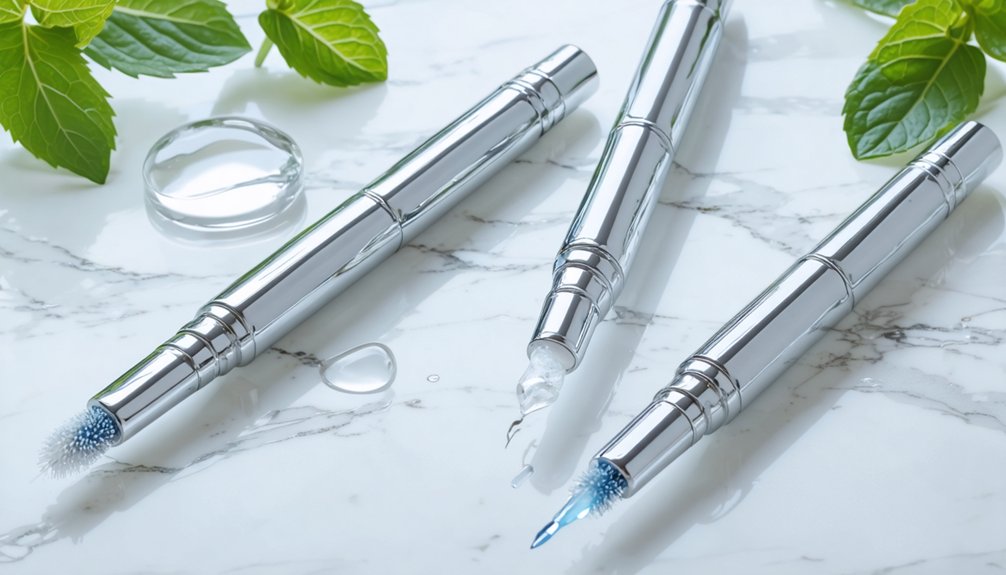
A teeth whitening pen is a portable applicator that dispenses a peroxide-based gel directly onto tooth surfaces. It’s designed for spot whitening and touch-ups, not full-mouth tray treatment.
Common formats include twist-base, click-to-dispense, and shake-then-apply mechanisms, each releasing a controlled amount of gel onto a brush tip.
Despite whitening myths suggesting otherwise, pens don’t saturate enamel with excessive product. They apply a thin, targeted layer to visible tooth surfaces, keeping gel away from gums and soft tissue to minimize teeth sensitivity.
You control exactly where the gel goes, which makes this format more precise than strips or trays.
Understanding what the pen actually does gives you a functional baseline before you apply it. Clarity on the tool precedes effective use of it.
How Peroxide Breaks Down Tooth Stains
Knowing how the pen works mechanically is only half the picture—what the gel does chemically determines whether you see results.
Peroxide concentration directly controls oxidation strength. When the gel contacts enamel, hydrogen or carbamide peroxide decomposes into unstable oxygen radicals. Those radicals penetrate the enamel’s crystalline structure and reach the organic compounds responsible for discoloration. The radicals break the carbon-carbon double bonds in chromogenic molecules, disrupting their light-absorbing properties and producing a lighter appearance.
Peroxide doesn’t polish your teeth—it chemically dismantles the molecules making them dark.
Stain removal, consequently, isn’t surface-level scrubbing—it’s a chemical reaction occurring within the tooth itself.
Higher peroxide concentration accelerates this process but increases sensitivity risk. Lower concentrations require longer or repeated exposure to achieve comparable results. Understanding this trade-off lets you select and use your pen with precision.
Why Prepping Your Teeth First Actually Matters
Before you apply a whitening pen, you need to brush your teeth thoroughly, because plaque acts as a physical barrier that prevents the peroxide gel from reaching the enamel surface directly.
You’ll also want to dry your teeth after brushing, since residual moisture dilutes the gel and reduces its effective concentration at the point of contact.
Skipping either step compromises the gel’s ability to penetrate enamel and break down stains efficiently.
Plaque Blocks Gel Contact
Plaque and debris on your tooth surfaces act as a physical barrier that prevents whitening gel from reaching the enamel directly.
When gel can’t contact enamel, its peroxide compounds can’t initiate the oxidation process that breaks down staining molecules. You’re fundamentally applying an active ingredient to an inactive layer of biofilm.
Standard plaque removal techniques—brushing thoroughly before application—eliminate this interference.
You’re not just cleaning your teeth; you’re clearing the path for the gel to work at the surface level where it’s actually effective. This step also supports enamel protection tips, since gel concentrated on clean enamel performs more predictably than gel diffusing unevenly through residue.
Skipping this step doesn’t just reduce results—it wastes the treatment entirely.
Moisture Dilutes Whitening Gel
Removing plaque clears the path, but saliva and residual moisture present a separate problem. When your tooth surface is wet, moisture dilutes the gel’s active peroxide concentration before it can penetrate enamel.
This moisture impact directly compromises gel consistency, thinning the formula and weakening its stain-breaking capacity.
You’ll counteract this by drying each tooth before applying the pen. Use a tissue, gauze, or simply air-dry for 30 seconds with your mouth open.
The goal is a visibly dry surface, not just a surface that feels clean.
A dry enamel surface allows the gel to adhere evenly, maintain its intended concentration, and remain in full contact with the tooth throughout the treatment window.
Skipping this step undermines the entire application.
How to Activate the Pen Without Wasting Gel
Activating a whitening pen correctly determines how much gel you waste before the brush tip is even near your teeth.
Before dispensing, remove the cap and hold the pen tip-down. Depending on your pen’s design, twist the base, click the end, or shake before dispensing — each mechanism requires a specific input. Most pens need two to three clicks or quarter-turns before gel flows.
For efficient dispensing, stop the moment gel reaches the brush tip. Don’t over-twist or over-click anticipating a larger yield; excess gel activation tips the balance toward waste and uneven application.
You want a controlled, minimal amount — enough to coat the front surfaces of visible teeth in one thin pass without pooling or running onto gum tissue.
How to Apply Whitening Pen Gel Correctly
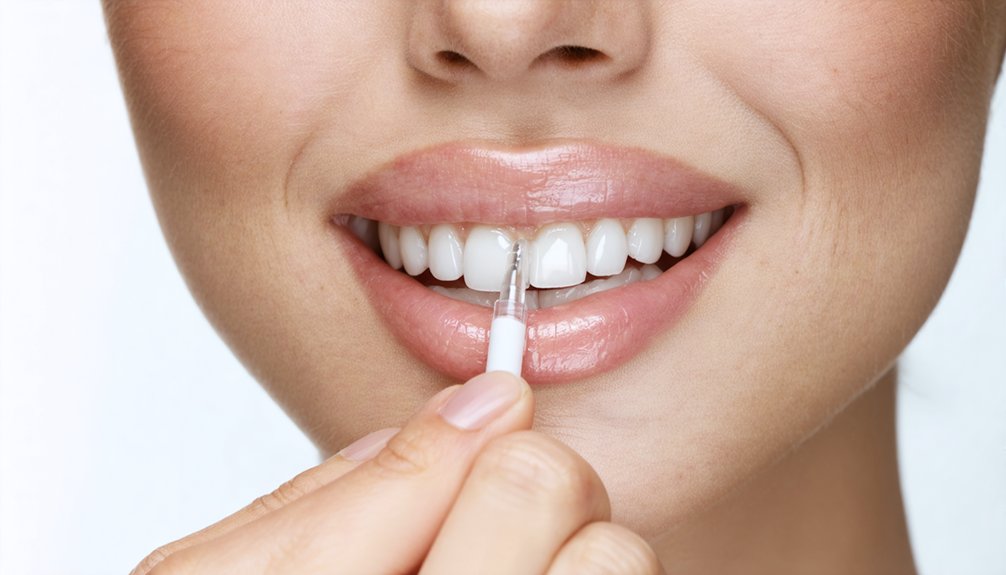
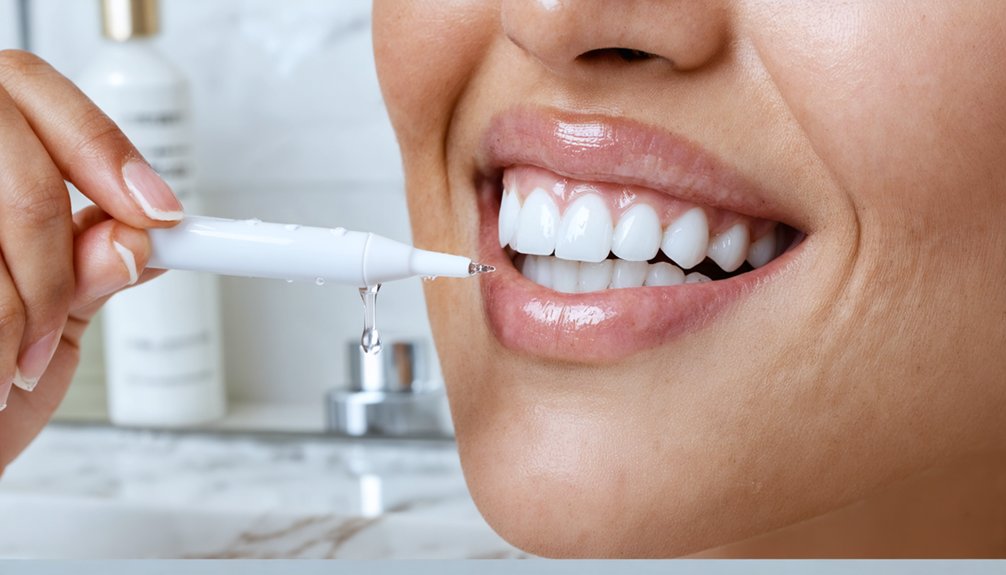
Once the gel reaches the brush tip, paint a thin, even layer across the front surface of each visible tooth, working from one side of the mouth to the other in controlled strokes.
Proper application techniques require light, deliberate passes—vertical or horizontal depending on your product’s instructions—without pressing hard enough to push gel onto the gumline.
Gel consistency matters here. If the formula is too thick or has pooled on the brush, blot the tip lightly before applying. You want full coverage across each enamel surface, not concentrated deposits.
Prioritize teeth with the most visible staining first. Keep the layer thin and uniform; excess gel doesn’t accelerate whitening—it increases irritation risk.
Precision, not volume, determines how effectively the peroxide contacts the enamel.
How Long to Leave the Gel On
How long you leave the gel on depends on the product’s peroxide concentration and formulation. Gel contact time typically ranges from 1–2 minutes for low-concentration pens to 10–30 minutes for higher-strength formulas. Check your product’s instructions to confirm the ideal duration for your specific pen.
During the waiting period, keep your lips away from your teeth to prevent smearing and maintain consistent coverage. Avoid eating, drinking, or rinsing until the recommended time has fully elapsed.
Keep lips pulled away from teeth during treatment to avoid smearing the gel and ensuring even coverage.
Exceeding the instructed contact time doesn’t accelerate results and may increase sensitivity or gum irritation. Conversely, rinsing too early reduces efficacy.
Treat the recommended duration as a precise target, not a general guideline, to maximize whitening outcomes while minimizing unnecessary tissue exposure.
How to Rinse and What to Avoid After Whitening
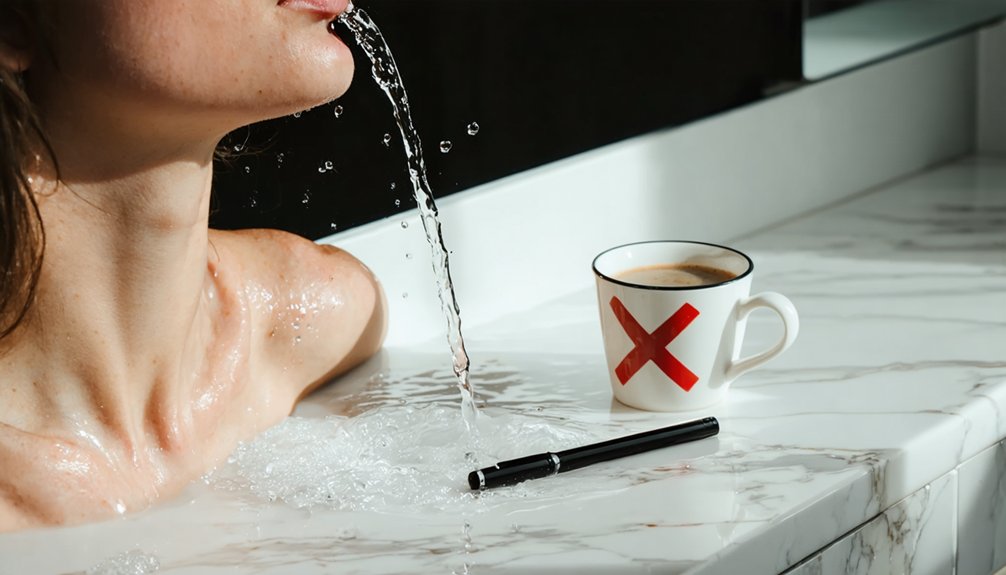
After the contact time ends, your next steps depend on whether your pen is a rinse-off or no-rinse formula. Check your product’s label before defaulting to rinsing techniques that may not apply.
For no-rinse formulas, simply allow the residual gel to absorb. For rinse-required formulas, use a gentle water rinse only.
Regardless of formula type, apply these post whitening precautions immediately after use:
- Avoid food and drinks for at least 20–30 minutes to prevent stain reabsorption onto freshly treated enamel.
- Skip coffee, tea, red wine, and acidic beverages during this window.
- Don’t brush immediately after—doing so can distribute residual peroxide onto sensitive tissue.
Controlling what enters your mouth post-application directly affects your results and gum safety.
Are Teeth Whitening Pens Actually Effective?
Teeth whitening pens can produce visible results, but their effectiveness depends on peroxide concentration, contact time, and consistency of use.
In effectiveness comparisons, pens consistently rank below custom trays and in-office treatments due to shorter gel contact and lower peroxide concentrations. They perform best on surface stains from coffee, tea, and tobacco rather than intrinsic discoloration.
Whitening pens rank below trays and in-office treatments, excelling only at surface stains, not intrinsic discoloration.
User testimonials frequently report noticeable brightening within one to two weeks of daily application, though results vary based on enamel condition and stain severity.
You’ll get the most measurable outcome by following preparation steps precisely, maintaining dry tooth surfaces, and applying the gel consistently. Without disciplined use, results diminish.
Treat the pen as a targeted maintenance tool rather than a primary whitening solution for reliable, controlled outcomes.
How Often Should You Use a Whitening Pen?
Most whitening pen manufacturers recommend once-daily application, typically after brushing and flossing at night. Daily usage maximizes gel contact with clean, dry enamel while minimizing unnecessary exposure. Treatment frequency should align with your specific product’s peroxide concentration.
Follow these guidelines to control your protocol:
- Standard maintenance: Apply once daily for 7–14 days, then pause to assess results before continuing.
- Sensitivity management: If irritation develops, reduce treatment frequency to every other day or discontinue temporarily.
- Long-term use: After achieving target whiteness, shift to 2–3 applications per week as maintenance.
Exceeding recommended daily usage doesn’t accelerate results — it increases enamel and gum sensitivity risk.
Track your progress objectively and adjust frequency based on visible response and tissue tolerance.
Frequently Asked Questions
Can You Use a Whitening Pen on Dental Crowns or Veneers?
they won’t respond. You can apply the pen, but peroxide doesn’t alter prosthetic materials — only natural enamel. You’ll risk uneven color contrast instead.
Are Teeth Whitening Pens Safe to Use During Pregnancy?
You should avoid whitening pens during pregnancy due to unresolved safety considerations around peroxide absorption. Current evidence doesn’t confirm their safety, and pregnancy effects on tissue sensitivity increase risk, so consult your obstetrician before proceeding.
What Should You Do if the Gel Accidentally Touches Your Gums?
If gel contacts your gums, immediately wipe it off to prioritize gel removal and minimize gum irritation. You should use a dry cloth or your finger, then rinse thoroughly with water to prevent prolonged peroxide exposure.
Do Whitening Pens Expire, and Can You Still Use Them After?
Over 60% of expired peroxide loses potency. Yes, whitening pens expire—you shouldn’t use them past the date. Watch for expiration signs like discoloration or thin gel. Follow storage tips: keep them cool and dry to maximize shelf life.
Can Whitening Pens Worsen Existing Tooth Sensitivity or Enamel Damage?
Yes, whitening pens can worsen existing sensitivity and enamel damage. You’ll need to prioritize sensitivity management by limiting contact time and frequency. For enamel protection, avoid application over compromised surfaces and consult your dentist before continuing use.
References
- https://www.youtube.com/watch?v=nIubKsffCNQ
- https://purexa.in/blogs/oral-wellness-blogs/explaining-the-teeth-whitening-pen-and-how-to-use-it
- https://biancabright.com/pages/how-to-use-a-whitening-pen-complete-guide-for-maximum-results
- https://www.suryadentalcare.com/all-about-teeth-whitening-pens-and-how-they-work/
- https://lemaclinic.com/how-to-use-a-teeth-whitening-pen/
- https://www.colgate.com/en-us/oral-health/selecting-dental-products/how-a-teeth-whitening-pen-works
- https://www.youtube.com/watch?v=wE8JQW9OT7Y
- https://wewhiten.com/how-to-teeth-whitening-pen/
- https://gosmile.com/blogs/news/how-to-use-teeth-whitening-pen
- https://www.natrusmile.com/blogs/news/how-to-use-a-teeth-whitening-pen