Preserving your whitened teeth starts with brushing twice daily using fluoride toothpaste and flossing once daily to remove stain-trapping plaque. You’ll want to incorporate whitening toothpaste several times weekly and replace your toothbrush every three months. Avoid dark beverages without a straw, rinse with water after staining foods, and schedule biannual dental cleanings to control tartar buildup. The habits you build daily determine how long your results actually last — and there’s more to uncover ahead.
Key Takeaways
- Brush twice daily with fluoride toothpaste using gentle strokes to protect enamel and prevent surface stains from settling.
- Floss daily using a C-shape motion to remove plaque and debris from interproximal spaces before stains develop.
- Drink staining beverages like coffee, tea, and red wine through a straw to minimize enamel contact.
- Rinse with water after consuming pigment-rich foods or acidic beverages to reduce residue penetration into enamel.
- Schedule biannual dental cleanings to remove calcified tartar that traps stains and undermines whitening results.
The Daily Brushing and Flossing Habits That Preserve Whitening Results
Brushing twice daily with fluoride toothpaste for a minimum of two minutes per session forms the foundation of any whitening maintenance routine. Consistent brushing frequency guarantees you’re removing surface stains before they penetrate enamel, protecting your investment in whitened teeth.
Use gentle, controlled strokes to avoid roughening enamel or irritating gum tissue.
Complement your brushing routine with precise flossing techniques executed once daily. Flossing removes plaque and pigment buildup from interproximal spaces that your brush can’t reach.
Slide the floss in a controlled C-shape motion along each tooth surface rather than snapping it aggressively against the gumline.
For additional stain control, incorporate whitening toothpaste containing fluoride several times weekly.
Replace your toothbrush every three months to maintain bristle effectiveness and avoid reintroducing bacteria during each session.
Why Whitened Teeth Yellow Again Over Time
Even after professional whitening, your enamel remains porous and continuously absorbs pigments from staining foods, beverages, and tobacco, causing gradual discoloration.
You accelerate this process through daily habits like drinking coffee, consuming acidic foods, and neglecting immediate rinsing after exposure to chromogenic substances.
Understanding how these routine behaviors compromise whitening results helps you make targeted adjustments that extend the longevity of your treatment.
Enamel Staining Over Time
Whitened teeth gradually yellow again because enamel is porous, meaning it continuously absorbs pigments from foods, beverages, and lifestyle habits. Understanding enamel composition helps you take targeted action.
Enamel’s microscopic tubules act as channels, drawing in chromogens from coffee, tea, red wine, and darkly pigmented foods. Once these compounds penetrate beneath the surface, standard brushing can’t fully reverse the discoloration.
Staining prevention requires deliberate, consistent behavior. You must limit exposure to staining agents, drink dark beverages through a straw, and rinse immediately after consuming pigment-rich foods.
Tobacco accelerates deep discoloration by embedding tar and nicotine directly into enamel tubules. Without professional cleanings every six months, tartar accumulation further locks in surface stains, compounding yellowing and undermining any whitening treatment you’ve previously completed.
Daily Habits Cause Yellowing
Beyond enamel’s porous nature, your everyday routines quietly drive the yellowing cycle. Yellowing causes aren’t random—they’re behavioral. Tobacco use, neglecting post-meal rinsing, and inconsistent brushing compound discoloration faster than most realize.
Without deliberate preventative measures, even professionally whitened teeth regress within months.
Three daily habits accelerating yellowing deserve your immediate attention:
- Consuming dark beverages without a straw exposes front enamel directly to chromogens, embedding pigment rapidly.
- Skipping water rinses after acidic or staining foods allows residue to penetrate porous enamel unchecked.
- Brushing immediately after acidic consumption erodes softened enamel, creating rougher surfaces that trap stains more aggressively.
You control the pace of discoloration. Identify which habits you’re maintaining, eliminate the offenders, and enforce consistent protocols daily.
Foods That Stain Whitened Teeth and How to Limit the Damage
Achieving a whiter smile takes effort, but certain foods and beverages can quickly undo that progress. Pigment-rich foods like berries, beets, tomato sauce, and ketchup deposit chromogens directly onto enamel, accelerating discoloration.
Staining beverages—coffee, tea, red wine, and dark fruit juices—compound that effect with repeated exposure.
You can limit the damage by acting strategically. Drink staining beverages through a straw to reduce contact with your front teeth. Rinse your mouth with water immediately after consuming problematic foods or drinks.
Eat high-fiber options like celery, apples, and raw carrots, which naturally scrub surface residue. Minimize acidic foods such as citrus and vinegar-based dressings, as they weaken enamel and increase stain penetration.
Consistent, deliberate choices protect your results daily.
Smarter Ways to Drink Coffee and Wine Without Wrecking Your White Smile
Coffee and wine don’t have to be off-limits just because you’ve invested in a whiter smile. Apply deliberate coffee alternatives and wine strategies to minimize staining while maintaining your routine.
- Use a straw when drinking coffee or wine to redirect liquid away from your front teeth.
- Rinse your mouth with water immediately after consuming either beverage to neutralize pigments before they bond to enamel.
- Sip slowly and limit session duration rather than prolonged, repeated exposure throughout the day.
Exploring coffee alternatives like lighter roasts or milk-based options reduces chromogen concentration.
For wine strategies, pairing red wine with high-fiber foods creates a natural buffering effect.
You control how much damage these beverages cause by adjusting timing, technique, and frequency consistently.
How Smoking and Grinding Quietly Destroy Whitening Results
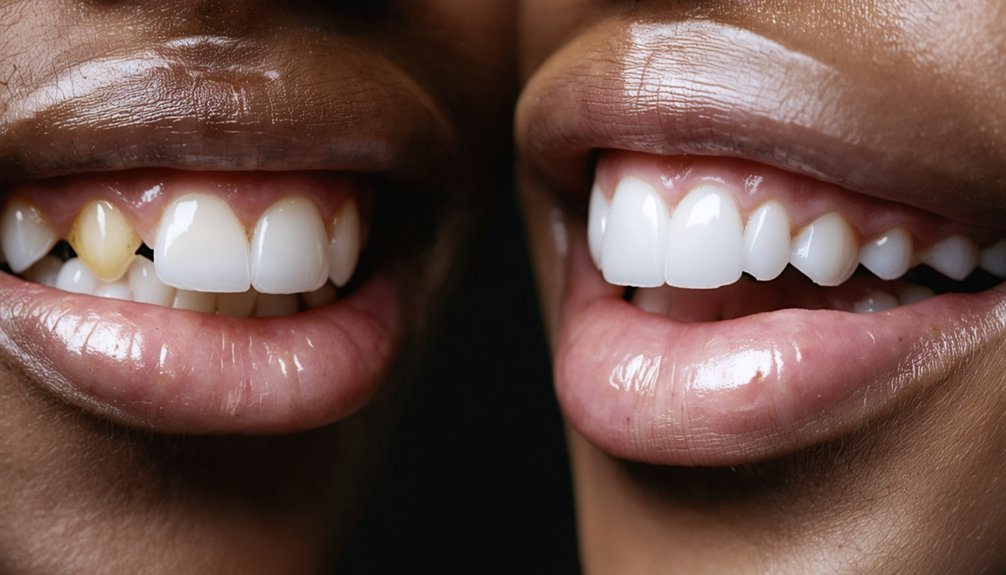
Beverage habits only account for part of what undermines whitening results—two overlooked culprits, smoking and bruxism, work beneath the surface to accelerate enamel degradation and discoloration.
The smoking effects on enamel are aggressive; tar and nicotine penetrate deeply, producing stains that resist standard whitening protocols. You can’t outpace tobacco’s chemical infiltration with touch-up treatments alone—elimination is the only effective countermeasure.
Grinding consequences are equally destructive. Bruxism mechanically wears enamel thin, exposing the yellowish dentin layer underneath and creating micro-surface roughness that traps pigment faster.
If you grind at night, a dentist-prescribed night guard isn’t optional—it’s essential for preserving both enamel integrity and whitening investment. Addressing these two habits directly gives your whitening results a defensible, long-term foundation.
When to See Your Dentist to Maintain a Whiter Smile
Even the most disciplined at-home routine has limits—professional dental care fills the gaps that brushing, flossing, and whitening products can’t.
Scheduling dental check ups every six months keeps tartar controlled and enamel strengthened against future staining. Dentists also identify early discoloration issues before they escalate beyond surface-level correction.
Strategic professional whitening treatments help you sustain results that touch-up kits alone can’t guarantee:
- Biannual cleanings remove calcified tartar that traps staining compounds beneath the surface.
- Fluoride treatments reinforce enamel, reducing stain penetration between visits.
- Dentist-approved whitening gels deliver controlled, precise results without risking enamel damage from unsupervised DIY methods.
Don’t wait for visible yellowing—proactive appointments keep your whitening investment protected and measurable.
Frequently Asked Questions
Can Lip Products Transfer Pigment Onto Whitened Teeth Over Time?
Like a slow tide creeping in, lip product effects can cause pigment transfer onto your whitened teeth over time. You’ll want to limit heavily pigmented lip products to protect your smile’s lasting brightness.
Do Night Guards Help Preserve Whitening Results for Teeth Grinders?
Yes, you’ll protect your whitening results by wearing a night guard. It directly addresses teeth grinding impacts, preventing enamel wear that accelerates discoloration. Night guard effectiveness lies in shielding enamel surface integrity, preserving your whitened results long-term.
How Often Should Whitening Touch-Up Treatments Be Performed Each Year?
you should perform whitening touch-up treatments twice yearly. This whitening frequency maximizes treatment effectiveness, ensuring you actively maintain your results and keep your smile consistently bright and controlled.
Does Drinking Water Throughout the Day Help Maintain Whitened Teeth?
Yes, drinking water throughout the day actively maintains your whitened teeth. It delivers hydration benefits, flushes stain-causing residue, neutralizes acids, and protects tooth enamel from discoloration, giving you precise control over long-term brightness.
Should Hygiene Accessories Be Tailored to Individual Tooth Structure Needs?
Yes, you should tailor your hygiene accessories to your individual tooth structure. Optimize your toothbrush selection for precise enamel coverage, and adjust your flossing techniques to effectively navigate unique spacing, ensuring you’re maintaining consistent, targeted oral cleanliness.
References
- https://meganjonesdds.com/blog/tips-to-keep-your-newly-whitened-teeth-bright/
- https://www.northcourtfamilydentistry.com/top-10-tips-for-maintaining-your-brighter-smile-after-teeth-whitening/
- https://creating-smiles.com/daily-habits-to-maintain-your-teeth-whitening/
- https://www.drbabenkov.com/tips-for-keeping-your-teeth-sparkling-after-teeth-whitening/
- https://www.thedentalcentre.ca/cosmetic-dentistry/10-ways-to-maintain-your-white-smile/
- https://www.elitedentistrymonroeville.com/blog/teeth-whitening-maintenance/
- https://www.fairviewdentalcare.com/blog/7-habits-people-white-teeth/
- https://www.listerine.com/articles/teeth-whitening/habits-white-teeth
- https://www.colgate.com/en-sa/oral-health/teeth-whitening/how-to-maintain-white-teeth-0513
- https://www.kin.es/en/habitos-sencillos-para-mantener-tus-dientes-blancos/