Maintaining radiant white teeth means tackling stains before they set. You’ll want to brush twice daily with a soft-bristled toothbrush and fluoride toothpaste, floss once daily, and rinse with water immediately after consuming staining foods or drinks like coffee, tea, and red wine. Avoid tobacco, limit acidic beverages, and choose ADA-approved whitening products carefully to prevent enamel erosion. The full picture of what actually works—and what doesn’t—is worth knowing.
Key Takeaways
- Brush twice daily for two minutes using a soft-bristled toothbrush, fluoride toothpaste, and gentle circular motions to minimize enamel wear.
- Rinse with water immediately after consuming staining foods or drinks like coffee, red wine, or dark berries to reduce pigment buildup.
- Floss once daily to remove plaque and debris from between teeth, preventing discoloration in hard-to-reach areas.
- Use ADA-approved whitening products as directed, avoiding overuse of hydrogen peroxide or baking soda to prevent enamel erosion.
- Schedule regular professional cleanings to remove tartar, monitor enamel health, and address deeper discoloration effectively.
Foods and Drinks That Stain Teeth the Most
Certain foods and drinks are among the most common culprits behind tooth discoloration. Staining beverages like coffee, tea, red wine, and cola directly deposit pigments onto enamel, weakening your teeth’s natural brightness over time.
Dark sauces, including soy sauce, tomato sauce, and ketchup, contribute similarly. Colorful fruits such as dark berries also accelerate staining with repeated exposure.
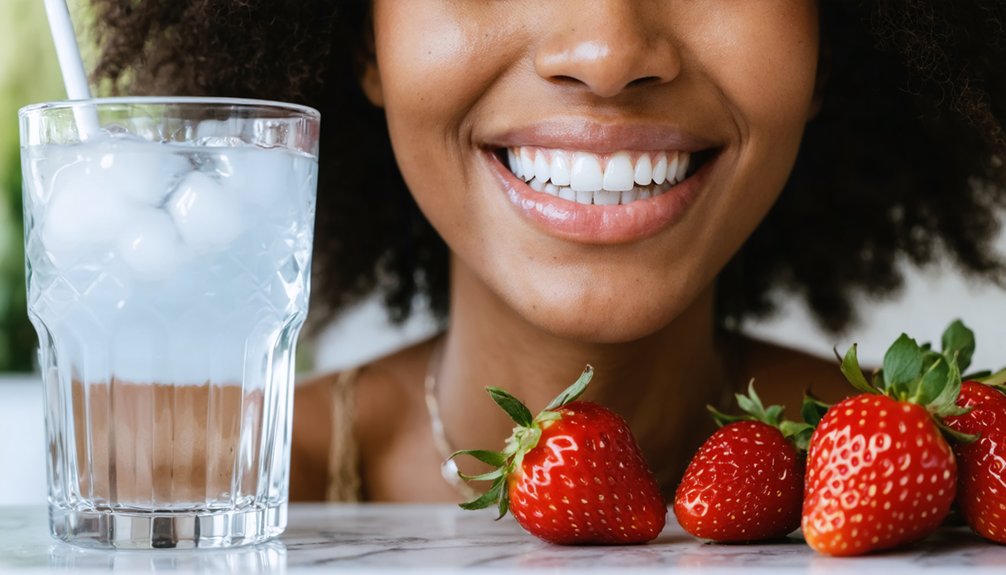
You can reduce pigment buildup by rinsing with water immediately after consuming these items. Using a straw limits direct contact between staining beverages and your enamel.
Tobacco products compound discoloration greatly and should be avoided entirely. Identifying your primary staining sources gives you precise control over which dietary habits to modify first, allowing you to target the most impactful changes efficiently.
How to Brush and Floss for Lasting White Teeth
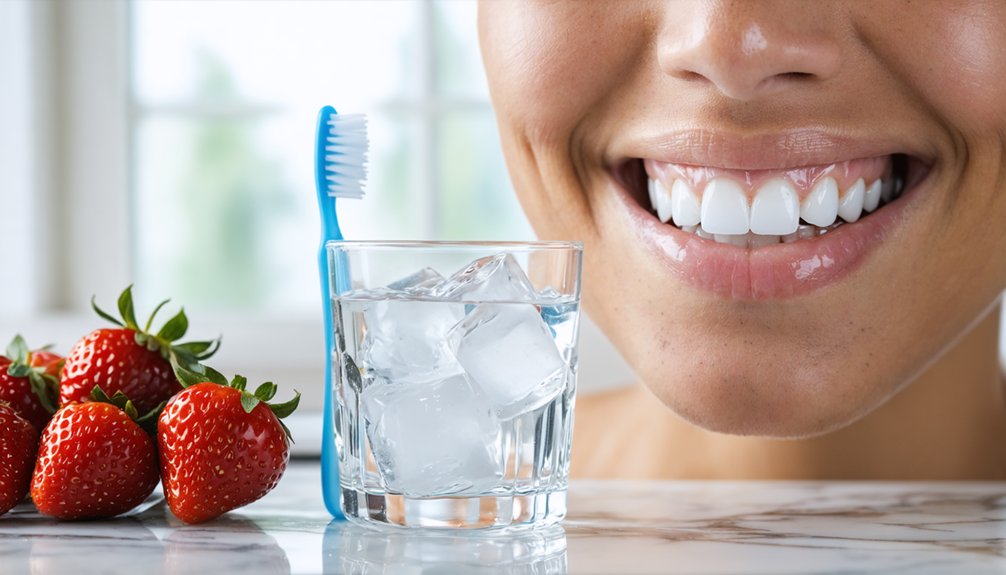
To maintain white teeth, you’ll need to brush twice daily for at least two minutes using a soft-bristled toothbrush, fluoride toothpaste, and gentle circular motions that minimize enamel wear.
Avoid forceful scrubbing, as aggressive technique erodes enamel and irritates gum tissue over time.
You should also floss once daily to clear plaque and debris from between teeth, targeting areas your toothbrush can’t effectively reach.
Optimal Brushing Technique Tips
Brushing correctly makes a measurable difference in how well you remove plaque and surface stains. Optimize your brushing frequency by committing to twice daily, morning and night, for at least two minutes each session.
Use gentle, circular motions rather than aggressive back-and-forth scrubbing, which erodes enamel and irritates gum tissue over time. Your toothbrush selection directly affects outcomes, so choose a soft-bristled brush paired with fluoride toothpaste to protect enamel while reducing discoloration.
Hard bristles don’t clean better; they damage. Replace your toothbrush every three months or earlier if bristles splay, since worn bristles lose mechanical efficiency.
Consistent technique, proper tool selection, and disciplined timing give you direct control over plaque removal and long-term tooth appearance.
Daily Flossing Best Practices
Flossing once daily removes plaque and food debris from interproximal spaces where your toothbrush bristles can’t reach, making it a non-negotiable complement to brushing.
To maximize results, use roughly 18 inches of floss, winding most around your middle fingers and leaving an inch or two to work with. Guide the floss gently between each tooth using a C-shaped curve against the tooth surface, sliding it beneath the gumline without forcing it.
Among available floss types, waxed floss slides more easily through tight contacts, while unwaxed floss tends to grip plaque more effectively. Floss picks and water flossers serve as practical alternatives when manual dexterity is limited.
Consistent flossing techniques directly reduce stain-trapping plaque accumulation, supporting both gum health and the long-term brightness of your teeth.
Daily Habits That Stop New Stains From Forming
Several simple daily habits can prevent new stains from forming before they become difficult to remove. Stain prevention begins with limiting coffee, tea, red wine, and cola-based drinks. When you do consume them, rinse with water immediately afterward or use a straw to reduce direct contact with enamel.
Avoiding tobacco products eliminates one of the most aggressive sources of discoloration.
Integrate these steps into your daily routine consistently. Wait 30 to 60 minutes after acidic foods or drinks before brushing to protect softened enamel.
Drink water throughout the day to dilute staining compounds and flush debris. Eating crunchy vegetables like celery and carrots mechanically scrubs surfaces and stimulates saliva, which naturally reduces pigment buildup.
Small, deliberate choices executed daily produce measurable, compounding results.
Which Whitening Products Actually Work?
Whitening toothpastes use mild abrasives, polishing agents, or low-concentration peroxide to lift surface stains during routine brushing. They won’t alter intrinsic tooth color but maintain brightness between treatments.
Whitening mouthwashes offer a supplementary benefit, extending peroxide contact time without replacing brushing or flossing.
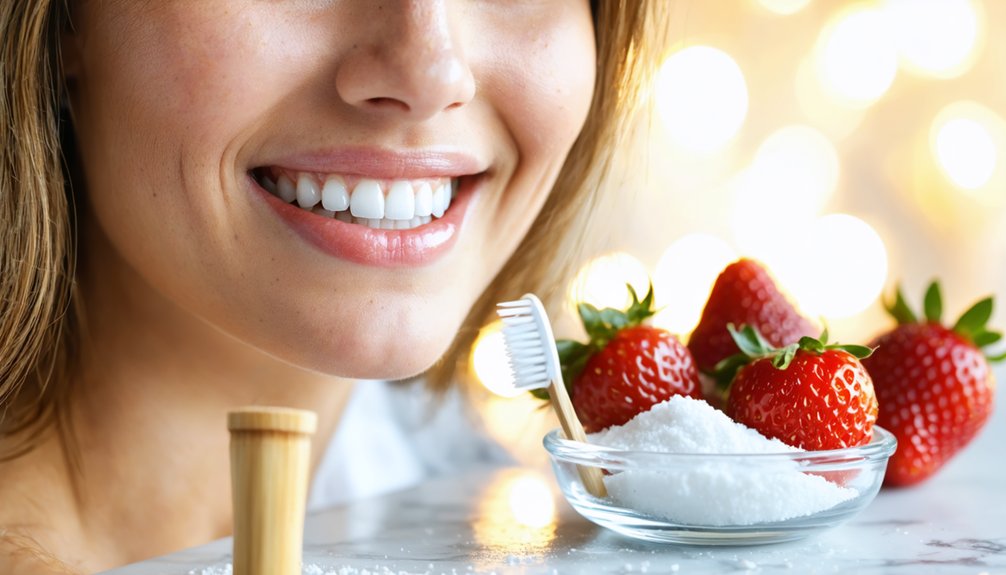
For product recommendations, prioritize ADA-approved formulas and follow labeled usage instructions precisely. Overusing hydrogen peroxide or baking soda-based products risks enamel erosion and sensitivity.
If irritation develops, stop immediately and consult your dentist.
Professional-grade treatments remain the most clinically validated option for deeper discoloration, making routine dental visits essential for targeted, evidence-based whitening decisions.
When to Use Whitening Products Safely at Home
At-home whitening products are safest when you follow three core principles: use ADA-approved formulas, follow labeled directions precisely, and stop immediately if sensitivity or irritation develops.
Whitening frequency guidelines exist for a reason — exceeding recommended cycles won’t accelerate results, but it will damage enamel and irritate gum tissue.
Whitening more often doesn’t mean whitening faster — it means damaging enamel and inflaming the gum tissue that protects it.
Apply safe application techniques by using the minimum effective amount and avoiding contact with soft tissue.
Don’t layer multiple whitening products simultaneously, and don’t substitute hydrogen peroxide rinses or baking soda scrubs for clinically tested formulations. These improvised methods carry unquantified risks.
Timing matters, too. Never apply whitening products directly after consuming acidic foods or drinks — wait until enamel has remineralized.
Your dentist should confirm that at-home maintenance aligns with your current enamel health before you begin any whitening regimen.
Signs You Need to Stop Whitening Treatments
If you notice tooth sensitivity, gum irritation, or soft tissue discomfort during or after whitening treatments, stop use immediately and allow your tissues to recover.
Continued use despite these warning signs raises your risk of enamel erosion and permanent nerve sensitivity, both indicators that you’ve exceeded safe treatment thresholds.
At that point, you should consult your dentist to assess the damage, adjust your approach, and determine whether any whitening treatment remains appropriate for your current oral health status.
Sensitivity and Irritation Signs
Tooth sensitivity and gum irritation are clear signals that a whitening treatment is causing harm and that you should stop use immediately.
Sensitivity triggers include sharp pain when consuming hot, cold, or sweet items, persistent aching between sessions, or heightened nerve response during application.
Gum irritation may present as redness, swelling, or a burning sensation along the tissue line.
For irritation relief, rinse with water, avoid acidic foods, and switch to a soft-bristled brush with fluoride toothpaste.
Don’t resume whitening without consulting your dentist first.
Overusing hydrogen peroxide or ignoring early warning signs accelerates enamel erosion and tissue damage.
You retain control over your oral health by responding promptly to these signals rather than pushing through discomfort.
Overuse Warning Indicators
Responding to sensitivity and irritation protects you in the moment, but recognizing the broader pattern of overuse is what prevents long-term damage. Exceeding recommended whitening frequency accelerates enamel erosion and increases gum vulnerability.
Stop treatments immediately if you notice persistent tooth sensitivity lasting beyond 48 hours, visible gum recession, or translucent enamel edges—structural signs that indicate overexposure.
Product interactions also demand attention; combining whitening toothpaste, mouthwash, and strip treatments simultaneously amplifies peroxide exposure beyond safe thresholds. Track how often you’re applying each product.
If discoloration returns rapidly after treatment, that pattern signals an underlying issue requiring professional evaluation, not increased whitening frequency. Consult your dentist before resuming any regimen.
Controlled, infrequent application guided by clinical recommendation is the only evidence-supported approach to long-term color maintenance.
When to Seek Dentist
Knowing when to stop whitening treatments and contact your dentist can prevent reversible sensitivity from becoming permanent structural damage. Certain dental symptoms require prompt professional evaluation.
Discontinue treatment immediately if you experience persistent tooth sensitivity lasting beyond 48 hours, sharp spontaneous pain, gum inflammation, or visible enamel erosion. These indicators suggest tissue damage that home products can’t resolve.
White spots, uneven discoloration, or increased translucency near tooth edges signal enamel thinning requiring clinical assessment. Your dentist can evaluate damage severity and outline appropriate treatment options, which may include desensitizing agents, fluoride therapy, or a structured whitening pause.
Don’t attempt to push through discomfort hoping symptoms resolve independently. Early intervention preserves enamel integrity and keeps future whitening treatment viable on your terms.
The Best Foods for Keeping Teeth White After Whitening
After whitening, your dietary choices directly influence how long your results last. During the first 48 hours, your teeth stain more easily, so you’ll want to prioritize foods that support brightness rather than compromise it.
Choose crunchy fruits and vegetables like apples, celery, and carrots. These act as natural abrasives, scrubbing enamel surfaces while stimulating saliva flow, which neutralizes acids and clears debris. Saliva is your mouth’s built-in defense system.
For teeth friendly beverages, stick to water throughout the day. It rinses away pigment-heavy compounds and dilutes staining agents before they adhere. Avoid coffee, tea, red wine, and cola.
Stock your routine with healthy snacks that are light-colored and low in acid. Cauliflower, white cheese, and bananas are practical, low-risk options that won’t undermine your whitening investment.
What Professional Cleanings Do That Home Care Can’t
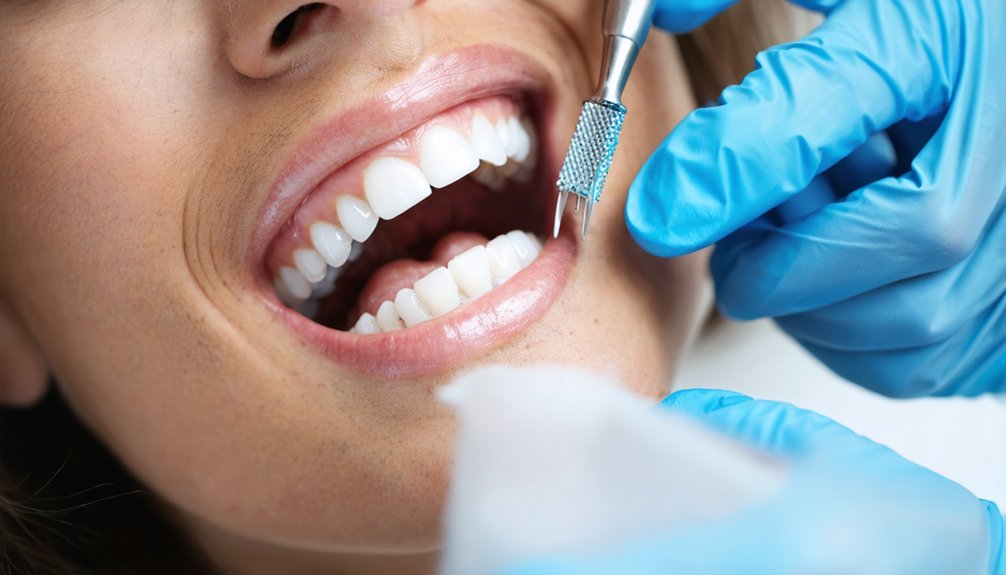
Even with consistent brushing and flossing, you can’t fully eliminate tartar, which only professional scaling tools can remove. Tartar harbors bacteria and accelerates discoloration, making professional expertise crucial to long-term whitening maintenance.
During a professional cleaning, your hygienist uses ultrasonic scalers and specialized instruments to break down calcified deposits that resist home care entirely.
Polishing tools then deliver targeted stain removal, clearing embedded pigments from coffee, tea, and tobacco that whitening toothpaste can’t reach.
These visits also give your dentist diagnostic data—early enamel erosion, gum recession, or stain patterns—that guide your home routine.
Scheduling cleanings every six months guarantees that your whitening results aren’t quietly undermined by buildup you can’t see or address on your own.
Frequently Asked Questions
How Often Should You Replace Your Toothbrush for Best Results?
You should retire your toothbrush every three months. When toothbrush types and bristle stiffness show wear sooner, replace it earlier. Worn bristles can’t effectively remove plaque, compromising your results.
Does Chewing Sugar-Free Gum Actually Help Keep Teeth Whiter?
Yes, chewing sugar-free gum’s chewing benefits include stimulating saliva flow, which naturally rinses staining compounds from your teeth. Confirm the gum ingredients are sugar-free to avoid counterproductive effects, making it a precise maintenance tool.
How Long Should You Wait Before Brushing After Eating?
Wait, protect, preserve—you should wait 30 to 60 minutes before brushing after consuming acidic foods or drinks. Acidic foods temporarily soften tooth enamel, and brushing too soon accelerates erosion, undermining your whitening efforts.
Can Saliva Naturally Help Prevent Staining Between Brushing Sessions?
Yes, your saliva composition actively supports natural whitening by washing away food particles and diluting staining compounds between sessions. You’ll enhance this effect by staying hydrated, chewing sugar-free gum, and eating crunchy vegetables to stimulate flow.
How Frequently Should You Schedule Professional Dental Check-Ups Annually?
You should schedule professional dental check-ups at least twice annually to maintain ideal dental hygiene and oral health. These visits let your dentist monitor enamel, remove stubborn stains, and confirm your whitening strategy’s effectiveness.
References
- https://www.smilesonportage.com/10-tips-to-ensure-your-teeth-stay-radiantly-white/
- https://worthing.sparklywhites.co.uk/ultimate-guide-to-sparkling-white-teeth/
- https://www.youtube.com/watch?v=pxBK4NDS0-k
- https://www.youramazingsmile.com/how-to-maintain-white-teeth/
- https://www.dentistsanfrancisco.com/maintain-white-teeth/
- https://www.canaandental.com/tips-for-keeping-your-teeth-white-after-professional-whitening/
- https://www.naperville.dental/5-easy-ways-to-keep-your-teeth-pearly-white/
- https://www.kin.es/en/habitos-sencillos-para-mantener-tus-dientes-blancos/
- https://beyonddentalhealth.com/unwrap-a-white-holiday-season-a-guide-to-radiant-smiles-with-teeth-whitening/
- https://www.mouthhealthy.org/all-topics-a-z/teeth-whitening