When whitening your teeth at home, hydrogen peroxide and baking soda work through completely different mechanisms. Hydrogen peroxide penetrates your enamel to chemically break down intrinsic stains deep within the dentin layer. Baking soda acts as a mild abrasive, mechanically scrubbing away surface discoloration from coffee, tea, or tobacco. Combining both maximizes results by targeting stains at multiple levels. Understanding each agent’s strengths, limitations, and safety guidelines will help you make smarter whitening decisions.
Key Takeaways
- Hydrogen peroxide chemically breaks down intrinsic stains through oxidation, while baking soda mechanically scrubs away surface-level extrinsic stains.
- Baking soda is better suited for stains caused by coffee, tea, or tobacco, as it removes surface discoloration effectively.
- Hydrogen peroxide penetrates deeper into enamel, making it more effective for stains caused by aging, medication, or trauma.
- Combining both agents creates a paste that maximizes whitening by utilizing mechanical scrubbing alongside chemical bleaching simultaneously.
- Home hydrogen peroxide use should not exceed 3% concentration, limiting application to once daily for one to two minutes.
How Do Hydrogen Peroxide and Baking Soda Whiten Teeth?
When it comes to teeth whitening, hydrogen peroxide and baking soda work through distinctly different whitening mechanisms.
Hydrogen peroxide penetrates your enamel and breaks down both intrinsic and extrinsic stain types through an oxidative chemical reaction. This makes it highly effective against deep, set-in discoloration.
Hydrogen peroxide doesn’t just clean the surface — it penetrates enamel to break down deep, set-in stains at the source.
Baking soda, by contrast, functions as a mild abrasive. It physically scrubs away extrinsic stain types on your tooth’s surface but can’t reach deeper discoloration within the enamel. It also neutralizes mouth acids, supporting overall oral health.
When you combine them into a paste, you’re leveraging both mechanisms simultaneously — mechanical scrubbing and chemical bleaching.
Understanding how each agent targets different stain types lets you make a more informed, controlled decision about your whitening approach.
Hydrogen Peroxide vs Baking Soda: Which Removes Deeper Stains?
When choosing between hydrogen peroxide and baking soda, you need to understand the difference between intrinsic and extrinsic stains.
Extrinsic stains sit on your tooth’s surface, while intrinsic stains penetrate the enamel and dentin.
Hydrogen peroxide reaches deeper into the tooth structure, making it the more effective option for addressing both stain types.
Intrinsic Vs Extrinsic Stains
Understanding the difference between intrinsic and extrinsic stains determines which whitening agent you’ll actually need.
Extrinsic stains sit on your enamel’s surface, caused by coffee, tea, or tobacco. Baking soda‘s mild abrasive action targets these stain types effectively through mechanical scrubbing.
Intrinsic stains, however, originate within the dentin layer, resulting from aging, medication, or trauma.
For intrinsic stain types, baking soda alone won’t produce meaningful results. Hydrogen peroxide penetrates enamel to oxidize deep discoloration, making it the superior choice among whitening methods targeting internal discoloration.
Choosing the wrong whitening method wastes time and risks unnecessary enamel exposure. Accurately identifying your stain type before selecting a whitening approach lets you apply the most targeted, evidence-supported solution rather than defaulting to trial and error.
Penetration Depth Comparison
Penetration depth separates these two whitening agents more decisively than any other factor.
Hydrogen peroxide’s penetration mechanics allow it to diffuse through enamel and reach the dentin layer, where intrinsic stains embed themselves over time. This chemical oxidation process breaks molecular bonds responsible for discoloration, delivering stain removal that baking soda simply can’t replicate structurally.
Baking soda operates exclusively on your enamel’s surface. Its mild abrasive action scrubs away extrinsic deposits effectively, but it lacks the chemical capacity to penetrate deeper layers.
If your staining originates from aging, antibiotics, or internal trauma, baking soda won’t reach it.
You’ll achieve more thorough results by combining both agents — baking soda mechanically clears the surface while hydrogen peroxide targets subsurface discoloration simultaneously.
Is It Safe to Use Hydrogen Peroxide on Your Teeth at Home?
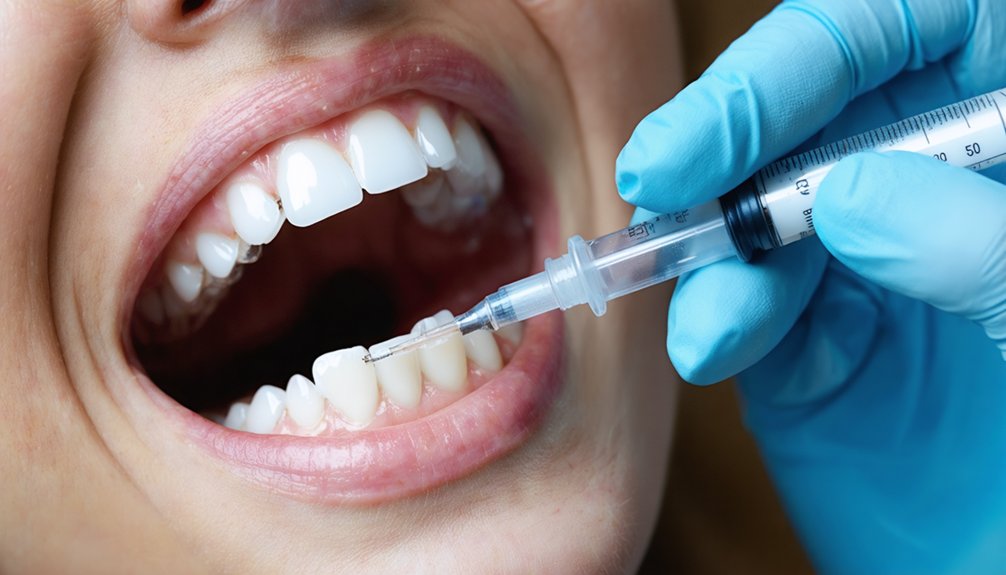
Hydrogen peroxide can be safe for home teeth whitening, provided you use it correctly and at the appropriate concentration. Dental guidelines recommend using no more than 3% concentration for home whitening applications.
To minimize risks, brush the paste gently for one to two minutes, then rinse thoroughly and follow with fluoride toothpaste to protect your enamel.
Adhering to safety guidelines is critical. Overuse causes tooth sensitivity, gum inflammation, and potential enamel erosion. Limit applications to once daily maximum, and avoid prolonged contact with your gum tissue, particularly if you have recessed gums or exposed roots.
Swishing concentrated peroxide carries additional risks and should be done sparingly. For higher concentrations or persistent concerns, consult your dentist for professionally supervised treatment tailored to your specific needs.
Side Effects of Hydrogen Peroxide and Baking Soda on Teeth
While both hydrogen peroxide and baking soda offer whitening benefits, each carries side effects you should weigh before use.
Hydrogen peroxide poses the greatest sensitivity risks, particularly with overuse or high concentrations. Baking soda, though gentler, can gradually wear enamel with excessive application.
Key side effects to monitor include:
- Tooth sensitivity: Frequent peroxide use inflames nerve pathways, causing sharp discomfort.
- Gum irritation: Peroxide contacting recessed gums or exposed roots triggers inflammation.
- Enamel erosion: Overusing either agent compromises your enamel’s structural integrity.
You can minimize these risks by limiting paste application to once daily, avoiding prolonged contact, and following up with fluoride toothpaste.
If sensitivity persists, discontinue use and consult your dentist for a supervised alternative.
How Baking Soda Compares to Hydrogen Peroxide for Surface Stains
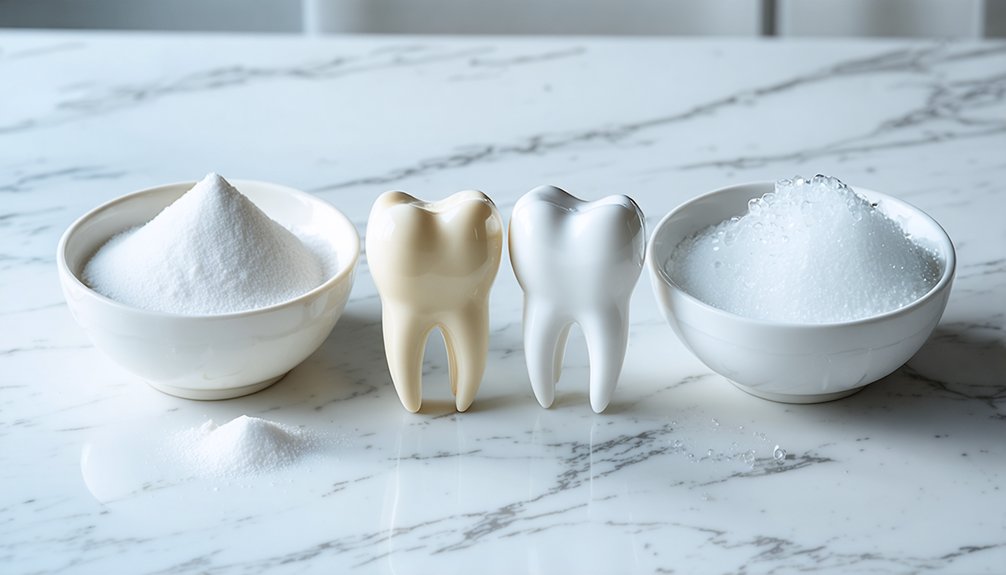
When comparing baking soda to hydrogen peroxide for surface stains, you’ll find that each works through a distinctly different mechanism.
Baking soda acts as a mild abrasive, physically scrubbing away extrinsic stains on the enamel’s surface, while hydrogen peroxide penetrates enamel to break down both surface and intrinsic stains through a chemical bleaching process.
You should understand that baking soda’s abrasive action, though generally low-risk, can wear enamel with overuse, whereas hydrogen peroxide’s bleaching capacity makes it the more clinically effective option for thorough stain removal.
Surface Stain Removal Differences
Both baking soda and hydrogen peroxide remove surface stains, but they work through fundamentally different mechanisms. Understanding these surface stain differences helps you make informed decisions about whitening effectiveness.
Baking soda acts as a mild abrasive, physically scrubbing extrinsic stains from enamel. Hydrogen peroxide penetrates enamel chemically, breaking down intrinsic and extrinsic stains simultaneously.
Key distinctions you should recognize:
- Baking soda targets only surface-level deposits through mechanical action
- Hydrogen peroxide addresses deeper discoloration through oxidative bleaching
- Combining both maximizes results by scrubbing and bleaching concurrently
If your stains originate from coffee, tea, or tobacco residue sitting on enamel, baking soda offers adequate removal.
However, if discoloration penetrates deeper enamel layers, hydrogen peroxide delivers measurably superior outcomes backed by ADA-recognized evidence.
Abrasive Action on Enamel
Although baking soda and hydrogen peroxide both contribute to surface stain removal, they interact with enamel through entirely different mechanisms. Baking soda’s abrasive properties physically scrub extrinsic stains from your enamel’s surface, functioning like a mild mechanical polisher.
Its relative dentin abrasivity (RDA) score falls well within safe limits, making enamel safety a manageable concern when you use it correctly.
Hydrogen peroxide, by contrast, produces no mechanical abrasion. It penetrates enamel chemically, oxidizing pigmented compounds embedded within tooth structure. This distinction matters because you’re addressing different stain depths with each agent.
Combining both creates a synergistic effect — the abrasive action lifts surface debris while peroxide targets deeper discoloration.
Understanding these mechanisms lets you make informed, precise decisions about which approach aligns with your whitening goals.
How to Mix Baking Soda and Hydrogen Peroxide for Best Results
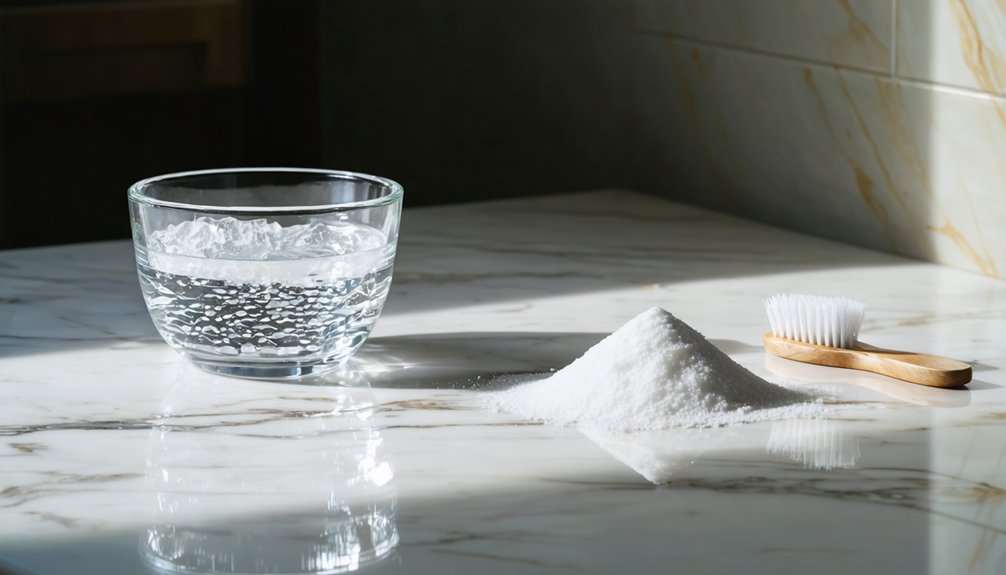
Mixing baking soda and hydrogen peroxide correctly takes just two ingredients and a careful ratio to guarantee both safety and effectiveness. Use two parts baking soda to one part 3% hydrogen peroxide as your ideal ratio. This mixing technique produces a consistent paste that balances abrasive scrubbing with chemical bleaching.
Follow these application guidelines precisely:
- Apply the paste with a soft-bristled toothbrush using gentle circular motions for one to two minutes.
- Rinse thoroughly, then follow immediately with fluoride toothpaste to protect enamel.
- Limit use to once daily and avoid extended daily application periods.
Never exceed 3% hydrogen peroxide concentration. Higher concentrations increase enamel erosion risk considerably.
If you experience sensitivity or gum irritation, discontinue use and consult your dentist promptly.
Safe Hydrogen Peroxide Concentrations That Won’t Damage Enamel
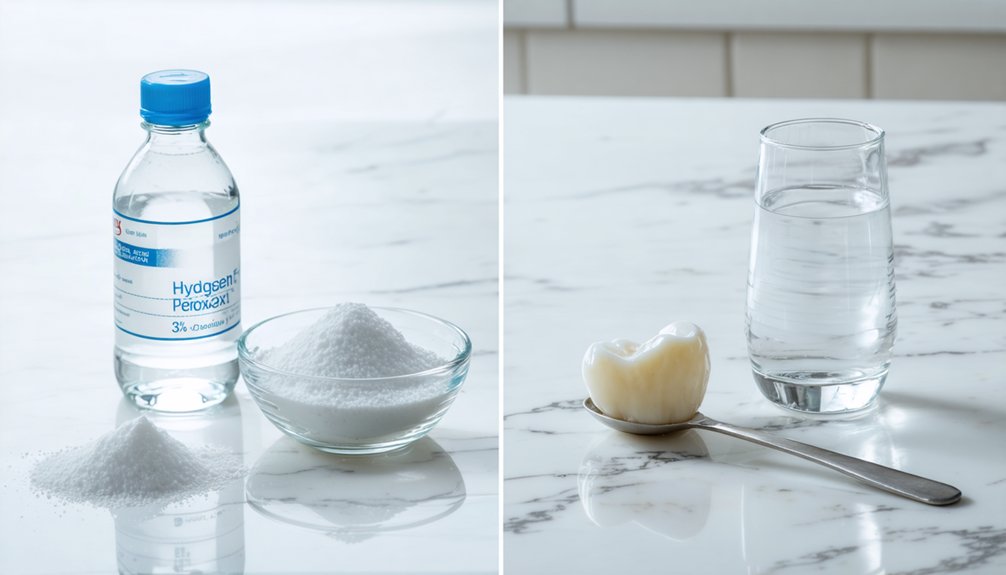
When using hydrogen peroxide at home, you should never exceed a 3% concentration to avoid enamel erosion and gum irritation. Higher concentrations accelerate enamel breakdown and increase tooth sensitivity, making lower dilutions the safest choice for unsupervised use.
For best practices, dilute 3% hydrogen peroxide further if you’re swishing rather than applying a paste. Limit swishing to one minute maximum, and don’t repeat this more than once weekly.
When using a baking soda paste mixed with 3% peroxide, restrict application to once daily and never exceed two minutes of contact time.
Usage frequency matters greatly. Overuse compounds damage even at safe concentrations. If you experience sensitivity or gum inflammation, stop immediately and consult your dentist before continuing any peroxide-based whitening regimen.
When Does Professional Whitening Outperform Both Home Remedies?
Home remedies have clear ceiling effects that professional whitening surpasses in several specific scenarios. When you’re dealing with intrinsic stains, deep discoloration, or time-sensitive results, professional techniques deliver outcomes that hydrogen peroxide and baking soda simply can’t match.
Advanced whitening protocols use peroxide concentrations between 15–40%, applied under controlled conditions that protect your gums and enamel simultaneously.
You’ll benefit most from professional treatment when:
- Stains originate from tetracycline, fluorosis, or trauma, which penetrate beyond enamel’s surface layer
- Previous home remedies failed after consistent, correctly applied use
- Speed matters, as professional sessions deliver measurable results within one appointment
Professional supervision also eliminates guesswork around concentration, application time, and sensitivity management—variables that home remedies leave entirely in your hands.
Frequently Asked Questions
Can Children Safely Use Hydrogen Peroxide or Baking Soda for Whitening?
You shouldn’t use either on children without consulting a dentist first. Safety concerns and age recommendations vary, as developing enamel’s more vulnerable. A dental professional can guide you toward evidence-based, age-appropriate whitening options for your child.
How Long Before Seeing Visible Whitening Results From These Home Remedies?
Imagine brushing consistently for two weeks—you’ll likely notice subtle brightness. Your whitening effectiveness timeline spans two to four weeks, but individual results variation means some see changes sooner depending on stain depth and remedy used.
Are Hydrogen Peroxide or Baking Soda Whitening Methods Safe During Pregnancy?
You should avoid both methods during pregnancy due to unresolved safety concerns and potential pregnancy effects from peroxide absorption. Consult your dentist for approved alternatives, as evidence-based guidelines don’t confirm these remedies’ safety for pregnant individuals.
Can These Whitening Methods Damage Existing Dental Crowns or Veneers?
Over 15 million veneers are placed yearly—you can damage them. Hydrogen peroxide weakens veneer integrity, while baking soda’s abrasiveness compromises crown longevity. Consult your dentist before applying either whitening method to protected restorations.
Does Diet Affect How Well Hydrogen Peroxide and Baking Soda Whiten Teeth?
Your dietary habits greatly impact whitening results. If you consume staining foods like coffee or wine, you’ll counteract treatments. Smart food choices—limiting pigment-rich options—enhance hydrogen peroxide’s and baking soda’s effectiveness, maximizing your outcomes.
References
- https://www.gentledental.com/resources/articles/hydrogen-peroxide-teeth-whitening
- https://www.greenhilldental.com/post/is-using-baking-soda-and-peroxide-safe-to-clean-my-teeth
- https://meadowsfamilydentistry.com/blog/it-ok-brush-your-teeth-baking-soda-and-hydrogen-peroxide
- https://www.urmc.rochester.edu/news/publications/health-matters/diy-teeth-whitening-too-good-to-be-true
- https://www.beverlyhillsfamilydentalgroup.com/blog/3-good-options-for-whitening-your-teeth-at-home/
- https://dentalcarefree.com/blogs/Hydrogen-Peroxide-in-Whitening-vs–Baking-Soda–Which-is-Better.html
- https://www.youtube.com/watch?v=7E5u9MMTI5w
- https://www.colgate.com/en-za/oral-health/teeth-whitening/can-hydroden-peroxide-be-used-to-whiten-teeth
- https://www.tiktok.com/@spotlightoralcare/video/6935865525310426374
- https://www.amazon.com/live/video/0ab9cd65053c48549f22b9e01b044e5b