Laser teeth whitening can be safe for sensitive gums when a qualified dentist customizes the procedure to your specific needs. Your dentist applies a protective barrier to shield gum tissue and adjusts laser intensity to minimize discomfort. It’s not suitable if you have active gum disease, inflamed tissue, or receding gums. Desensitizing agents and careful monitoring further reduce sensitivity risks. The sections below cover everything you need to make a confident, informed decision.
Key Takeaways
- Protective barriers applied to gums during laser whitening physically block chemical contact, significantly reducing irritation for sensitive gum tissue.
- Dentists can adjust laser intensity in real time, ensuring a more comfortable experience for patients with gum sensitivity.
- Laser whitening minimizes prolonged chemical exposure compared to strips or trays, lowering the risk of gum irritation.
- Desensitizing agents applied before treatment help manage sensitivity, making the procedure gentler for reactive teeth and gums.
- Laser whitening is unsuitable for inflamed, receding, or diseased gums; a dental evaluation is essential before proceeding.
Is Laser Teeth Whitening Safe for Sensitive Gums?
Whether laser teeth whitening is safe for sensitive gums depends largely on the current state of your gum health and how the procedure’s administered. When your dentist applies protective barriers and monitors gel contact carefully, the treatment carries manageable risk for most patients with mild sensitivity.
However, you shouldn’t undergo this procedure if your gums are inflamed, receding, or affected by active gum disease. These conditions greatly elevate your risk of chemical irritation or burns from the hydrogen peroxide gel.
Before proceeding, your dentist must evaluate your gum health thoroughly. This consultation allows you to identify necessary safety measures, such as adjusted laser intensity or desensitizing agents, giving you direct control over how the treatment’s customized to protect your gums throughout the process.
How Laser Teeth Whitening Works in a Single Session
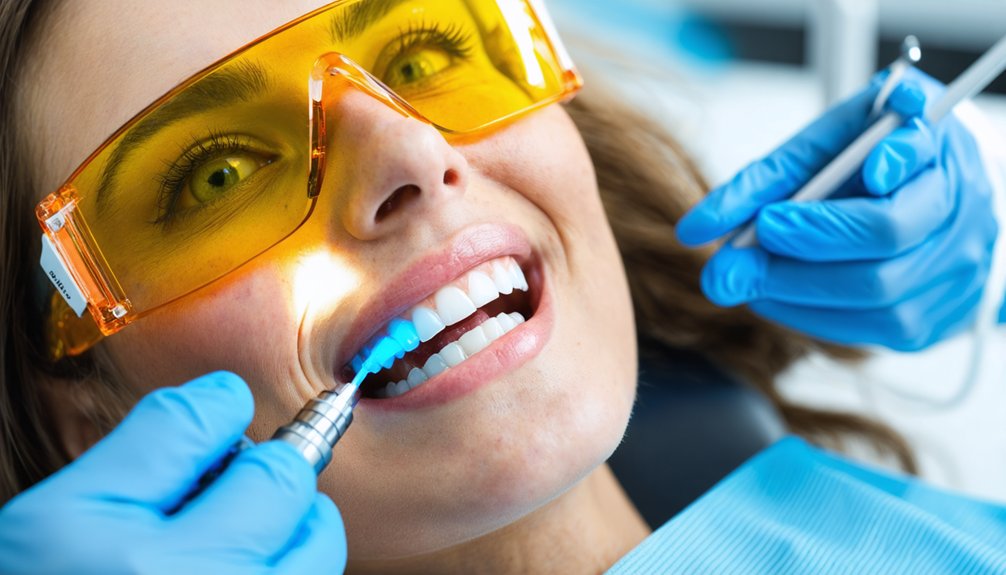
Once you’re seated in the dental chair, your dentist begins by thoroughly cleaning your teeth to remove surface debris that could interfere with the whitening gel’s contact.
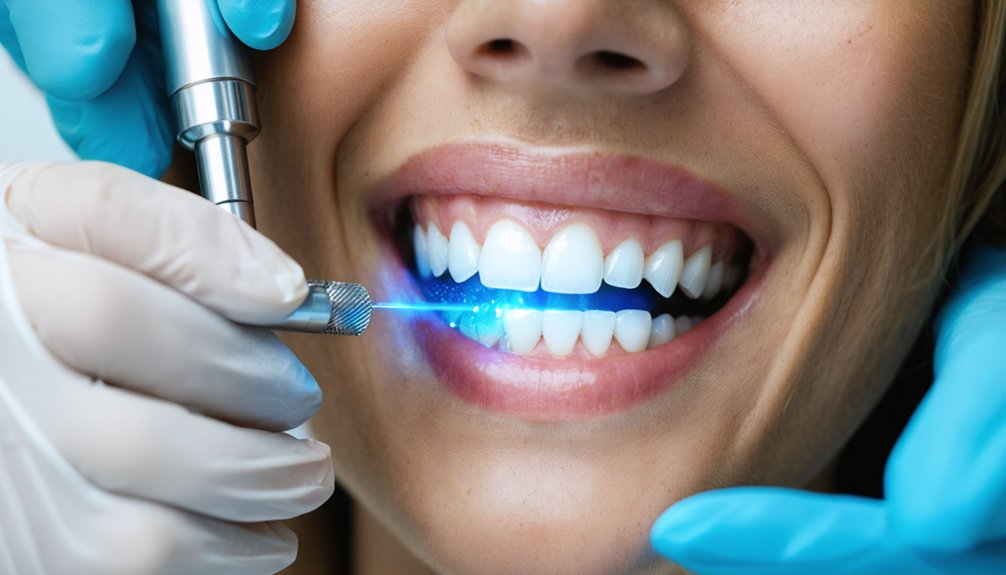
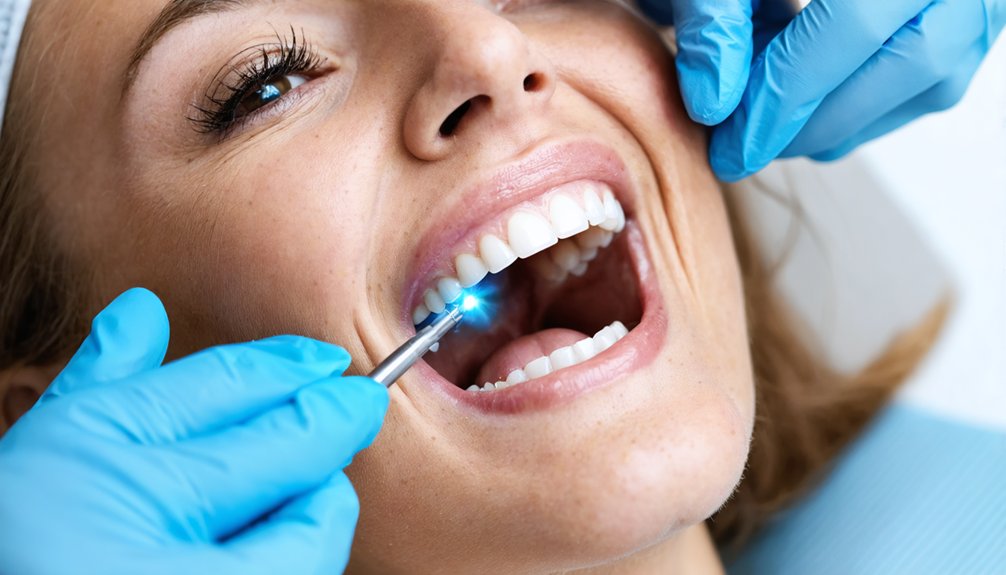
A protective barrier is then applied to your gums, shielding soft tissue from chemical exposure. High-concentration hydrogen peroxide gel is carefully placed on your tooth surfaces, and a laser or LED light activates the whitening technology, accelerating the bleaching process at a controlled intensity.
Treatment duration typically runs under one hour, with the gel applied in timed intervals to manage sensitivity. Your dentist monitors each stage, adjusting laser intensity as needed.
Why Laser Whitening Causes Less Gum Irritation Than Strips or Trays
Although strips and trays rely on prolonged contact between peroxide gel and your gum tissue, laser whitening minimizes that exposure through professional application and physical barriers. Among competing whitening techniques, this distinction matters greatly.
Strips frequently overlap onto gum margins, delivering sustained chemical contact you can’t easily control. Custom trays perform better, but gel migration remains a documented concern during extended wear.
Laser advantages become clear when you examine the mechanics: your dentist applies a protective gum barrier before treatment, physically blocking gel from reaching sensitive tissue.
The session concludes in under one hour, reducing cumulative peroxide exposure compared to overnight tray protocols.
You retain greater control over outcomes because a trained professional monitors every stage, adjusting intensity and exposure time to protect your gums throughout the procedure.
How Dentists Reduce Sensitivity During Laser Teeth Whitening
Dentists employ several targeted strategies to minimize sensitivity before, during, and after laser whitening.
They’ll apply desensitizing agents containing potassium nitrate or fluoride to calm nerve response prior to gel application.
During treatment, they’ll adjust laser intensity based on your real-time feedback, giving you direct control over your comfort threshold.
Protective barriers shield your gums from chemical contact, markedly reducing irritation risk.
These sensitivity techniques work together to make the procedure manageable even for reactive teeth.
When sensitivity techniques align, even the most reactive teeth can undergo whitening with confidence and comfort.
Post-treatment, dentists may recommend fluoride applications or prescription-strength desensitizing toothpaste to accelerate recovery.
Any discomfort typically resolves within 24 to 48 hours.
This level of professional oversight and patient comfort prioritization distinguishes in-office laser whitening from unsupervised at-home alternatives where sensitivity management remains largely guesswork.
When Should You Avoid Laser Teeth Whitening for Sensitive Gums?
While laser teeth whitening offers significant cosmetic benefits, certain gum conditions make it an unsuitable and potentially harmful choice. You should avoid this procedure if you’re experiencing active gum disease, inflamed tissue, or gums that are red, swollen, or currently recovering from treatment.
Receding or thinning gums increase your risk of chemical burns and heightened sensitivity from both the peroxide gel and laser heat.
Prioritizing your gum health means recognizing when postponement protects you better than proceeding. Schedule a professional consultation to assess your oral condition before committing to any whitening protocol.
If laser treatment isn’t appropriate for you, treatment alternatives such as low-concentration at-home kits or custom-fitted trays offer safer options that still deliver measurable results without compromising vulnerable gum tissue.
Frequently Asked Questions
How Long Does Post-Treatment Gum Sensitivity Last After Laser Whitening?
You’ll typically experience post-treatment gum sensitivity for 24–48 hours. Effective sensitivity management and proper post-treatment care—like avoiding hot or cold foods—help you control discomfort and support a smooth, fast recovery.
Can Laser Whitening Worsen Receding Gums Over Multiple Sessions?
Exposed, vulnerable root surfaces signal real risk. Yes, repeated sessions can worsen receding gums, as laser safety protocols become critical — you’ll need your dentist to monitor tissue response and adjust intensity carefully between treatments.
What Shade Improvement Can Sensitive Gum Patients Realistically Expect?
You’ll typically achieve 4–8 shade improvements in a single session, though your sensitivity levels directly influence treatment intensity. Managing shade expectations realistically means your dentist can customize peroxide concentration and laser exposure to protect your gums effectively.
Are There Age Restrictions for Laser Whitening With Sensitive Gums?
“Age before wisdom” applies here—you must meet age eligibility standards before proceeding. Treatment guidelines typically restrict laser whitening to adults 18+, as developing teeth and gums require protection. Consult your dentist to confirm you’re a suitable candidate.
How Soon Can You Eat or Drink After Laser Whitening Treatment?
After treatment, you’ll want to avoid staining foods and drinks for 48 hours. Follow strict dietary restrictions as part of your post-treatment care to protect results and minimize gum sensitivity during your recovery window.
References
- https://ivorywhitening.com/laser-teeth-whitening-for-sensitive-teeth/
- https://dentalartistryirving.com/2025/12/03/laser-teeth-whitening-for-sensitive-gums/
- https://drghayoumi.com/best-teeth-whitening-method/
- https://completesmilesbv.com.au/can-gum-disease-patients-use-laser-whitening/
- https://tempefamilydentistry.com/laser-teeth-whitening-benefits-sensitivity-levels-and-expected-results/
- https://bloommedspamn.com/laser-teeth-whitening-guide-what-to-expect/
- https://deandentalsolutions.com/discover-if-laser-teeth-whitening-is-right-for-you/
- https://www.giangrecofamilydental.com/pros-and-cons-of-laser-teeth-whitening/
- https://dentistoftorrance.com/blog/laser-teeth-whitening
- https://www.suttonpda.com/sensitivity-safety-teeth-whitening/