You don’t need to spend hundreds on professional whitening to get real results. Over-the-counter options like Crest 3D Whitestrips and Colgate Optic White deliver clinically comparable outcomes at 5–10% of the cost. Match your method to your sensitivity level—strips work for mild discoloration, while LED kits can achieve up to 10 shades in five days. Pair any whitening agent with fluoride toothpaste to protect enamel. The full breakdown ahead covers everything you need to whiten smarter.
Key Takeaways
- OTC whitening options like Crest 3D Whitestrips ($45) deliver results comparable to professional treatments at 5–10% of the cost.
- Strips suit straight teeth with mild discoloration, while custom trays provide even coverage for misaligned surfaces.
- Dentist-recommended products include Crest 3D White Whitestrips Professional Effects and Opalescence Go prefilled gel trays.
- LED kits can achieve up to 10 shades whiter in five days, while whitestrips deliver up to 18 shades in 20 days.
- Pair any whitening method with fluoride toothpaste or mouthrinse to protect enamel and minimize sensitivity.
Why Professional Whitening Costs More Than It Should
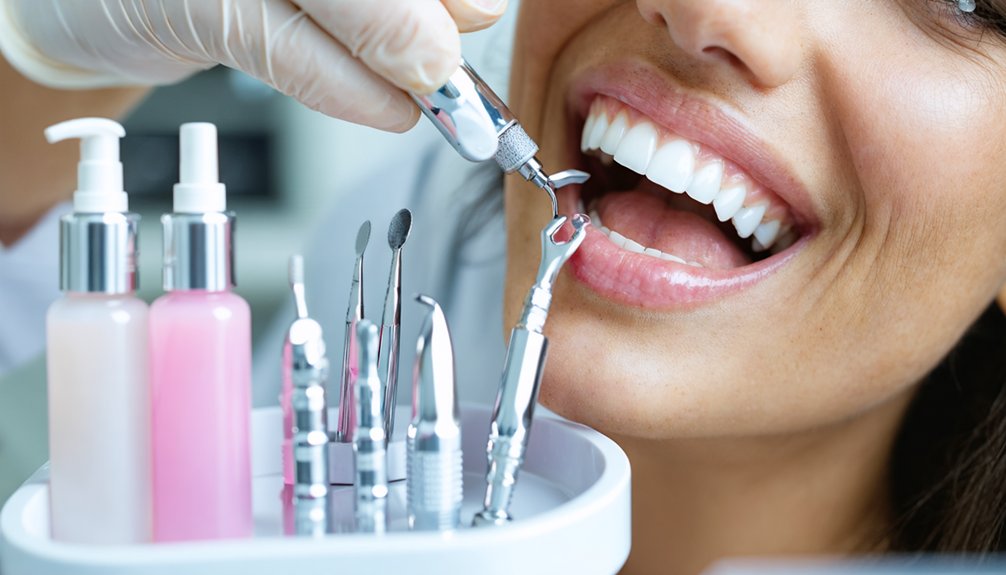
Why does professional teeth whitening cost anywhere from $300 to $1,000 per session when the active ingredient—hydrogen peroxide—costs a fraction of that?
The cost breakdown reveals what you’re actually paying for: clinical overhead, chair time, licensed labor, and liability margins.
The hydrogen peroxide itself is cheap. Consumer pricing inflates the final number because dentists bundle the compound with custom trays, UV lights, and post-treatment sensitivity management.
You’re not paying for a superior molecule—you’re paying for a controlled setting.
OTC whitening strips and tray kits use the same active ingredient at lower concentrations, delivering comparable surface results at 5–10% of the professional cost.
Once you understand what drives the price, you can make a calculated decision about where to spend your money.
Which Whitening Method Is Right for You?
Knowing that professional whitening’s premium reflects overhead rather than ingredient superiority puts you in a stronger position to match a method to your actual needs. Your whitening preferences should drive treatment personalization.
Strips suit straight teeth with mild-to-moderate discoloration; trays cover misaligned surfaces more evenly. If sensitivity concerns you, choose peroxide-free options or Crest’s Sensitive Whitestrips. For accelerated results, LED kits deliver up to 10 shades in five days.
Match your whitening method to your teeth: strips for straight smiles, trays for uneven surfaces, LED kits for speed.
Daily-use toothpastes and mouthrinses address surface stains gradually with minimal risk. Budget constraints narrow choices further: toothpastes run $3–$6, strips $20–$50, and LED kits $50–$300. Pair any method with fluoride products to protect enamel.
For severe intrinsic staining, consult a dentist before committing to an OTC regimen.
The Best Affordable Whitening Products Under $50
Effective whitening doesn’t require a large budget—several well-tested products deliver measurable results for under $50.
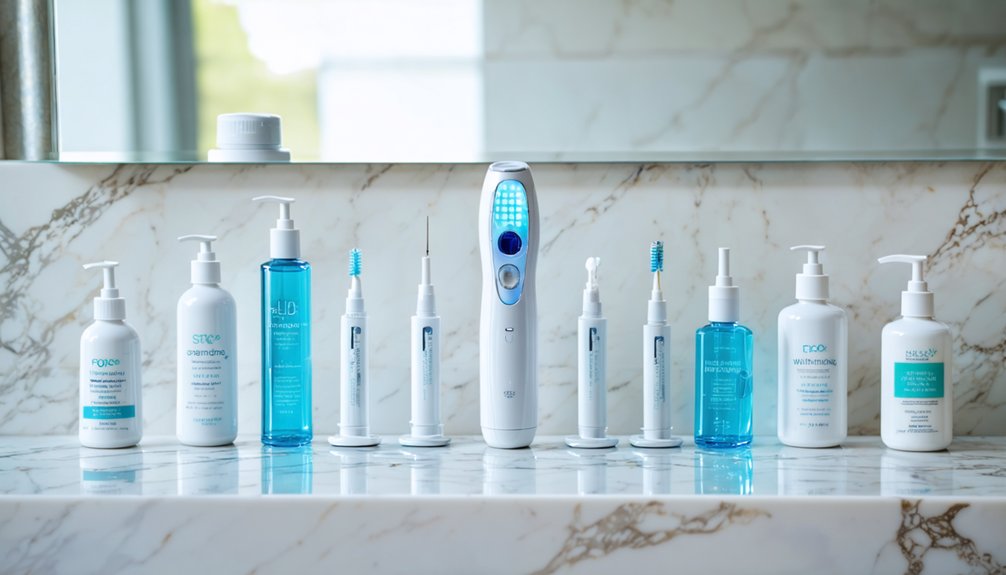
For budget-friendly solutions, consider these clinically supported options:
Crest 3D Whitestrips ($45): Hydrogen peroxide-based with ADA Seal approval; results last six-plus months; visible improvement in 10–12 days.
Colgate Optic White Advanced Toothpaste ($6): Targets intrinsic and extrinsic stains; noticeable results within two weeks.
Plus White 5 Minute Kit ($11): Reliable drugstore option with satisfactory outcomes.
ACT Whitening Mouthrinse ($6): Combines hydrogen peroxide with fluoride for dual stain removal and enamel protection.
Effective whitening techniques involve matching product strength to your sensitivity level.
Higher peroxide accelerates results but increases sensitivity risk.
Pair any whitening product with fluoride to preserve enamel integrity.
What Dentists Actually Recommend for Home Whitening
While over-the-counter shelves offer dozens of options, dentists consistently narrow their recommendations to a short list of clinically validated products.
For effective at-home solutions, professionals most frequently endorse Crest 3D White Whitestrips Professional Effects at $44.99, citing results comparable to in-office treatments. Opalescence Go ranks as another top pick, offering prefilled gel trays in two peroxide strengths.
Dentists most frequently recommend Crest 3D White Whitestrips Professional Effects and Opalescence Go for clinically proven at-home whitening results.
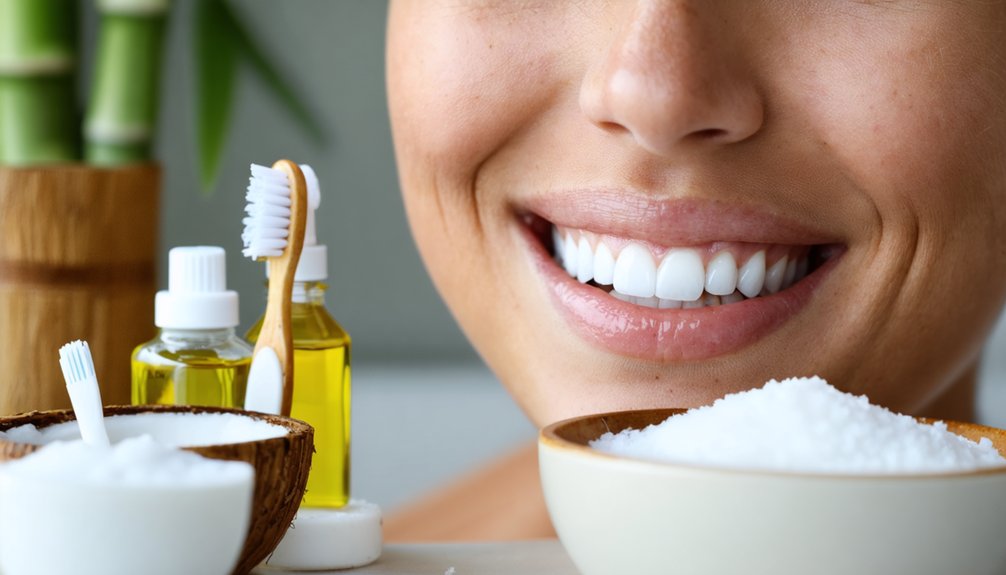
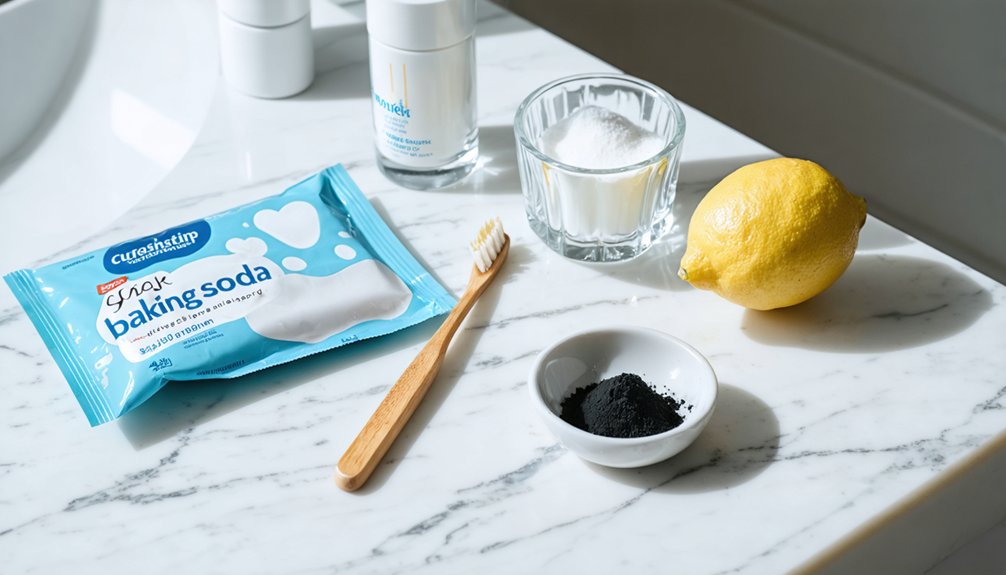
When exploring DIY techniques, avoid unverified methods. Dentists caution against baking soda abrasion and oil pulling as primary whitening strategies.
Instead, pair hydrogen peroxide-based strips with fluoride toothpaste to protect enamel integrity. If you experience sensitivity, Crest Whitestrips for Sensitive Teeth delivers gentler results without sacrificing efficacy.
Always consult your dentist before starting any whitening regimen, particularly if you have existing restorations or enamel erosion.
How Long Each Whitening Method Actually Takes
When choosing a whitening method, you’ll find that timelines vary considerably based on the active ingredient concentration and application format.
Whitestrips can brighten your teeth up to 18 shades over 20 days, while LED kits like Glo Science deliver up to 10 shades in as few as 5 days.
If you’re after the fastest results, prescription-strength gels with 10x higher peroxide than OTC options outpace every at-home method.
Though standard drugstore toothpastes and mouthrinses require consistent daily use for roughly two weeks before you’ll notice any surface stain removal.
Timelines By Whitening Method
Choosing the right whitening method means understanding how long each one actually takes to deliver results. Whitestrips deliver up to 18 shades in 20 days with 30 daily minutes of use. A single 60-minute session produces noticeable brightening.
LED kits like Glo Science achieve 10 shades in five days, while Crest Emulsions show two shades brighter within one day. Toothpastes and mouthrinses require two weeks of consistent use before surface stains visibly fade.
Prescription gels, containing 10 times more peroxide than OTC options, produce faster, stronger results. Your whitening frequency should match your method’s intensity—higher peroxide demands longer recovery between sessions.
Build a maintenance routine using fluoride products to protect enamel and sustain results between whitening cycles.
Fastest Results Achievable
For maximum whitening efficiency, LED kits lead the category. The Glo Science device delivers up to 10 shades in five days using hydrogen peroxide with LED activation.
Crest Whitening Emulsions produces two shades brighter within one day. Whitestrips achieve up to 18 shades in 20 days, with a single 60-minute session producing noticeable fast results.
Prescription-strength gels—containing roughly 10x more peroxide than OTC options—work fastest overall but require a dentist.
Toothpastes and mouthrinses offer the slowest improvement, delivering surface-level changes over two weeks.
Prioritize LED kits or professional-strength strips when your timeline is tight.
How to Get Better Whitening Results Without Sensitivity or Damage
You can reduce sensitivity by choosing low-peroxide formulas or peroxide-free alternatives like Oral Essentials Lumineux, and by limiting whitening sessions to the recommended frequency rather than overusing strips or gels.
Pairing your whitening routine with fluoride toothpaste or a fluoride mouthrinse, such as ACT Anticavity Fluoride Mouthrinse, actively reinforces enamel and counteracts mineral loss caused by peroxide exposure.
If you have misaligned teeth or experience uneven whitening, switching from strips to custom trays guarantees more consistent gel coverage while reducing the risk of gum irritation.
Minimizing Sensitivity During Whitening
Whitening products containing hydrogen peroxide can trigger temporary tooth sensitivity, but selecting the right formulation and application strategy greatly reduces that risk.
For effective sensitivity management, choose lower-concentration peroxide formulas or peroxide-free alternative methods like coconut oil or sage-based products if your teeth react strongly. Crest Whitestrips for Sensitive Teeth uses AdvancedSeal technology, delivering gentler results over two weeks.
Pair any whitening regimen with fluoride-based toothpaste or mouthrinse, such as ACT Fluoride Mouthrinse, to reinforce enamel integrity. Limit strip or tray application time rather than skipping sessions entirely.
Adding a brief five-minute LED exposure instead of extended sessions reduces irritation while maintaining efficacy. Always consult your dentist if sensitivity persists beyond 48 hours post-treatment.
Protecting Enamel While Whitening
Protecting your enamel goes hand in hand with managing sensitivity—both depend on choosing the right concentration and pairing whitening agents with enamel-reinforcing products.
For whitening safety, use fluoride mouthrinses like ACT Whitening + Anticavity after each whitening session; fluoride actively remineralizes enamel weakened by peroxide exposure. Avoid acidic foods and drinks within an hour of whitening, as enamel temporarily softens post-treatment.
For enamel care, limit LED kit sessions to manufacturer-recommended durations—exceeding them increases erosion risk without improving results.
Opt for lower peroxide concentrations if you whiten frequently; sustained high-peroxide exposure degrades enamel over time. Peroxide-free alternatives like Oral Essentials Lumineux eliminate this risk entirely.
Consulting your dentist before starting any regimen guarantees you select a protocol matched to your enamel’s current condition.
Frequently Asked Questions
Can Teeth Whitening Products Expire and Affect Their Effectiveness Over Time?
yes, teeth whitening ingredients do expire. You’ll notice reduced effectiveness over time, so follow product storage guidelines carefully to maintain potency and make certain you’re getting peak whitening performance.
Does Drinking Water Immediately After Whitening Treatments Reduce Their Effectiveness?
Drinking water immediately after whitening doesn’t greatly reduce effectiveness. You’re safe to hydrate, as water won’t interfere with whitening timing or hydration effects on treated enamel. Avoid staining beverages during the post-treatment window instead.
Are Teeth Whitening Products Safe to Use During Pregnancy or Breastfeeding?
You should avoid whitening products during pregnancy or breastfeeding due to the risks involved with peroxide absorption. Instead, opt for natural alternatives like coconut oil. Consult your dentist for evidence-based guidance tailored to your specific situation.
Can Whitening Treatments Affect Dental Crowns, Veneers, or Fillings?
Whitening treatments won’t alter your crowns, veneers, or fillings—they’ll stand unchanged while natural teeth brighten around them, creating visible crown discoloration contrasts. You’ll risk whitening sensitivity on surrounding enamel, so consult your dentist before proceeding.
How Does Diet Impact the Longevity of Teeth Whitening Results?
Your dietary habits directly impact whitening longevity. You’ll extend results through stain prevention by avoiding coffee, tea, red wine, and dark foods. Consuming crunchy vegetables and drinking water actively helps maintain your brighter smile longer.
References
- https://www.gentledental.com/resources/articles/teeth-whitening-products
- https://deandentalsolutions.com/the-best-at-home-teeth-whitening-worth-trying/
- https://www.health.com/condition/oral-health/teeth-whitening-kits
- https://www.forbes.com/sites/forbes-personal-shopper/article/best-teeth-whitening-kit/
- https://www.reddit.com/r/hygiene/comments/1e2l8mp/best_cost_effective_teeth_whitening/
- https://nhdentistrybeverlyhills.com/press/6-of-the-best-teeth-whitening-kits-in-the-drugstore/
- https://www.rejuv-health.com/cosmetic-dentistry/teeth-whitening-cost/
- https://www.goodhousekeeping.com/health-products/g28723133/best-at-home-teeth-whitening-products/
- https://www.goodrx.com/conditions/dental-care/is-teeth-whitening-safe
- https://www.aarp.org/health/conditions-treatments/teeth-whitening/