Laser teeth whitening uses a peroxide-based gel activated by laser light to break down stains and brighten your smile in a single appointment. It’s generally safe when performed by a qualified dental professional, but it does carry risks like tooth sensitivity and gum irritation. Results can last up to three years with proper care. Keep exploring to find out everything you need to make the safest, most informed choice.
Key Takeaways
- Laser teeth whitening is an in-office procedure using peroxide-based gel activated by laser light to break down stains quickly.
- A trained dental professional performs an oral exam beforehand to confirm you’re a suitable candidate for the treatment.
- Gum barriers and protective eyewear are used during the procedure to minimize risks to soft tissue and eyes.
- Common side effects include temporary tooth sensitivity and gum irritation, which proper technique and aftercare can significantly reduce.
- Results can last up to three years by avoiding staining foods, maintaining oral hygiene, and scheduling periodic touch-ups.
What Is Laser Teeth Whitening?
Laser teeth whitening is an in-office cosmetic dental procedure that combines a peroxide-based whitening gel with laser or light activation to break down stains on your enamel.
The laser heats the gel, accelerating the whitening process and delivering faster, more dramatic results than at-home strips or toothpaste. You’ll typically complete treatment in a single appointment lasting one to two hours.
The benefits overview includes targeting extrinsic stains from food, drinks, and tobacco, though it offers limited impact on deep intrinsic discoloration.
It’s a controlled, professional-grade option that puts measurable results within reach.
Procedure costs vary depending on your location and provider but generally exceed over-the-counter alternatives, reflecting the precision, equipment, and professional oversight required to perform the treatment safely and effectively.
How the Laser Teeth Whitening Procedure Works
Understanding how the procedure unfolds helps you know what to expect from the moment you sit in the dental chair. Your dentist begins with a quick oral exam to confirm you’re a suitable candidate.
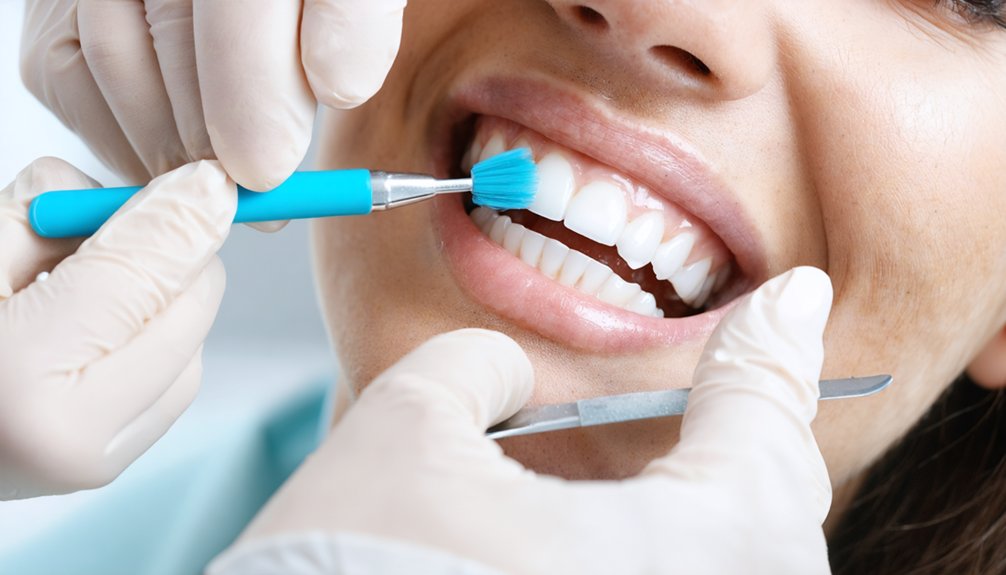
Once cleared, soft shields or a rubber barrier protect your gums from the whitening agent.
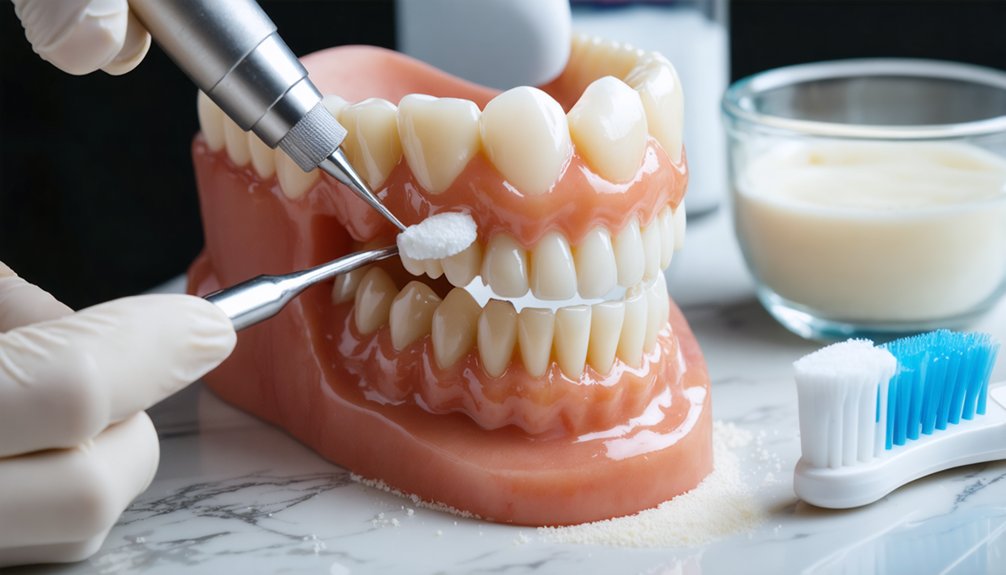
Next comes the laser gel application, where your dentist carefully coats your visible tooth surfaces with a peroxide-based whitening gel.
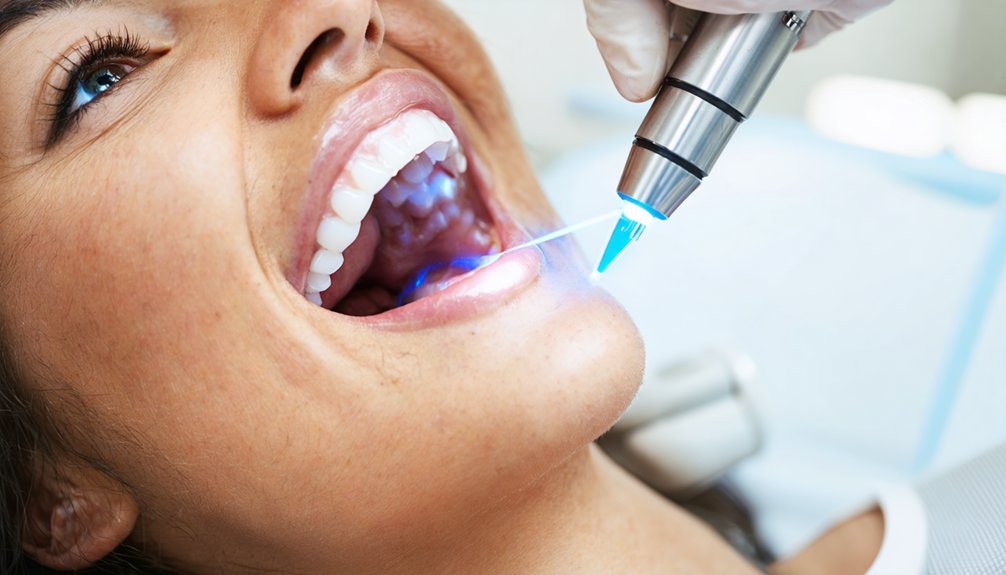
Light activation follows, as a laser is directed at the gel in controlled intervals, generating heat that accelerates stain breakdown.
After each interval, the gel is removed and your mouth is rinsed. This cycle may repeat several times within a single appointment, typically lasting one to two hours, giving you measurable results before you leave the office.
Is Laser Teeth Whitening Safe?
Safety is a reasonable concern when any laser device is used near your face, but laser teeth whitening is generally considered safe when a trained dental professional performs it under proper in-office conditions.
Knowing what protections are in place helps you stay informed and in control.
Key safety factors include:
- Gum isolation using barriers or shields prevents gel contact with soft tissue
- Protective eyewear shields your eyes from laser light exposure
- Controlled gel application limits peroxide contact to enamel surfaces only
- Sensitivity management involves monitoring peroxide strength to reduce post-treatment discomfort
- Post-treatment care instructions help you avoid triggers like hot or cold foods that worsen sensitivity
Proper technique and professional oversight make the difference between a safe outcome and avoidable complications.
What Are the Real Risks and Side Effects?
Even though laser teeth whitening is generally safe, it does carry real risks you should weigh before committing to treatment.
Tooth sensitivity is the most common side effect, caused by temporary enamel dehydration from strong peroxide concentrations. This discomfort usually resolves within days, but it can be significant.
Gum irritation or chemical burns can occur if the whitening gel contacts soft tissue during application. Improper laser technique also raises concerns about pulp damage or broader tissue injury.
If you have weak enamel, exposed dentin, or untreated cavities, those conditions amplify your risk considerably.
Choosing a qualified dental professional who uses proper isolation techniques and follows safety protocols is the most effective way to minimize complications and protect your oral health.
Who Should Avoid Laser Teeth Whitening?
Laser teeth whitening isn’t the right choice for everyone, and knowing where you fall can save you from unnecessary discomfort or poor results.
Understanding the contraindications factors and candidates considerations helps you make a smarter, safer decision.
Avoid or delay treatment if you have:
- Untreated cavities or active gum disease — these must be resolved first
- Weak enamel or exposed dentin — heightened sensitivity and damage risk increase considerably
- Tetracycline or deep intrinsic staining — laser whitening won’t deliver meaningful results
- Oral tumors, injuries, or malformations — treatment could worsen existing conditions
- Current orthodontic hardware — brackets and wires interfere with even gel application
Consult your dentist honestly about your oral health before committing to any whitening procedure.
How Long Do Laser Teeth Whitening Results Last?
Once you’ve confirmed you’re a good candidate, the next practical question is how long those brighter results will actually stick around. Results vary greatly based on duration factors like stain type, baseline tooth color, and your daily habits. Some people maintain their results for several months; others see brightness last up to three years.
Whitening results can last anywhere from a few months to three years, depending on your stains and daily habits.
You control much of that outcome. Maintenance tips worth following include limiting staining foods and beverages like coffee, tea, and red wine, avoiding tobacco, and keeping up with consistent oral hygiene.
Periodic touch-up treatments can also extend your results noticeably.
Intrinsic stains or heavy dietary exposure will shorten longevity. Understanding these variables lets you set realistic expectations and take deliberate steps to protect your investment in the procedure.
How to Maintain Your Laser Whitening Results

Protecting your results starts the moment you leave the dental office. Post treatment care and stain prevention directly determine how long your investment lasts.
You control the outcome through consistent daily choices.
Follow these proven maintenance strategies:
- Avoid staining foods and drinks — coffee, tea, red wine, and dark sauces accelerate discoloration
- Quit or reduce tobacco use — smoking and chewing tobacco rapidly reverse whitening results
- Brush twice daily with a whitening toothpaste to manage surface stains
- Rinse immediately after consuming pigment-rich foods or beverages when brushing isn’t possible
- Schedule periodic touch-up treatments as recommended by your dentist to sustain brightness
Consistency is what separates lasting results from short-lived ones.
Frequently Asked Questions
How Much Does Laser Teeth Whitening Typically Cost per Session?
You’ll typically spend $300–$1,500 per session, depending on your provider and location. Session duration runs one to two hours. Explore affordable options by comparing dental offices, as prices vary considerably based on technology and expertise used.
Can Laser Whitening Damage Existing Dental Crowns, Veneers, or Fillings?
Laser whitening won’t damage your crowns or veneers, but it also won’t change their color. You’ll want to contemplate crown sensitivity and veneer safety, as existing restorations may create uneven whitening results afterward.
How Does Laser Whitening Compare to Professional Tray-Based Bleaching Treatments?
Imagine faster, bolder results — laser whitening wins the effectiveness comparison with quicker treatment duration, often just one session. Tray-based bleaching takes weeks but lets you control the pace from home.
Is Laser Teeth Whitening Covered by Dental Insurance Plans?
Dental insurance typically won’t cover laser teeth whitening since it’s cosmetic. You’ll want to review your plan’s benefits overview and factor in treatment duration costs before committing to this elective, out-of-pocket procedure.
At What Age Is Laser Teeth Whitening Considered Appropriate for Patients?
Most dentists consider you a suitable candidate once your teeth have fully developed, typically around age 18. Age guidelines and patient suitability vary, so you’ll want your dentist to evaluate your oral health beforehand.
References
- https://www.3dental.ie/blog/pros-cons-laser-teeth-whitening/
- https://bloommedspamn.com/laser-teeth-whitening-guide-what-to-expect/
- https://www.dentaly.org/us/teeth-whitening/laser-teeth-whitening/
- https://www.healthline.com/health/dental-and-oral-health/laser-teeth-whitening
- https://www.youtube.com/watch?v=zF6pjQ5KXQk
- https://www.nhs.uk/tests-and-treatments/teeth-whitening/
- https://pmc.ncbi.nlm.nih.gov/articles/PMC4385673/
- https://www.colgate.com/en-us/oral-health/teeth-whitening/is-laser-teeth-whitening-an-option-for-you
- https://www.reddit.com/r/beauty/comments/fggbo1/laser_teeth_whitening/
- https://toppinoledental.com/blog/laser-teeth-whitening-and-tooth-decay-any-connection